


Lycoperdon excipuliforme
(Scop.) Pers.
Study description
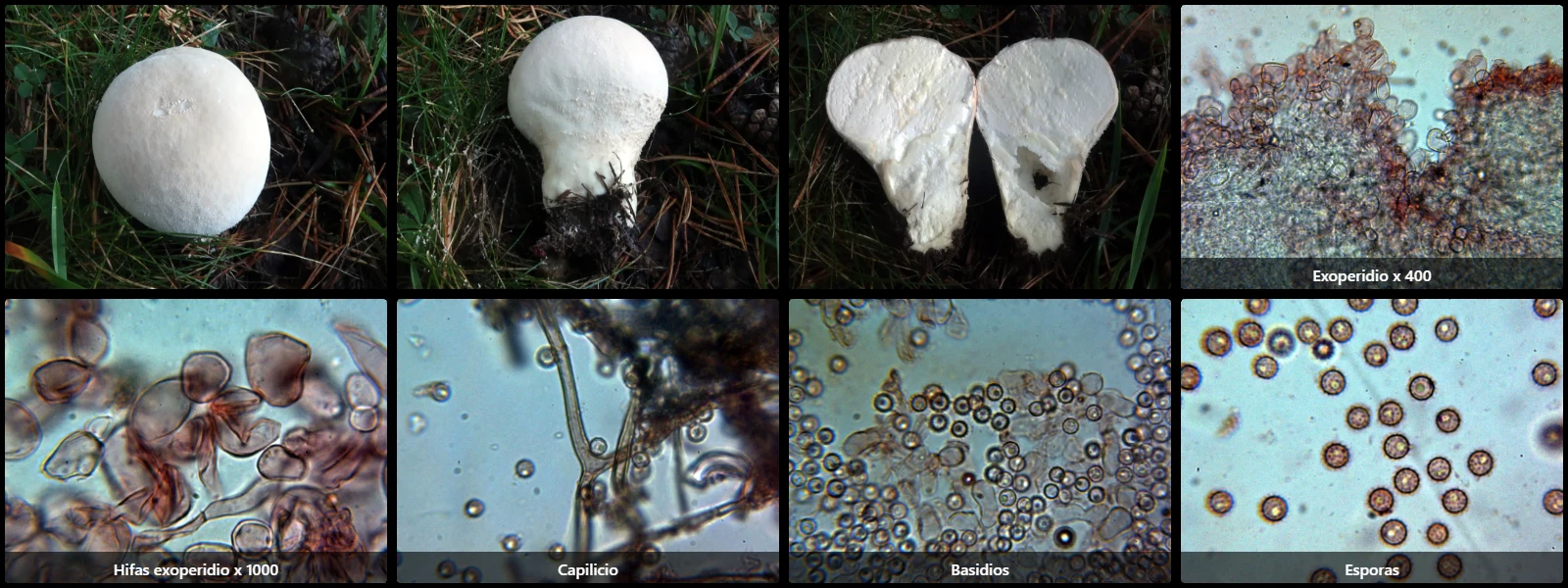
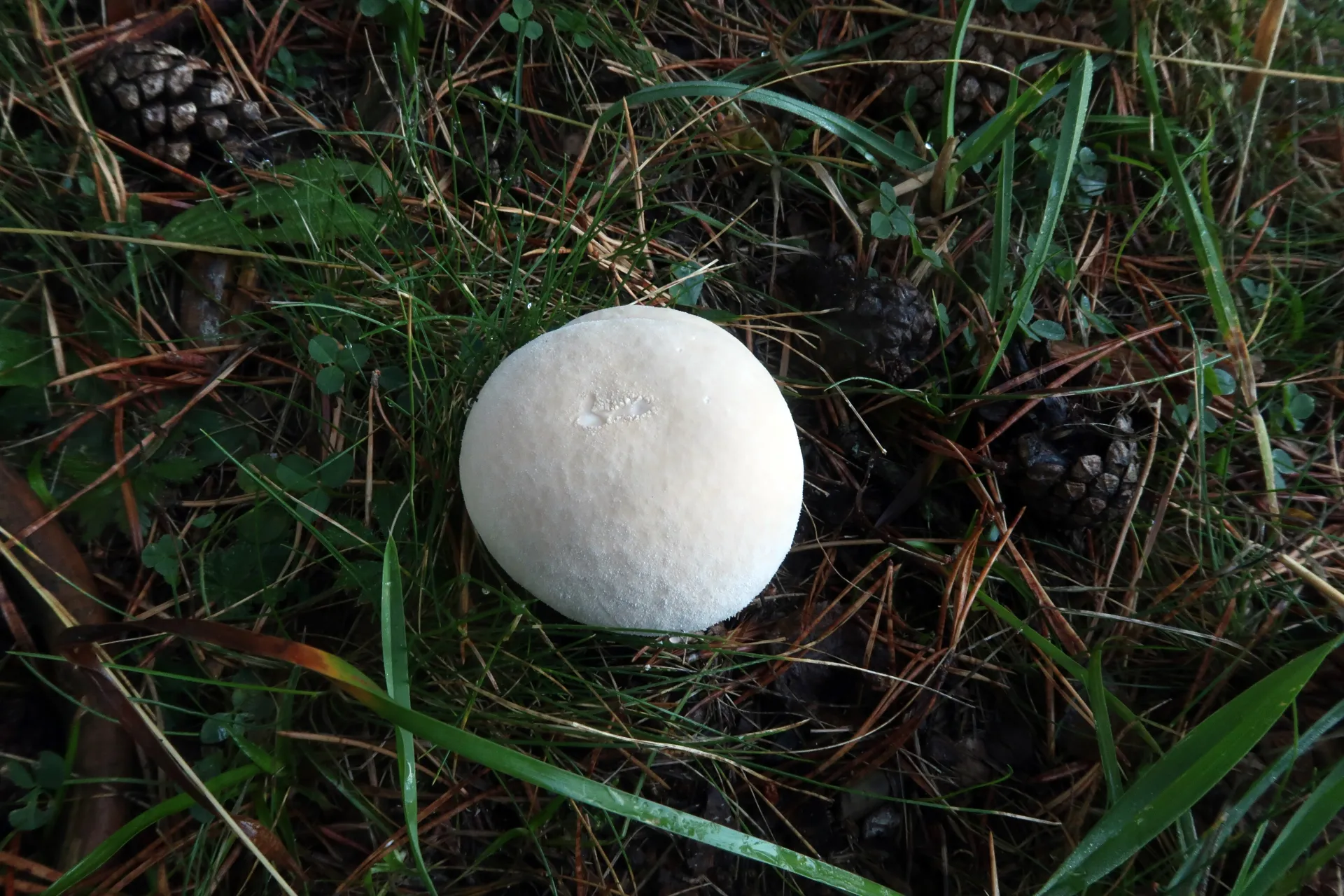
General: Large puffball with a prominent, elongated pestle-like stipe, found in pine woods and holm oak woods, exoperidium covered with small rounded granules that easily slough off.
Exoperidium: Sphaerocyst-like structure composed of subglobose, ovoid, pyriform to vesiculose cells 25-40 µm in diameter.
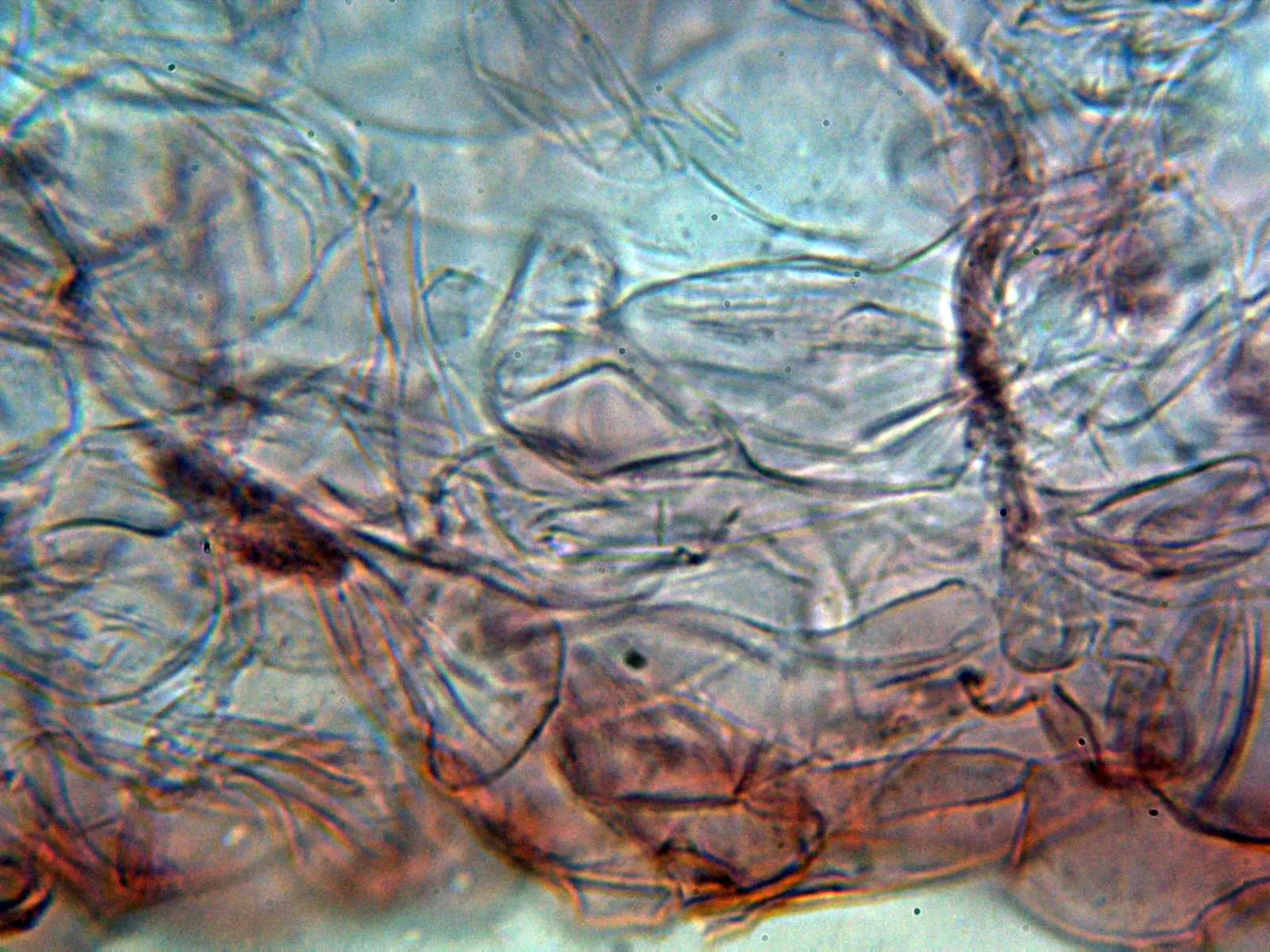
Endoperidium: Hyphae filamentous, 2-5 µm wide, hyaline and thin-walled.
Capillitium: Composed of thick-walled, sparingly branched threads 3-6 µm wide, brown under the microscope, aseptate, perforated by distinct small circular pores.
Basidia: Pyriform to clavate, 10-15 x 4-7 µm, clampless, with 4 to 6 sterigmata.
Spores: Globose, thick-walled, coarsely verrucose with warts up to 1 µm high, 4.5-5.5 µm in diameter, pale brown under the microscope, with a hyaline pedicel remnant and small oil droplets.
Exoperidium: Sphaerocyst-like structure composed of subglobose, ovoid, pyriform to vesiculose cells 25-40 µm in diameter.
Endoperidium: Hyphae filamentous, 2-5 µm wide, hyaline and thin-walled.
Capillitium: Composed of thick-walled, sparingly branched threads 3-6 µm wide, brown under the microscope, aseptate, perforated by distinct small circular pores.
Basidia: Pyriform to clavate, 10-15 x 4-7 µm, clampless, with 4 to 6 sterigmata.
Spores: Globose, thick-walled, coarsely verrucose with warts up to 1 µm high, 4.5-5.5 µm in diameter, pale brown under the microscope, with a hyaline pedicel remnant and small oil droplets.
Geographic references
Map generated from global occurrence data from GBIF. GBIF.
Study measurements
Values in Microns (µm)Macroscopic gallery
1 / 4Lycoperdon excipuliforme - 1 - IMG_7418
Microscopic gallery
1 / 9Lycoperdon excipuliforme - 10 - Peridio interno