


Lophodermium petiolicola
Fuckel
Study description
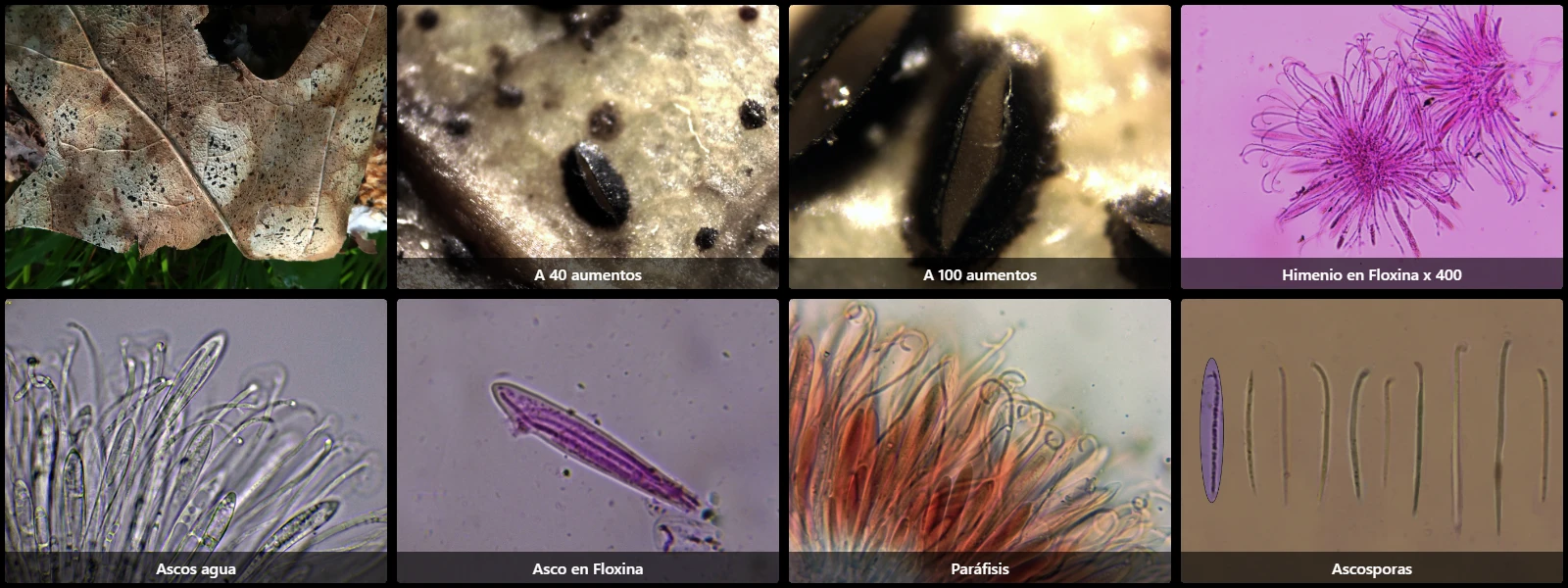
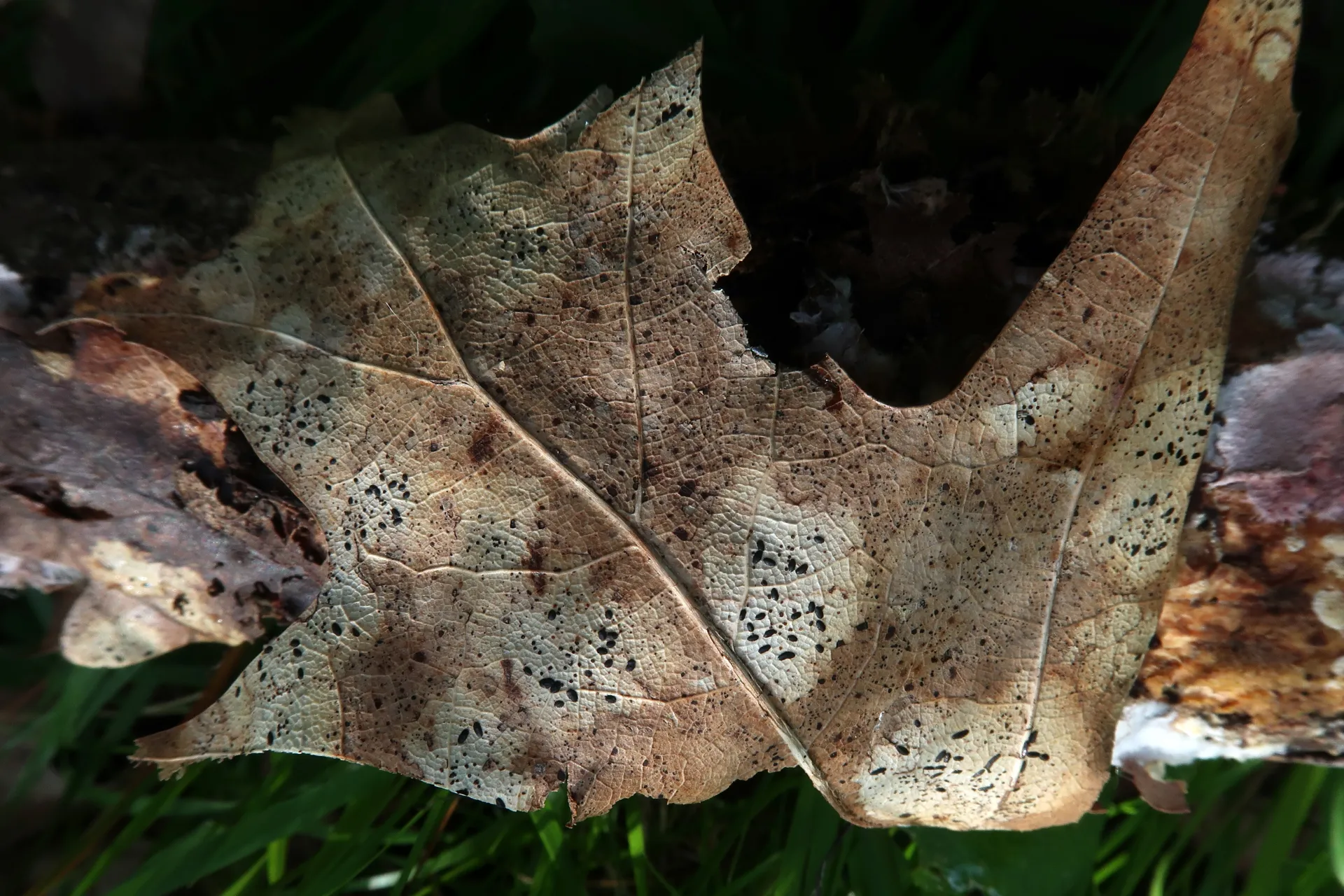
Substrate: Developing on decaying fallen oak (Quercus) leaves, producing blackish oval ascomata opening via a longitudinal slit.
Ascomata: Ellipsoid to oval, 0.8-1.5 mm long, developing singly, especially along the petioles and primary leaf veins.
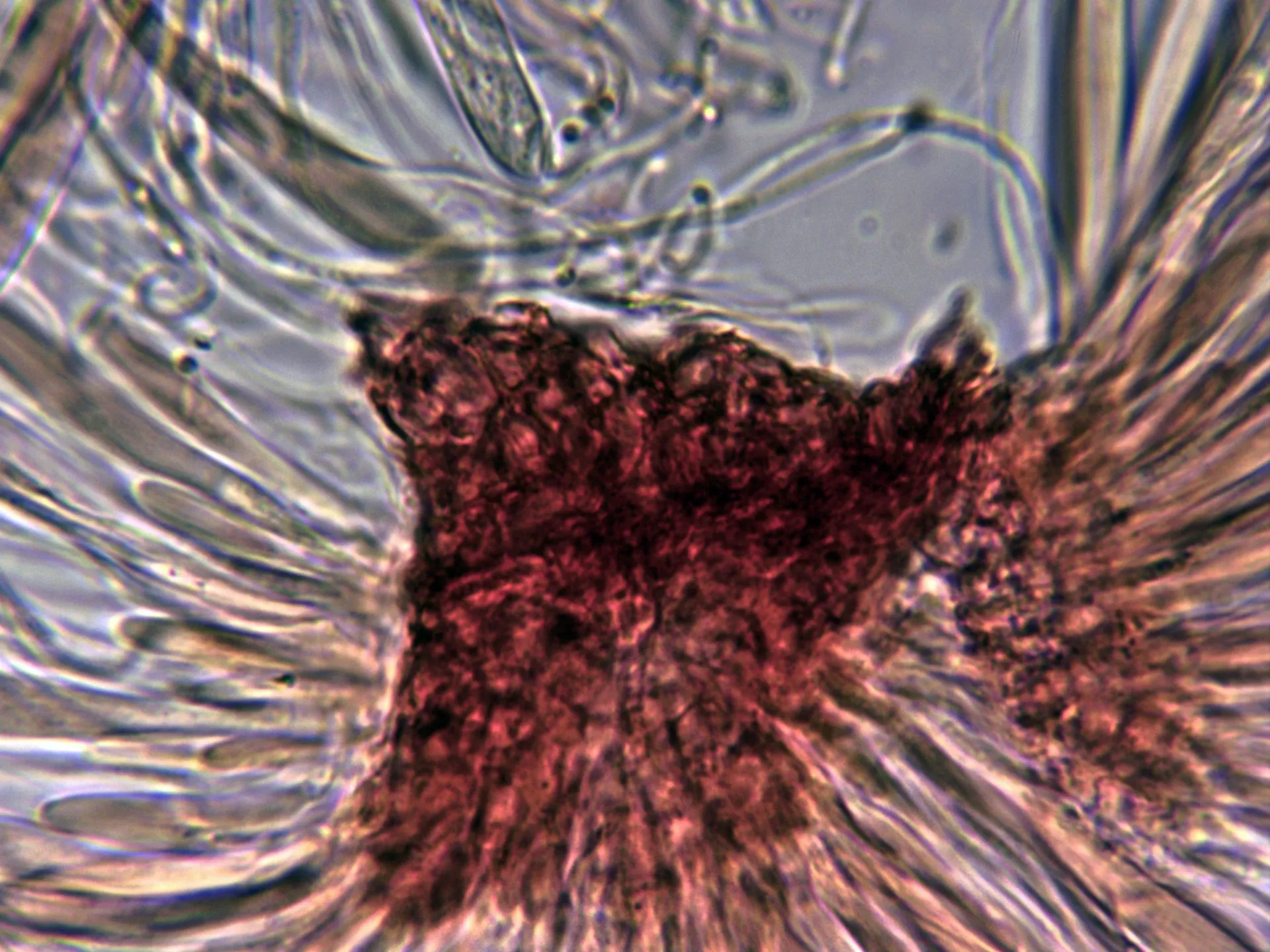
Excipulum: Composed of hyphae forming a textura globulosa, hyaline, thick-walled, 6-10 µm wide.
Asci: Cylindrical to fusiform, 8-spored, 90-120 x 10-13 µm, spores arranged in parallel within the ascus, base simple without croziers, inamyloid in Melzer's reagent.
Paraphyses: Abundant, filiform, simple, unbranched, septate, 1.5-2.5 µm wide, apices curved to sinuous with the terminal cell slightly widened up to 3 µm, projecting above the asci.
Ascospores: Filiform, acicular, with one end slightly curved and the opposite end pointed, 20-40 x 1-1.6 µm.
Herbarium voucher: JTP2521/25.
Ascomata: Ellipsoid to oval, 0.8-1.5 mm long, developing singly, especially along the petioles and primary leaf veins.
Excipulum: Composed of hyphae forming a textura globulosa, hyaline, thick-walled, 6-10 µm wide.
Asci: Cylindrical to fusiform, 8-spored, 90-120 x 10-13 µm, spores arranged in parallel within the ascus, base simple without croziers, inamyloid in Melzer's reagent.
Paraphyses: Abundant, filiform, simple, unbranched, septate, 1.5-2.5 µm wide, apices curved to sinuous with the terminal cell slightly widened up to 3 µm, projecting above the asci.
Ascospores: Filiform, acicular, with one end slightly curved and the opposite end pointed, 20-40 x 1-1.6 µm.
Herbarium voucher: JTP2521/25.
Geographic references
Map generated from global occurrence data from GBIF. GBIF.
Study measurements
Values in Microns (µm)Macroscopic gallery
1 / 17Lophodermium petiolicola - 1 - IMG_3310
Microscopic gallery
1 / 18Lophodermium petiolicola - 15 - Excípulo