


Lophodermium foliicola
(Fr.) P.F.Cannon & Minter
Study description
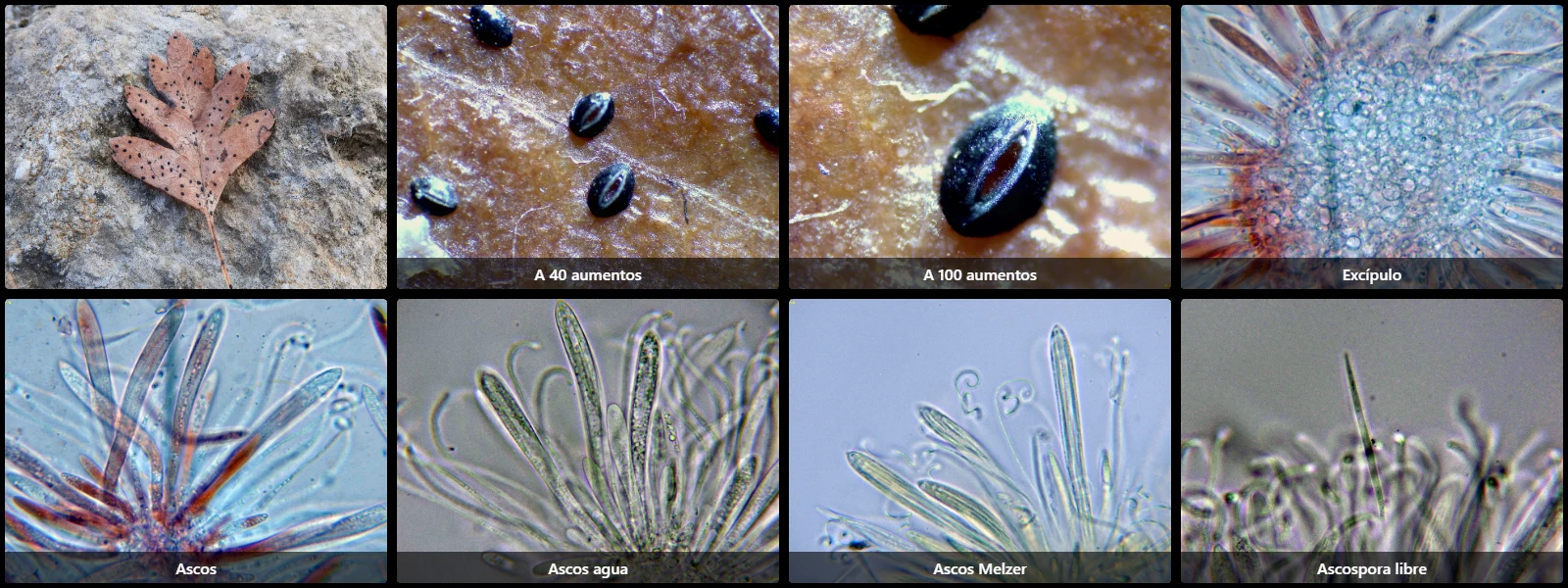
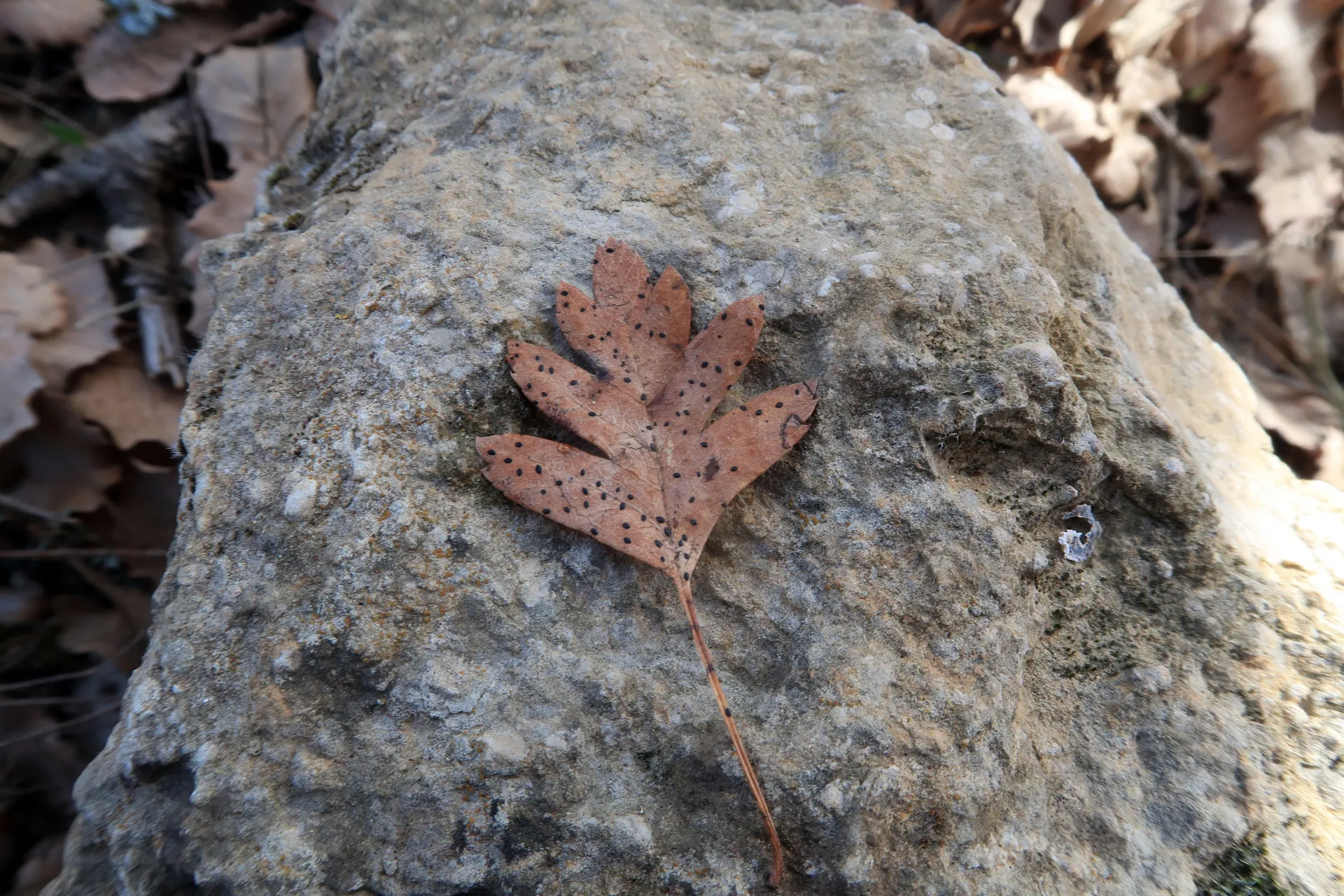
Substrate: Developing on decaying fallen leaves of Crataegus monogyna, producing blackish, coffee-bean-shaped hysterothecial ascomata opening via a longitudinal slit, 0.6-0.9 mm long.
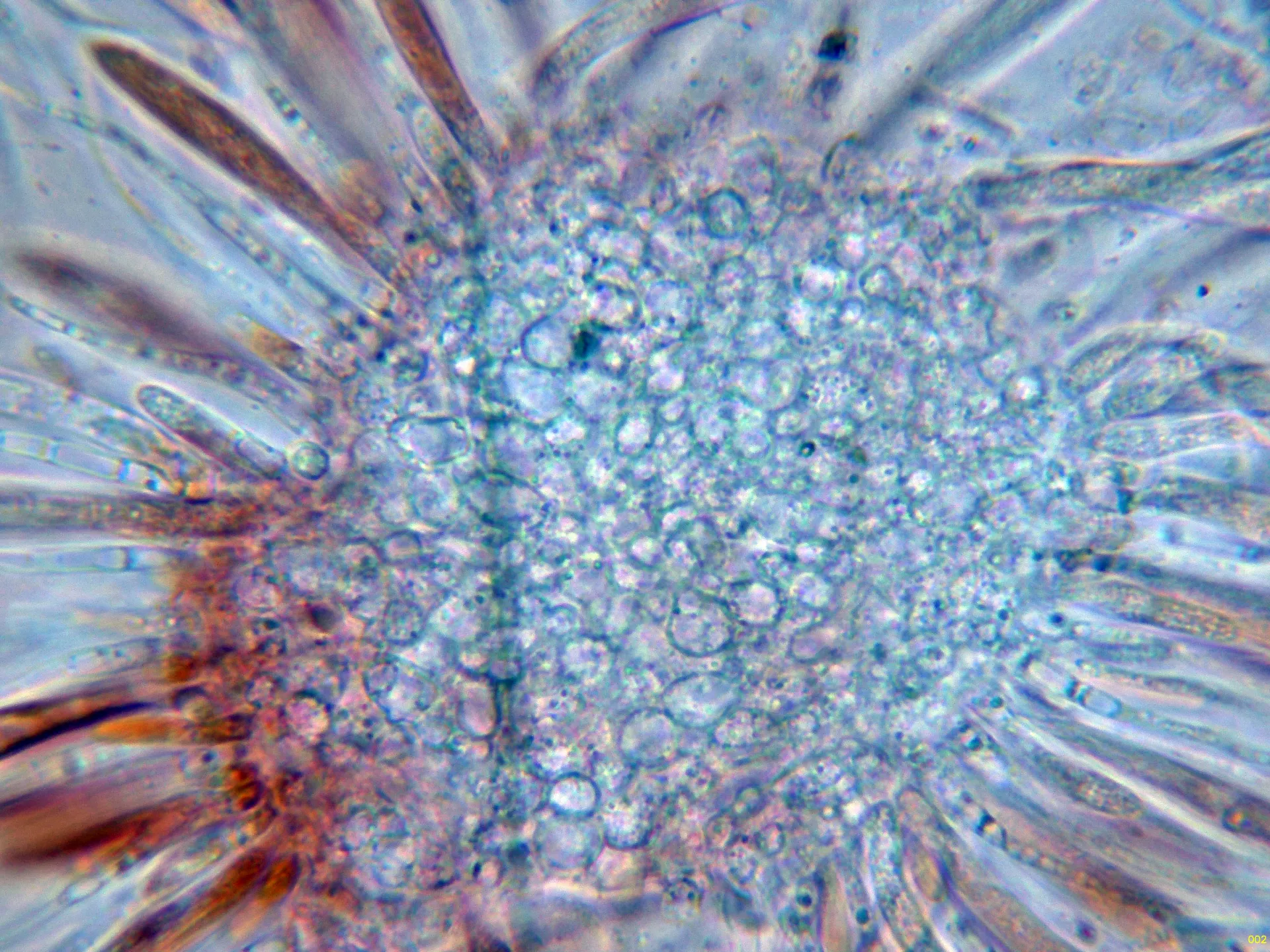
Excipulum: Pseudoparenchymatous in appearance, with globose to slightly angular cells, moderately thick-walled, 6-10 µm in diameter.
Asci: Cylindrical to clavate, 8-spored, 70-105 x 7-9 µm, spores arranged in parallel or slightly interwoven, base simple without croziers, inamyloid in Melzer's reagent.
Paraphyses: Filiform, simple, very slender, maximum width barely exceeding 1 µm, without apical swellings, apices strongly curved and curled.
Ascospores: Filiform, acicular, with one truncate and curved end and the opposite end pointed, 40-53 x 1.4-2.5 µm, containing minute guttules.
Herbarium voucher: JTP2069/24.
Excipulum: Pseudoparenchymatous in appearance, with globose to slightly angular cells, moderately thick-walled, 6-10 µm in diameter.
Asci: Cylindrical to clavate, 8-spored, 70-105 x 7-9 µm, spores arranged in parallel or slightly interwoven, base simple without croziers, inamyloid in Melzer's reagent.
Paraphyses: Filiform, simple, very slender, maximum width barely exceeding 1 µm, without apical swellings, apices strongly curved and curled.
Ascospores: Filiform, acicular, with one truncate and curved end and the opposite end pointed, 40-53 x 1.4-2.5 µm, containing minute guttules.
Herbarium voucher: JTP2069/24.
Geographic references
Map generated from global occurrence data from GBIF. GBIF.
Study measurements
Values in Microns (µm)Macroscopic gallery
1 / 8Lophodermium foliicola - 1 - IMG_7013
Microscopic gallery
1 / 14Lophodermium foliicola - 11 - Excípulo-002