


Lophiotrema rubi
(Fuckel) Y.Zhang ter, C.L.Schoch & K.D.Hyde
Study description
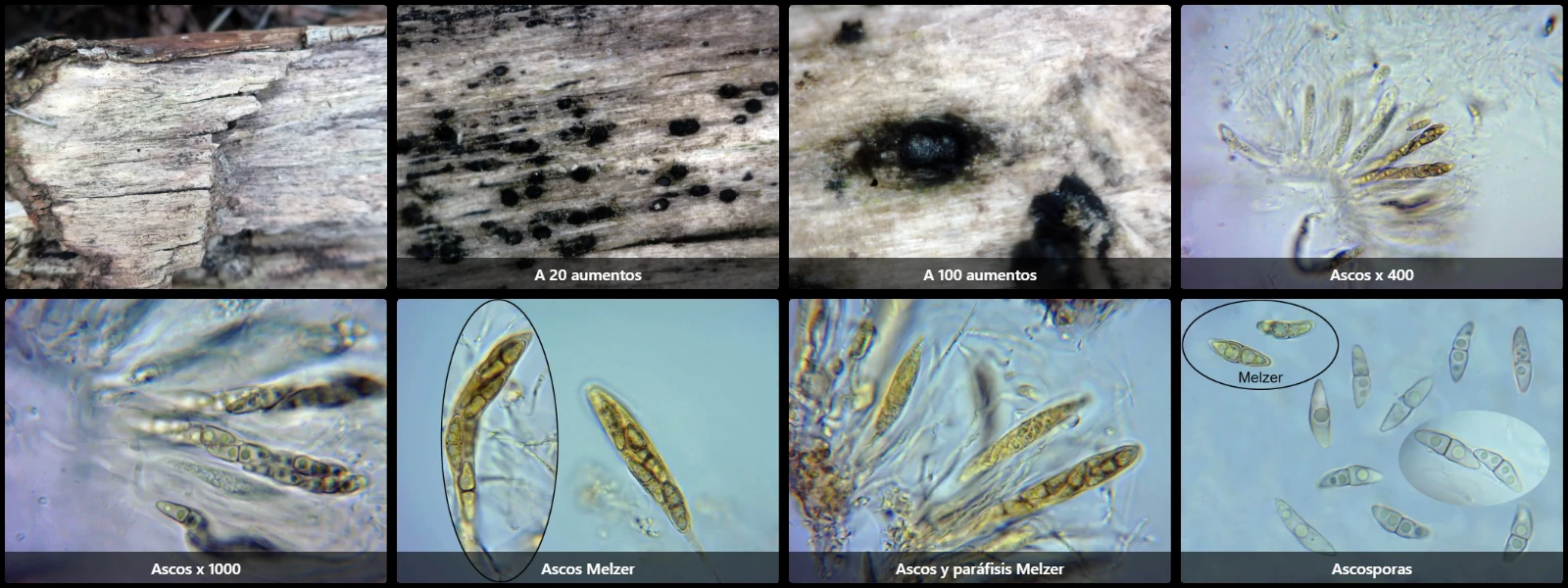
Ascomata: Partially immersed in host wood, appearing as blackish grain-like structures 0.2-0.5 mm in diameter, with an inconspicuous apical ostiole.
Asci: Cylindrical to clavate, 8-spored, biseriate to slightly irregular spore arrangement, 80-110 x 9-14 µm, arising from a simple base without croziers, inamyloid in Melzer's reagent.
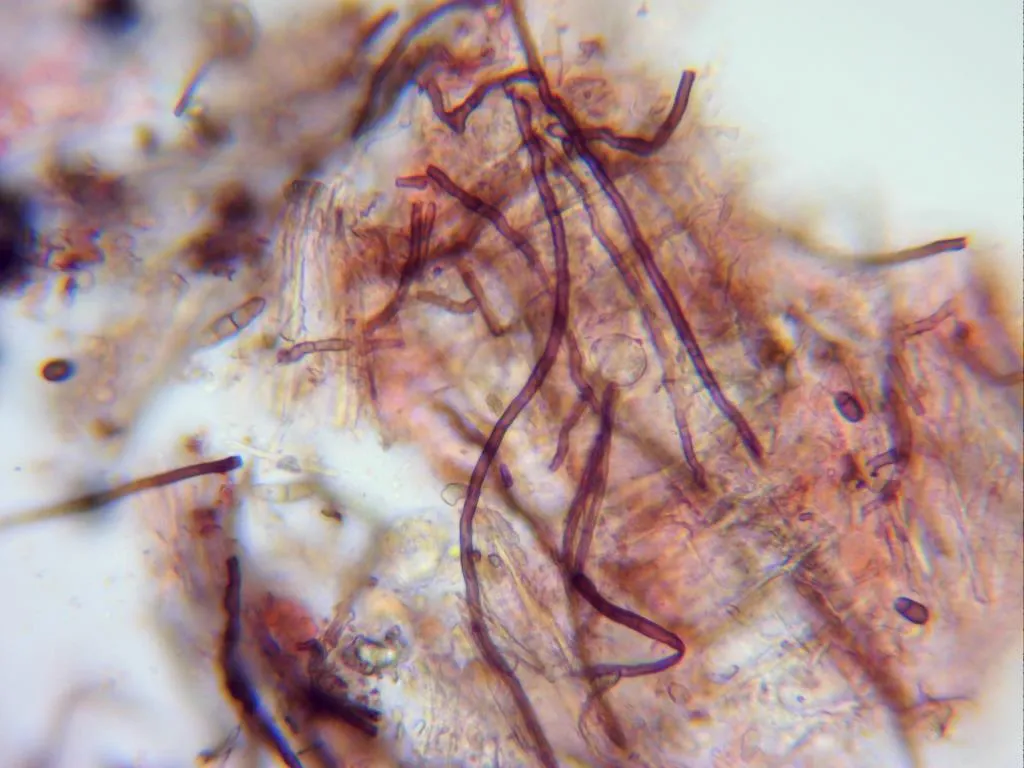
Hamethecium: Abundant pseudoparaphyses, composed of slender, hyaline, septate filamentous hyphae 1.5-2 µm wide, with frequent branching.
Ascospores: Fusiform with slightly pointed ends, smooth and moderately thick-walled, with a median septum dividing the spore into two cells, strongly constricted at the septum, usually with two large guttules per cell, inamyloid in Melzer's.
Asci: Cylindrical to clavate, 8-spored, biseriate to slightly irregular spore arrangement, 80-110 x 9-14 µm, arising from a simple base without croziers, inamyloid in Melzer's reagent.
Hamethecium: Abundant pseudoparaphyses, composed of slender, hyaline, septate filamentous hyphae 1.5-2 µm wide, with frequent branching.
Ascospores: Fusiform with slightly pointed ends, smooth and moderately thick-walled, with a median septum dividing the spore into two cells, strongly constricted at the septum, usually with two large guttules per cell, inamyloid in Melzer's.
Geographic references
Map generated from global occurrence data from GBIF. GBIF.
Study measurements
Values in Microns (µm)Macroscopic gallery
1 / 11Lophiotrema rubi - 1
Microscopic gallery
1 / 16Lophiotrema rubi - 16 - Hifas x 400