


Lichenomphalia velutina
(Quél.) Redhead, Lutzoni, Moncalvo & Vilgalys
Study description
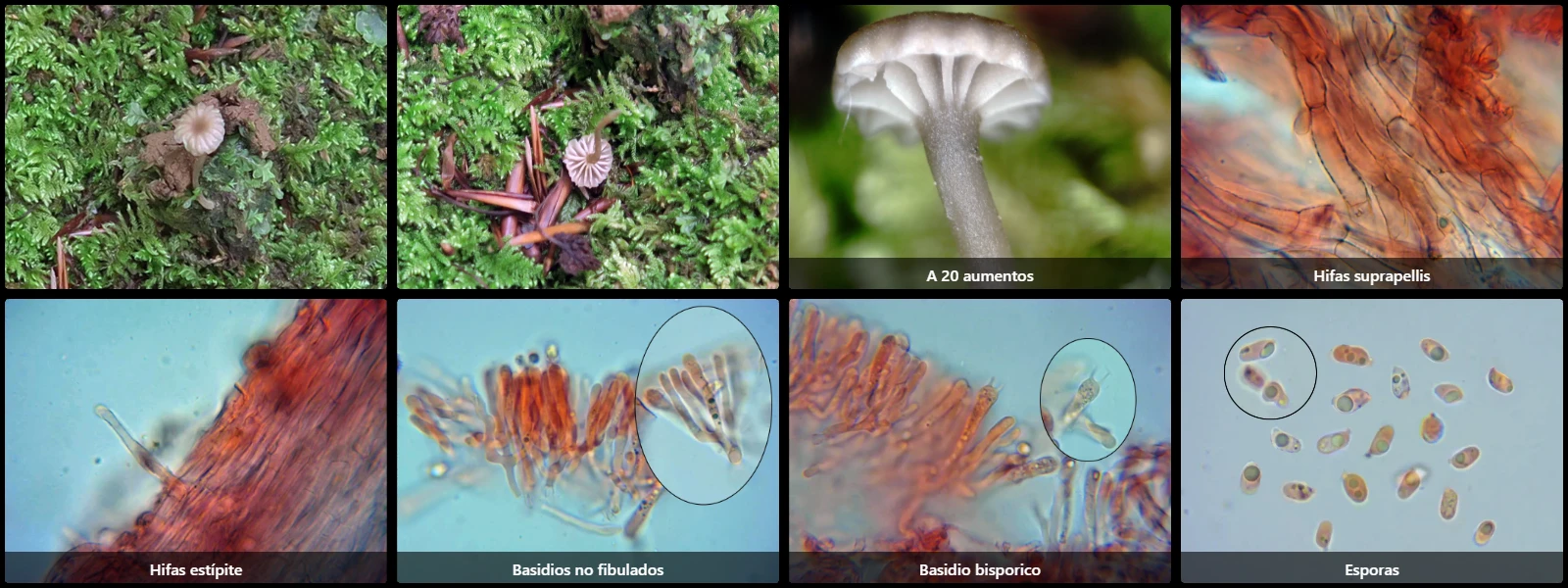
General: Small lichenized agaric growing among bryophytes in symbiosis with green algae, pileus umbilicate, greyish-brown, radially translucent-striate, lamellae decurrent, distant and thick, stipe long, cylindrical, concolorous with pileus.
Pileipellis: Cutis composed of cylindrical hyphae 4-8 µm wide, arranged parallel to slightly interwoven, with greyish-brown encrusting pigment, septate with simple septa (clamp connections absent).
Caulopellis: Stipe surface hyphae projecting outward as slender hair-like elements.
Basidia: Cylindrical, 17-30 x 4-6 µm, base simple, consistently 2-spored (bisporic), unlike other species of the genus.
Spores: Ellipsoid to fusiform, occasional deformed spores present, 6-8 x 3.5-5 µm, with a prominent eccentric apiculus, containing oil droplets, inamyloid in Melzer's reagent.
Pileipellis: Cutis composed of cylindrical hyphae 4-8 µm wide, arranged parallel to slightly interwoven, with greyish-brown encrusting pigment, septate with simple septa (clamp connections absent).
Caulopellis: Stipe surface hyphae projecting outward as slender hair-like elements.
Basidia: Cylindrical, 17-30 x 4-6 µm, base simple, consistently 2-spored (bisporic), unlike other species of the genus.
Spores: Ellipsoid to fusiform, occasional deformed spores present, 6-8 x 3.5-5 µm, with a prominent eccentric apiculus, containing oil droplets, inamyloid in Melzer's reagent.
Geographic references
Map generated from global occurrence data from GBIF. GBIF.
Study measurements
Values in Microns (µm)Macroscopic gallery
1 / 6Lichenomphalia velutina - 1
Microscopic gallery
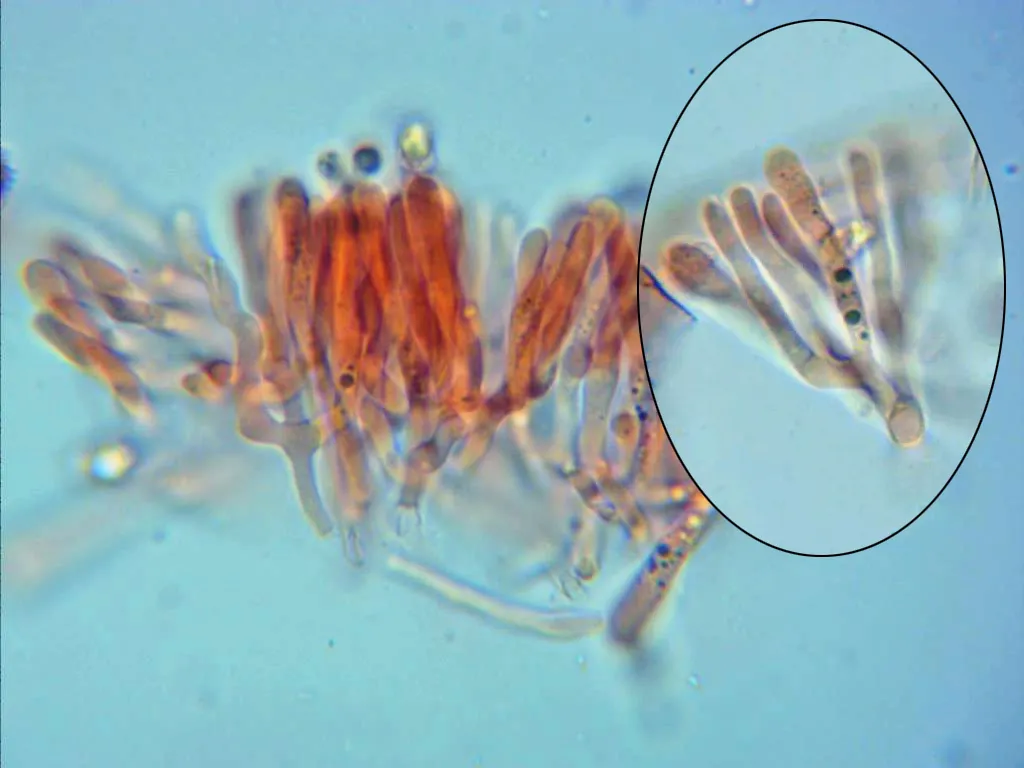
1 / 6Lichenomphalia velutina - 10 - Basidios en candelabro sin fíbulas