


Leucopaxillus phaeopus
(J.Favre & Poluzzi) Bon
Study description
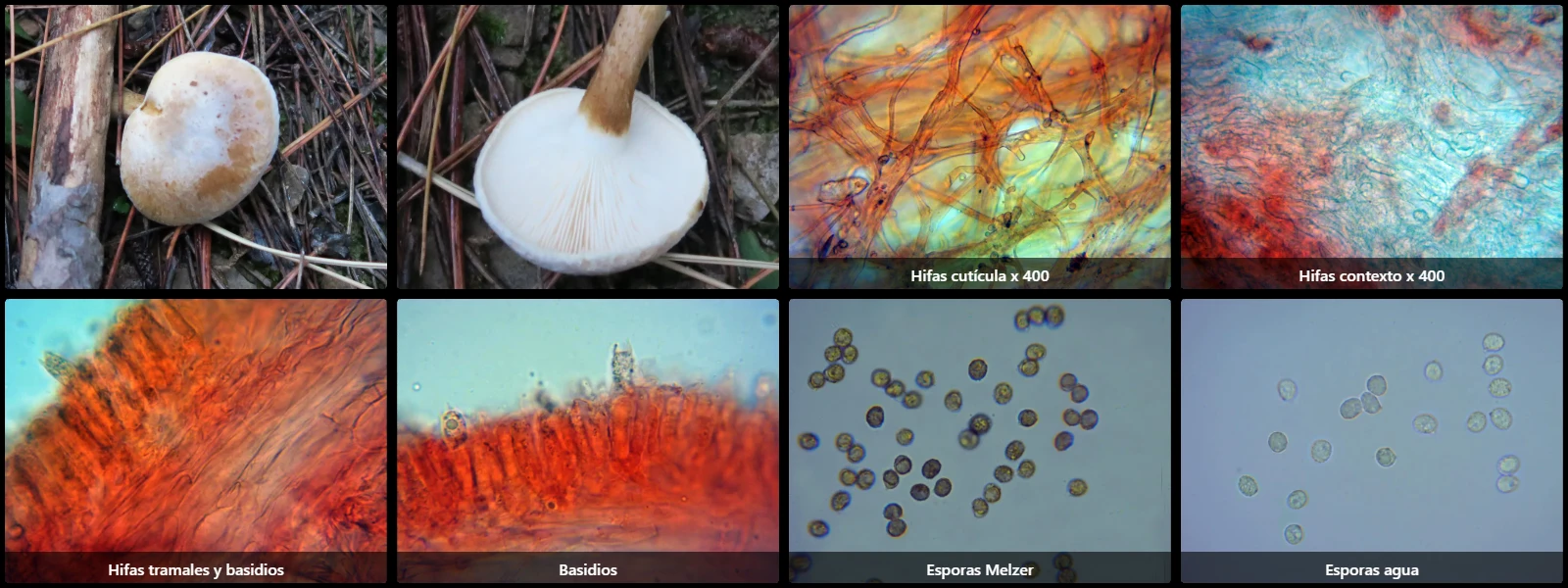
General: Autumnal species associated with conifers, formerly treated as a variety or form of Leucopaxillus gentianeus, distinguished by a dark brown stipe especially in the upper portion, and a raphanoid, slightly acrid, non-bitter taste.
Pileipellis: Cutis composed of cylindrical hyphae 3-7 µm wide, interwoven, with brown intracellular pigment, branched, septate with clamp connections.
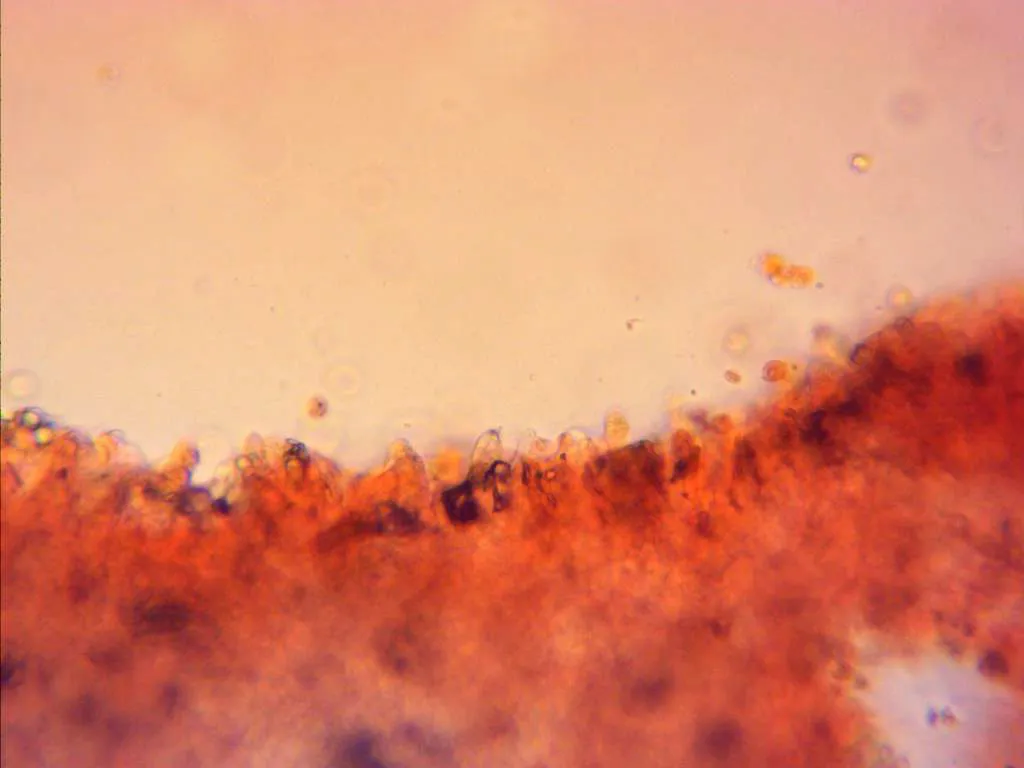
Lamellar edge: Fertile, lacking differentiated cystidia.
Lamellar trama: Regular.
Basidia: Cylindric-clavate, 35-45 x 8-10 µm, with basal clamp connections, 4-spored.
Spores: Subglobose to ellipsoid, thin-walled, delicately verruculose, 5.5-7 x 4.5-6 µm, apiculus minute, containing granular matter, amyloid in Melzer's reagent.
Pileipellis: Cutis composed of cylindrical hyphae 3-7 µm wide, interwoven, with brown intracellular pigment, branched, septate with clamp connections.
Lamellar edge: Fertile, lacking differentiated cystidia.
Lamellar trama: Regular.
Basidia: Cylindric-clavate, 35-45 x 8-10 µm, with basal clamp connections, 4-spored.
Spores: Subglobose to ellipsoid, thin-walled, delicately verruculose, 5.5-7 x 4.5-6 µm, apiculus minute, containing granular matter, amyloid in Melzer's reagent.
Geographic references
Map generated from global occurrence data from GBIF. GBIF.
Study measurements
Values in Microns (µm)Macroscopic gallery
1 / 4Leucopaxillus phaeopus - 1
Microscopic gallery
1 / 11Leucopaxillus phaeopus - 10 - Arista laminar x 400