


Leucopaxillus compactus
(P.Karst.) Neuhoff
Study description
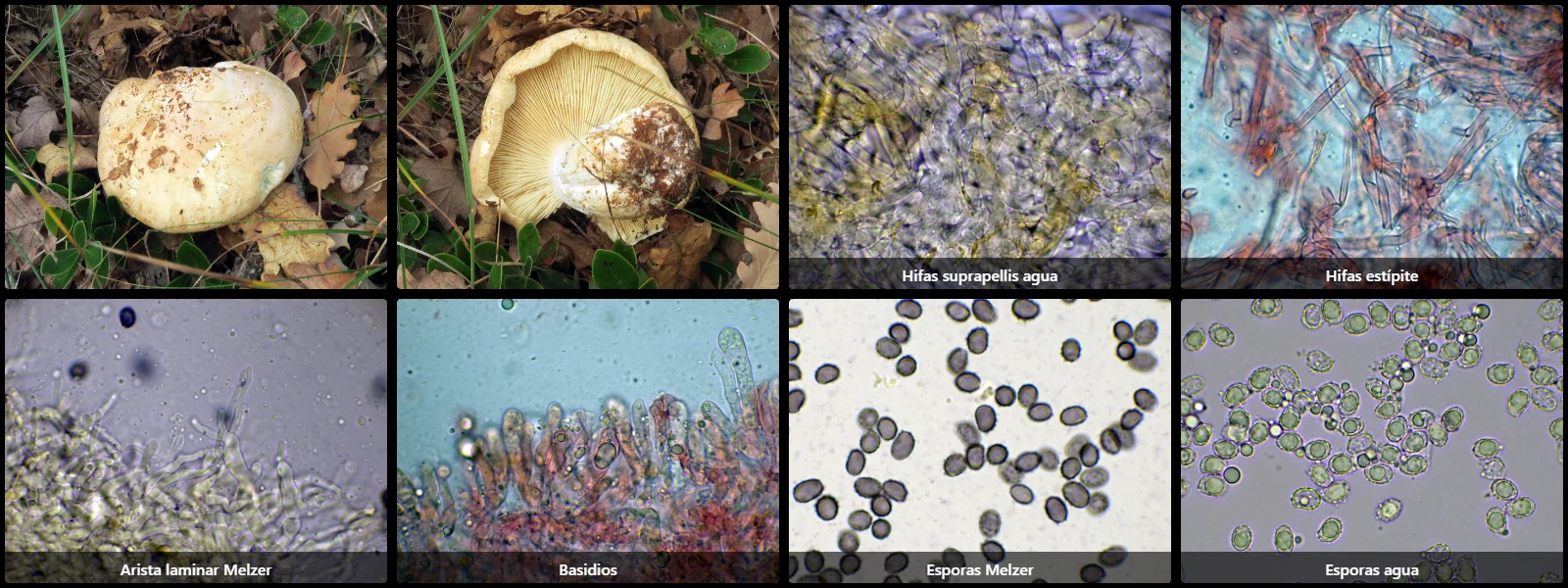
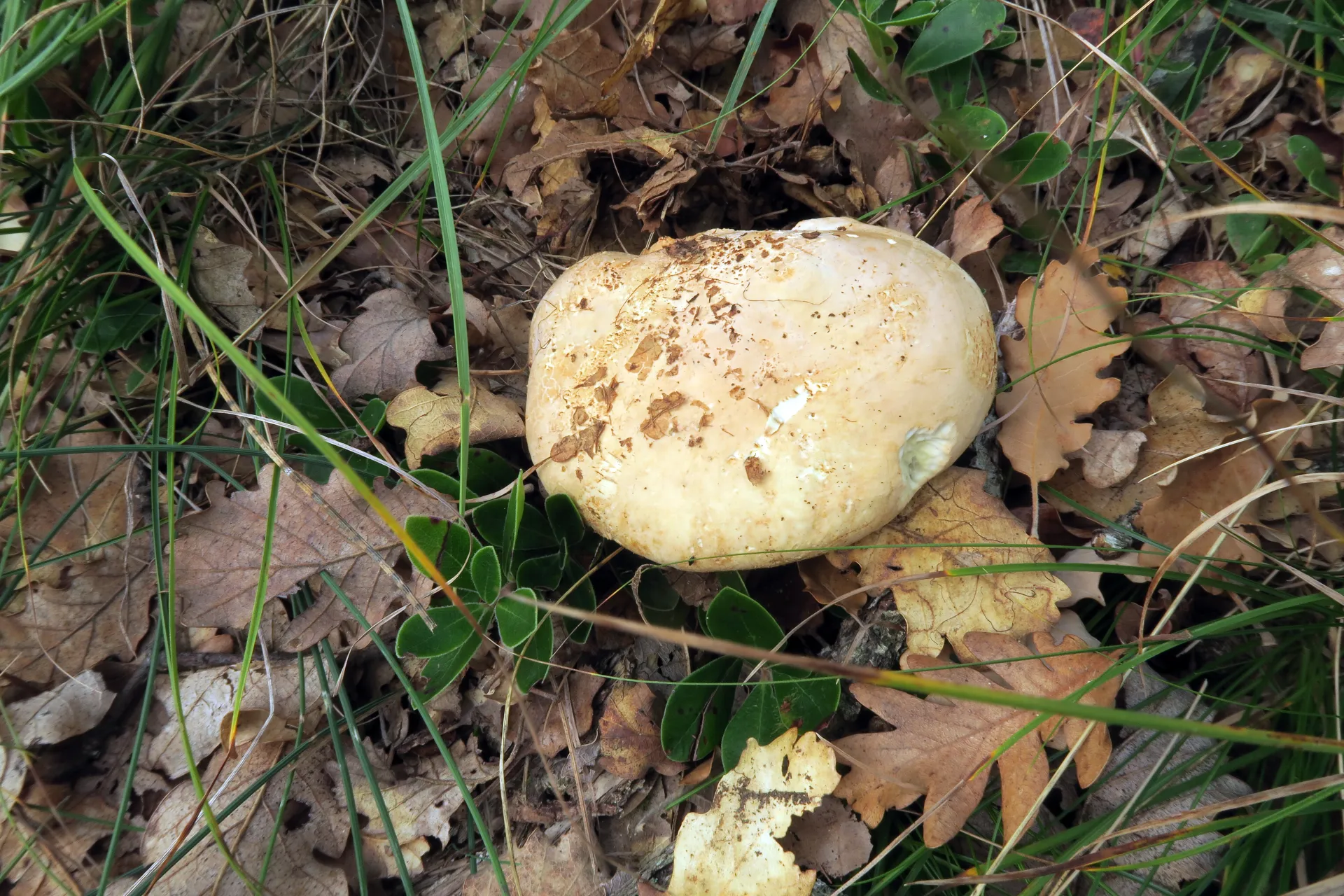
General: Inhabiting broadleaved woodlands (Quercus, Fagus) on calcareous soils, pileus large and fleshy, convex, yellowish-ochre, lamellae concolorous, flesh white, stipe solid and slightly clavate-thickened at the base.
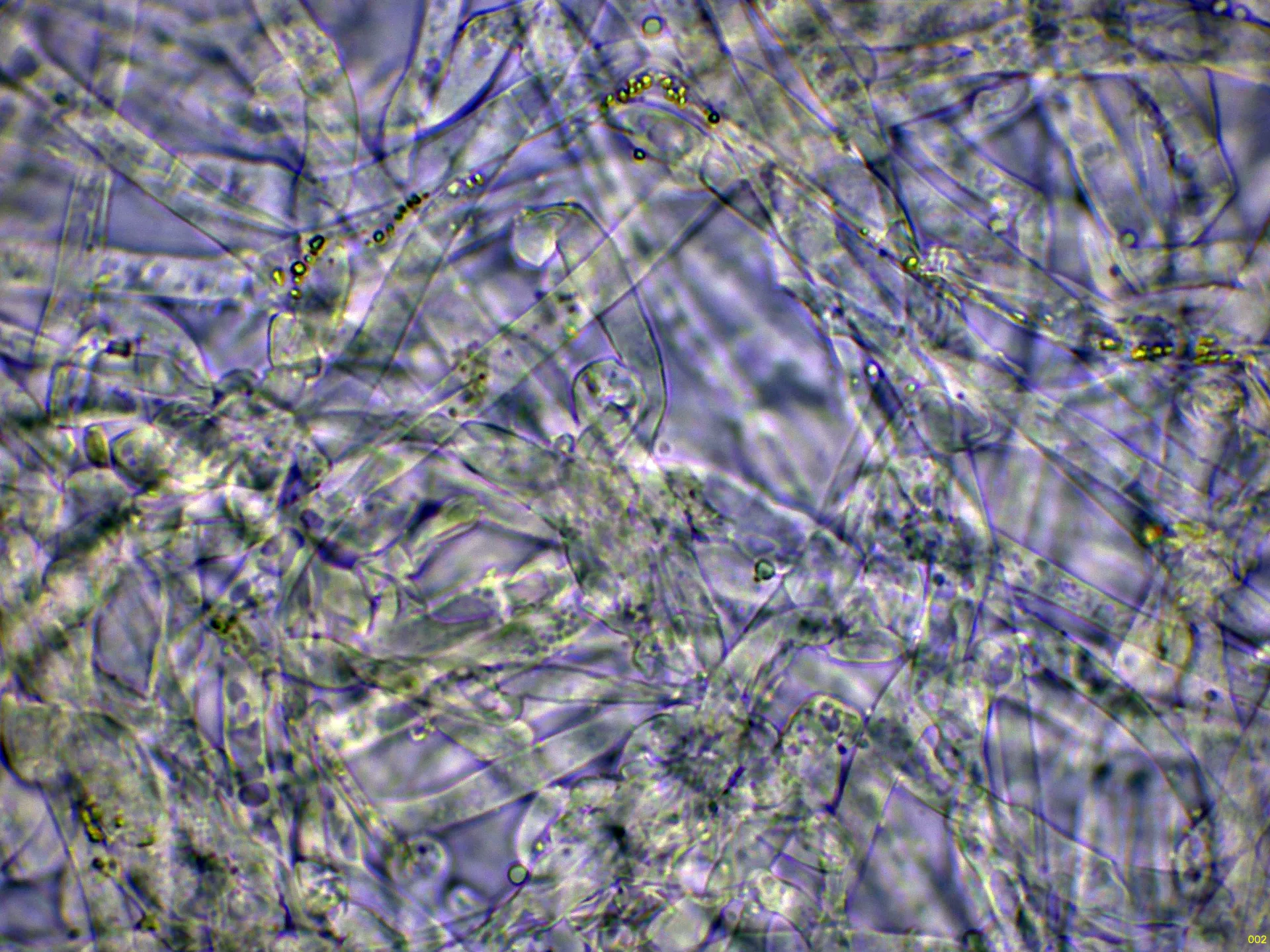
Pileipellis: Composed of filamentous hyphae 2.5-5 µm wide, hyaline or containing pale brown intracellular pigment, densely compacted and irregularly interwoven, branched, septate with clamp connections.
Lamellar edge: Lined with abundant sterile terminal hyphae (cheilocystidia/paracystidia), hyaline, cylindrical to sinuous, nodulose or branched, 25-50 x 3-5 µm.
Basidia: Cylindric-clavate, 26-38 x 6-9 µm, with basal clamp connections, 4-spored.
Spores: Ellipsoid, hyaline, verrucose, 6.5-8 x 4.5-6 µm, with an eccentric apiculus, containing a large oil guttule, amyloid in Melzer's reagent.
Herbarium voucher: JTP2630/25.
Pileipellis: Composed of filamentous hyphae 2.5-5 µm wide, hyaline or containing pale brown intracellular pigment, densely compacted and irregularly interwoven, branched, septate with clamp connections.
Lamellar edge: Lined with abundant sterile terminal hyphae (cheilocystidia/paracystidia), hyaline, cylindrical to sinuous, nodulose or branched, 25-50 x 3-5 µm.
Basidia: Cylindric-clavate, 26-38 x 6-9 µm, with basal clamp connections, 4-spored.
Spores: Ellipsoid, hyaline, verrucose, 6.5-8 x 4.5-6 µm, with an eccentric apiculus, containing a large oil guttule, amyloid in Melzer's reagent.
Herbarium voucher: JTP2630/25.
Geographic references
Map generated from global occurrence data from GBIF. GBIF.
Study measurements
Values in Microns (µm)Macroscopic gallery
1 / 4Leucopaxillus compactus - 1 - IMG_4467
Microscopic gallery
1 / 21Leucopaxillus compactus - 10 - Subpellis agua-002