


Leucogyrophana mollusca
(Fr.) Pouzar
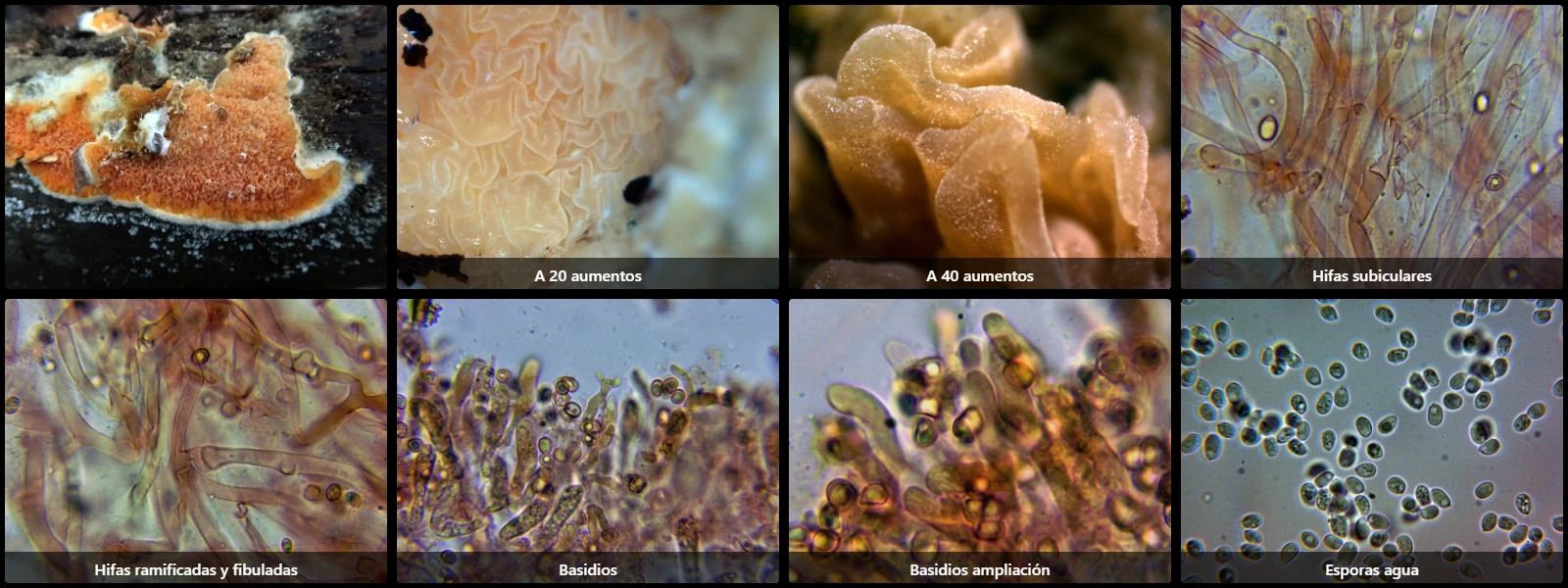
Study description
General: Completely resupinate basidioma developing on decaying conifer wood (especially pine), with a merulioid hymenophore composed of irregular, folded-wrinkled orange ridges and a whitish growing margin.
Hyphal system: Monomitic, composed of smooth, hyaline, thin-walled generative hyphae; subhymenial hyphae 3-4 µm wide; subicular hyphae 4-6 µm wide, interwoven, branched, separated by gelatinization, septate with clamp connections.
Cystidia: Absent.
Basidia: Clavate, 18-25 x 5-6 µm, with basal clamp connections, 4-spored.
Spores: Ellipsoid, smooth, hyaline, moderately thick-walled, 5-6.5 x 3.5-4.5 µm, with an eccentric apiculus, granular content, dextrinoid in Melzer's reagent.
Notes: Closely allied to Leucogyrophana pseudomollusca, which differs by larger basidia (30-40 µm long) and larger spores (6-9 µm long).
Hyphal system: Monomitic, composed of smooth, hyaline, thin-walled generative hyphae; subhymenial hyphae 3-4 µm wide; subicular hyphae 4-6 µm wide, interwoven, branched, separated by gelatinization, septate with clamp connections.
Cystidia: Absent.
Basidia: Clavate, 18-25 x 5-6 µm, with basal clamp connections, 4-spored.
Spores: Ellipsoid, smooth, hyaline, moderately thick-walled, 5-6.5 x 3.5-4.5 µm, with an eccentric apiculus, granular content, dextrinoid in Melzer's reagent.
Notes: Closely allied to Leucogyrophana pseudomollusca, which differs by larger basidia (30-40 µm long) and larger spores (6-9 µm long).
Geographic references
Map generated from global occurrence data from GBIF. GBIF.
Study measurements
Values in Microns (µm)Macroscopic gallery
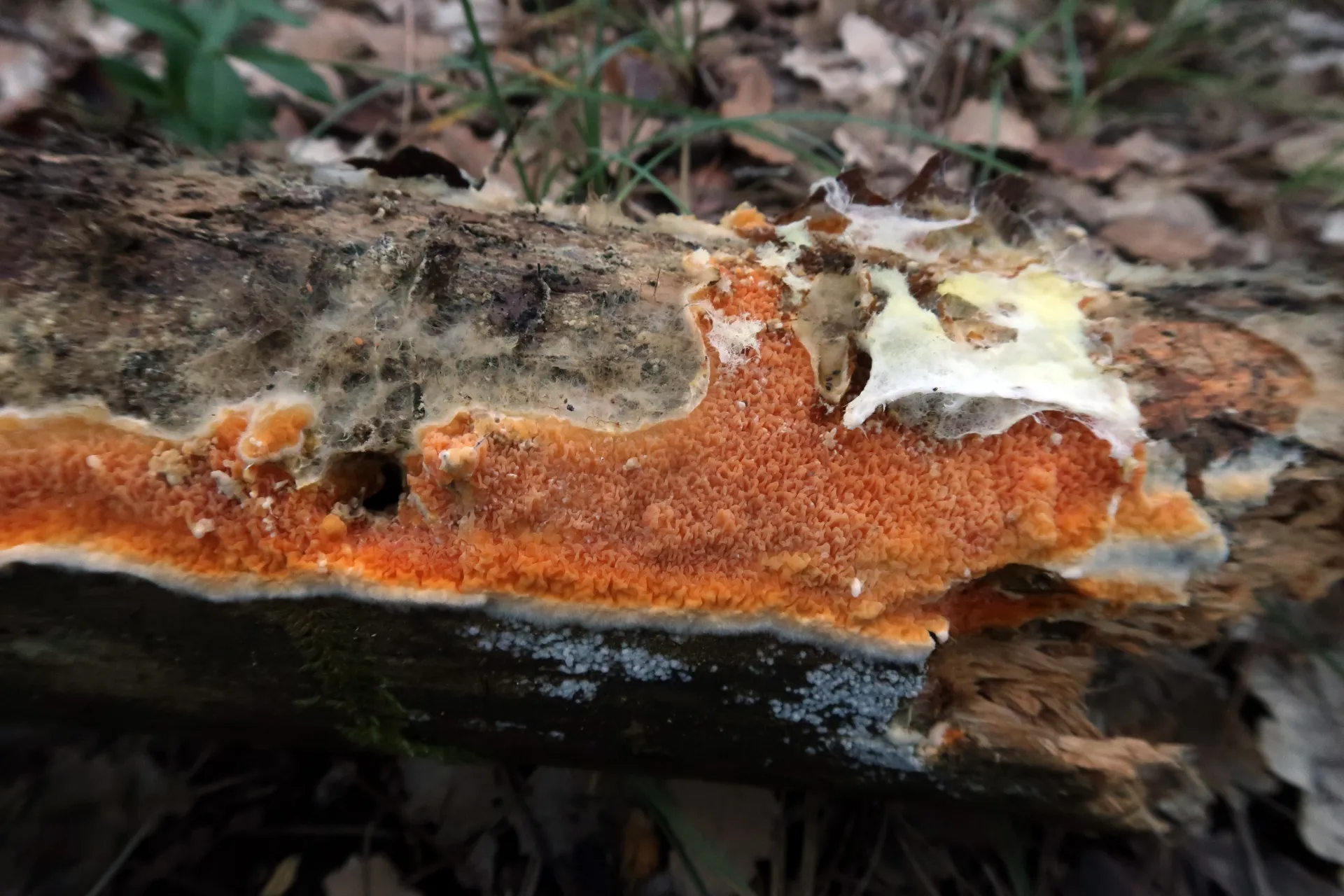
1 / 10Leucogyrophana mollusca - 1 - IMG_8154
Microscopic gallery
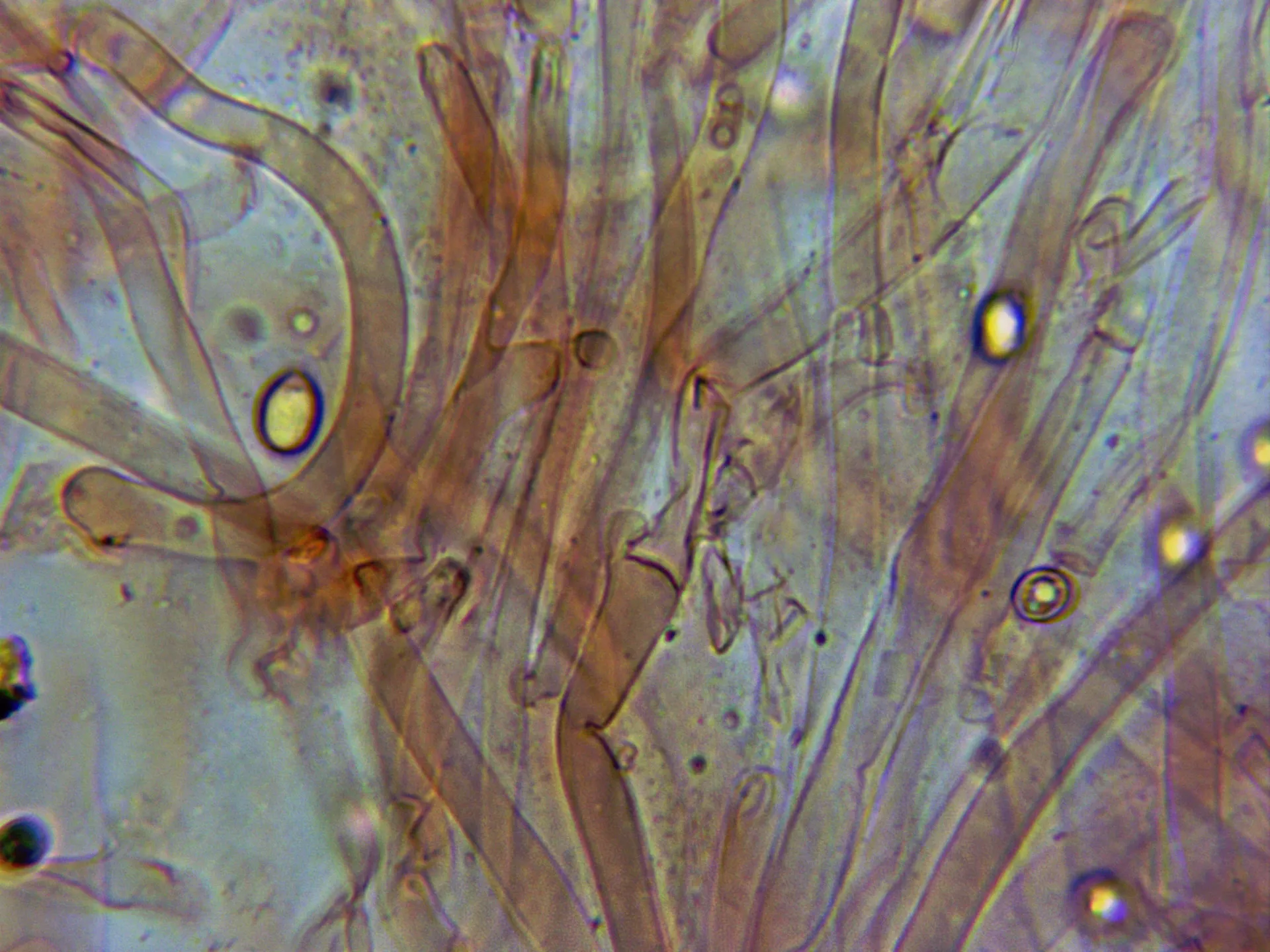
1 / 12Leucogyrophana mollusca - 10 - Hifas contexto