


Leucocoprinus cretaceus
(Bull.) Locq.
Study description
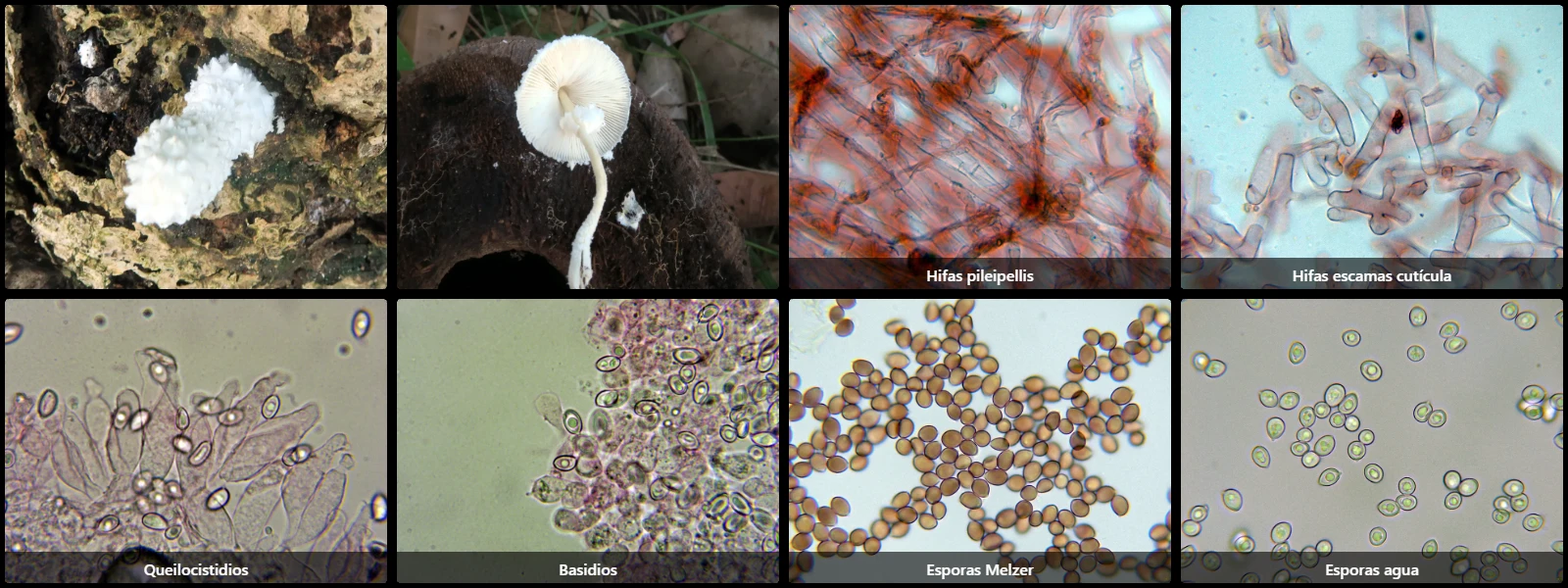
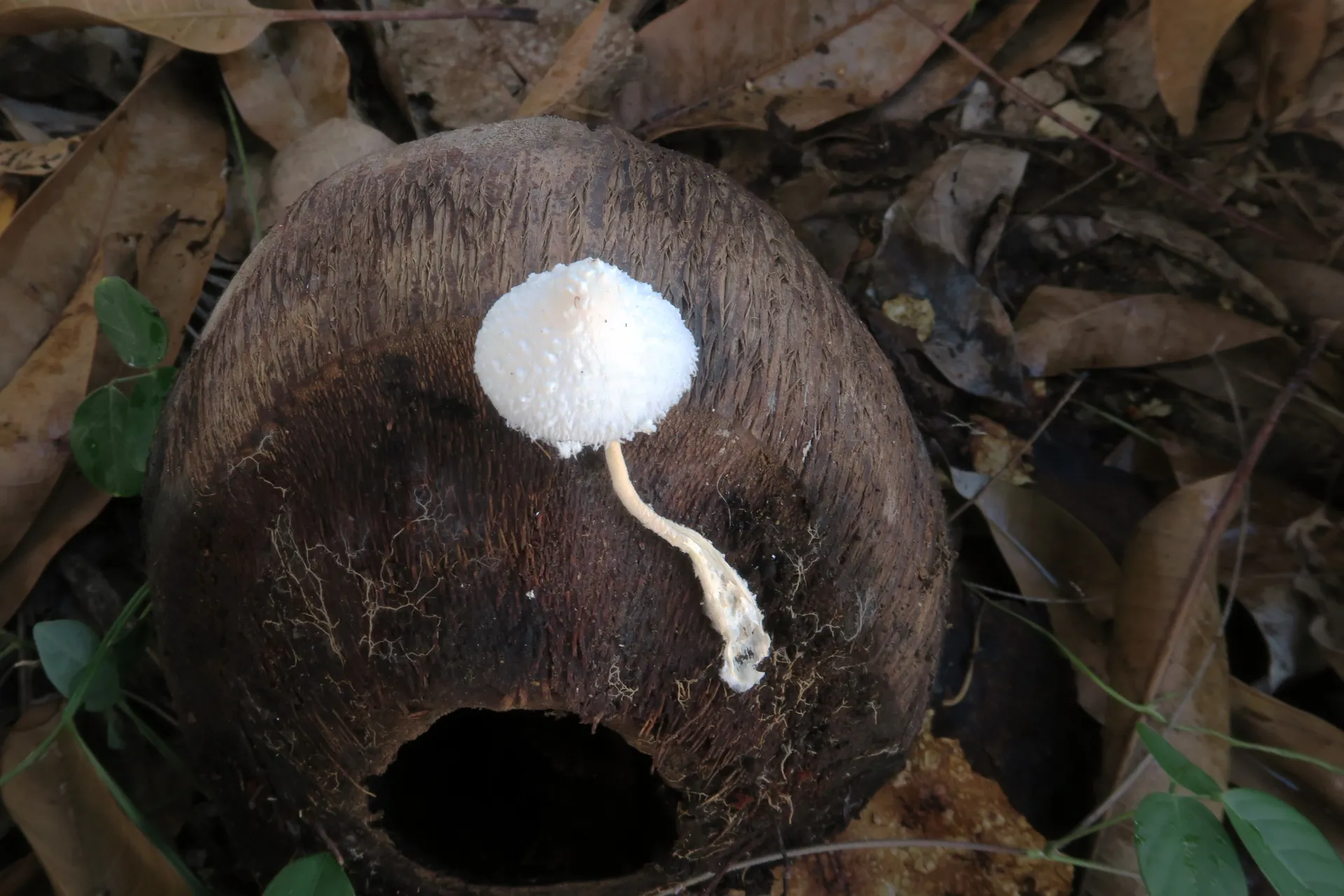
General: Developing on rich organic debris, compost, and wood mulch (even observed fruiting on discarded coconut husks), with a pure white pileus densely covered with white chalky, granular-floccose scales that detach easily, a membranous ring on the stipe, and a granular-scaly stipe surface.
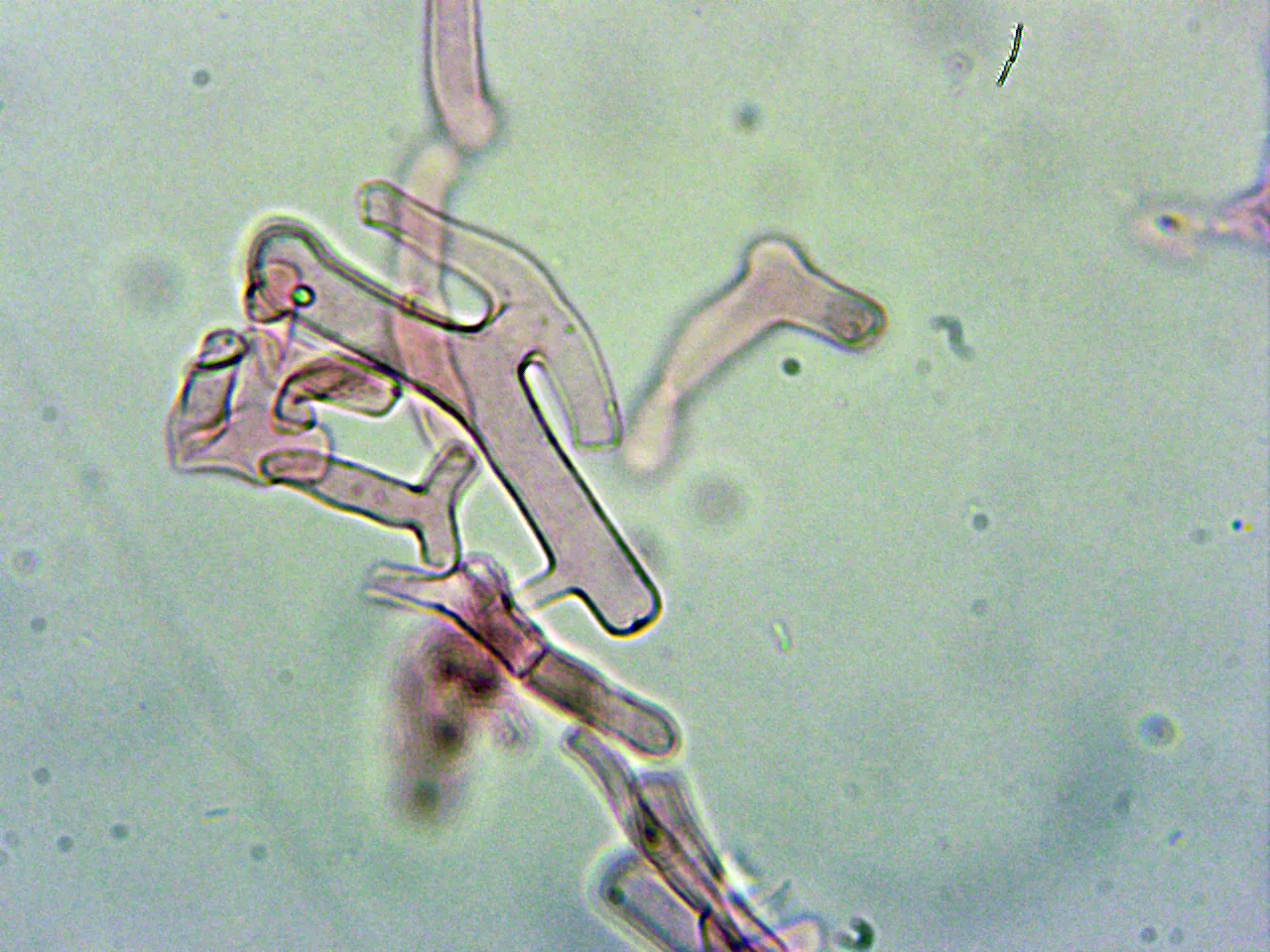
Pileipellis: Composed of hyaline interwoven hyphae 5-7 µm wide, overlain by hyphae that fragment into puzzle- or letter-like pieces, 5-10 µm wide, with moderately thickened walls.
Cheilocystidia: Abundant, subcylindrical to fusiform, some subcapitate, 40-75 x 8-15 µm.
Pleurocystidia: Absent.
Basidia: Clavate, 18-28 x 8-12 µm, base simple (clampless), 4-spored.
Spores: Ellipsoid to subamygdaliform, hyaline, smooth, thick-walled, 8-10 x 6-7 µm, with an eccentric apiculus and a small indistinct germ pore, containing a large oil guttule, dextrinoid in Melzer's reagent.
Herbarium voucher: JTP2284/24.
Pileipellis: Composed of hyaline interwoven hyphae 5-7 µm wide, overlain by hyphae that fragment into puzzle- or letter-like pieces, 5-10 µm wide, with moderately thickened walls.
Cheilocystidia: Abundant, subcylindrical to fusiform, some subcapitate, 40-75 x 8-15 µm.
Pleurocystidia: Absent.
Basidia: Clavate, 18-28 x 8-12 µm, base simple (clampless), 4-spored.
Spores: Ellipsoid to subamygdaliform, hyaline, smooth, thick-walled, 8-10 x 6-7 µm, with an eccentric apiculus and a small indistinct germ pore, containing a large oil guttule, dextrinoid in Melzer's reagent.
Herbarium voucher: JTP2284/24.
Geographic references
Map generated from global occurrence data from GBIF. GBIF.
Study measurements
Values in Microns (µm)Macroscopic gallery
1 / 6Leucocoprinus cretaceus - 1 - IMG_1980
Microscopic gallery
1 / 23Leucocoprinus cretaceus - 10 - Hifas velo pileo 3