


Leucocoprinus cepistipes
(Sowerby) Pat.
Study description
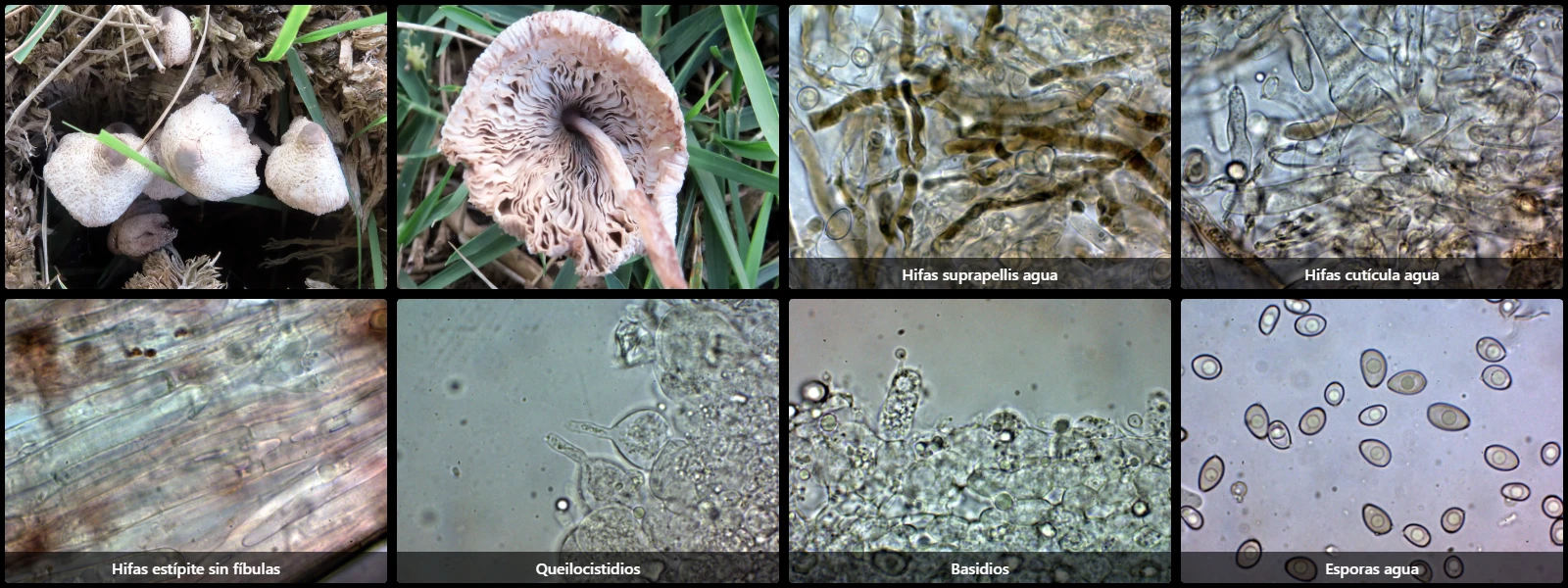
General: Occurring on decaying woodchips, compost, rich garden soils, or plant pots, pileus with a white background and brownish disc covered with small brownish scales, stipe with a fugacious ring and an enlarged, non-bulbous base.
Pileipellis: Cutis composed of filamentous, densely interwoven hyphae 3-5 µm wide, hyaline except in the scales which contain dark brown intracellular pigment; terminal elements cylindrical to subfusiform, up to 100 x 5-7.5 µm.
Cheilocystidia: Abundant, lageniform, often with an elongated neck, hyaline, thin-walled, 40-85 x 8-20 µm.
Pleurocystidia: Absent.
Basidia: Clavate, 18-35 x 9-12 µm, base simple, predominantly 4-spored.
Spores: Ellipsoid, smooth, thick-walled, 7-13 x 5-7.5 µm, with an eccentric apiculus and a small apical germ pore, guttulate, dextrinoid in Melzer's reagent.
Pileipellis: Cutis composed of filamentous, densely interwoven hyphae 3-5 µm wide, hyaline except in the scales which contain dark brown intracellular pigment; terminal elements cylindrical to subfusiform, up to 100 x 5-7.5 µm.
Cheilocystidia: Abundant, lageniform, often with an elongated neck, hyaline, thin-walled, 40-85 x 8-20 µm.
Pleurocystidia: Absent.
Basidia: Clavate, 18-35 x 9-12 µm, base simple, predominantly 4-spored.
Spores: Ellipsoid, smooth, thick-walled, 7-13 x 5-7.5 µm, with an eccentric apiculus and a small apical germ pore, guttulate, dextrinoid in Melzer's reagent.
Geographic references
Map generated from global occurrence data from GBIF. GBIF.
Study measurements
Values in Microns (µm)Macroscopic gallery
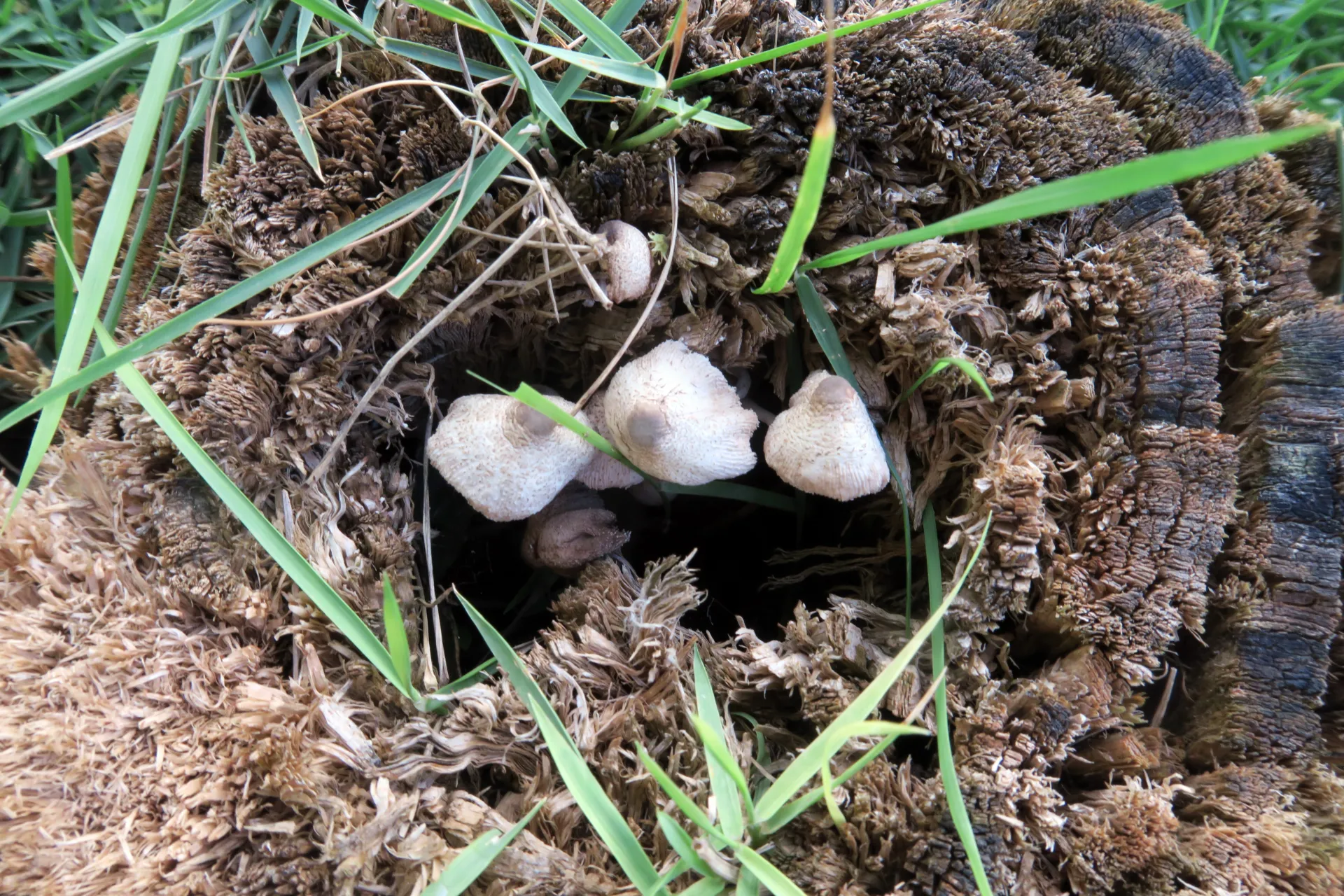
1 / 10Leucocoprinus cepistipes - 1 - IMG_1712
Microscopic gallery
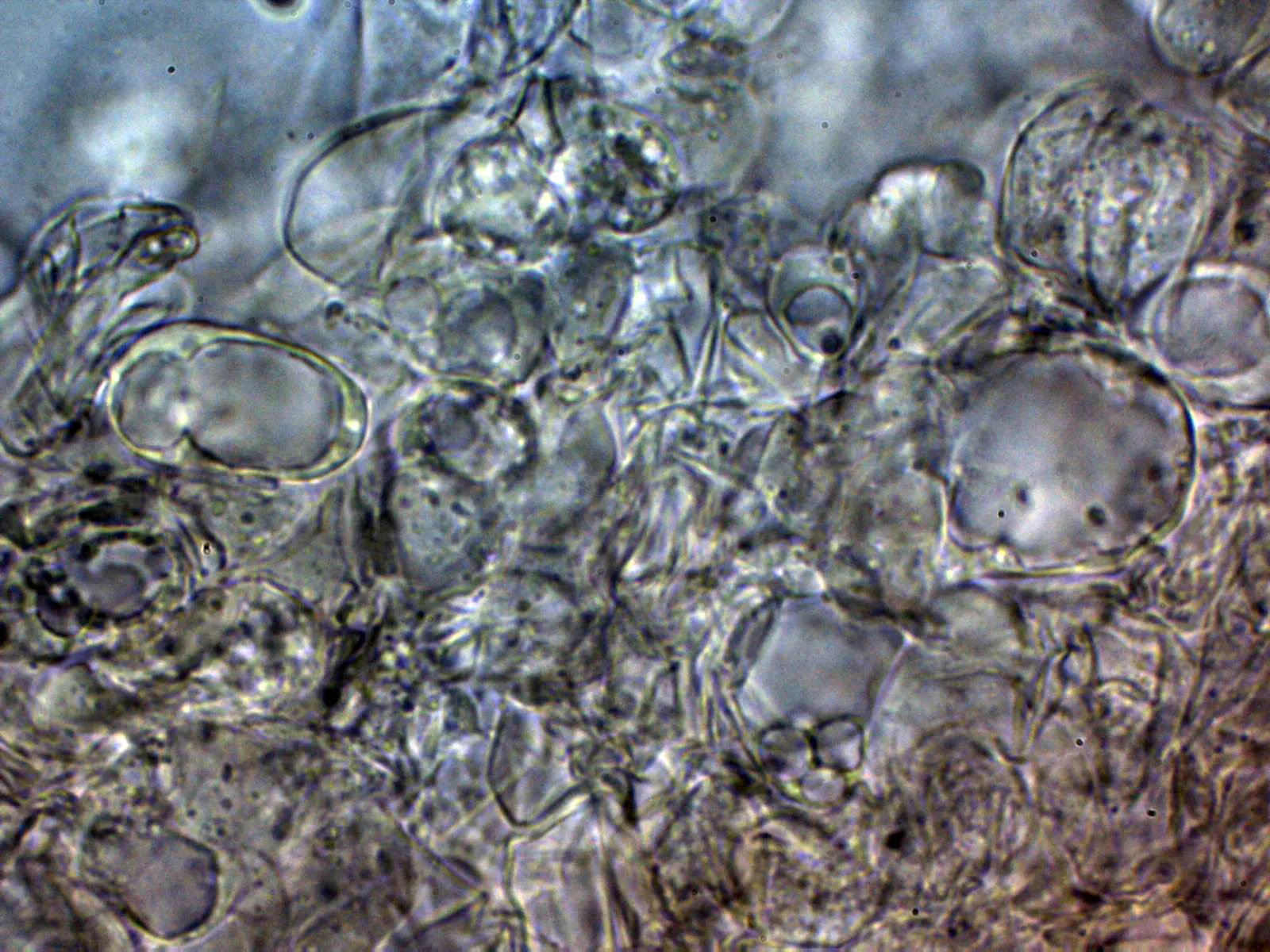
1 / 29Leucocoprinus cepistipes - 13 - Suprapellis agua 1