


Leucoagaricus cinereolilacinus
(Barbier) Bon & Boiffard
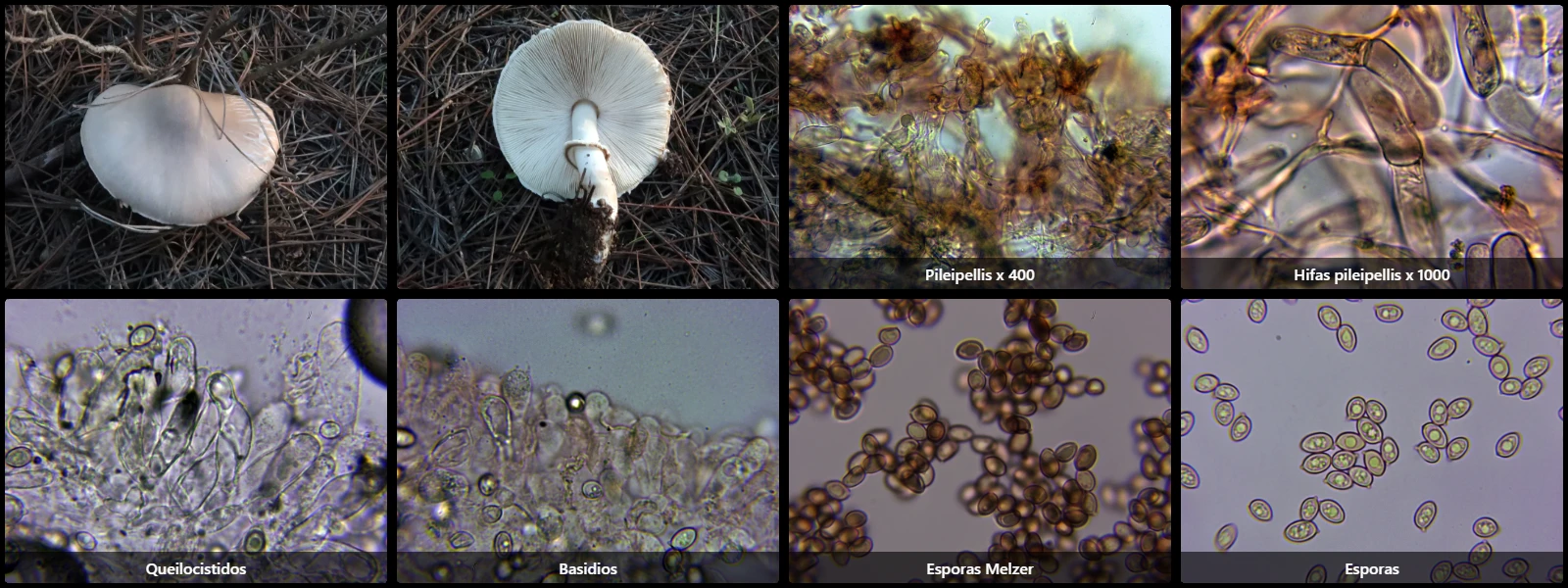
Study description
General: Autumnal species fruiting on compost, rubble, or decaying leaf litter, pileus with grey and lilac-violaceous shades, with a membranous ring on the upper stipe, indistinct odor and taste, and white spore print.
Pileipellis: Composed of filamentous cylindrical hyphae 4-8 µm wide, slightly interwoven, with greyish-brown intracellular pigment, terminal elements up to 120 x 8-14 µm, septate with simple septa.
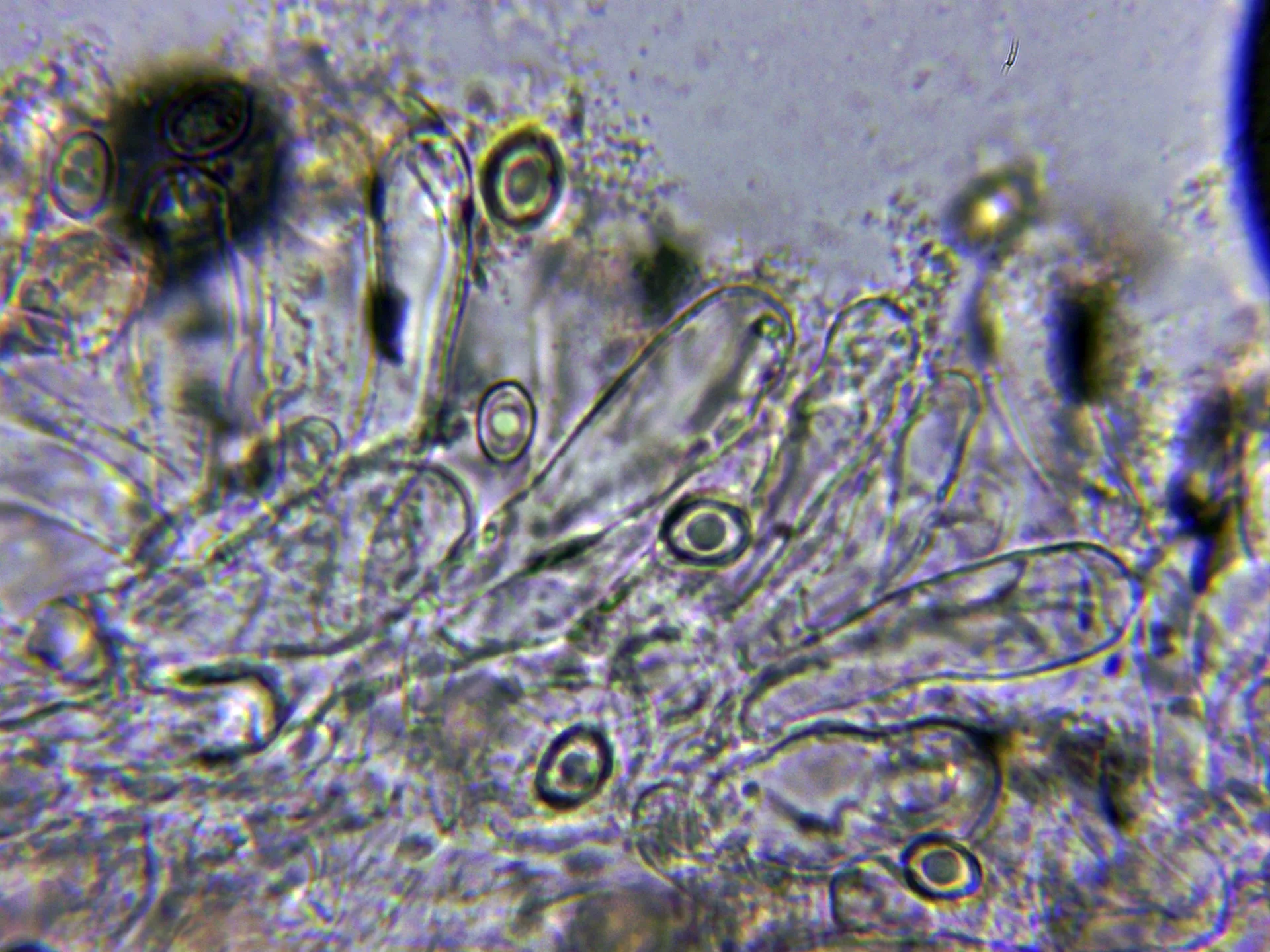
Cheilocystidia: Polymorphous, very abundant, hyaline, mostly cylindrical to clavate, utriform or ventricose, 30-55 x 8-15 µm.
Pleurocystidia: Absent.
Basidia: Clavate, hyaline, 20-30 x 8-10 µm, base simple, 4-spored.
Spores: Ellipsoid to slightly amygdaliform, smooth, thick-walled, 8-11 x 5-6.5 µm, with a hyaline eccentric apiculus, guttulate, distinctly dextrinoid in Melzer's reagent.
Pileipellis: Composed of filamentous cylindrical hyphae 4-8 µm wide, slightly interwoven, with greyish-brown intracellular pigment, terminal elements up to 120 x 8-14 µm, septate with simple septa.
Cheilocystidia: Polymorphous, very abundant, hyaline, mostly cylindrical to clavate, utriform or ventricose, 30-55 x 8-15 µm.
Pleurocystidia: Absent.
Basidia: Clavate, hyaline, 20-30 x 8-10 µm, base simple, 4-spored.
Spores: Ellipsoid to slightly amygdaliform, smooth, thick-walled, 8-11 x 5-6.5 µm, with a hyaline eccentric apiculus, guttulate, distinctly dextrinoid in Melzer's reagent.
Geographic references
Map generated from global occurrence data from GBIF. GBIF.
Study measurements
Values in Microns (µm)Macroscopic gallery
1 / 2Leucoagaricus cinereolilacinus - 1
Microscopic gallery
1 / 13Leucoagaricus cinereolilacinus - 10 - Queilocistidios