


Lepista irinoides
Bohus
Study description
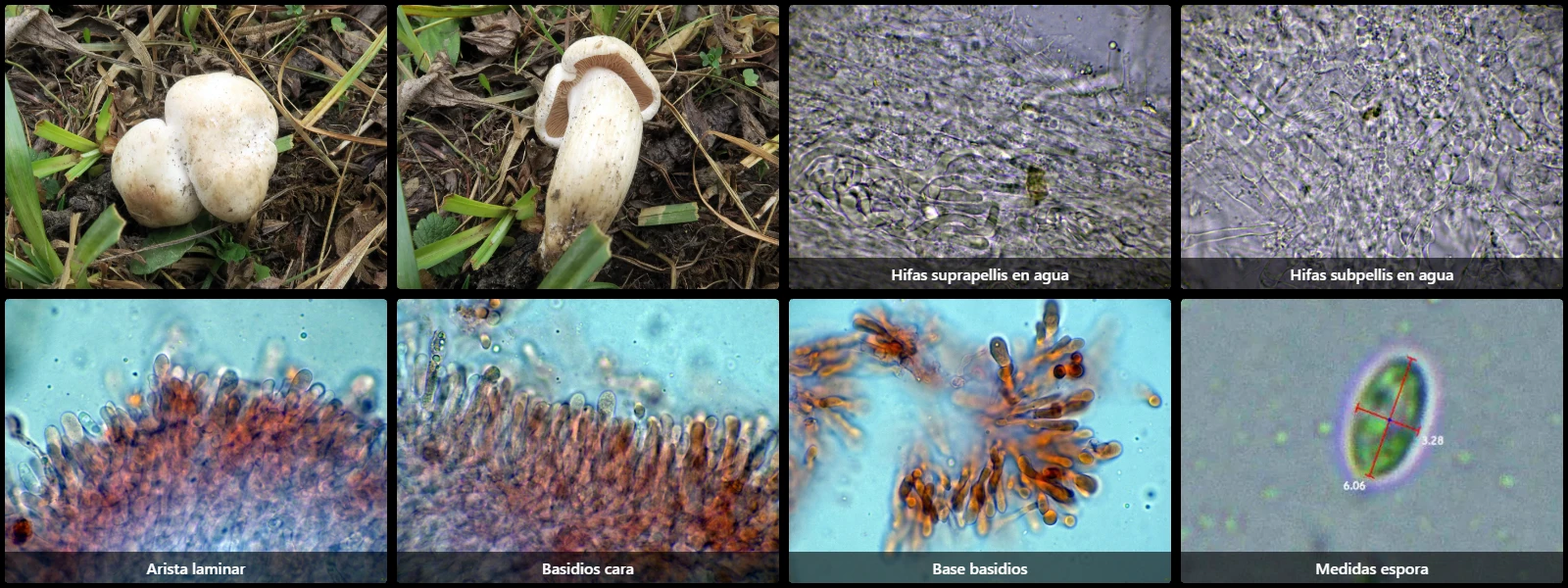
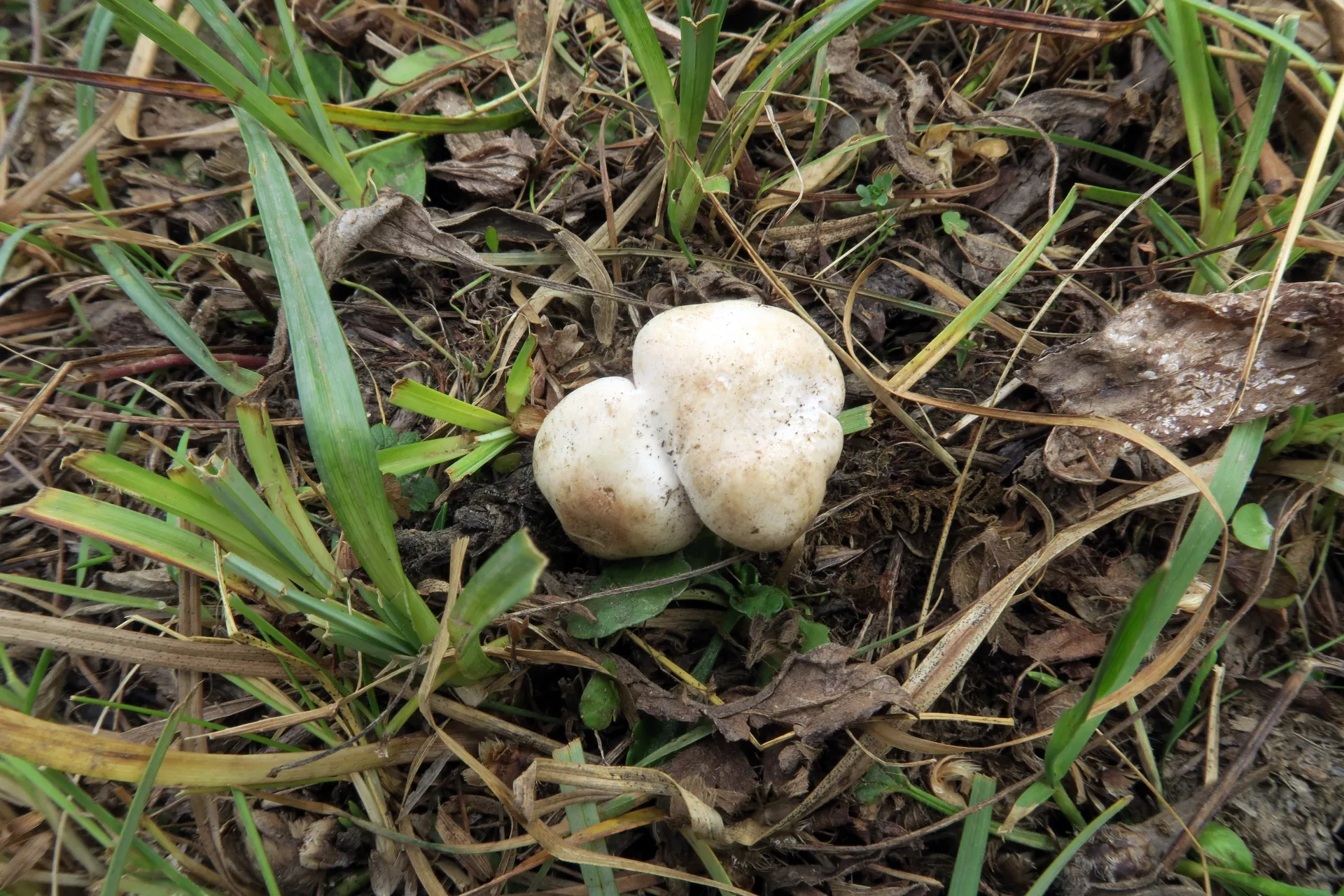
General: An uncommon species of grassy pastures, closely resembling Lepista irina, with a very pale cream convex pileus, and a robust, solid stipe paler than the pileus with longitudinal fibrils.
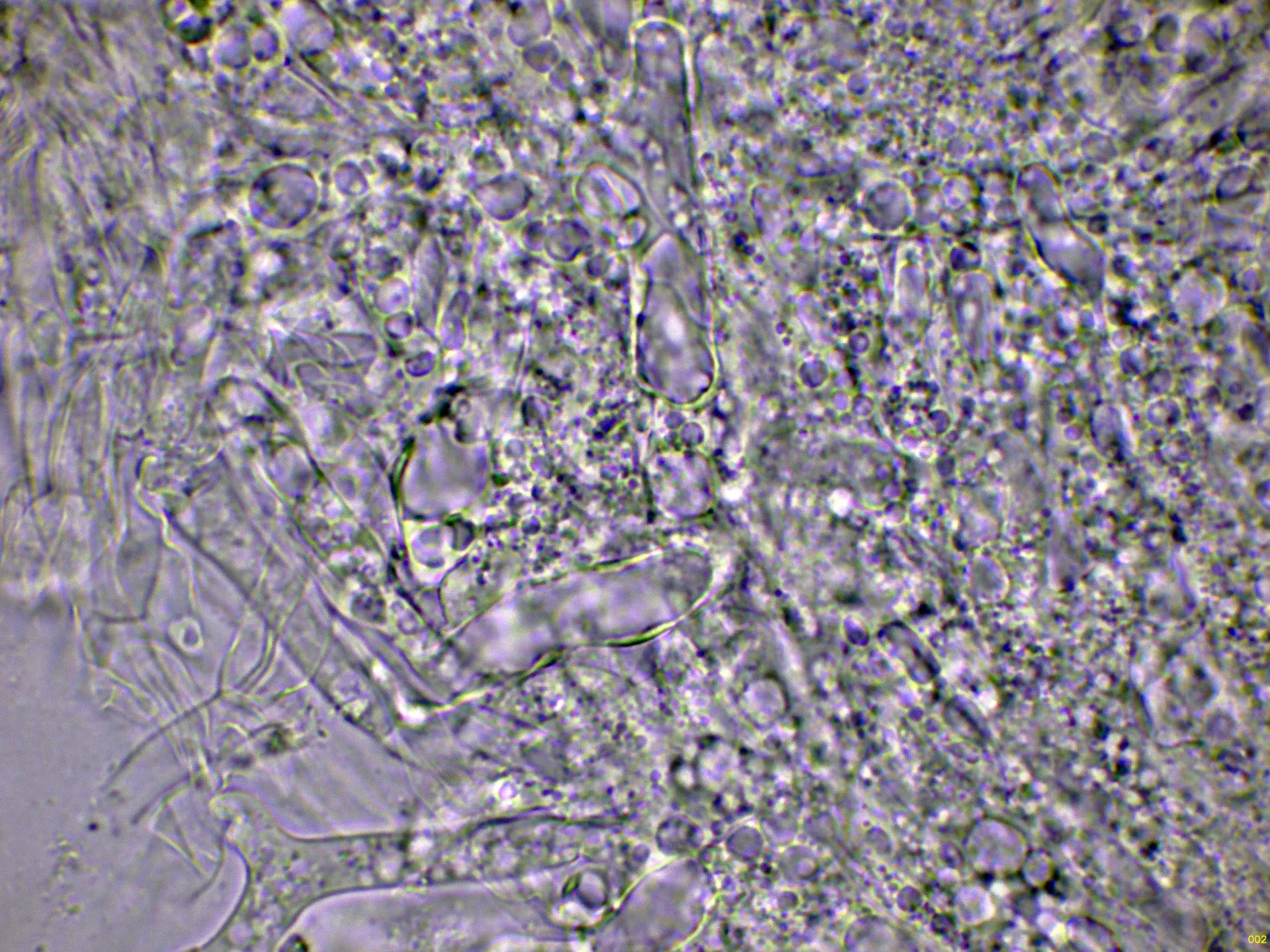
Pileipellis: Filamentous cutis formed by cylindrical hyphae 3-7 µm wide, arranged more or less parallel to slightly interwoven, hyaline, septate with clamp connections.
Lamellar edge: Fertile, lacking differentiated cheilocystidia.
Basidia: Cylindric-clavate, 20-30 x 4-6.5 µm, with basal clamp connections, 4-spored.
Spores: Not obtained in this study; literature describes them as ellipsoid, hyaline, minutely verruculose, 5-7.5 x 3.5-4.2 µm, inamyloid in Melzer's reagent.
Herbarium voucher: 2776/25.
Pileipellis: Filamentous cutis formed by cylindrical hyphae 3-7 µm wide, arranged more or less parallel to slightly interwoven, hyaline, septate with clamp connections.
Lamellar edge: Fertile, lacking differentiated cheilocystidia.
Basidia: Cylindric-clavate, 20-30 x 4-6.5 µm, with basal clamp connections, 4-spored.
Spores: Not obtained in this study; literature describes them as ellipsoid, hyaline, minutely verruculose, 5-7.5 x 3.5-4.2 µm, inamyloid in Melzer's reagent.
Herbarium voucher: 2776/25.
Geographic references
Map generated from global occurrence data from GBIF. GBIF.
Study measurements
Values in Microns (µm)Macroscopic gallery
1 / 3Lepista irinoides - 1 - IMG_4570
Microscopic gallery
1 / 16Lepista irinoides - 10 - Subpellis agua-002
Genetic / Phylogenetic Study
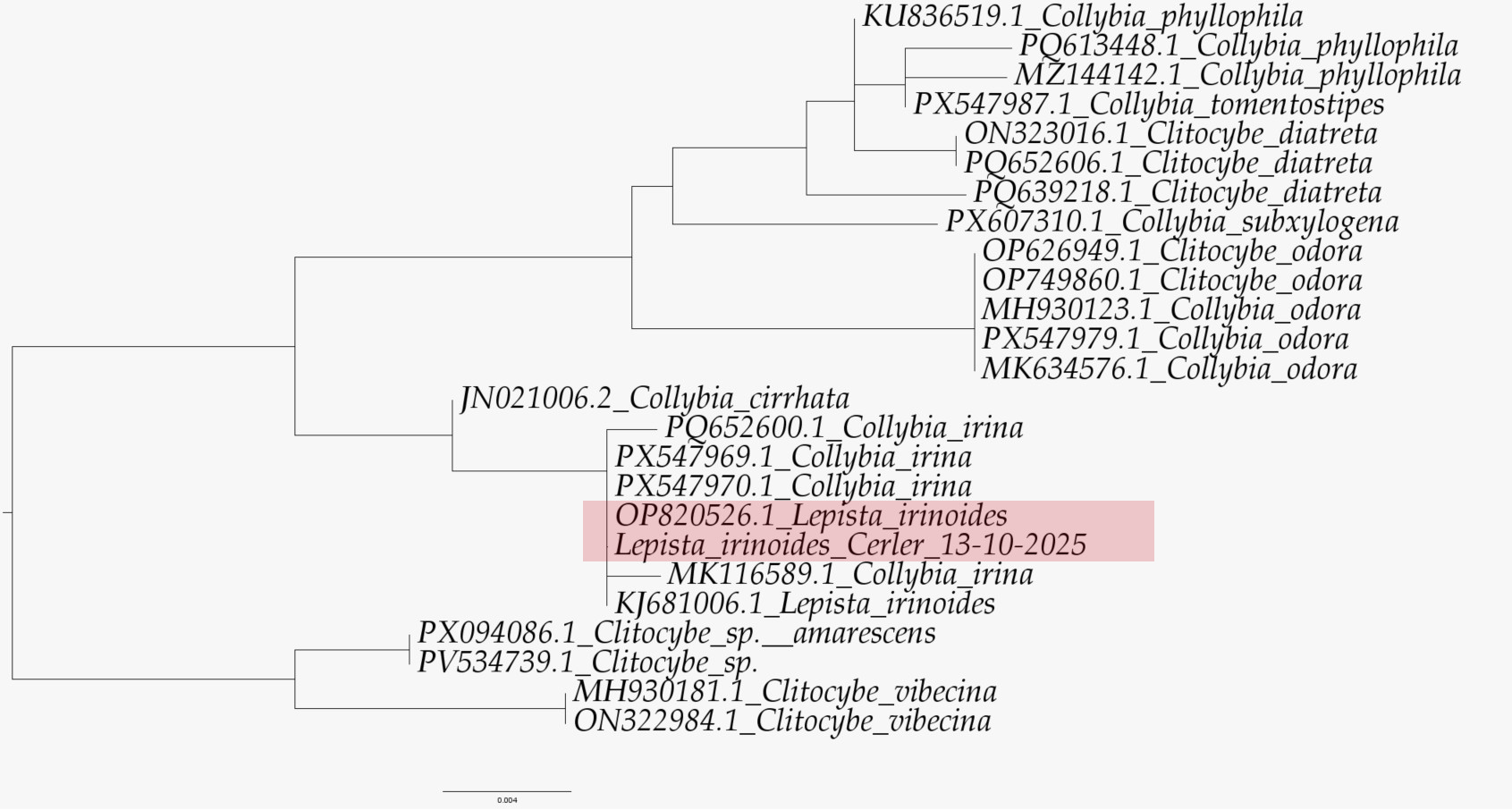
Phylogenetic Tree
Arbol filogenetico.jpg
Sequences and Data
Sequencing (Chromatogram)
Select a file to visualize the chromatogram