


Lepista irina
(Fr.) H.E.Bigelow
Study description
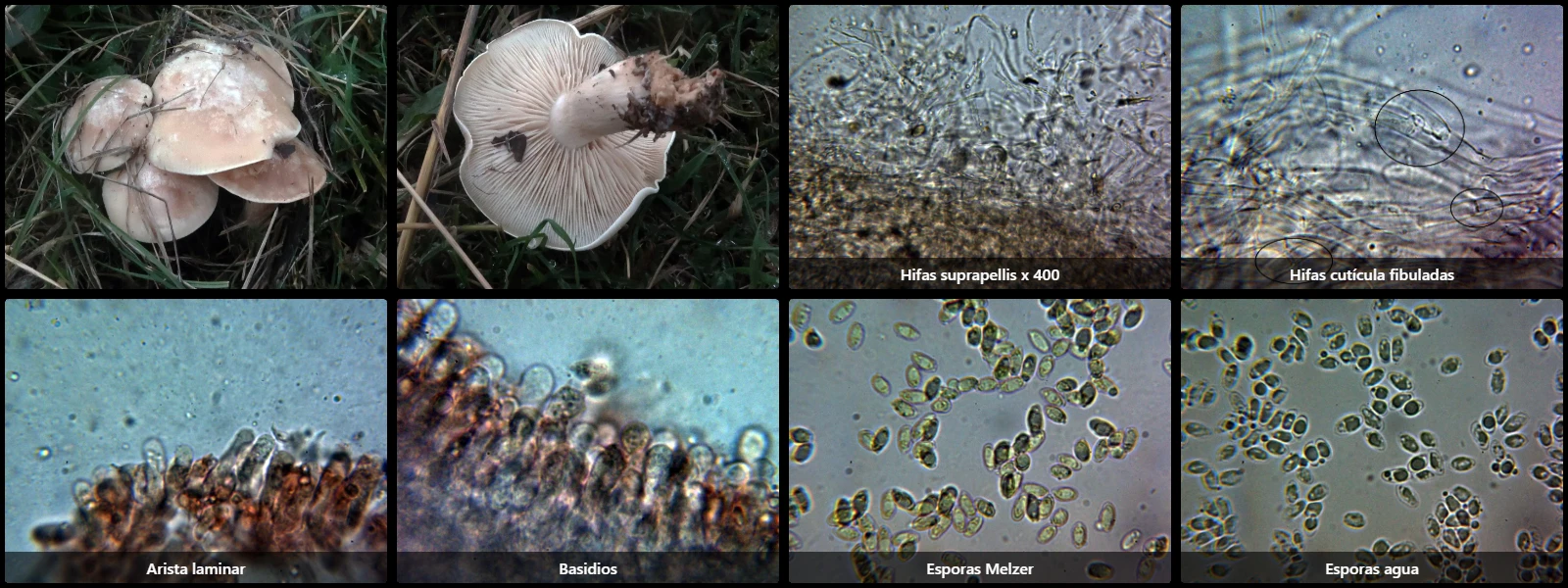
General: Inhabiting broadleaved woodlands in grassy areas, parks, or gardens, pileus convex, ochraceous with pinkish tints and undulate margin, odor pleasantly perfumed (flowery, reminiscent of irises), taste mild and insipid.
Pileipellis: Cutis composed of cylindrical filamentous hyphae 3-5 µm wide, hyaline or with faint ochraceous-brown intracellular pigment, arranged parallel to irregularly interwoven, septate with clamp connections.
Lamellar edge: Fertile, lacking differentiated cystidia; homomorphic.
Basidia: Clavate, 20-35 x 5-8 µm, with basal clamp connections, 4-spored.
Spores: Ellipsoid, hyaline, very finely verruculose (scabrate, ornamentation faint), 6.5-9 x 4-5 µm, with an inconspicuous eccentric apiculus, containing oil guttules, inamyloid in Melzer's reagent.
Pileipellis: Cutis composed of cylindrical filamentous hyphae 3-5 µm wide, hyaline or with faint ochraceous-brown intracellular pigment, arranged parallel to irregularly interwoven, septate with clamp connections.
Lamellar edge: Fertile, lacking differentiated cystidia; homomorphic.
Basidia: Clavate, 20-35 x 5-8 µm, with basal clamp connections, 4-spored.
Spores: Ellipsoid, hyaline, very finely verruculose (scabrate, ornamentation faint), 6.5-9 x 4-5 µm, with an inconspicuous eccentric apiculus, containing oil guttules, inamyloid in Melzer's reagent.
Geographic references
Map generated from global occurrence data from GBIF. GBIF.
Study measurements
Values in Microns (µm)Macroscopic gallery
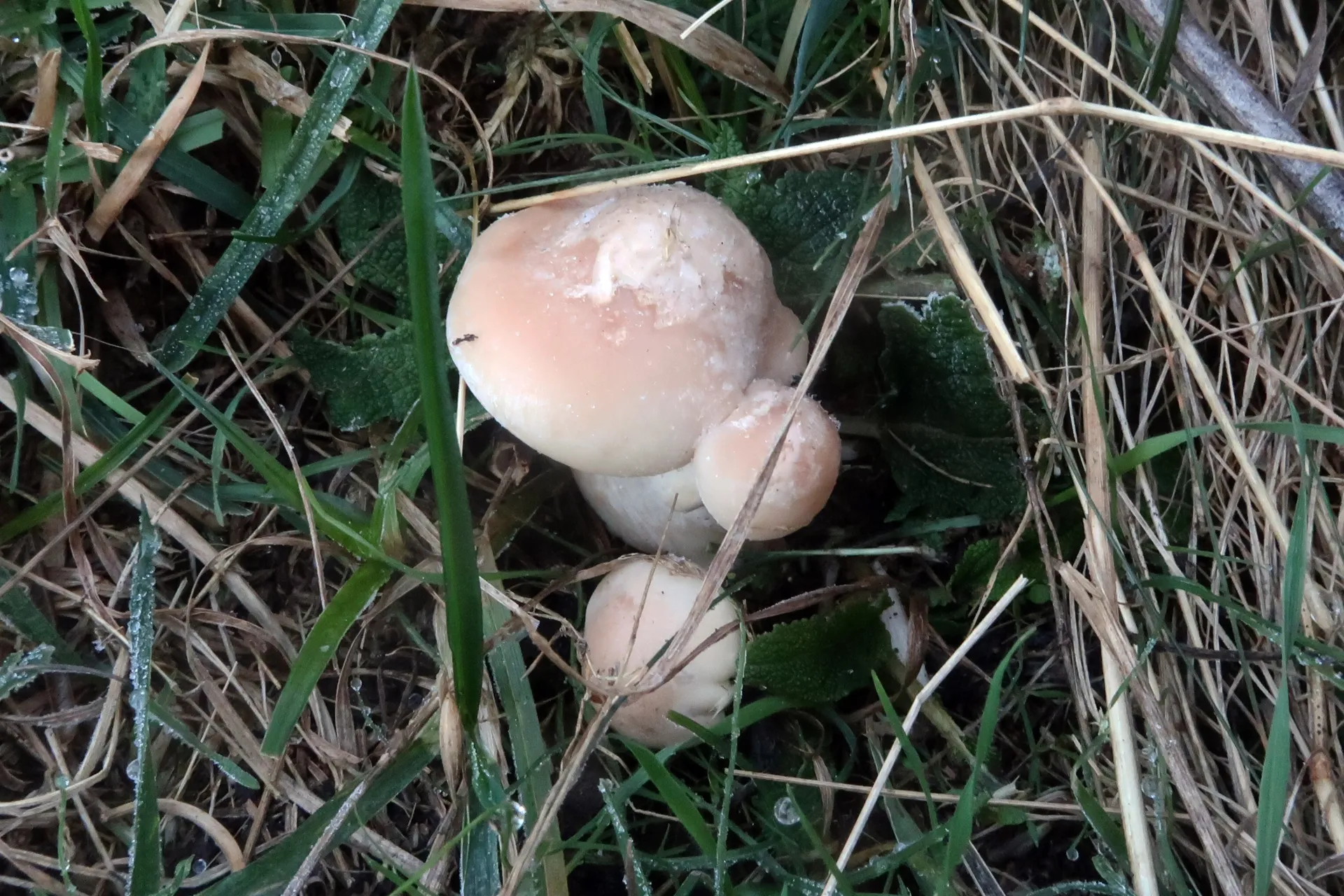
1 / 6Lepista irina - 1 - IMG_5646
Microscopic gallery
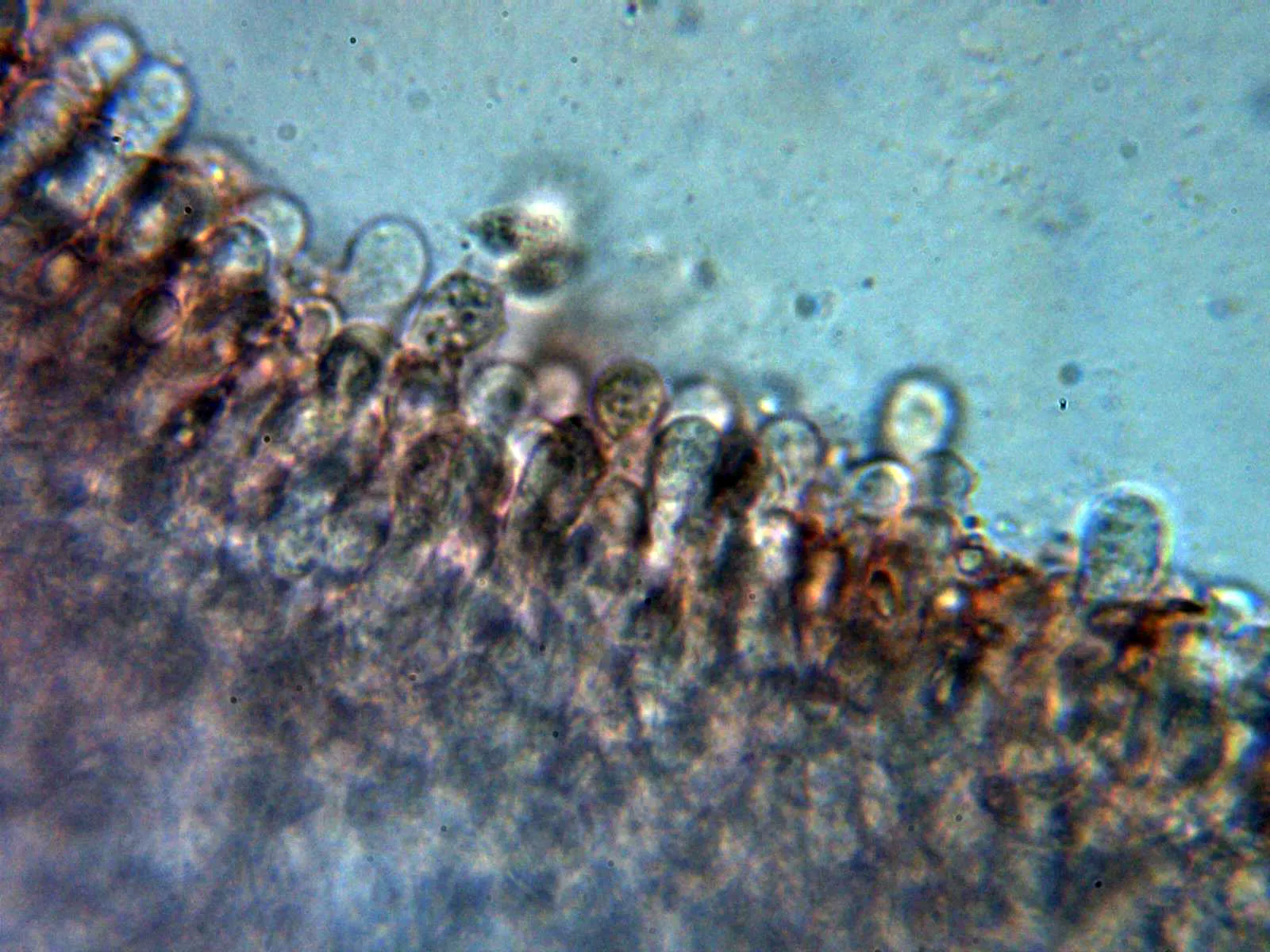
1 / 24Lepista irina - 10 - Himenio 1