


Lepiota subincarnata
J.E.Lange
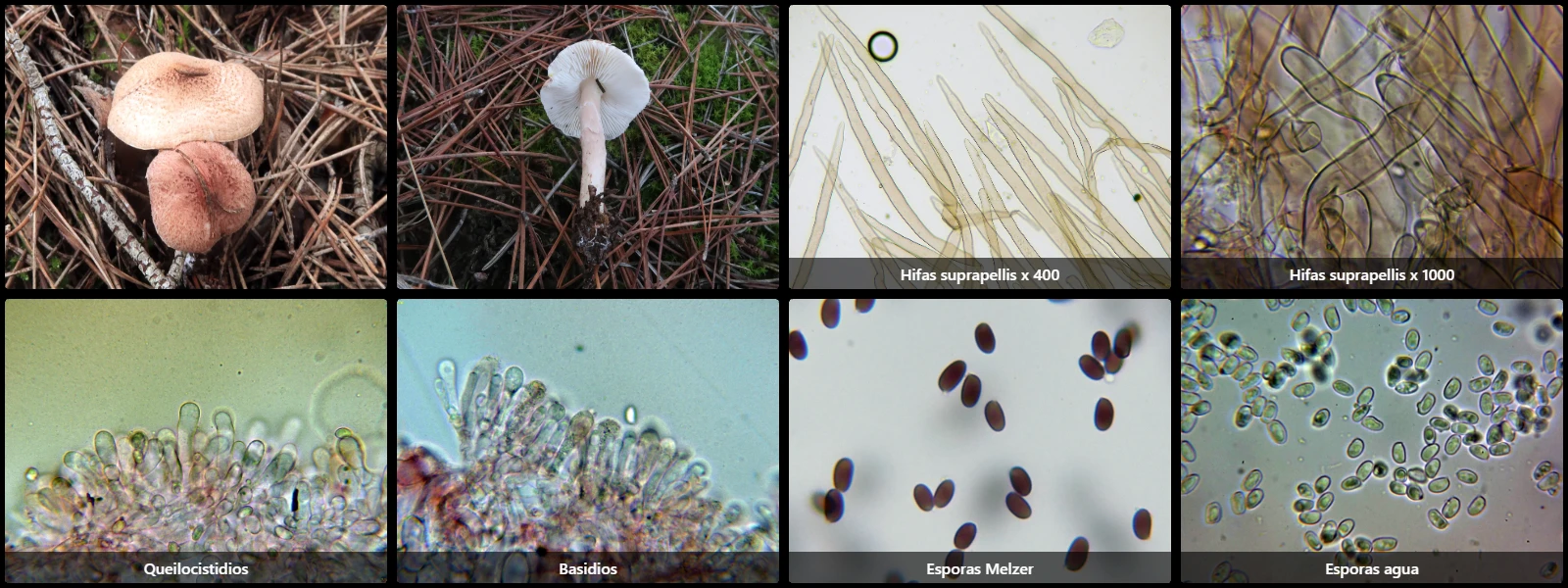
Study description
General: Deadly toxic species occurring across various habitats (forest clearings, parks, and gardens), pileus exhibiting pinkish tones with abundant darker brown scales, stipe lacking a distinct annulus, and a fruity odor.
Pileipellis: Cutis composed of cylindrical, moderately thick-walled hyphae, producing emergent hair-like terminal elements 150-300 x 8-14 µm, intermixed at the base with shorter clavate elements, both containing pale ochraceous-brown intracellular pigment, septate and clamped.
Cheilocystidia: Subcylindrical to clavate, 18-35 x 8-14 µm.
Basidia: Clavate, 18-25 x 6-8 µm, containing small oil guttules, with basal clamp connections, predominantly 4-spored with occasional 2-spored basidia.
Spores: Ellipsoid to oblong, smooth, slightly thick-walled, hyaline, 6-7.5 x 3-4 µm, with an eccentric apiculus, guttulate, dextrinoid in Melzer's reagent.
Herbarium voucher: JTP2294/24.
Pileipellis: Cutis composed of cylindrical, moderately thick-walled hyphae, producing emergent hair-like terminal elements 150-300 x 8-14 µm, intermixed at the base with shorter clavate elements, both containing pale ochraceous-brown intracellular pigment, septate and clamped.
Cheilocystidia: Subcylindrical to clavate, 18-35 x 8-14 µm.
Basidia: Clavate, 18-25 x 6-8 µm, containing small oil guttules, with basal clamp connections, predominantly 4-spored with occasional 2-spored basidia.
Spores: Ellipsoid to oblong, smooth, slightly thick-walled, hyaline, 6-7.5 x 3-4 µm, with an eccentric apiculus, guttulate, dextrinoid in Melzer's reagent.
Herbarium voucher: JTP2294/24.
Geographic references
Map generated from global occurrence data from GBIF. GBIF.
Study measurements
Values in Microns (µm)Macroscopic gallery
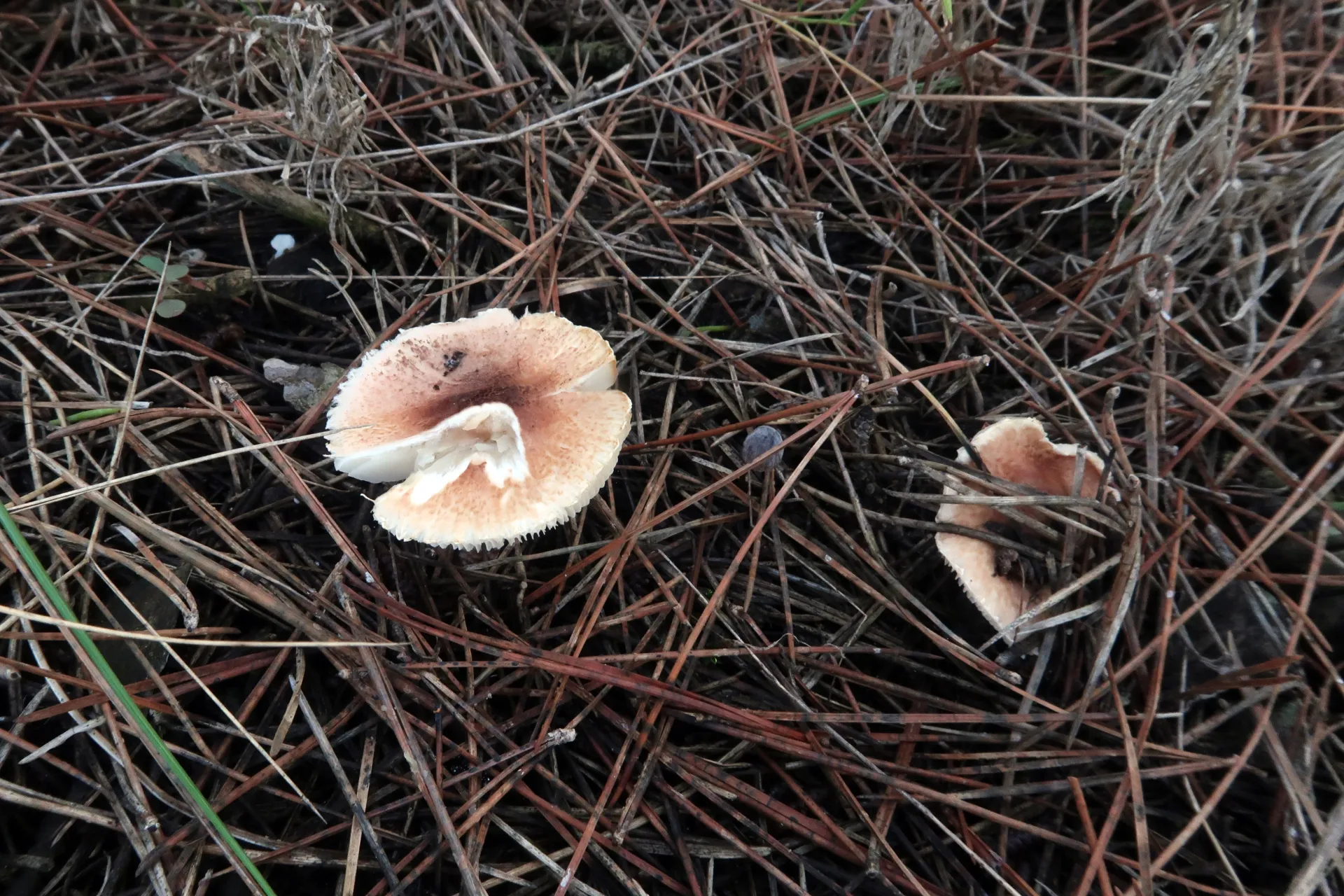
1 / 10Lepiota subincarnata - 1 - IMG_2350
Microscopic gallery
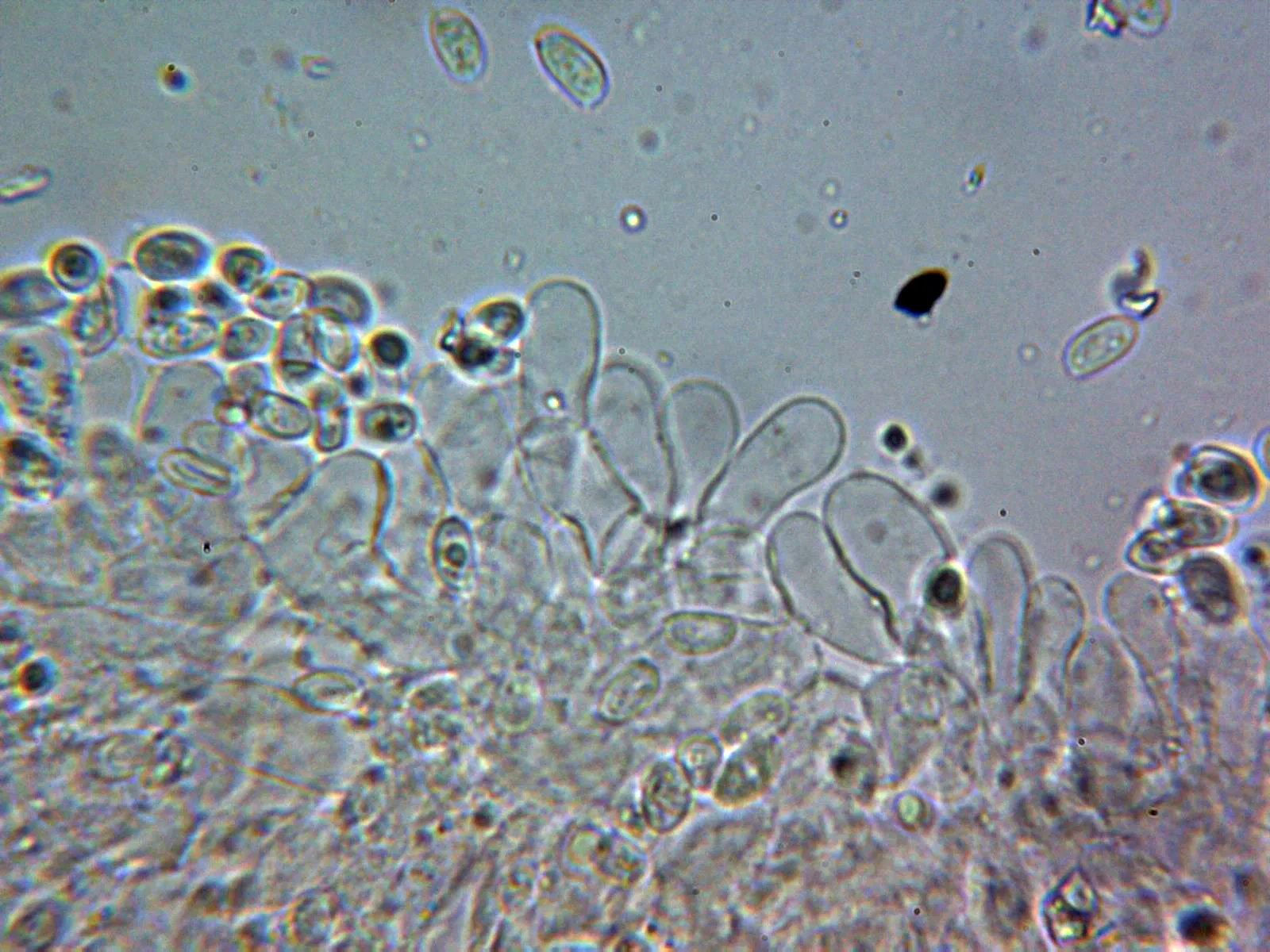
1 / 31Lepiota subincarnata - 10 - Arista amoniaco