


Lepiota magnispora
Murrill
Study description
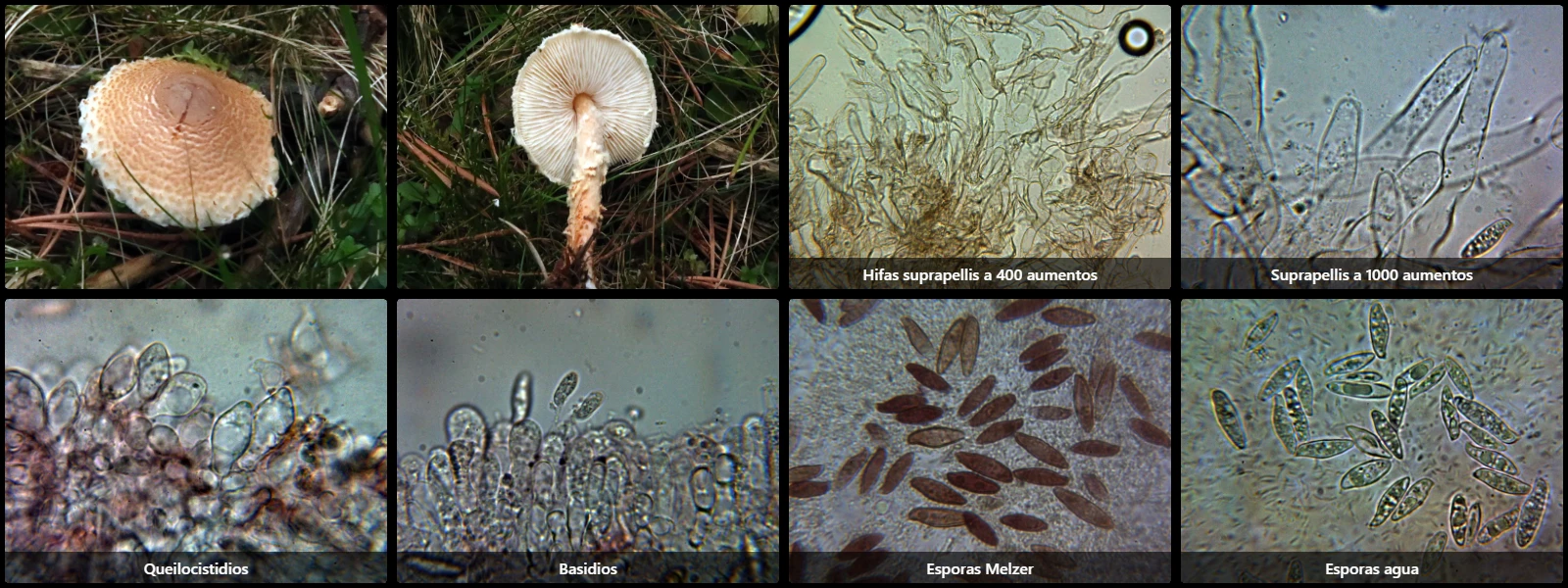
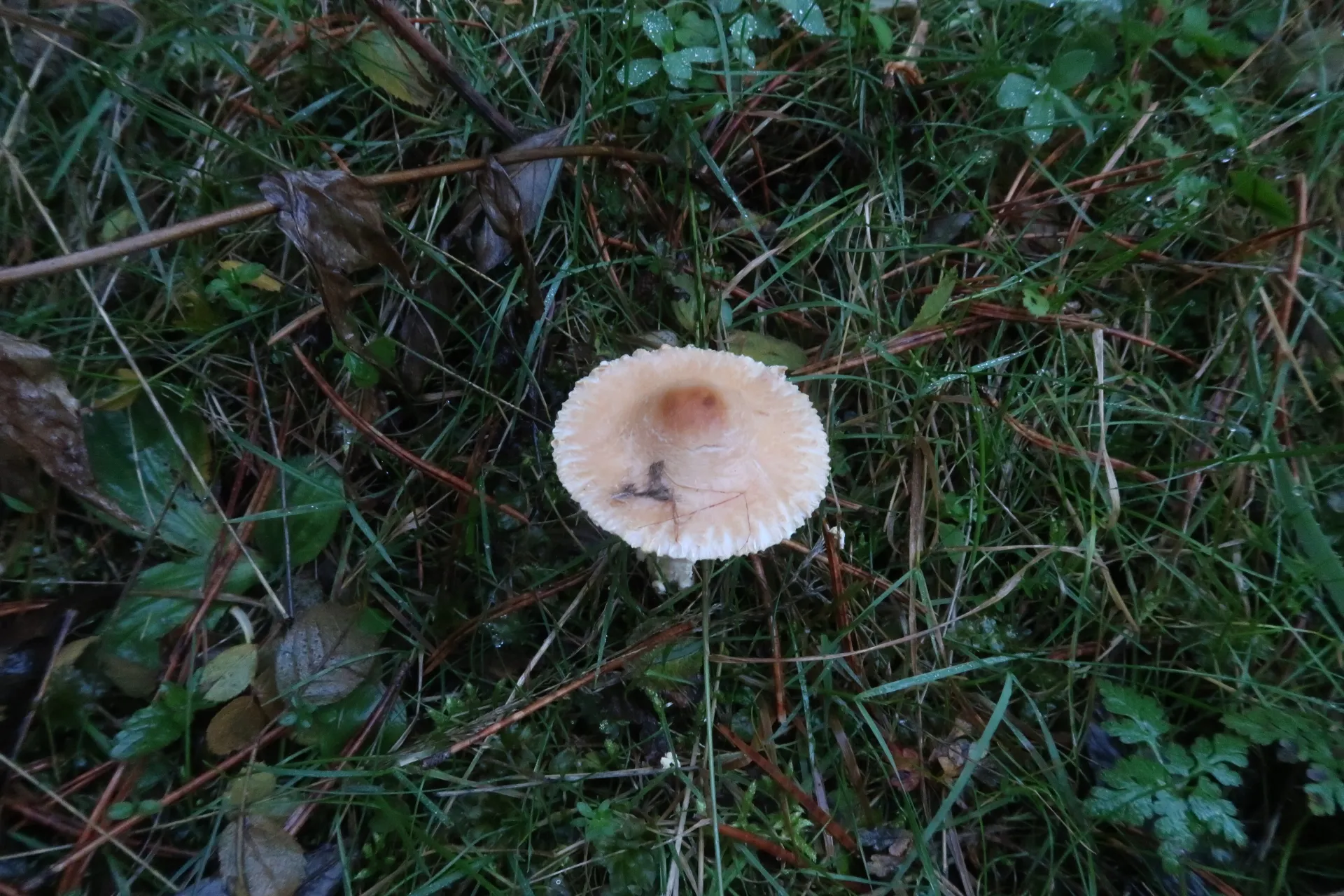
General: Displaying a marked preference for conifers, with a scaly pileus, stipe adorned with abundant yellowish-ochre floccose-woolly girdles, faint but unpleasant odor, and exceptionally large spores as indicated by its specific epithet.
Pileipellis: Composed of cylindrical hyphae with very broad, short-celled basal elements, giving rise to thin-walled terminal hyphae up to 350 µm long, 8-20 µm wide, containing pale ochraceous intracellular pigment, septate and clamped.
Cheilocystidia: Subcylindrical, pyriform to subfusiform, hyaline, 20-35 x 9-14 µm.
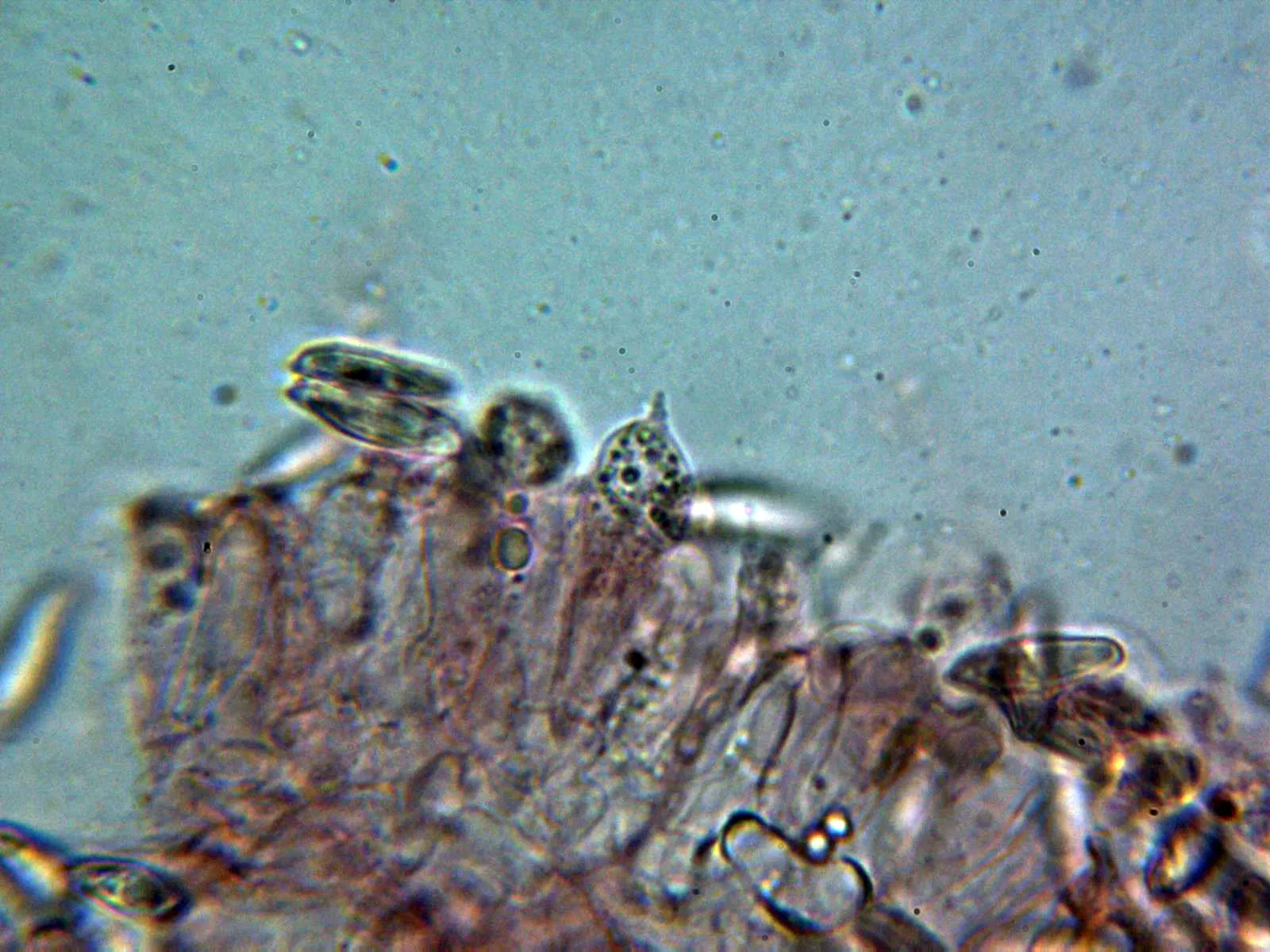
Basidia: Cylindric-clavate, 25-35 x 9-11 µm, with basal clamp connections, 4-spored.
Spores: Large, fusiform to spurred, hyaline, slightly thick-walled, 15-22 x 5-6 µm, with a lateral apiculus, containing oil guttules, dextrinoid in Melzer's reagent.
Pileipellis: Composed of cylindrical hyphae with very broad, short-celled basal elements, giving rise to thin-walled terminal hyphae up to 350 µm long, 8-20 µm wide, containing pale ochraceous intracellular pigment, septate and clamped.
Cheilocystidia: Subcylindrical, pyriform to subfusiform, hyaline, 20-35 x 9-14 µm.
Basidia: Cylindric-clavate, 25-35 x 9-11 µm, with basal clamp connections, 4-spored.
Spores: Large, fusiform to spurred, hyaline, slightly thick-walled, 15-22 x 5-6 µm, with a lateral apiculus, containing oil guttules, dextrinoid in Melzer's reagent.
Geographic references
Map generated from global occurrence data from GBIF. GBIF.
Study measurements
Values in Microns (µm)Macroscopic gallery
1 / 5Lepiota magnispora - 1 - IMG_5683
Microscopic gallery
1 / 25Lepiota magnispora - 10 - Basidios 2