


Lepiota ignivolvata
Bousset & Joss. ex Joss.
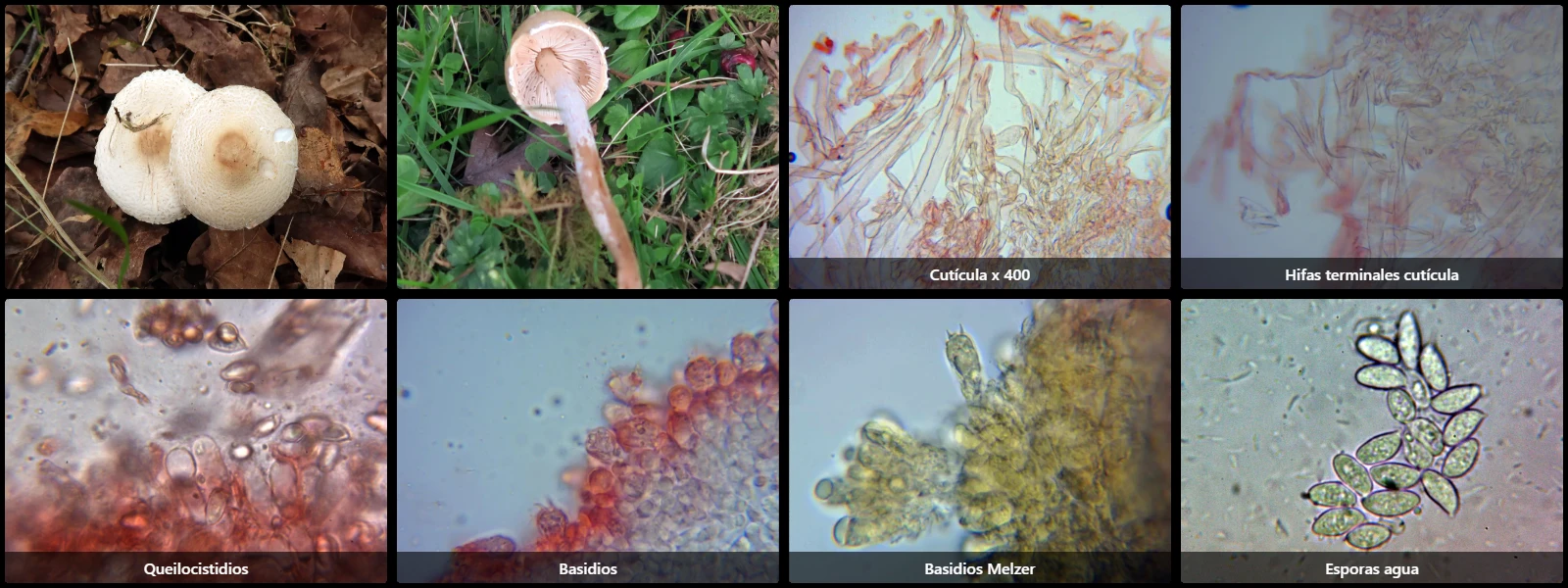
Study description
General: Typical of beech (Fagus sylvatica) woods on calcareous soils, pileus covered with concentrically arranged cream-colored scales over a whitish background, typically developing an orange-red zone on the lower stipe, unpleasant odor, and mild to unpleasant taste.
Pileipellis: Cutis composed of cylindrical, septate hyphae, prostrate to erect, 80-500 x 6-12 µm, containing pale brown intracellular pigment, partially clamped.
Cheilocystidia: Clavate to pyriform, hyaline, 15-35 x 8-13 µm.
Pleurocystidia: Absent.
Basidia: Clavate, 28-35 x 9-11 µm, with basal clamp connections, 4-spored.
Spores: Ellipsoid to slightly fusiform, with an eccentric, slightly curved pointed apiculus, smooth, hyaline, thin-walled, dextrinoid in Melzer's reagent.
Pileipellis: Cutis composed of cylindrical, septate hyphae, prostrate to erect, 80-500 x 6-12 µm, containing pale brown intracellular pigment, partially clamped.
Cheilocystidia: Clavate to pyriform, hyaline, 15-35 x 8-13 µm.
Pleurocystidia: Absent.
Basidia: Clavate, 28-35 x 9-11 µm, with basal clamp connections, 4-spored.
Spores: Ellipsoid to slightly fusiform, with an eccentric, slightly curved pointed apiculus, smooth, hyaline, thin-walled, dextrinoid in Melzer's reagent.
Geographic references
Map generated from global occurrence data from GBIF. GBIF.
Study measurements
Values in Microns (µm)Macroscopic gallery
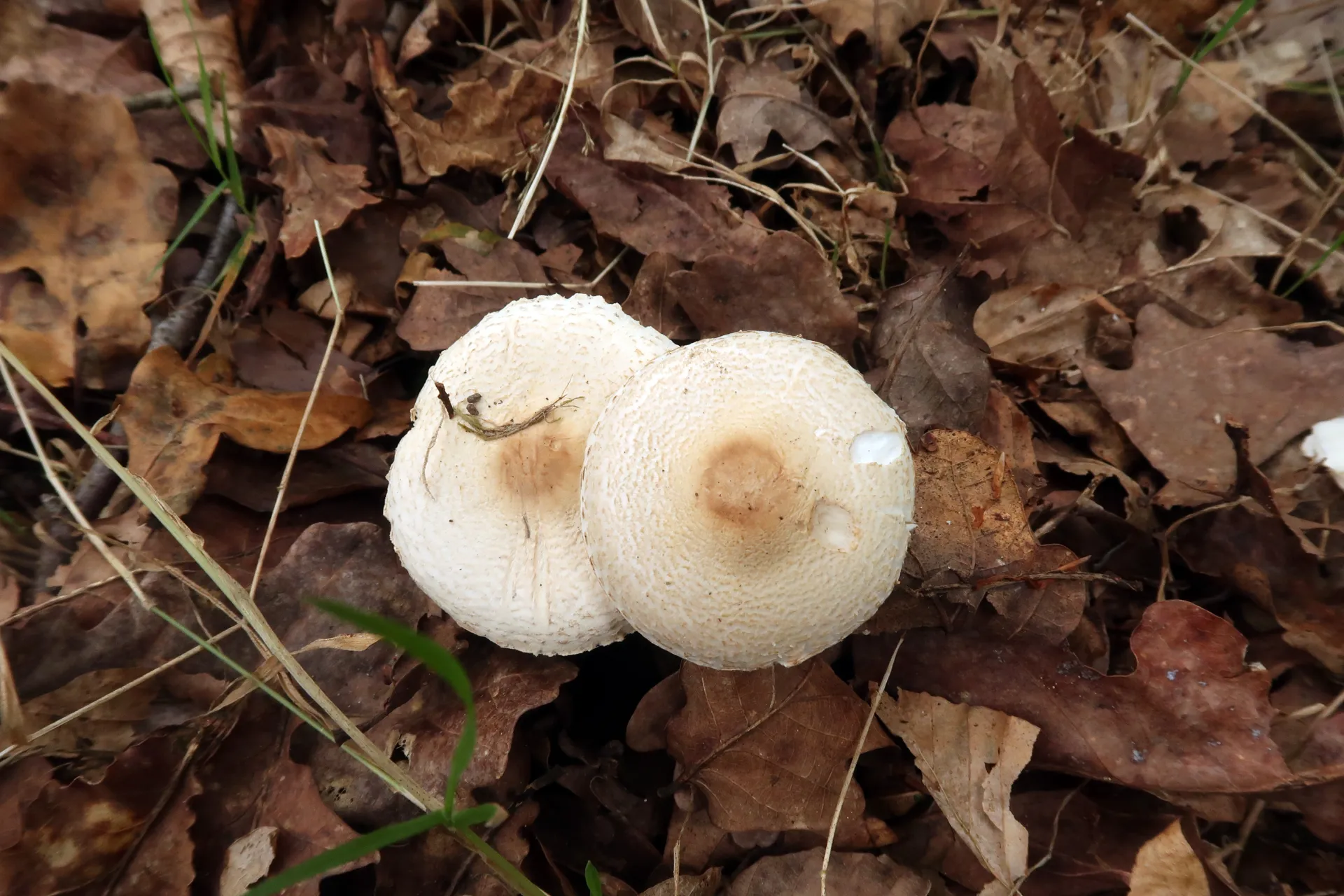
1 / 5Lepiota ignivolvata - 1 - IMG_7951
Microscopic gallery

1 / 12Lepiota ignivolvata - 11 - Basidio tetrasporico