


Lepiota echinella
Quél. & G.E.Bernard
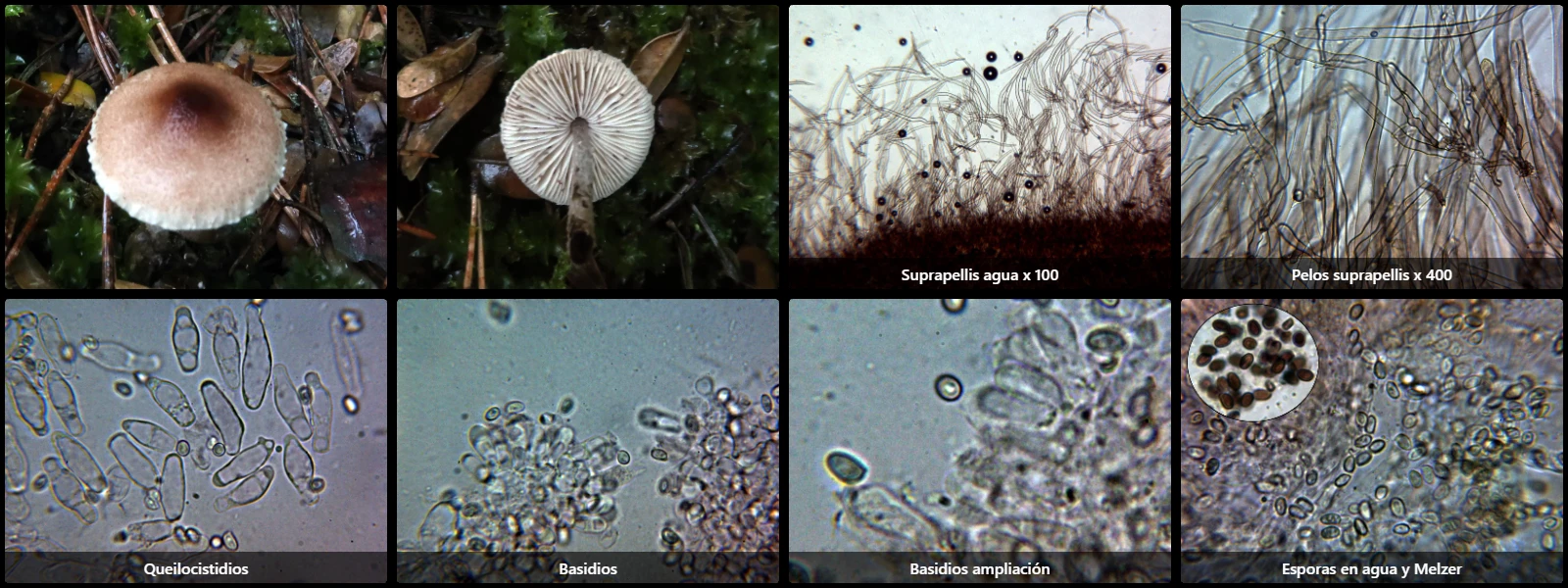
Study description
General: Small stature (pileus up to 3 cm), convex and slightly umbonate, with reddish-brown scales concentrated at the center, stipe lacking a persistent annulus, slightly unpleasant odor, insipid taste.
Pileipellis: Trichoderm of erect cylindrical terminal hairs 150-400 x 11-14 µm, supported on a base of shorter elements up to 50 µm long, with brown intracellular pigment, septate with clamp connections.
Cheilocystidia: Abundant, clavate, utriform to fusiform, 28-35 x 9-12 µm, easily collapsing.
Pleurocystidia: Absent.
Basidia: Clavate, 18-25 x 5-7 µm, with basal clamp connections, 4-spored.
Spores: Ellipsoid to oblong, smooth, very thick-walled, small for the genus, apiculus minute, containing one or more oil droplets, distinctly dextrinoid in Melzer's reagent.
Pileipellis: Trichoderm of erect cylindrical terminal hairs 150-400 x 11-14 µm, supported on a base of shorter elements up to 50 µm long, with brown intracellular pigment, septate with clamp connections.
Cheilocystidia: Abundant, clavate, utriform to fusiform, 28-35 x 9-12 µm, easily collapsing.
Pleurocystidia: Absent.
Basidia: Clavate, 18-25 x 5-7 µm, with basal clamp connections, 4-spored.
Spores: Ellipsoid to oblong, smooth, very thick-walled, small for the genus, apiculus minute, containing one or more oil droplets, distinctly dextrinoid in Melzer's reagent.
Geographic references
Map generated from global occurrence data from GBIF. GBIF.
Study measurements
Values in Microns (µm)Macroscopic gallery
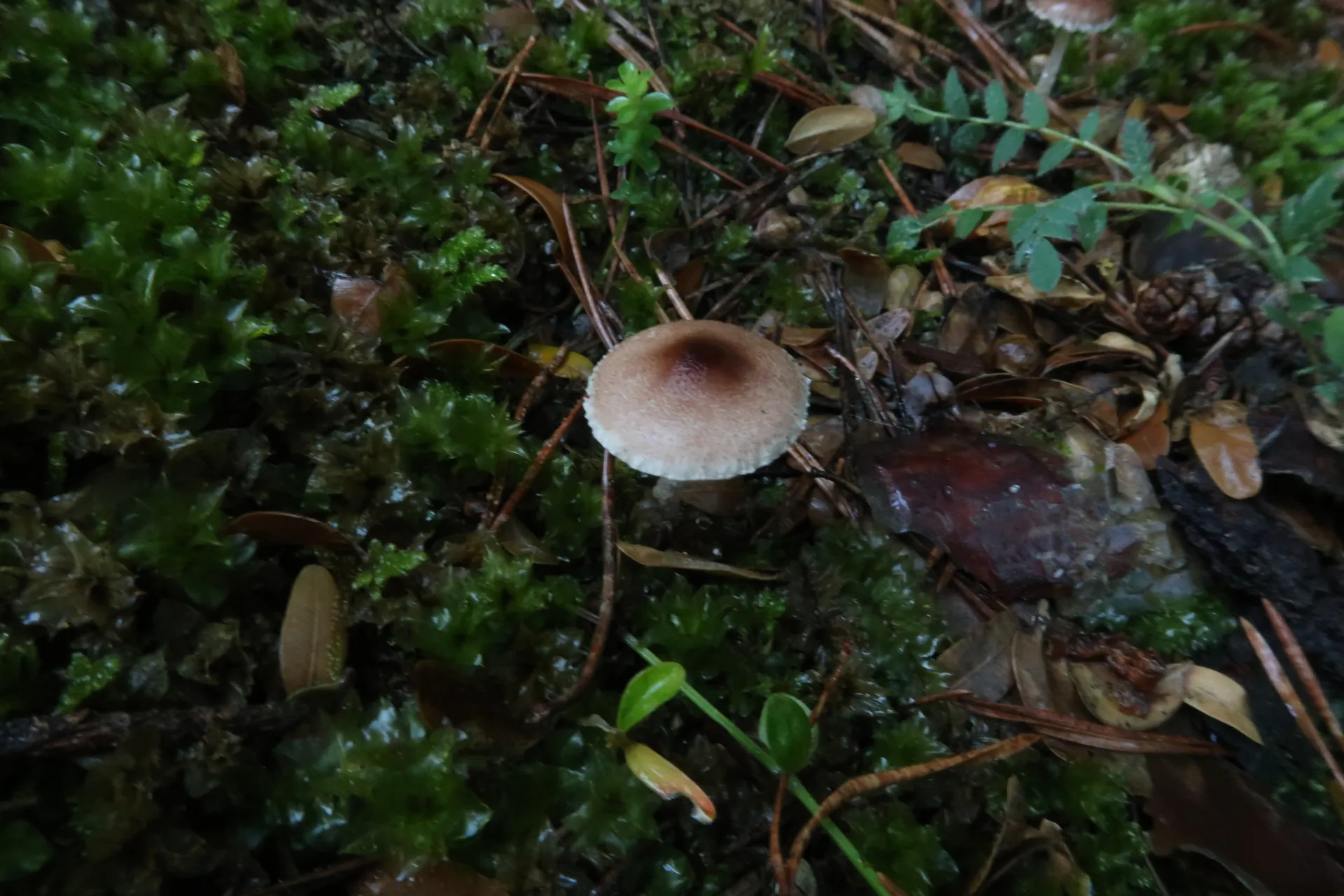
1 / 5Lepiota echinella - 1 - IMG_7579
Microscopic gallery

1 / 20Lepiota echinella - 10 - Hifas pigmentadas suprapellis