


Lepiota cristata
(Bolton) P.Kumm.
Study description
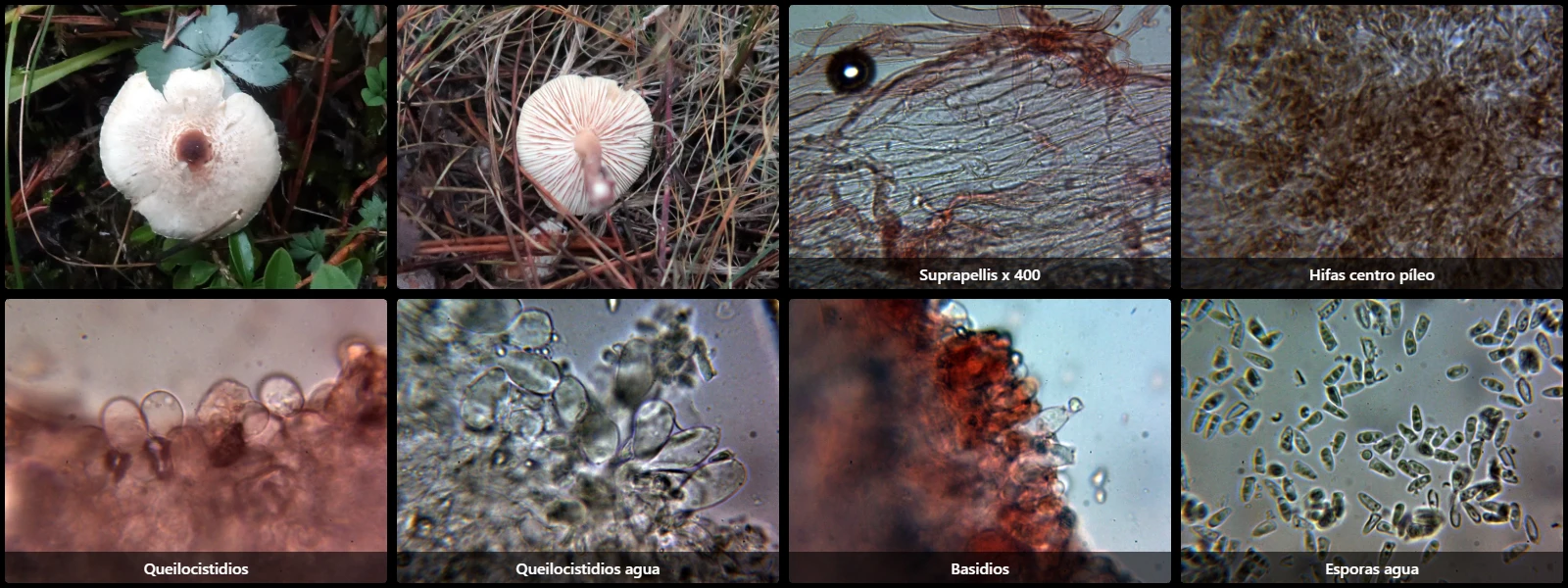
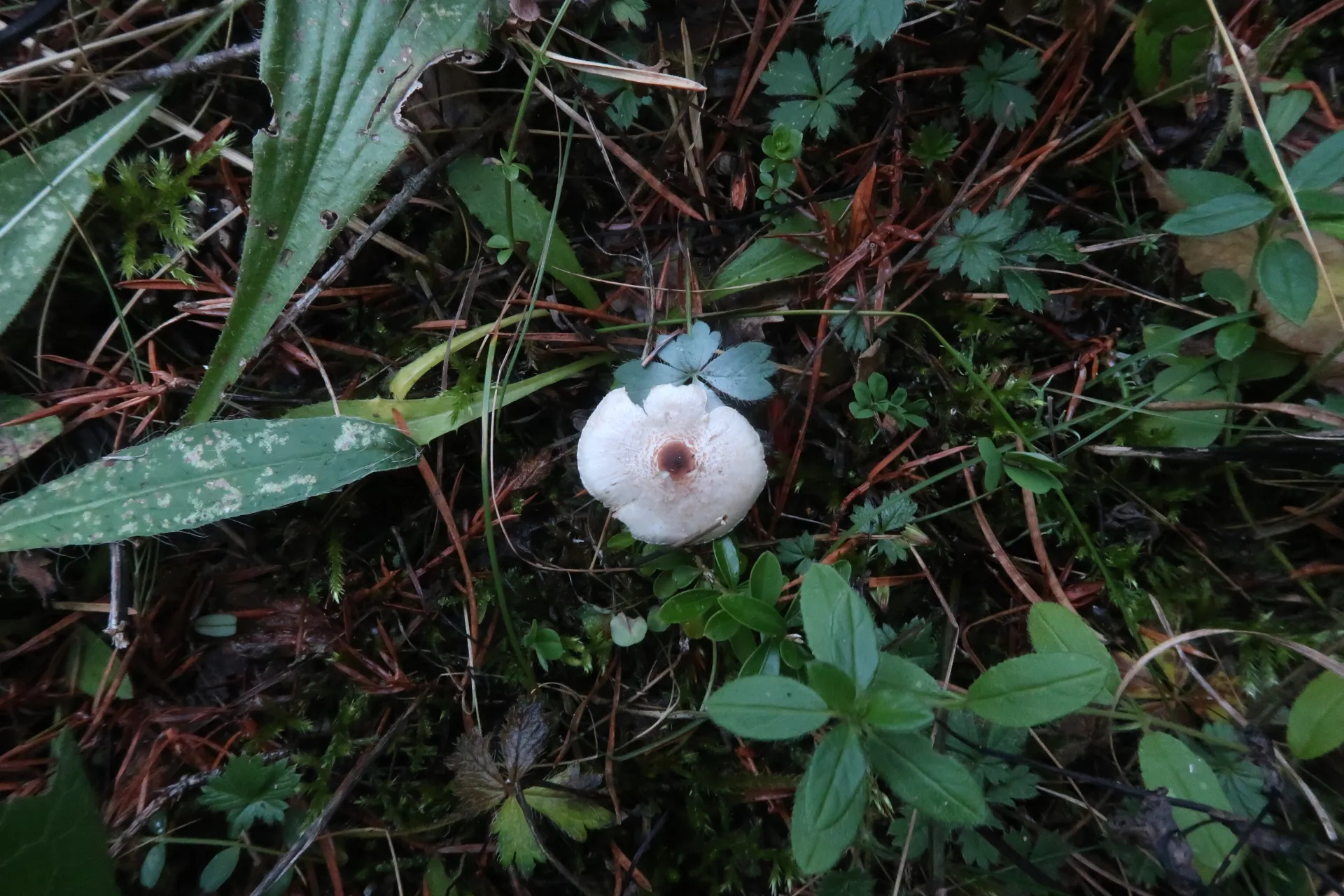
General: Common in parks, gardens, and path margins, pileus umbonate with concentric reddish-brown scales over a whitish background, dark at the disc, emitting a repulsive rubbery/scleroderma-like odor, taste unpleasant.
Pileipellis: Hymeniderm-like layer of erect clavate to pyriform cells up to 70 x 9-14 µm, arising from prostrate cylindrical hyphae 6-10 µm wide, with pale brown intracellular pigment, septate and partially clamped.
Cheilocystidia: Pyriform to vesiculose, hyaline, 22-40 x 11-15 µm.
Pleurocystidia: Not observed.
Basidia: Clavate to slightly ventricose, 20-25 x 6-8 µm, with basal clamp connections, 4-spored.
Spores: Distinctly spurred (calcarate), truncate-cuneiform, smooth, hyaline, thin-walled, containing oil droplets, dextrinoid in Melzer's reagent.
Pileipellis: Hymeniderm-like layer of erect clavate to pyriform cells up to 70 x 9-14 µm, arising from prostrate cylindrical hyphae 6-10 µm wide, with pale brown intracellular pigment, septate and partially clamped.
Cheilocystidia: Pyriform to vesiculose, hyaline, 22-40 x 11-15 µm.
Pleurocystidia: Not observed.
Basidia: Clavate to slightly ventricose, 20-25 x 6-8 µm, with basal clamp connections, 4-spored.
Spores: Distinctly spurred (calcarate), truncate-cuneiform, smooth, hyaline, thin-walled, containing oil droplets, dextrinoid in Melzer's reagent.
Geographic references
Map generated from global occurrence data from GBIF. GBIF.
Study measurements
Values in Microns (µm)Macroscopic gallery
1 / 8Lepiota cristata - 1 - IMG_5559
Microscopic gallery
1 / 19Lepiota cristata - 10 - Hifas estípite sin caulos