


Lentinus crinitus
(L.) Fr.
Study description
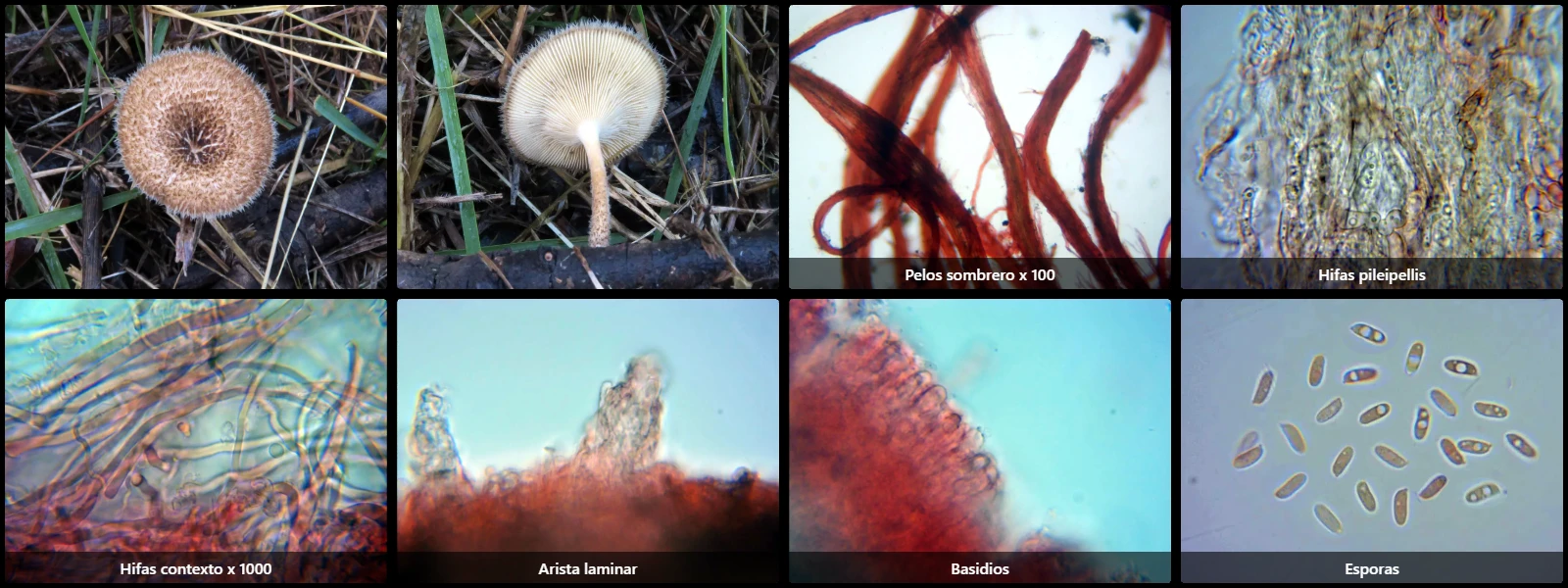
General: Lignicolous tropical species, pileus densely hirsute with a depressed center, lamellae decurrent, stipe adorned with numerous dark scales particularly in the lower two-thirds.
Pileipellis: Hairy surface formed by parallel fascicles of very thick-walled hyphae containing abundant brown intracellular pigment; subpellis of more hyaline hyphae, 3-7 µm wide, septate with clamp connections.
Lamellar edge: Lacking true cystidia, but bearing sterile hyphal fascicles that form short, hyaline, pointed pegs (hyphal pegs).
Basidia: Cylindric-clavate, 22-28 x 4-6 µm, with basal clamp connections, 4-spored.
Spores: Cylindrical, some slightly allantoid, flattened on the adaxial side, smooth, hyaline, thin-walled, with an eccentric apiculus, inamyloid in Melzer's reagent.
Pileipellis: Hairy surface formed by parallel fascicles of very thick-walled hyphae containing abundant brown intracellular pigment; subpellis of more hyaline hyphae, 3-7 µm wide, septate with clamp connections.
Lamellar edge: Lacking true cystidia, but bearing sterile hyphal fascicles that form short, hyaline, pointed pegs (hyphal pegs).
Basidia: Cylindric-clavate, 22-28 x 4-6 µm, with basal clamp connections, 4-spored.
Spores: Cylindrical, some slightly allantoid, flattened on the adaxial side, smooth, hyaline, thin-walled, with an eccentric apiculus, inamyloid in Melzer's reagent.
Geographic references
Map generated from global occurrence data from GBIF. GBIF.
Study measurements
Values in Microns (µm)Macroscopic gallery
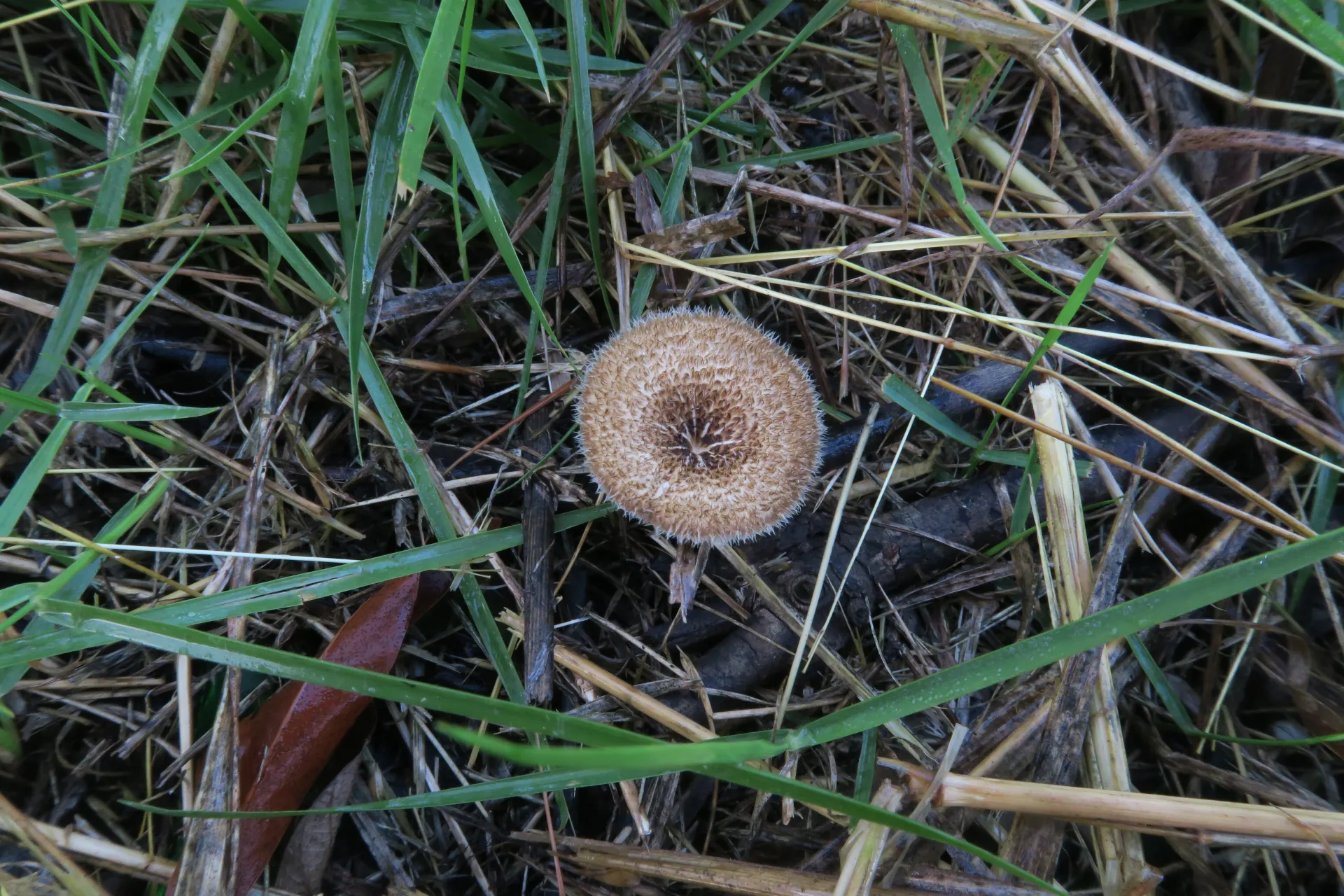
1 / 9Lentinus crinitus - 1 - IMG_1305
Microscopic gallery
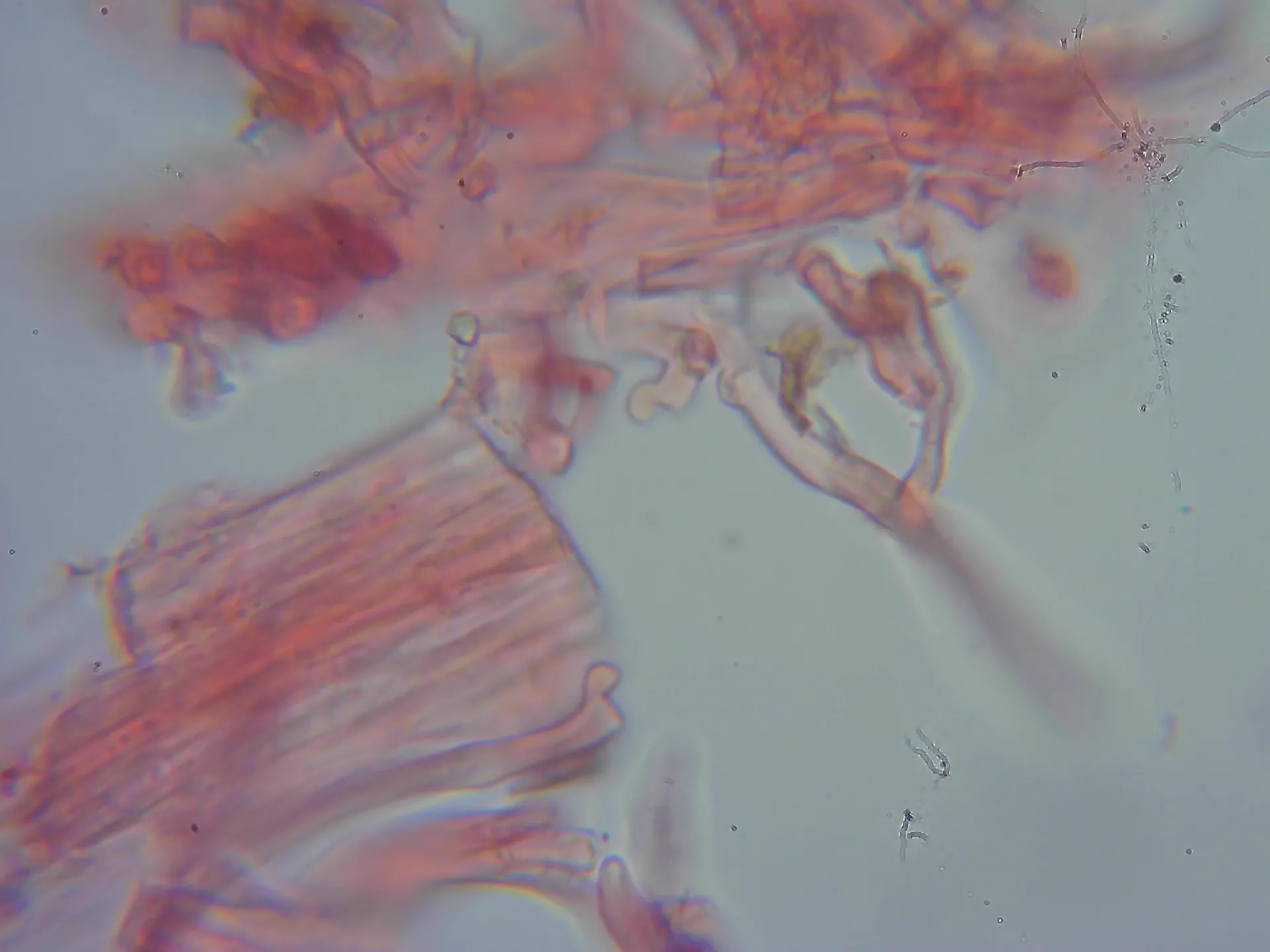
1 / 26Lentinus crinitus - 10 - Fíbula 3