


Laxitextum bicolor
(Pers.) Lentz
Study description
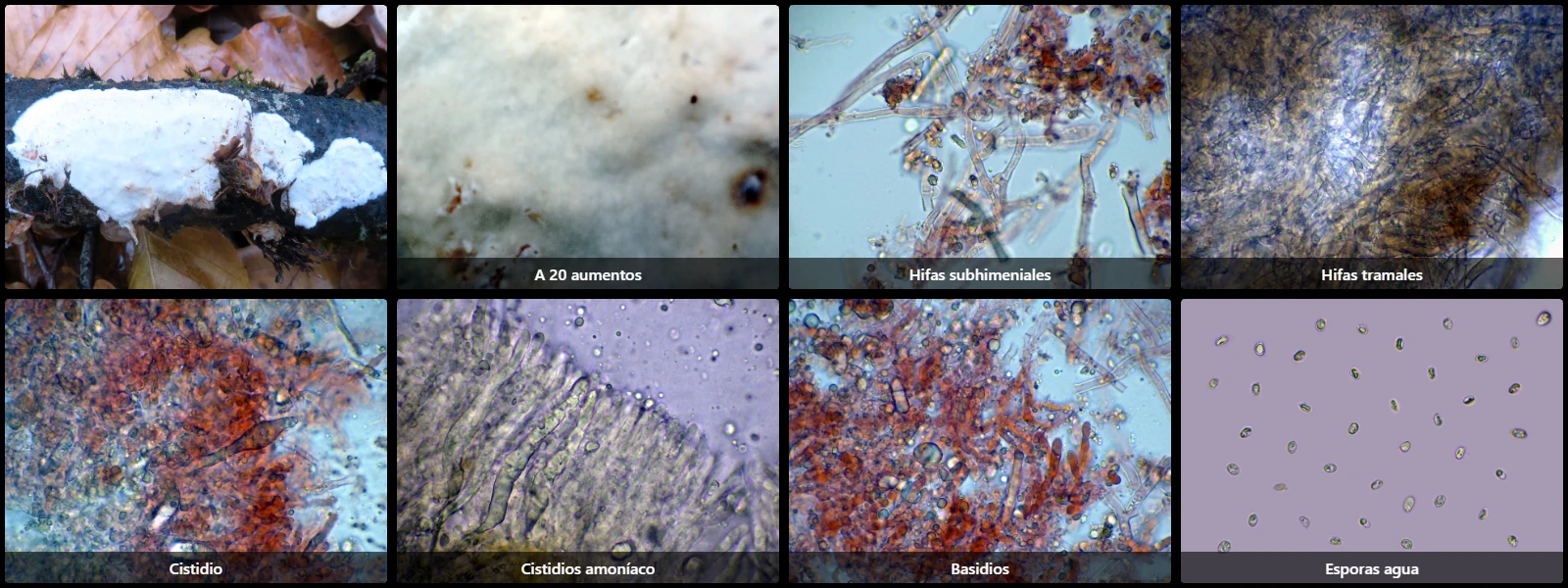
Basidioma: Completely resupinate on decaying wood of various broadleaved trees, whitish turning cream with age, surface smooth to slightly undulate with a well-delimited margin.
Hyphal system: Tramal hyphae thick-walled, 2-4 µm wide, with abundant brown intracellular pigment, clamped. Subhymenial hyphae hyaline, thin- to slightly thick-walled, 1.5-2.5 µm wide, septate with clamp connections.
Gloeocystidia: Cylindrical to fusiform, deeply embedded in hymenium, 90-190 x 8-10 µm, barely projecting beyond basidia, containing yellowish-brown contents.
Basidia: Clavate, 20-28 x 3-5 µm, with basal clamps, mostly 4-spored.
Spores: Ellipsoid, small, thin-walled, finely verruculose, hyaline, with a faint eccentric apiculus, amyloid in Melzer's reagent.
Herbarium voucher: JTP2681/25.
Hyphal system: Tramal hyphae thick-walled, 2-4 µm wide, with abundant brown intracellular pigment, clamped. Subhymenial hyphae hyaline, thin- to slightly thick-walled, 1.5-2.5 µm wide, septate with clamp connections.
Gloeocystidia: Cylindrical to fusiform, deeply embedded in hymenium, 90-190 x 8-10 µm, barely projecting beyond basidia, containing yellowish-brown contents.
Basidia: Clavate, 20-28 x 3-5 µm, with basal clamps, mostly 4-spored.
Spores: Ellipsoid, small, thin-walled, finely verruculose, hyaline, with a faint eccentric apiculus, amyloid in Melzer's reagent.
Herbarium voucher: JTP2681/25.
Geographic references
Map generated from global occurrence data from GBIF. GBIF.
Study measurements
Values in Microns (µm)Macroscopic gallery
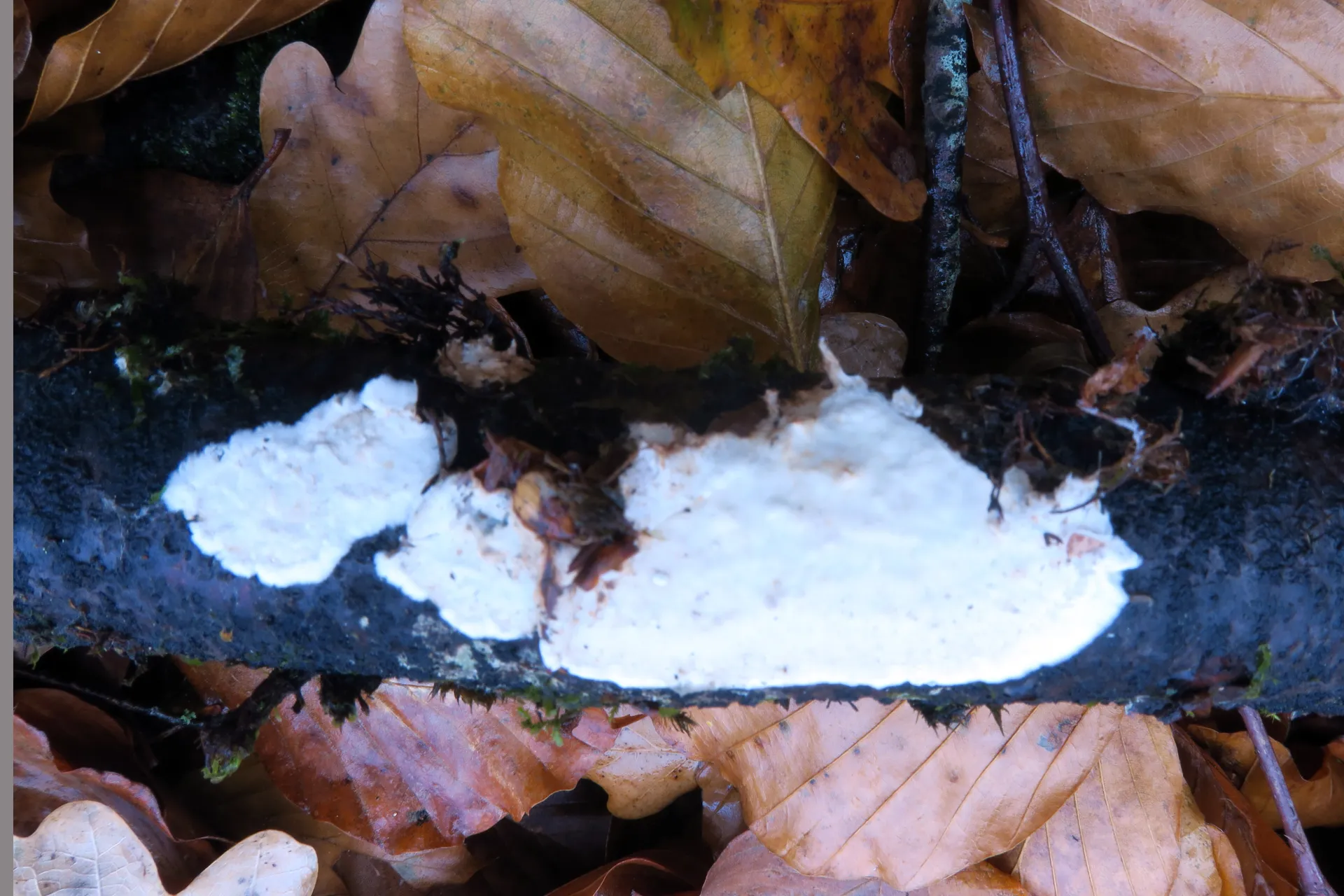
1 / 5Laxitextum bicolor - 1 - IMG_4688
Microscopic gallery
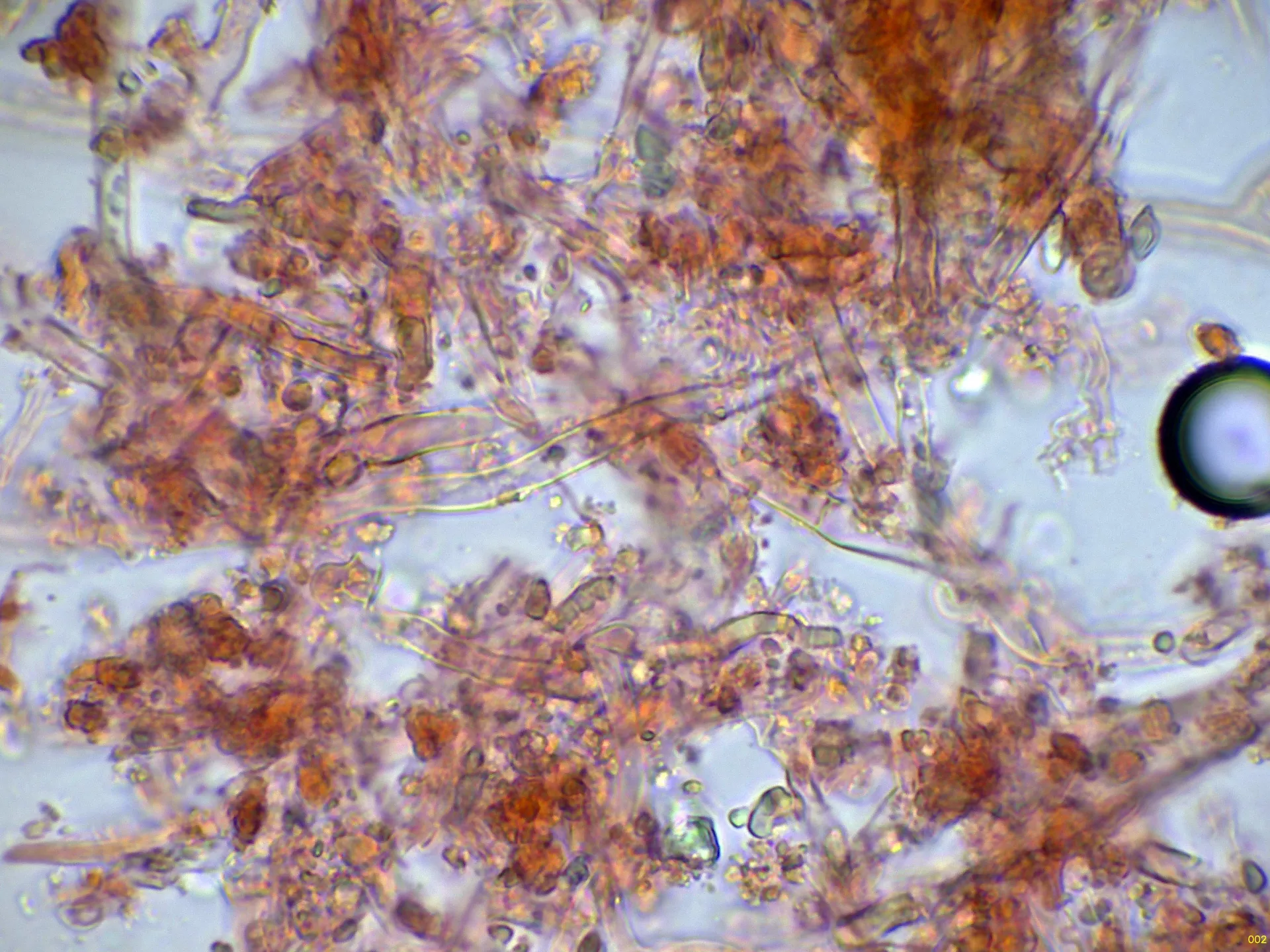
1 / 15Laxitextum bicolor - 10 - Hifas subiculares-002