


Lamprospora carbonicola
Boud.
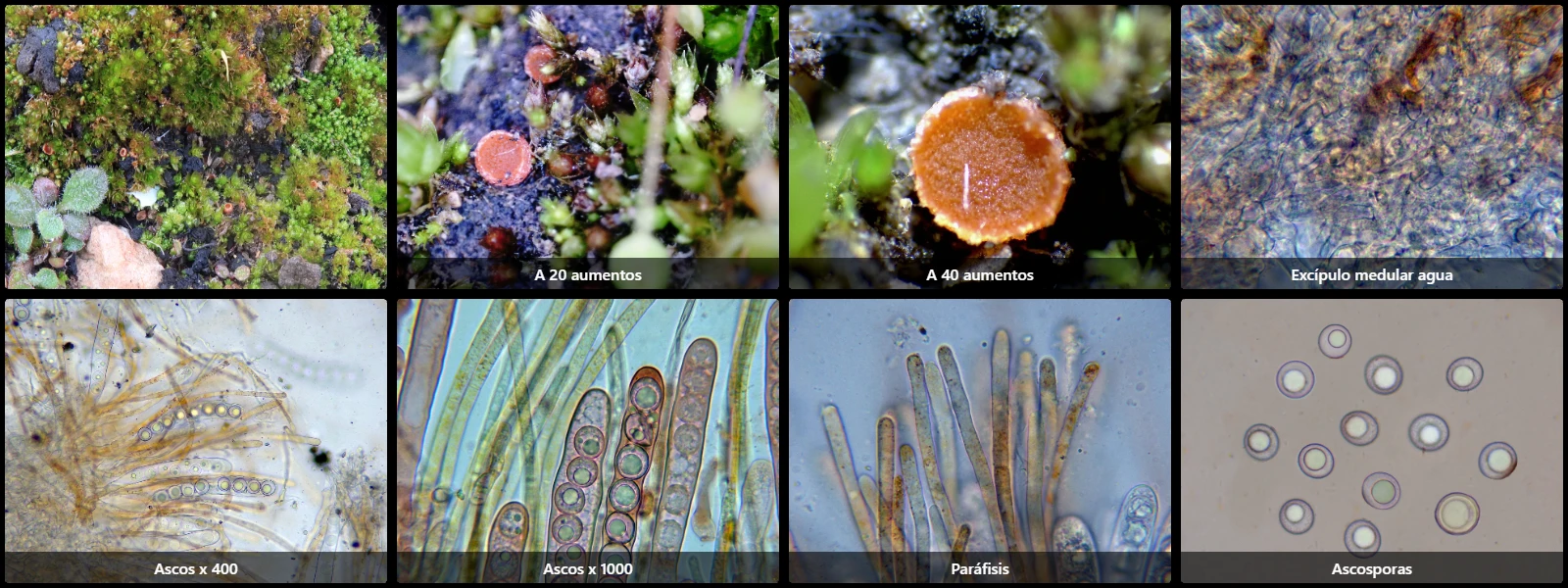
Study description
Ecology: Parasitic on the rhizoids of Funaria hygrometrica on burnt soil.
Ascomata: Apothecial, sessile, disc-shaped to slightly cupulate, 1-3 mm in diameter, bright orange to reddish-orange. Excipulum: medullary excipulum of textura intricata, ectal excipulum of textura angularis to globulosa.
Asci: Cylindrical, 8-spored, uniseriate, 180-250 x 15-19 µm, croziers present at base, inamyloid in Melzer's reagent.
Paraphyses: Filiform, septate, slightly enlarged at the apex up to 6-8 µm, containing orange carotenoid granules that turn greenish-blue in Melzer's reagent.
Spores: Perfectly globose, smooth, hyaline, thick-walled, containing a large central lipid guttule, 14-17 µm in diameter.
Herbarium voucher: JTP2071/24, 2302/24.
Ascomata: Apothecial, sessile, disc-shaped to slightly cupulate, 1-3 mm in diameter, bright orange to reddish-orange. Excipulum: medullary excipulum of textura intricata, ectal excipulum of textura angularis to globulosa.
Asci: Cylindrical, 8-spored, uniseriate, 180-250 x 15-19 µm, croziers present at base, inamyloid in Melzer's reagent.
Paraphyses: Filiform, septate, slightly enlarged at the apex up to 6-8 µm, containing orange carotenoid granules that turn greenish-blue in Melzer's reagent.
Spores: Perfectly globose, smooth, hyaline, thick-walled, containing a large central lipid guttule, 14-17 µm in diameter.
Herbarium voucher: JTP2071/24, 2302/24.
Geographic references
Map generated from global occurrence data from GBIF. GBIF.
Study measurements
Values in Microns (µm)Macroscopic gallery
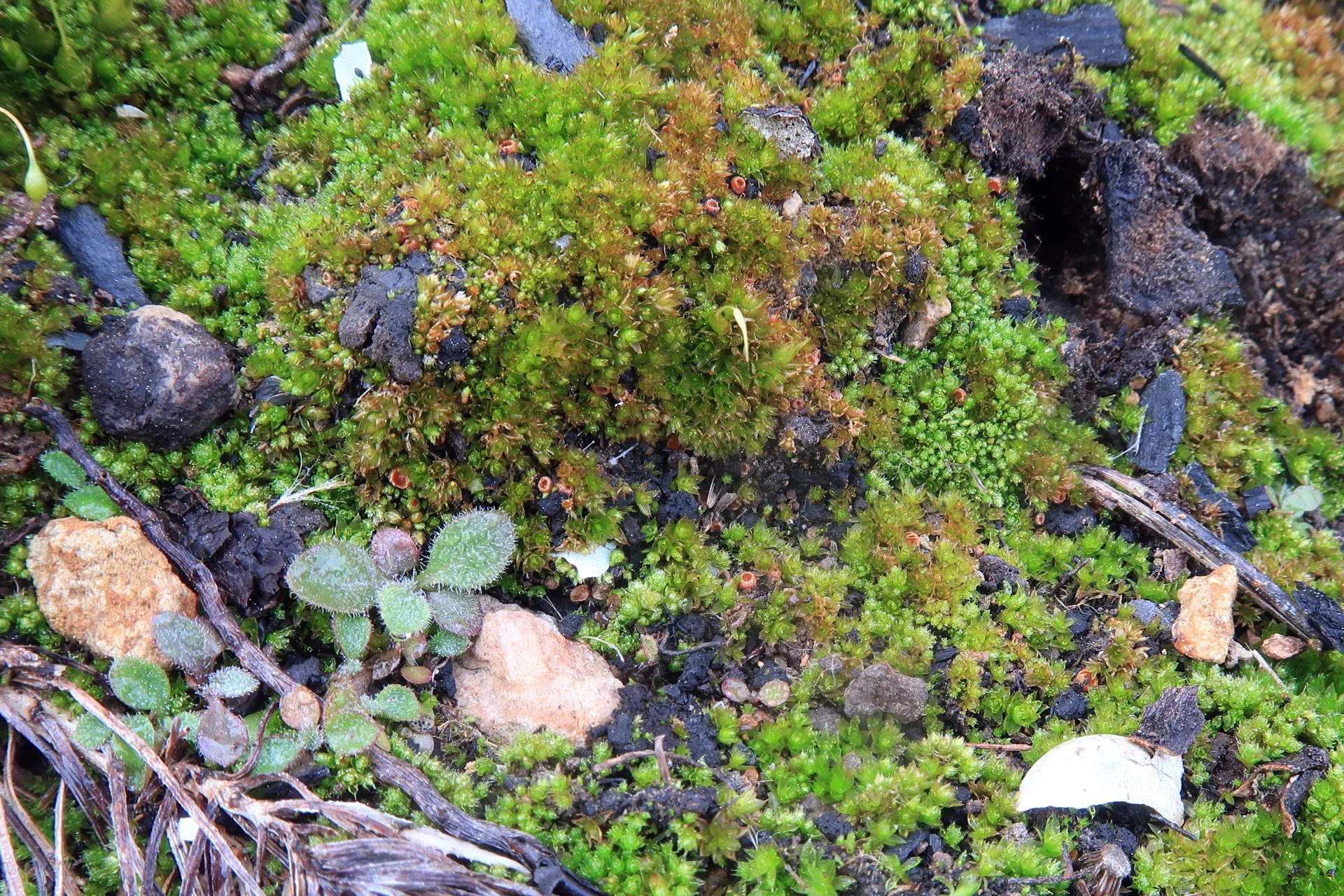
1 / 19Lamprospora carbonicola - 1 - IMG_7019
Microscopic gallery
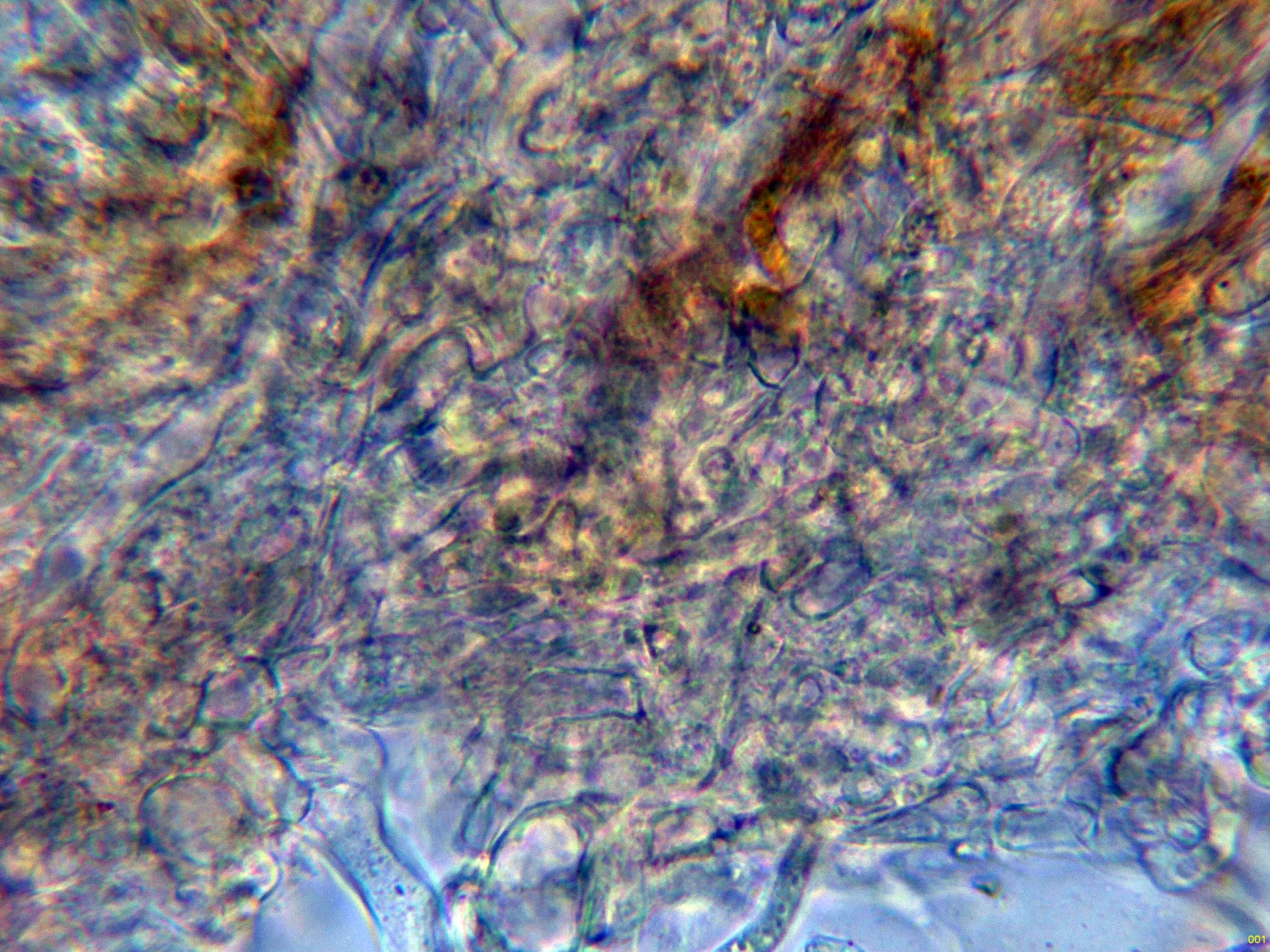
1 / 26Lamprospora carbonicola - 17 - Excípulo medular agua-001