


Lamproconium desmazieri
(Berk. & Broome) Grove
Study description
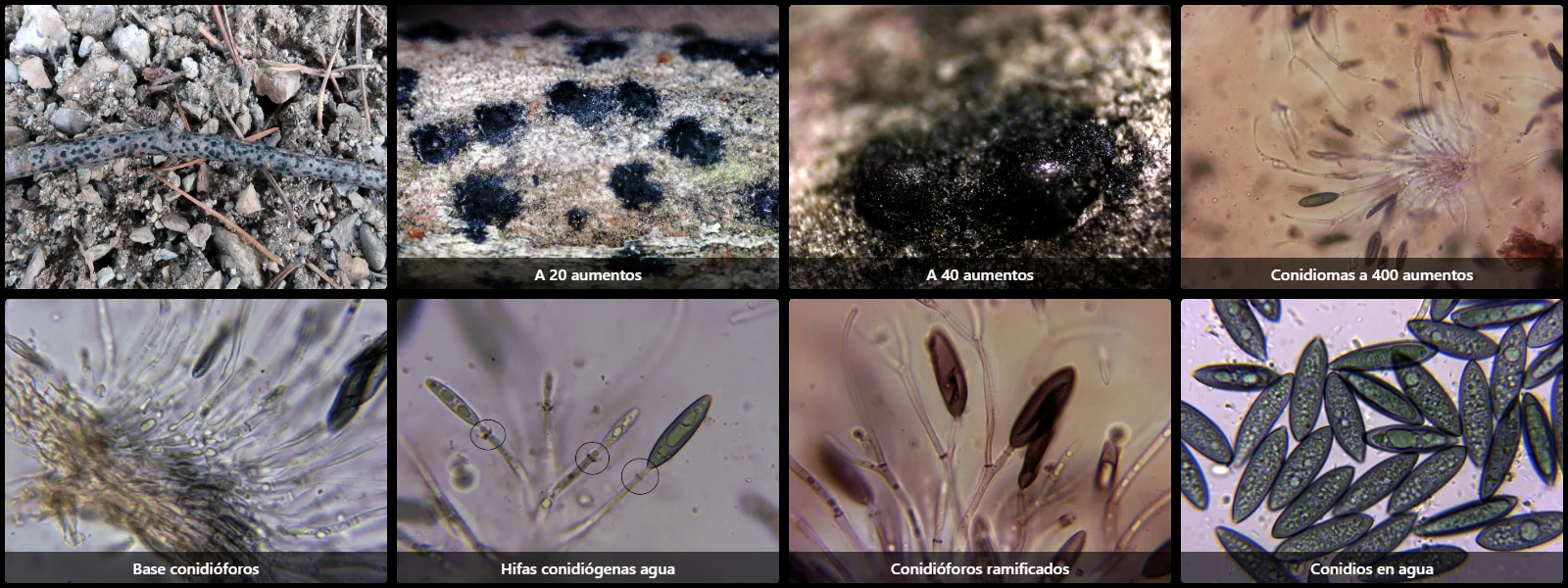
Acervuli: Formed on twigs of Tilia platyphyllos, subepidermal, erumpent, blackish, 0.55-0.8 mm diam.
Conidiogenous cells: Conidiophores branched at base, septate, hyaline, giving rise to cylindrical or subcylindrical conidiogenous cells with a distinct apical collarette.
Conidia: Fusiform to ellipsoid-fusiform, acute at both ends, thick-walled, unicellular, containing multiple refractive lipid droplets, bluish-green in water mounts, turning dark blue to blackish-blue in KOH, greenish in Melzer's reagent, and becoming reddish with age, 28-36 x 8-11 µm.
Conidiogenous cells: Conidiophores branched at base, septate, hyaline, giving rise to cylindrical or subcylindrical conidiogenous cells with a distinct apical collarette.
Conidia: Fusiform to ellipsoid-fusiform, acute at both ends, thick-walled, unicellular, containing multiple refractive lipid droplets, bluish-green in water mounts, turning dark blue to blackish-blue in KOH, greenish in Melzer's reagent, and becoming reddish with age, 28-36 x 8-11 µm.
Geographic references
Map generated from global occurrence data from GBIF. GBIF.
Study measurements
Values in Microns (µm)Macroscopic gallery
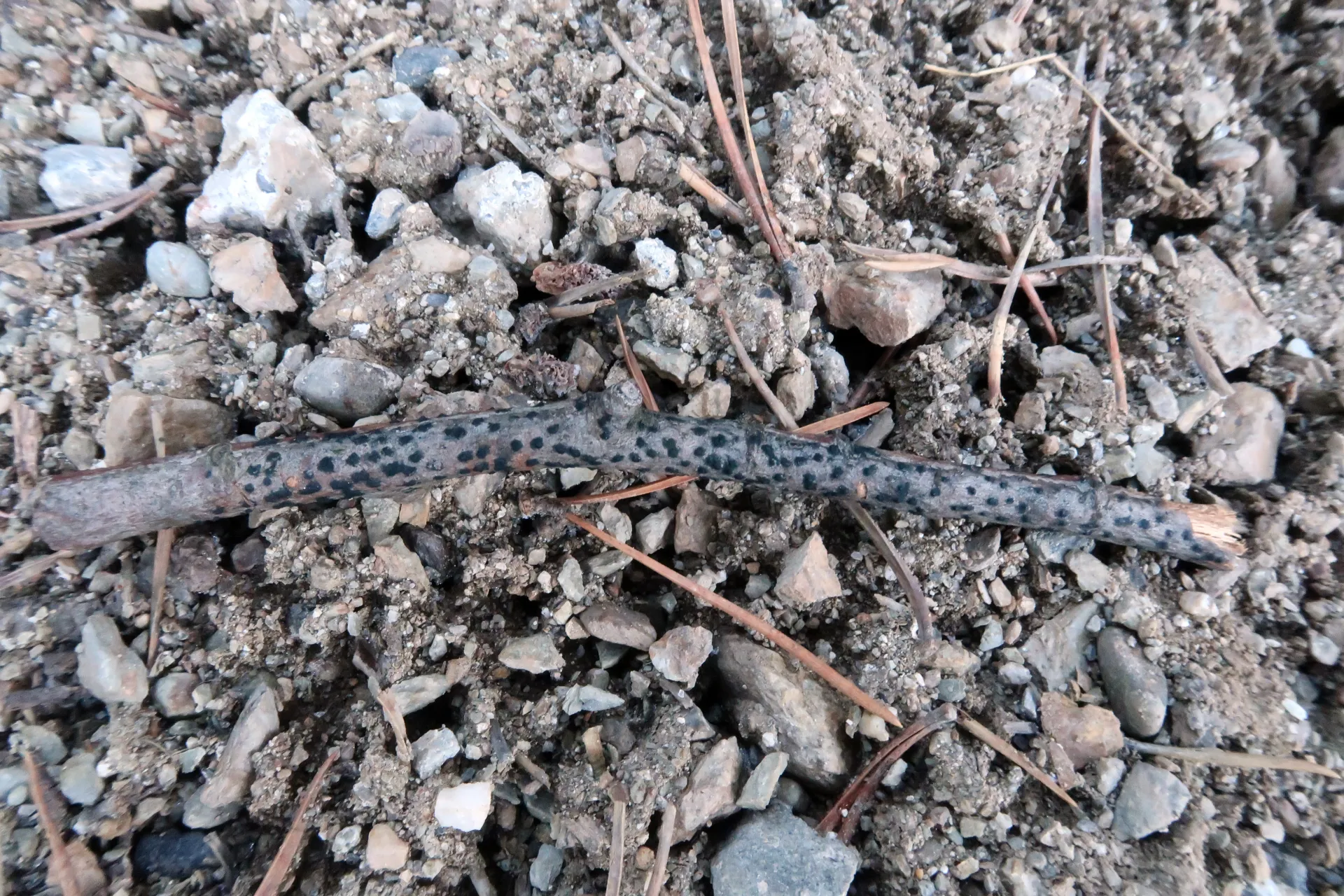
1 / 9Lamproconium desmazieri - 1 - IMG_3108
Microscopic gallery
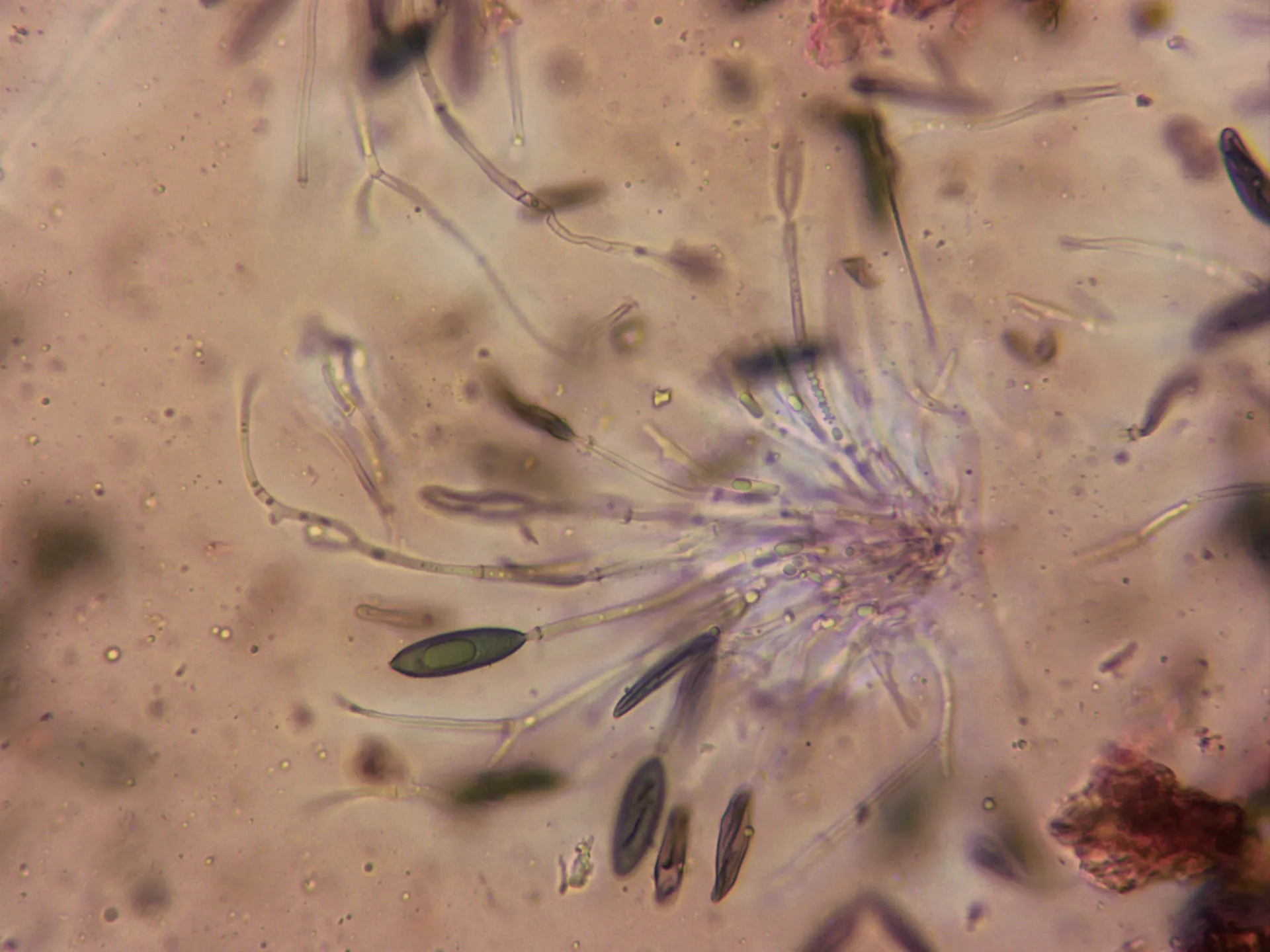
1 / 25Lamproconium desmazieri - 13 - Himenio Rojo Congo x 400