


Lactocollybia epia
(Berk. & Broome) Pegler
Study description
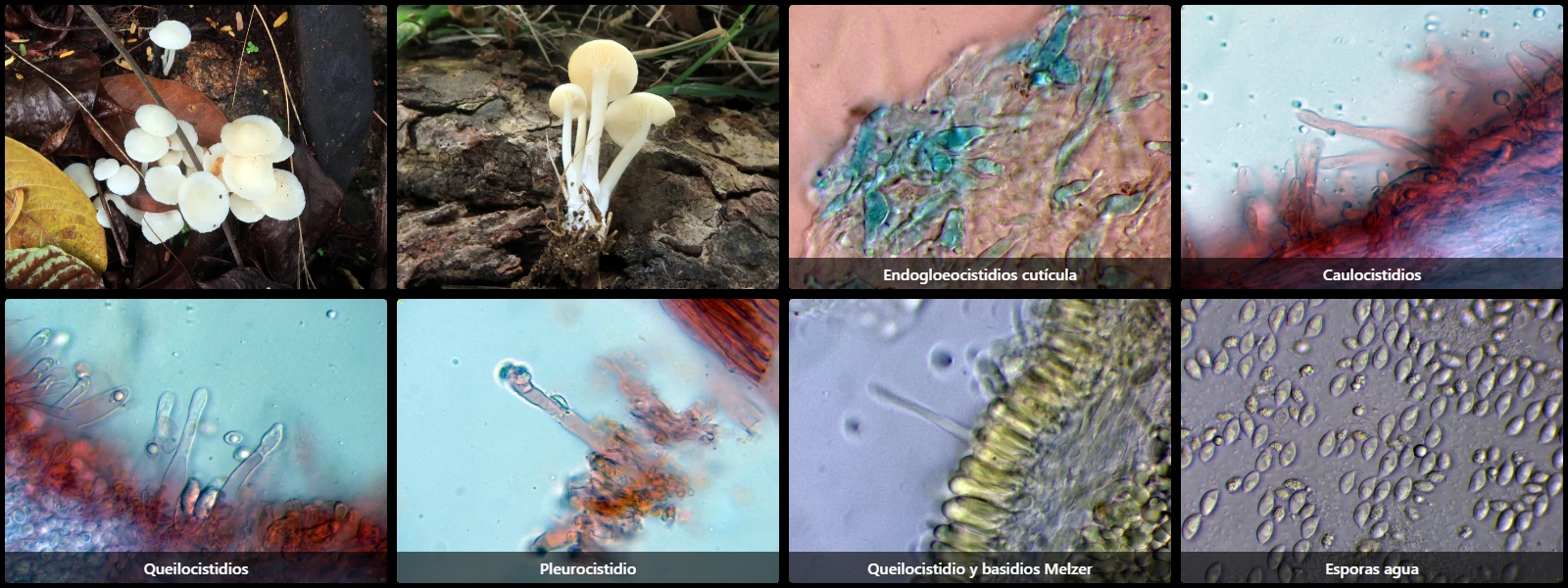
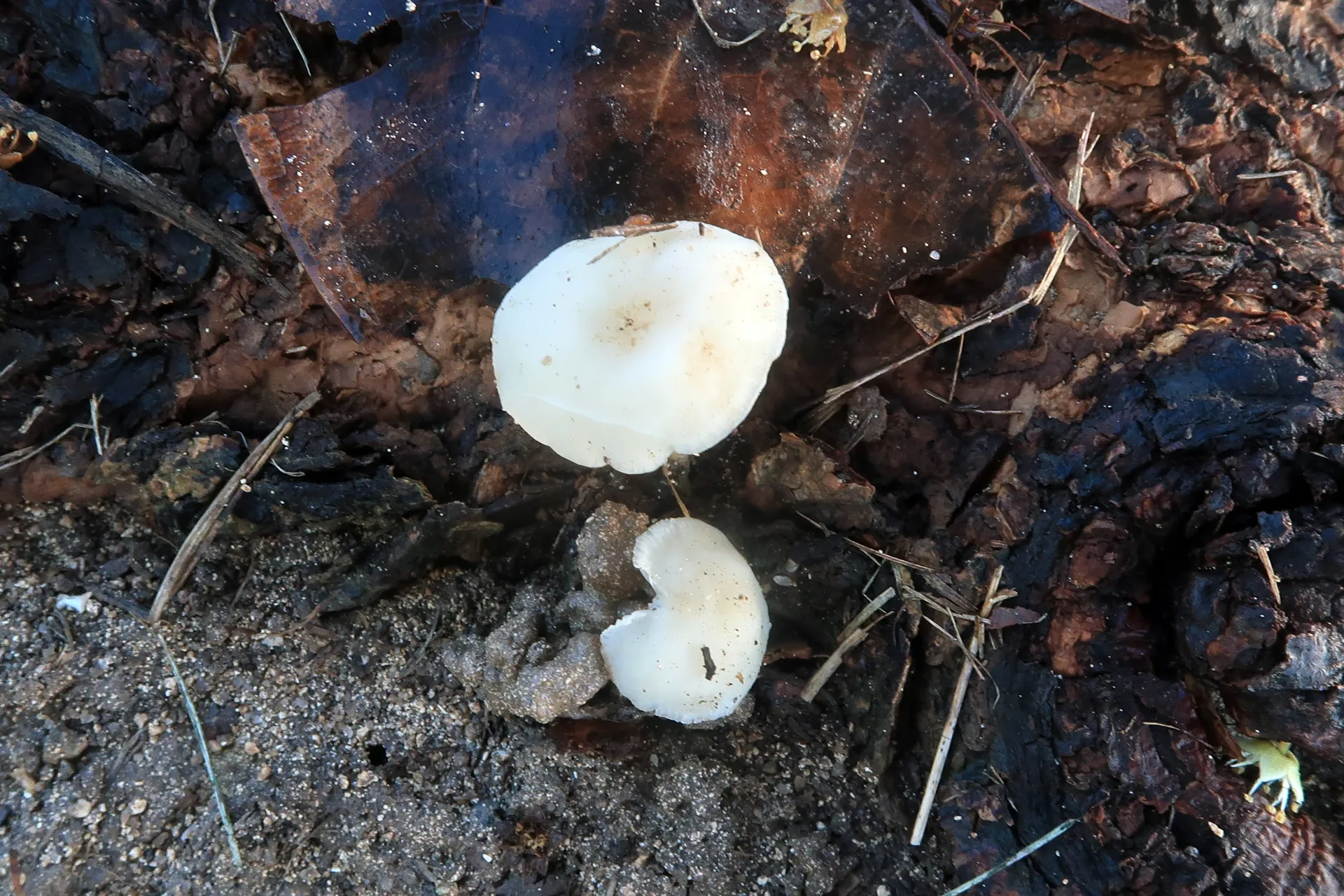
General: Lignicolous tropical species, whitish turning pale yellowish with development, thin-fleshed, without distinctive odor or taste.
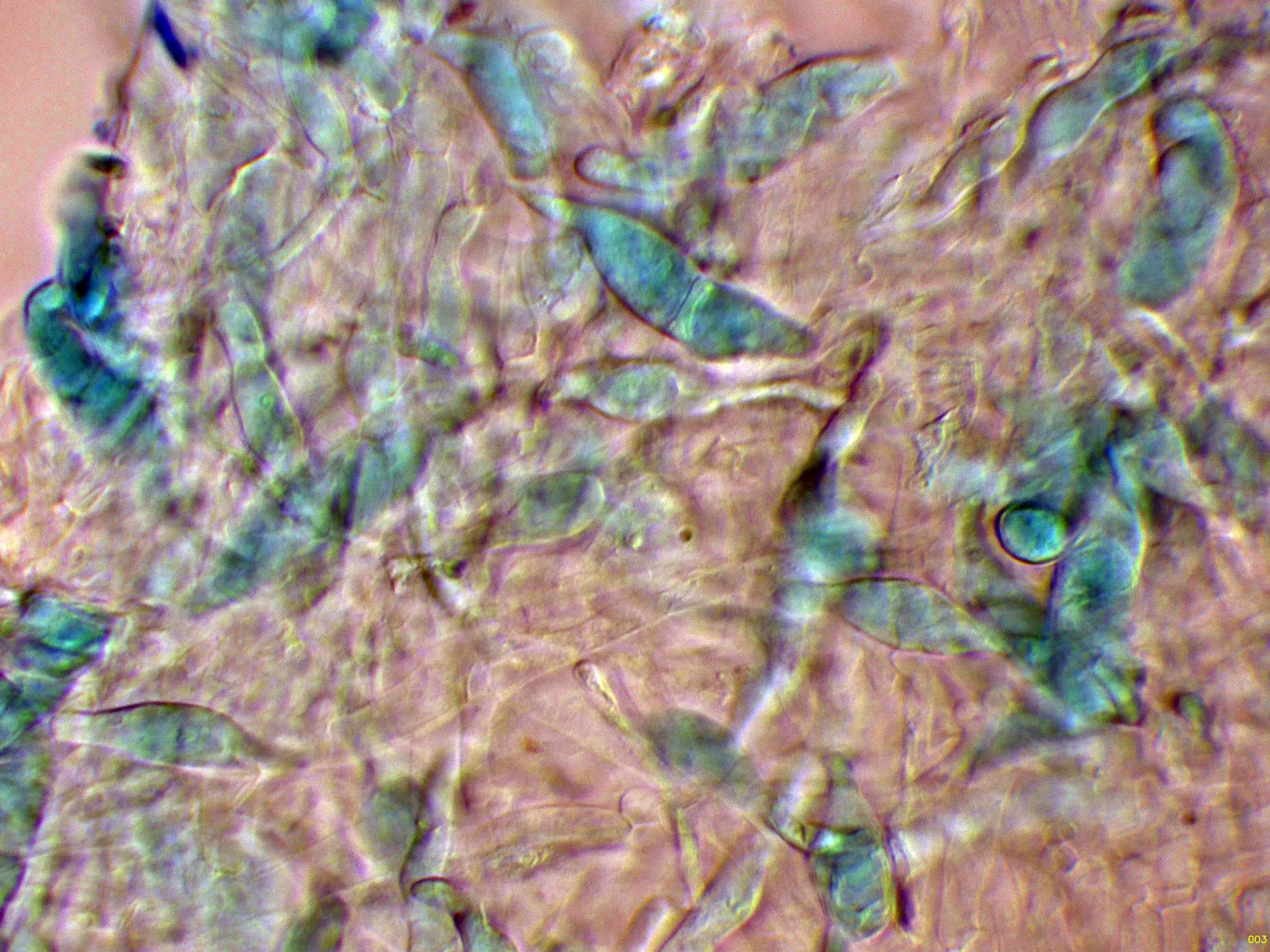
Pileipellis: Cutis of filamentous hyphae 3-12 µm wide, containing abundant large fusiform endogloeocystidia that stain metachromatically in Cresyl blue.
Caulocystidia: Cylindrical to slightly fusiform, present especially on upper stipe.
Cheilocystidia: Abundant, subfusiform to lageniform, 40-53 x 7-11 µm, projecting distinctly above the basidia.
Pleurocystidia: Scattered, similar in morphology and size.
Hymenial gloeocystidia: Deeply embedded in the hymenium, up to 13 µm wide.
Basidia: Clavate, small, 20-27 x 7-10 µm, clamped, 4-spored.
Spores: Ellipsoid to amygdaliform, hyaline, smooth, thin-walled, mostly with a large oil guttule, inamyloid in Melzer's reagent.
Herbarium vouchers: JTP2161/24, JTP2351/24, JTP2364/25, and JTP2536/25.
Pileipellis: Cutis of filamentous hyphae 3-12 µm wide, containing abundant large fusiform endogloeocystidia that stain metachromatically in Cresyl blue.
Caulocystidia: Cylindrical to slightly fusiform, present especially on upper stipe.
Cheilocystidia: Abundant, subfusiform to lageniform, 40-53 x 7-11 µm, projecting distinctly above the basidia.
Pleurocystidia: Scattered, similar in morphology and size.
Hymenial gloeocystidia: Deeply embedded in the hymenium, up to 13 µm wide.
Basidia: Clavate, small, 20-27 x 7-10 µm, clamped, 4-spored.
Spores: Ellipsoid to amygdaliform, hyaline, smooth, thin-walled, mostly with a large oil guttule, inamyloid in Melzer's reagent.
Herbarium vouchers: JTP2161/24, JTP2351/24, JTP2364/25, and JTP2536/25.
Geographic references
Map generated from global occurrence data from GBIF. GBIF.
Study measurements
Values in Microns (µm)Macroscopic gallery
1 / 7Lactocollybia epia - 1 - IMG_8080
Microscopic gallery
1 / 30Lactocollybia epia - 10 - Endogloeocistidios epicutis A. Cresilo-003