


Lactarius subumbonatus
Lindgr.
Study description
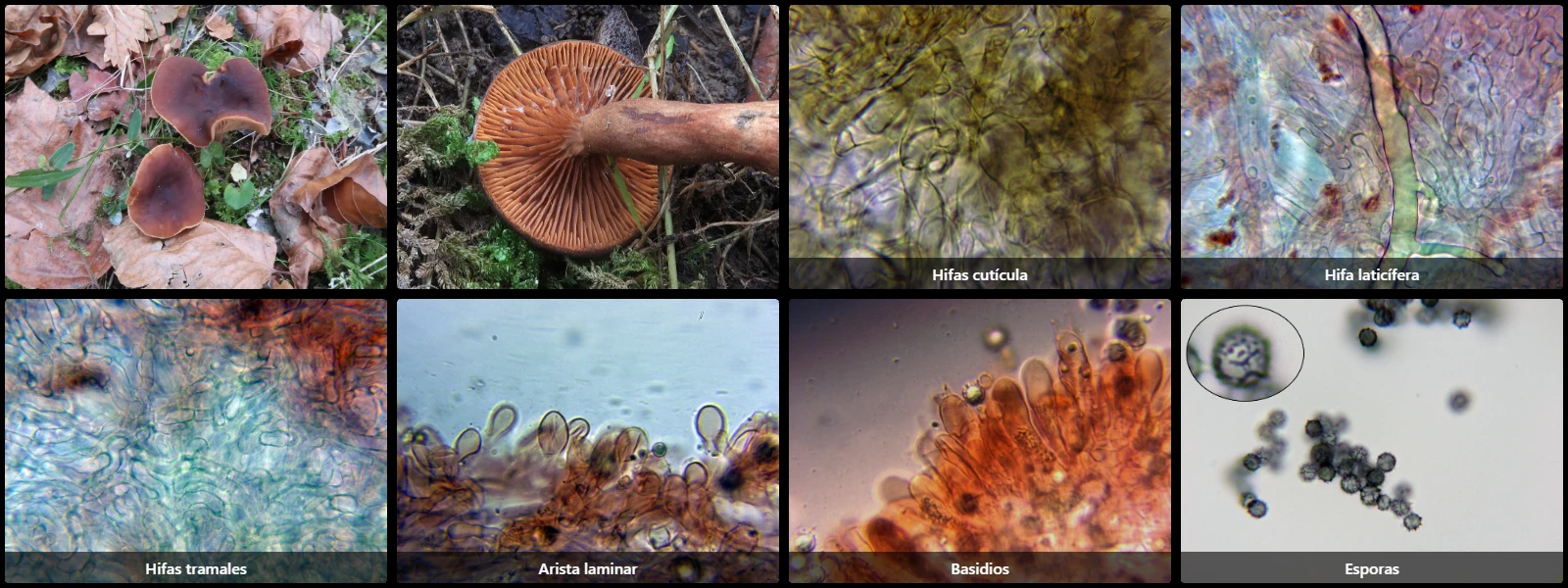
General: Featuring a uniformly dark brown pileus, occurring in beech and holm oak forests, with unchanging white latex and a sweetish but disagreeable taste and strong chicory odor.
Pileipellis: Outer layer composed of globose, vesiculose to pyriform cells, underlaid by densely interwoven filamentous hyphae with brown intracellular pigment.
Lamellar edge: Lined with abundant hyaline terminal elements (paracystidia), globose, subglobose to pyriform, 20-40 x 8-12 µm, base simple.
Basidia: Clavate, 35-55 x 9-11 µm, base simple, mostly 4-spored.
Spores: Globose to subglobose, with ridges up to 1.2 µm high interconnected into an incomplete reticulum, with a hyaline apiculus, amyloid in Melzer's reagent.
Herbarium voucher: JTP2029/24.
Pileipellis: Outer layer composed of globose, vesiculose to pyriform cells, underlaid by densely interwoven filamentous hyphae with brown intracellular pigment.
Lamellar edge: Lined with abundant hyaline terminal elements (paracystidia), globose, subglobose to pyriform, 20-40 x 8-12 µm, base simple.
Basidia: Clavate, 35-55 x 9-11 µm, base simple, mostly 4-spored.
Spores: Globose to subglobose, with ridges up to 1.2 µm high interconnected into an incomplete reticulum, with a hyaline apiculus, amyloid in Melzer's reagent.
Herbarium voucher: JTP2029/24.
Geographic references
Map generated from global occurrence data from GBIF. GBIF.
Study measurements
Values in Microns (µm)Macroscopic gallery
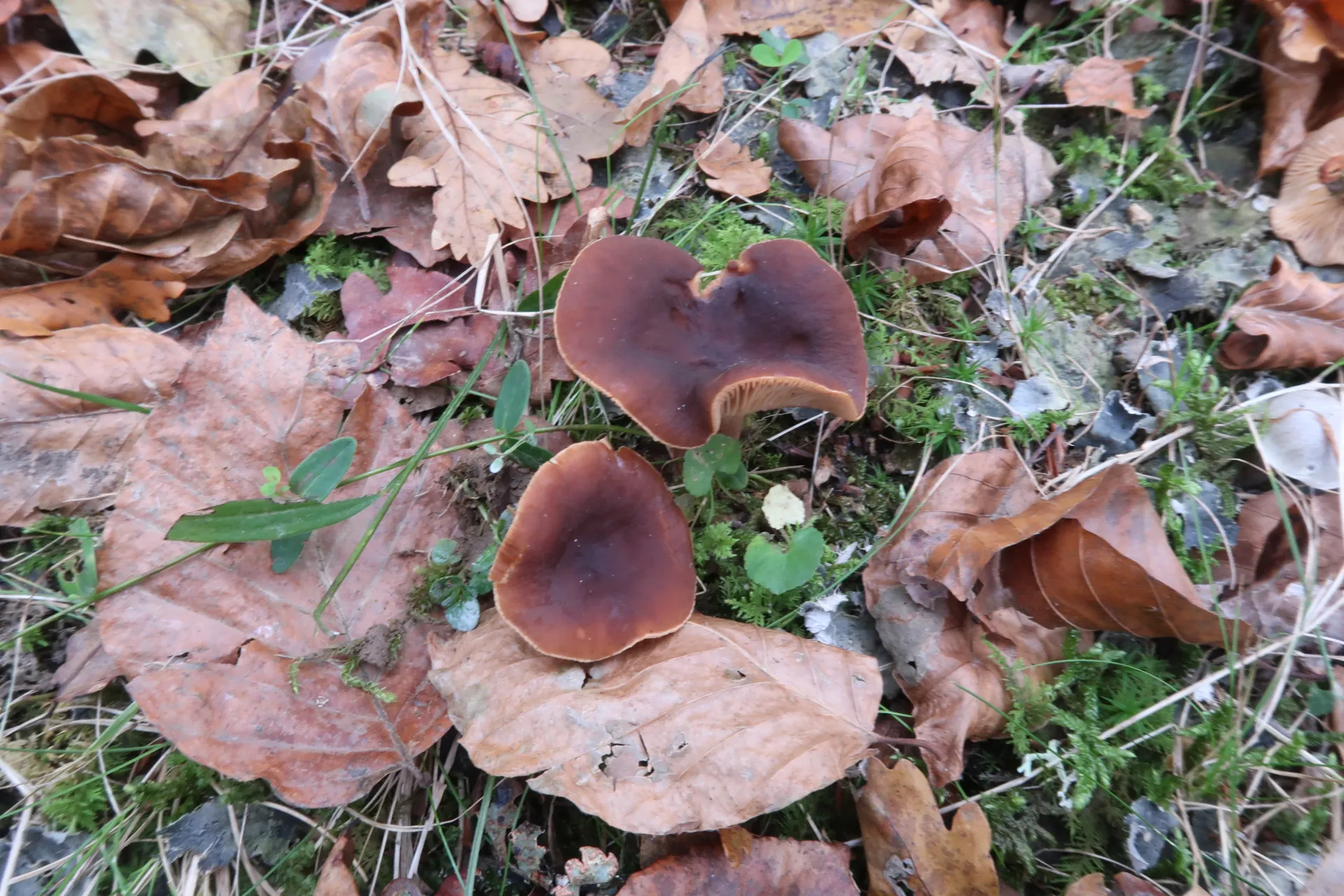
1 / 8Lactarius subumbonatus - 1 - IMG_2269
Microscopic gallery
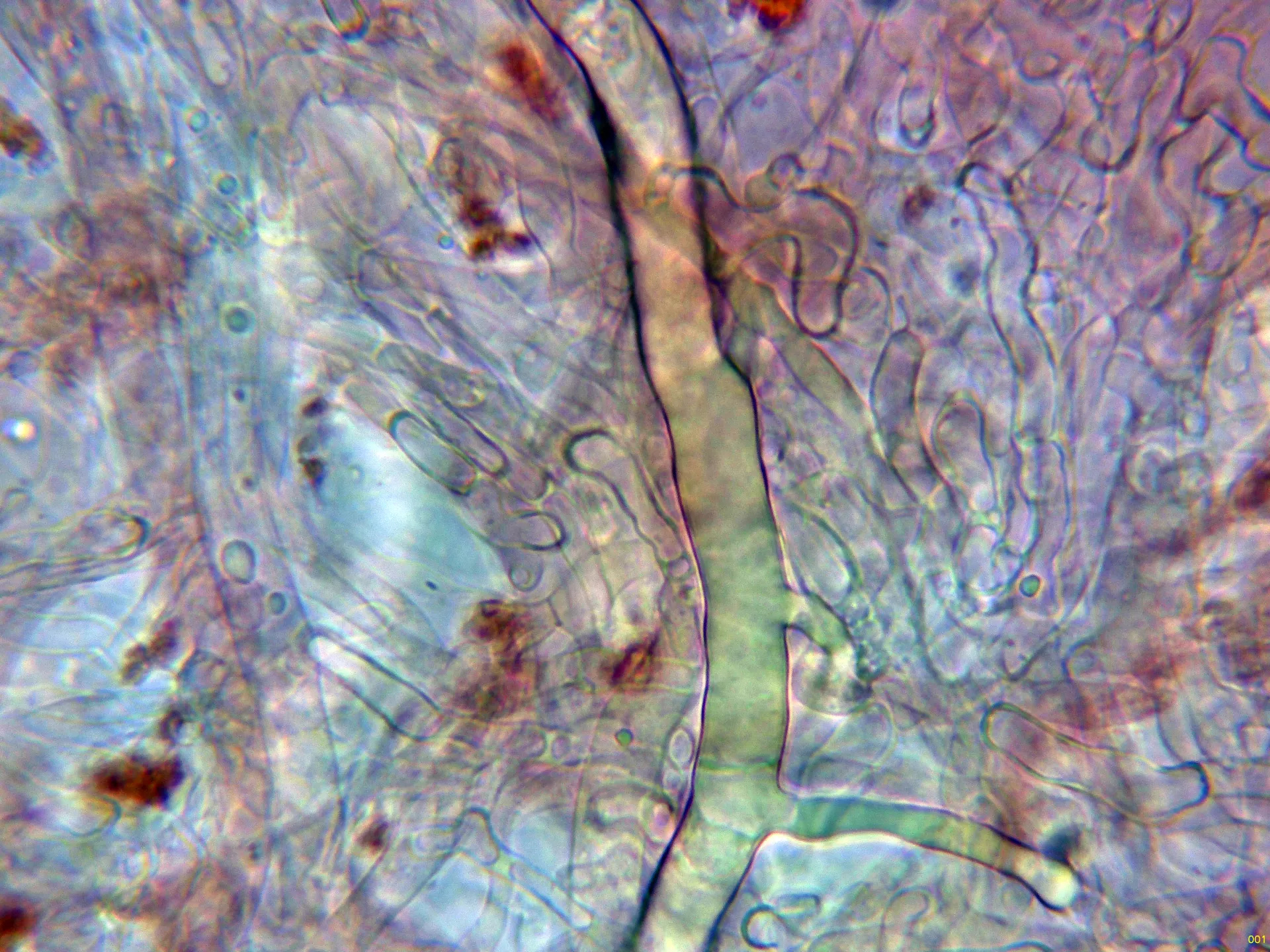
1 / 19Lactarius subumbonatus - 10 - Hifa laticifera-001