


Lactarius rubrocinctus
Fr.
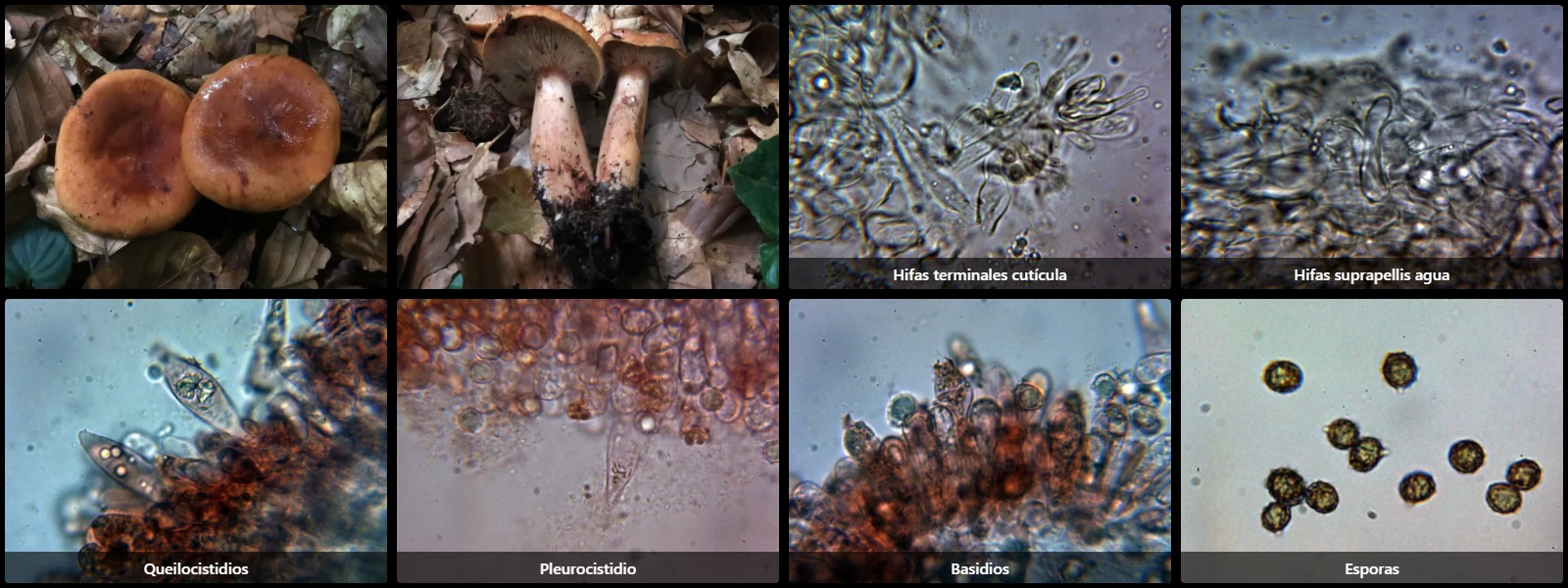
Study description
General: Inhabiting beech (Fagus sylvatica) forests, with a marked preference for calcareous soils, unchanging white latex, and a slightly bitter, astringent taste.
Pileipellis: Epithelium-like layer of subglobose, ovoid to pyriform cells 10-40 x 10-25 µm, giving rise to cylindrical hair-like terminal hyphae 5-10 µm wide.
Cheilocystidia: Scarce, fusiform, 40-75 x 5-7 µm, with granular contents.
Pleurocystidia: Scattered, scarce, identical in shape to cheilocystidia, 60-100 x 5-12 µm.
Basidia: Clavate, 35-50 x 10-13 µm, base simple, 4-spored.
Spores: Subspherical to ellipsoid, with numerous warts connecting into short ridges up to 1.2 µm high, interconnected without forming a reticulum, with a hyaline apiculus, amyloid in Melzer's reagent.
Pileipellis: Epithelium-like layer of subglobose, ovoid to pyriform cells 10-40 x 10-25 µm, giving rise to cylindrical hair-like terminal hyphae 5-10 µm wide.
Cheilocystidia: Scarce, fusiform, 40-75 x 5-7 µm, with granular contents.
Pleurocystidia: Scattered, scarce, identical in shape to cheilocystidia, 60-100 x 5-12 µm.
Basidia: Clavate, 35-50 x 10-13 µm, base simple, 4-spored.
Spores: Subspherical to ellipsoid, with numerous warts connecting into short ridges up to 1.2 µm high, interconnected without forming a reticulum, with a hyaline apiculus, amyloid in Melzer's reagent.
Geographic references
Map generated from global occurrence data from GBIF. GBIF.
Study measurements
Values in Microns (µm)Macroscopic gallery
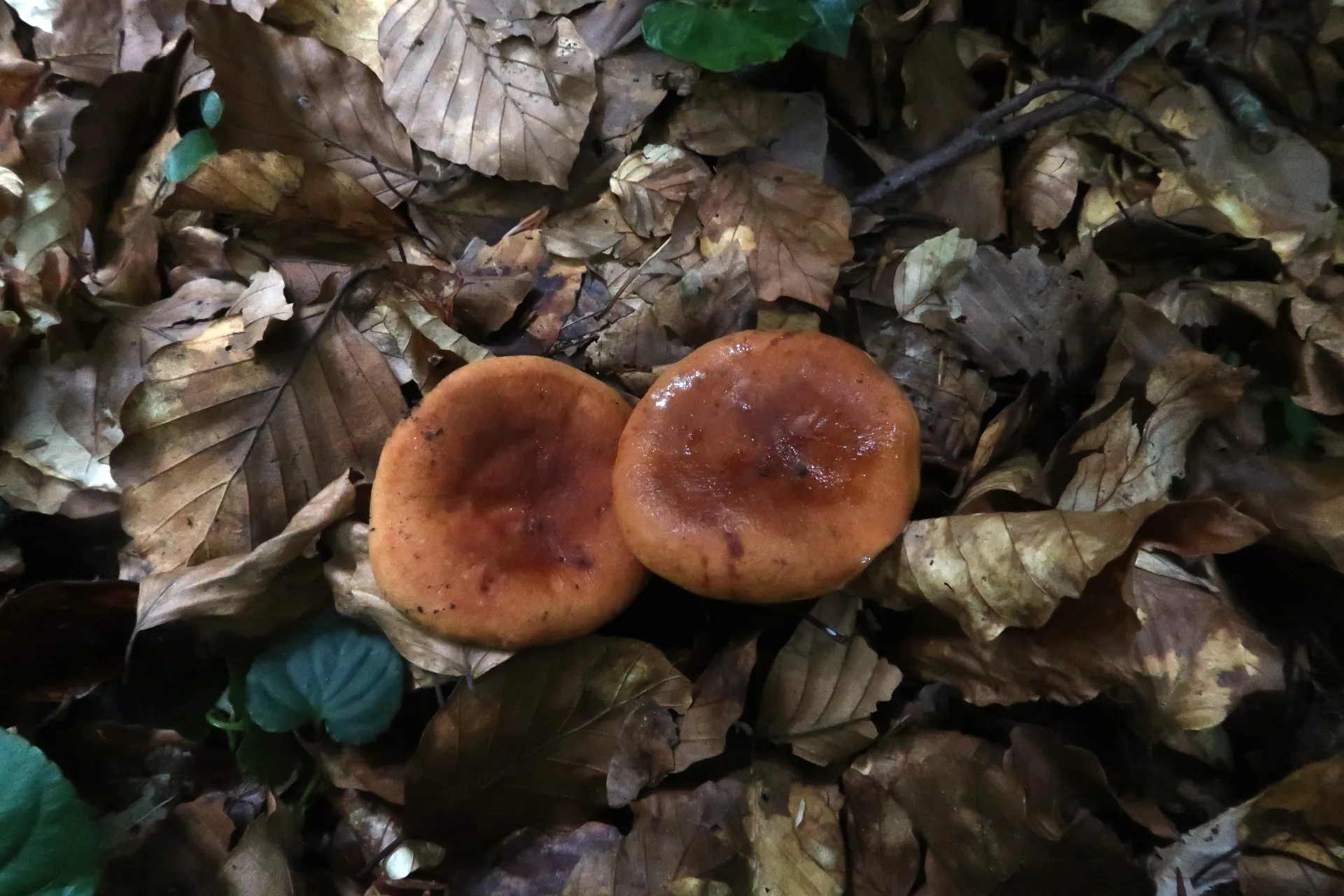
1 / 4Lactarius rubrocinctus - 1 - IMG_7074
Microscopic gallery
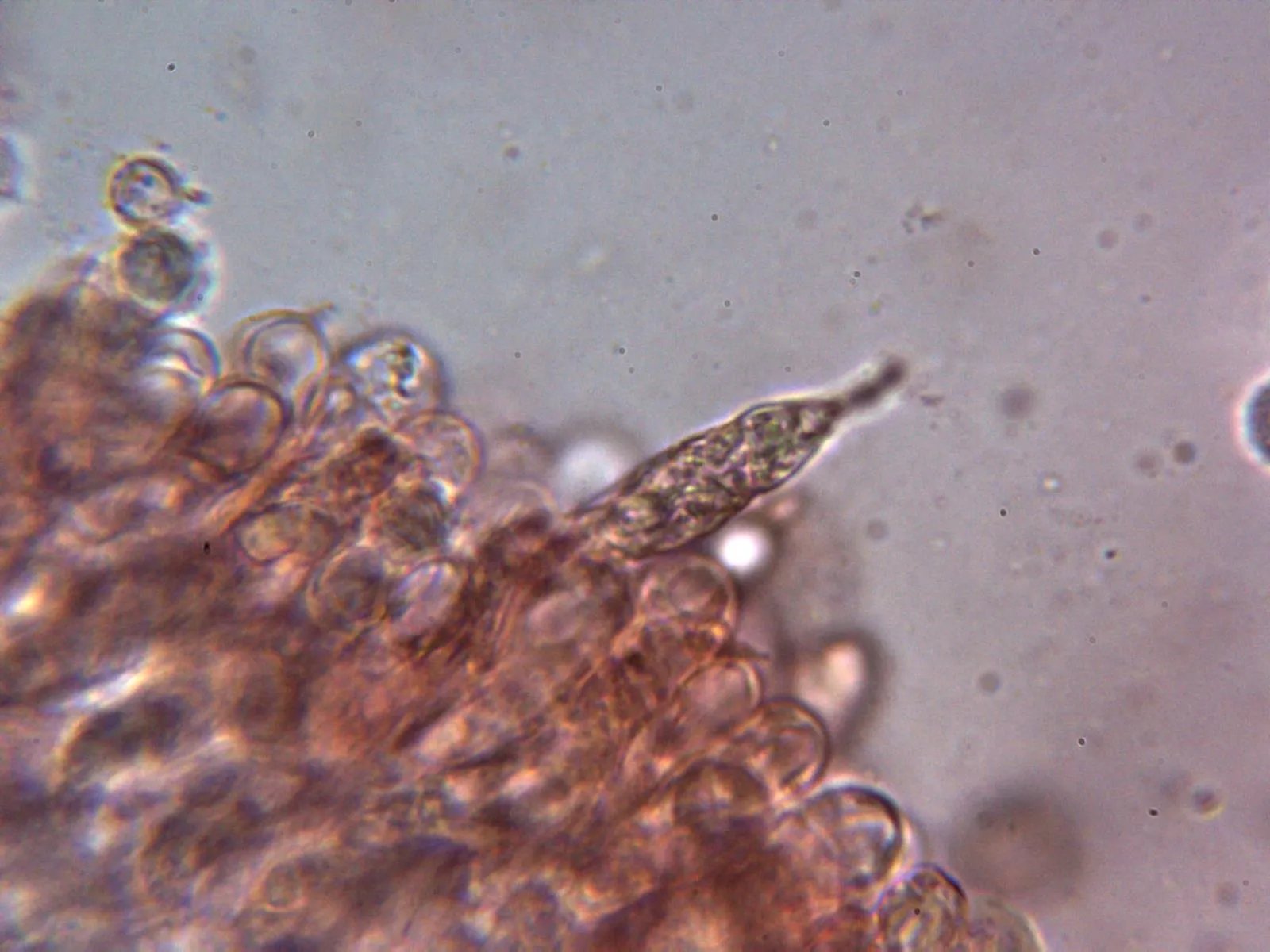
1 / 12Lactarius rubrocinctus - 10 - Queilocistidio 2