


Lactarius romagnesii
Bon
Study description
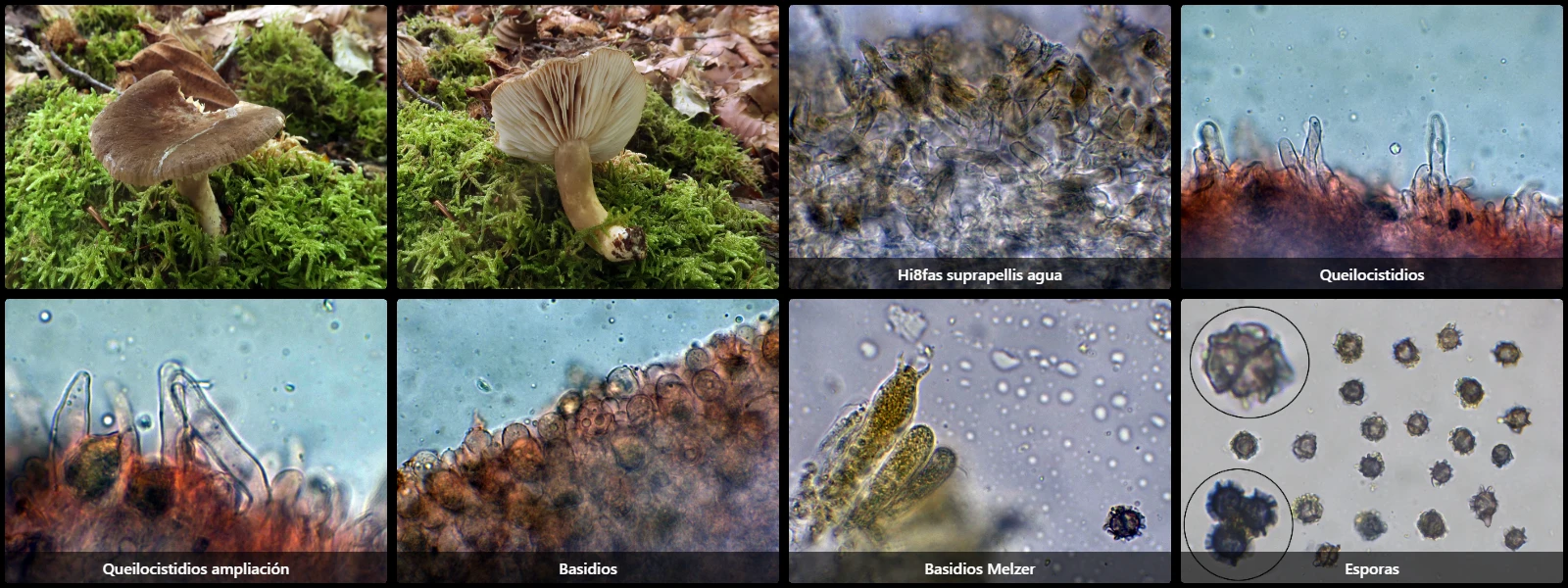
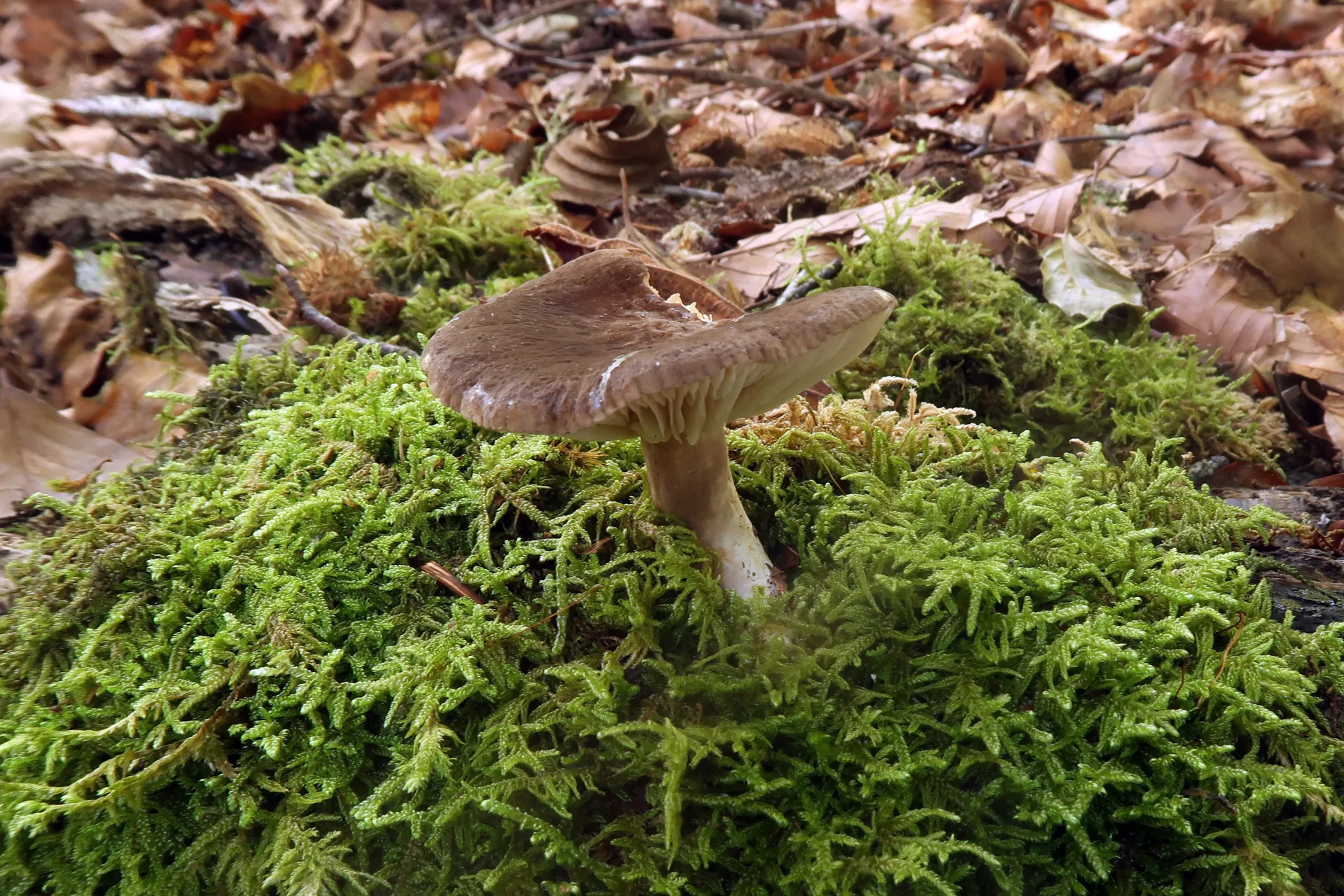
General: Typical of beech (Fagus sylvatica) woods, featuring a uniformly dark brown pileus, unchanging white latex, and an acrid taste.
Pileipellis: Composed of emergent cylindrical terminal hyphae 4-7 µm wide with abundant pale brown intracellular pigment, underlaid by shorter, broader hyaline cells up to 12 µm wide.
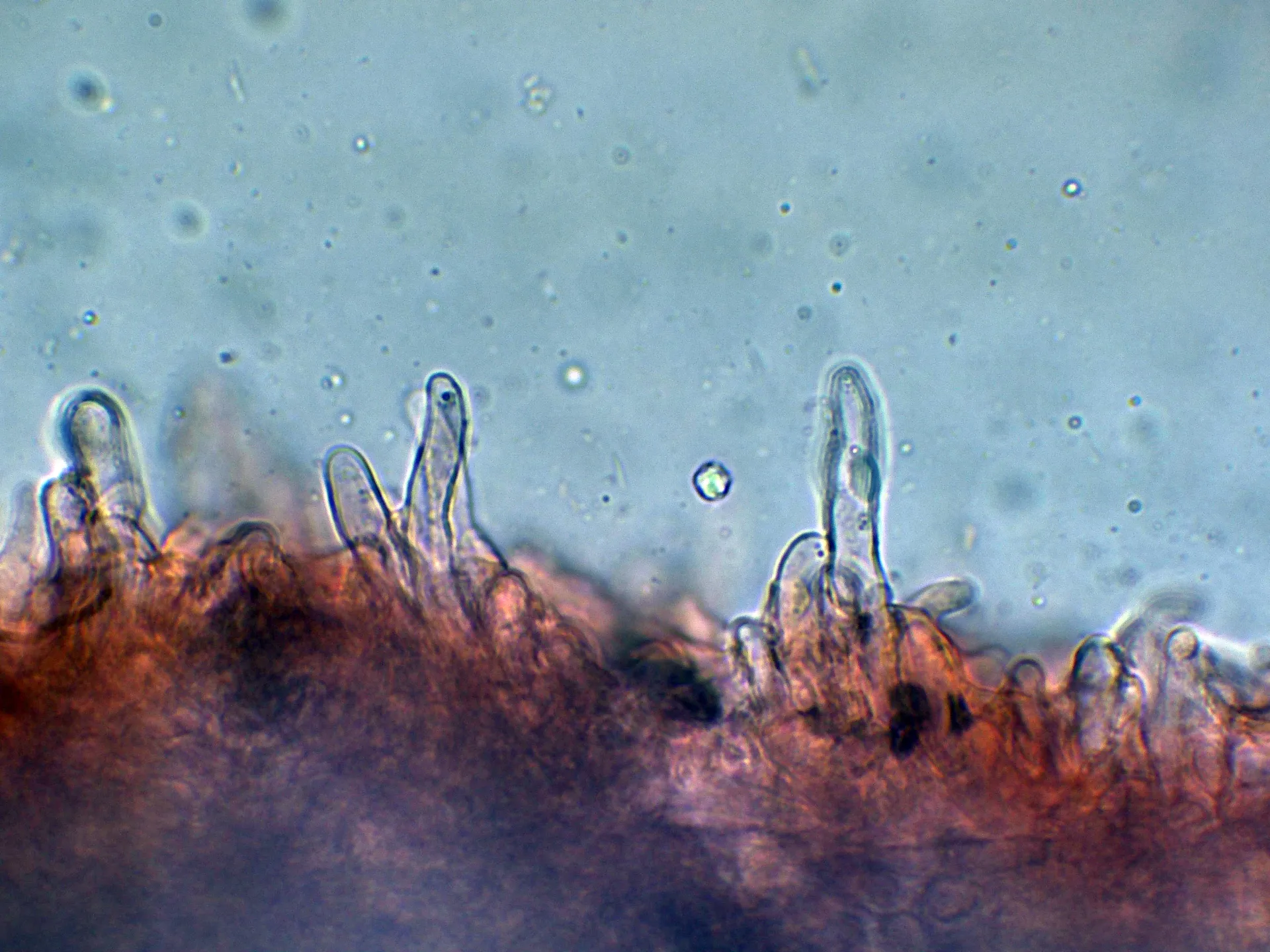
Cheilocystidia: Numerous, polymorphous, mostly cylindrical, hyaline, 45-80 x 6-9 µm.
Pleurocystidia: Not observed.
Basidia: Cylindric-clavate, 45-65 x 10-13 µm, base simple, 4-spored.
Spores: Subspherical, ornamented with coarse ridges up to 3 µm high, interconnected without forming a complete reticulum, with a hyaline apiculus, strongly amyloid in Melzer's reagent.
Pileipellis: Composed of emergent cylindrical terminal hyphae 4-7 µm wide with abundant pale brown intracellular pigment, underlaid by shorter, broader hyaline cells up to 12 µm wide.
Cheilocystidia: Numerous, polymorphous, mostly cylindrical, hyaline, 45-80 x 6-9 µm.
Pleurocystidia: Not observed.
Basidia: Cylindric-clavate, 45-65 x 10-13 µm, base simple, 4-spored.
Spores: Subspherical, ornamented with coarse ridges up to 3 µm high, interconnected without forming a complete reticulum, with a hyaline apiculus, strongly amyloid in Melzer's reagent.
Geographic references
Map generated from global occurrence data from GBIF. GBIF.
Study measurements
Values in Microns (µm)Macroscopic gallery
1 / 5Lactarius romagnesii - 1 - IMG_0139
Microscopic gallery
1 / 9Lactarius romagnesii - 10 - Queilocistidios-001