


Lactarius pterosporus
Romagn.
Study description
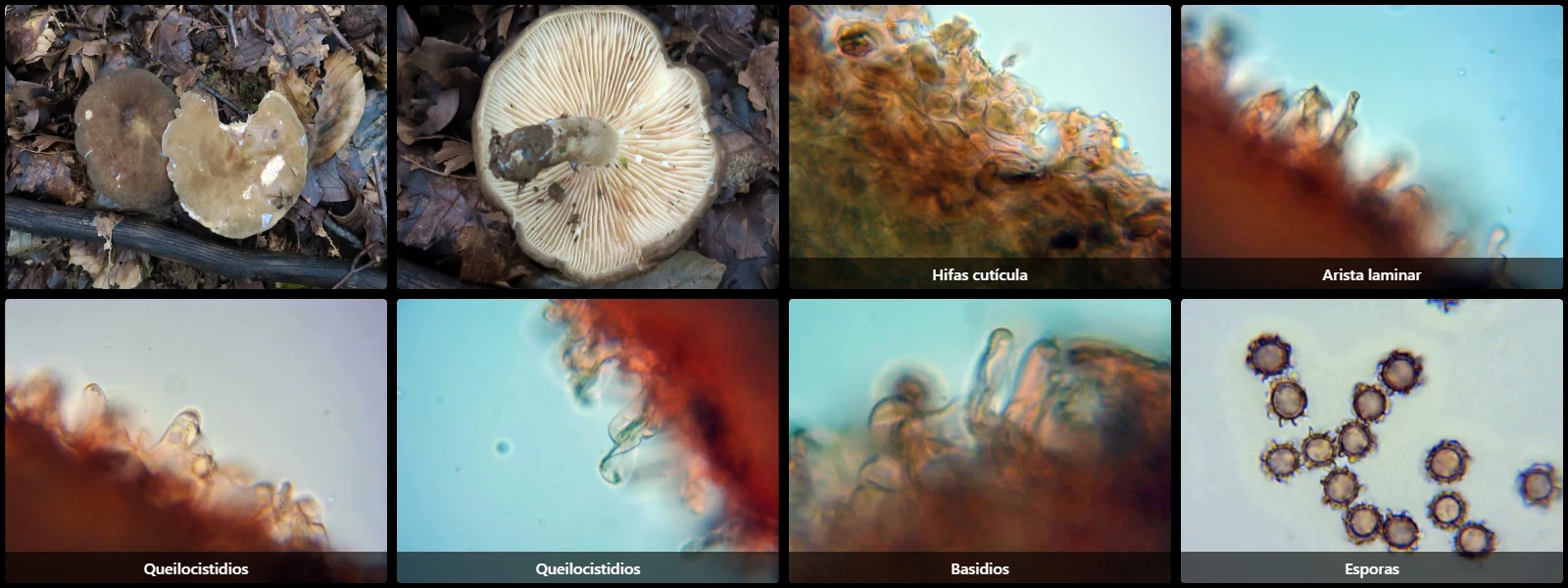
General: Associated with Fagus sylvatica, with a marked preference for calcareous soils, white latex that dries reddish on the lamellae, and an acrid taste.
Pileipellis: Suprapellis composed of filamentous terminal hyphae 4-7 µm wide arranged in a palisade, overlying subglobose to short-cylindrical cells up to 20 µm long and 15 µm wide.
Cheilocystidia: Polymorphous, predominantly cylindrical, 30-50 x 5-8 µm, generally hyaline and lacking refractive contents.
Pleurocystidia: Not observed.
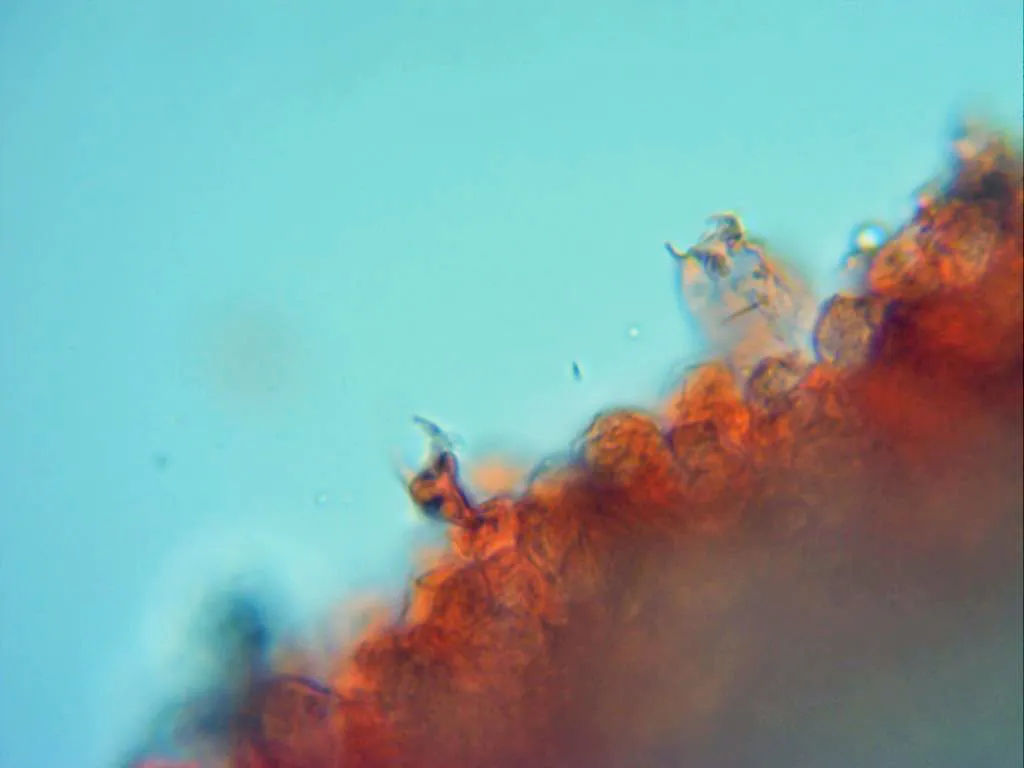
Basidia: Clavate, slightly ventricose, 55-70 x 10-13 µm, base simple, 4-spored.
Spores: Subspherical, ornamented with prominent winged ridges (pterate ornamentation) exceeding 2 µm in height, interconnected without forming a complete reticulum, with a hyaline apiculus, strongly amyloid in Melzer's reagent.
Pileipellis: Suprapellis composed of filamentous terminal hyphae 4-7 µm wide arranged in a palisade, overlying subglobose to short-cylindrical cells up to 20 µm long and 15 µm wide.
Cheilocystidia: Polymorphous, predominantly cylindrical, 30-50 x 5-8 µm, generally hyaline and lacking refractive contents.
Pleurocystidia: Not observed.
Basidia: Clavate, slightly ventricose, 55-70 x 10-13 µm, base simple, 4-spored.
Spores: Subspherical, ornamented with prominent winged ridges (pterate ornamentation) exceeding 2 µm in height, interconnected without forming a complete reticulum, with a hyaline apiculus, strongly amyloid in Melzer's reagent.
Geographic references
Map generated from global occurrence data from GBIF. GBIF.
Study measurements
Values in Microns (µm)Macroscopic gallery
1 / 3Lactarius pterosporus - 1
Microscopic gallery
1 / 10Lactarius pterosporus - 10 - Basidios tetrasporicos