


Lactarius lignyotus
Fr.
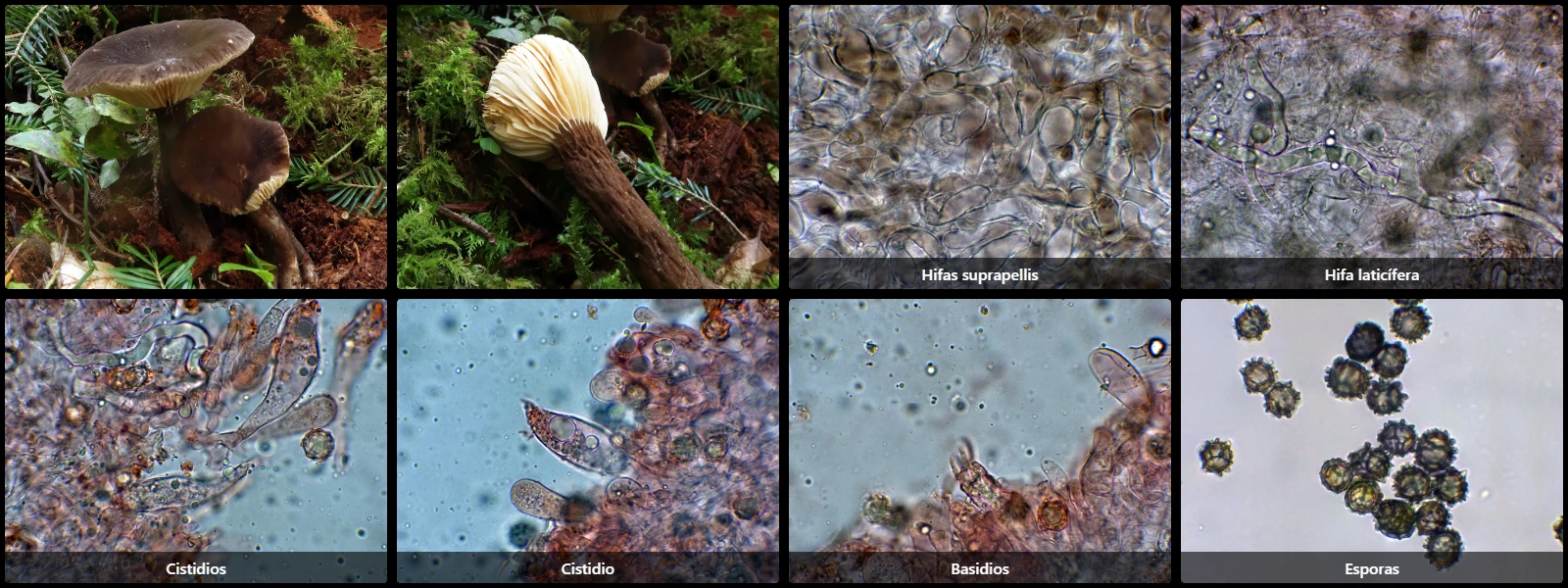
Study description
General: Associated with Picea, preferring well-decayed conifer logs, with a dark brown velvety cap and stipe, and white latex turning pinkish to reddish within minutes.
Pileipellis: Trichoderm/palisadoderm composed of cylindrical, subglobose to pyriform thick-walled cells 10-30 x 7-16 µm, filled with abundant dark brown intracellular pigment.
Cheilocystidia: Cylindrical to fusiform, some bifurcate, 25-55 x 5-7 µm.
Pleurocystidia: Similar in morphology and dimensions.
Basidia: Clavate, large, 55-70 x 10-14 µm, base simple, 4-spored.
Spores: Spherical to subspherical, ornamented with impressive interconnecting ridges up to 2 µm high without forming a complete reticulum, with a hyaline apiculus, strongly amyloid in Melzer's reagent.
Pileipellis: Trichoderm/palisadoderm composed of cylindrical, subglobose to pyriform thick-walled cells 10-30 x 7-16 µm, filled with abundant dark brown intracellular pigment.
Cheilocystidia: Cylindrical to fusiform, some bifurcate, 25-55 x 5-7 µm.
Pleurocystidia: Similar in morphology and dimensions.
Basidia: Clavate, large, 55-70 x 10-14 µm, base simple, 4-spored.
Spores: Spherical to subspherical, ornamented with impressive interconnecting ridges up to 2 µm high without forming a complete reticulum, with a hyaline apiculus, strongly amyloid in Melzer's reagent.
Geographic references
Map generated from global occurrence data from GBIF. GBIF.
Study measurements
Values in Microns (µm)Macroscopic gallery
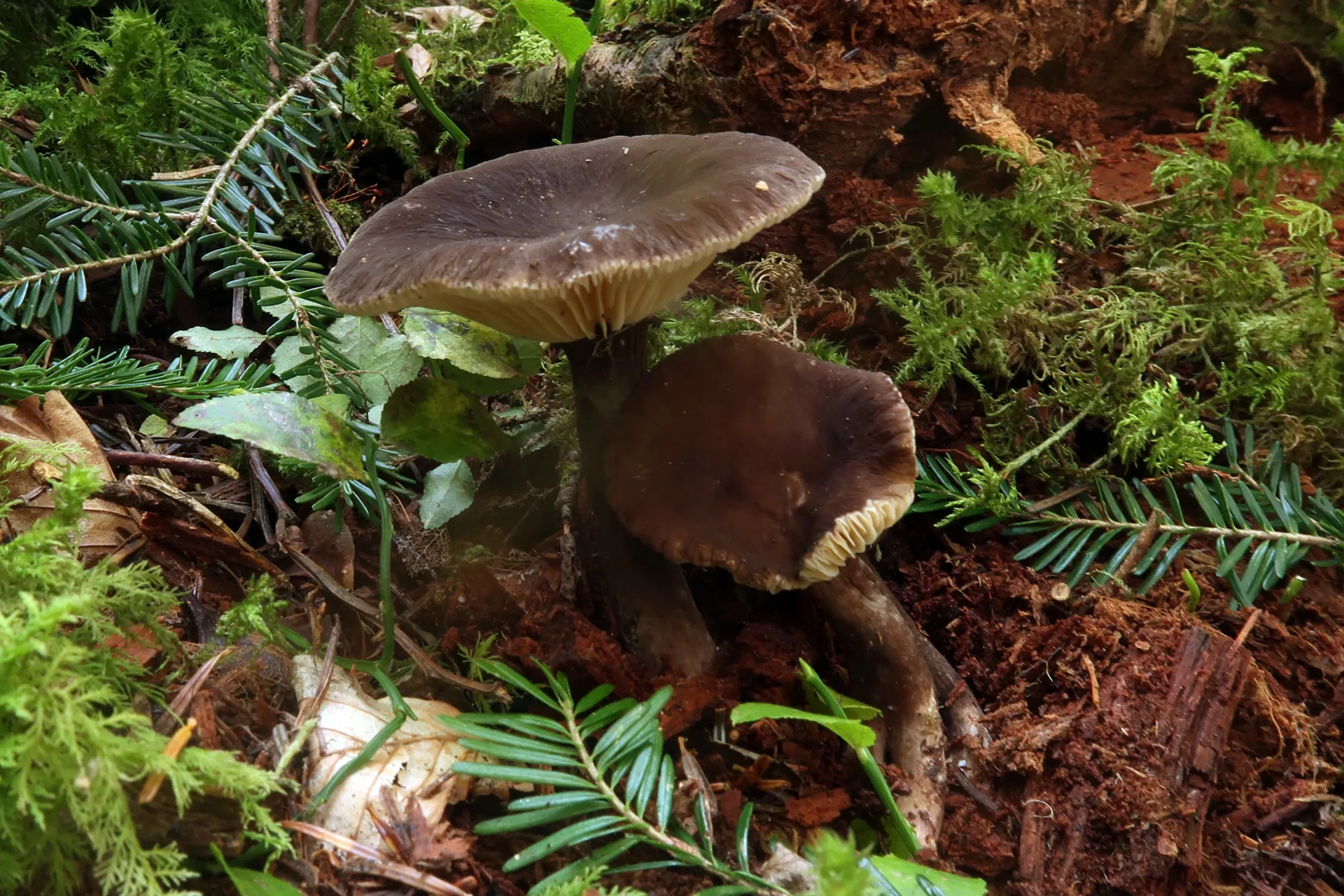
1 / 4Lactarius lignyotus - 1 - IMG_0274
Microscopic gallery
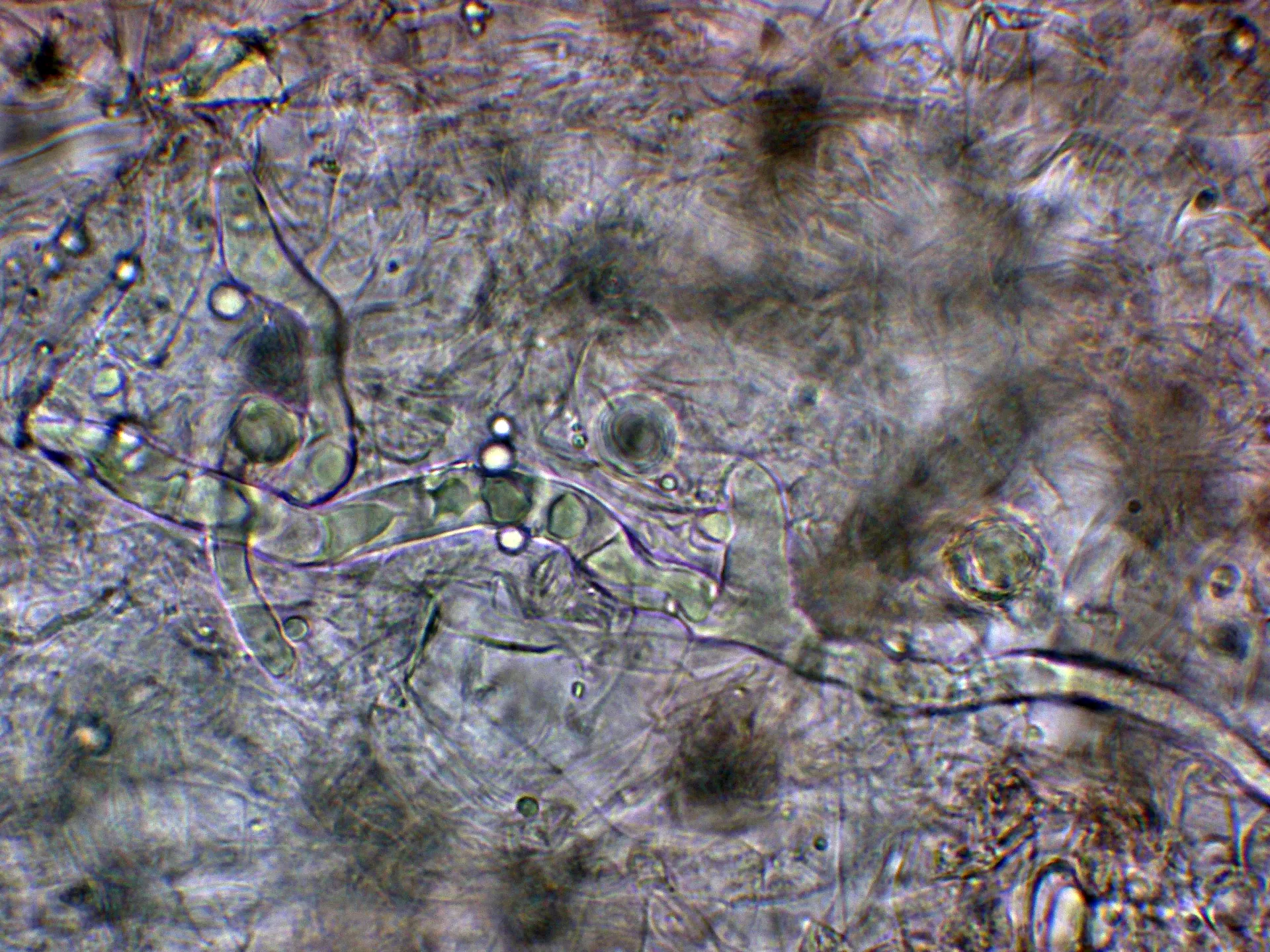
1 / 16Lactarius lignyotus - 10 - Hifa laticifera-001