


Lactarius fluens
Boud.
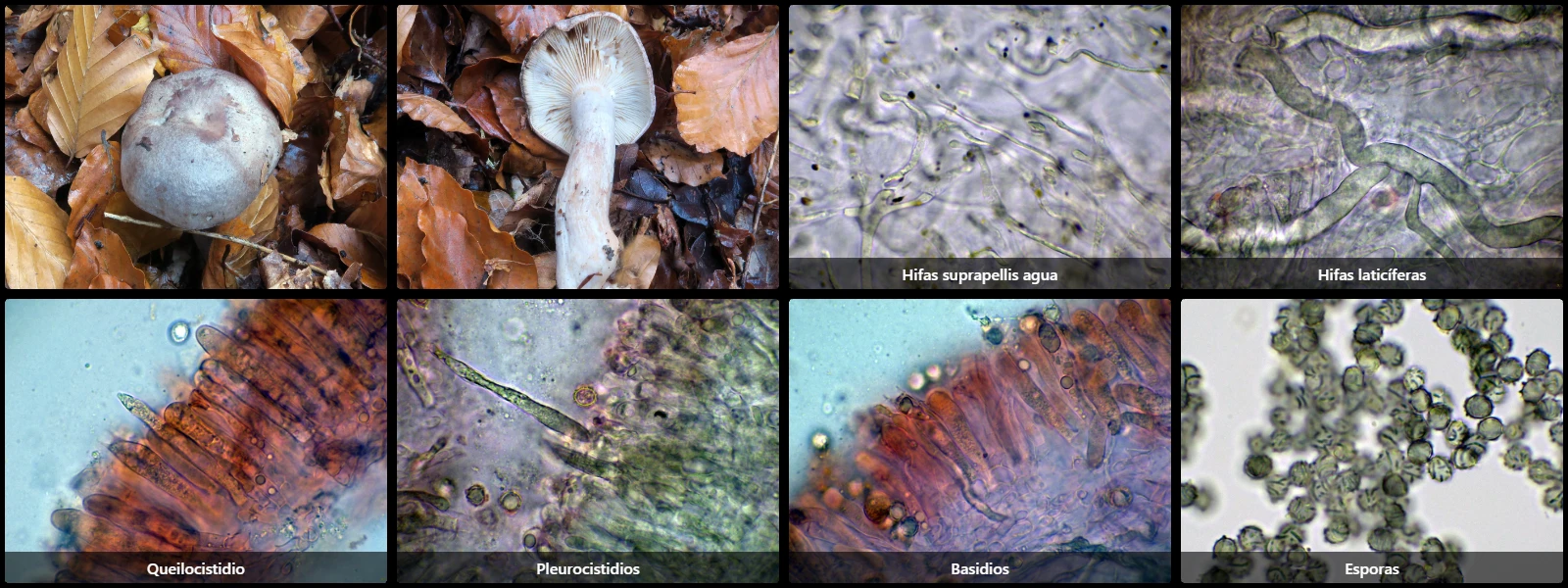
Study description
General: Inhabiting beech (Fagus sylvatica) forests, characterized by a greenish-grey pileus, white latex turning greyish within minutes, and a moderately acrid taste.
Pileipellis: Ixocutis formed by filamentous, densely interwoven hyphae 2-5 µm wide, richly branched, embedded in a gelatinous matrix, with yellowish-brown intracellular pigment.
Cheilocystidia & Pleurocystidia: Fusiform, with acute tips, 55-72 x 7-9 µm, containing abundant refractive granular contents.
Basidia: Cylindrical to slightly clavate, 40-55 x 8-11 µm, base simple, predominantly 4-spored.
Spores: Subglobose to ovoid, ornamented with broad interconnecting ridges up to 1 µm high without forming a complete reticulum, with a hyaline apiculus, amyloid in Melzer's reagent.
Herbarium voucher: JTP2666/25.
Pileipellis: Ixocutis formed by filamentous, densely interwoven hyphae 2-5 µm wide, richly branched, embedded in a gelatinous matrix, with yellowish-brown intracellular pigment.
Cheilocystidia & Pleurocystidia: Fusiform, with acute tips, 55-72 x 7-9 µm, containing abundant refractive granular contents.
Basidia: Cylindrical to slightly clavate, 40-55 x 8-11 µm, base simple, predominantly 4-spored.
Spores: Subglobose to ovoid, ornamented with broad interconnecting ridges up to 1 µm high without forming a complete reticulum, with a hyaline apiculus, amyloid in Melzer's reagent.
Herbarium voucher: JTP2666/25.
Geographic references
Map generated from global occurrence data from GBIF. GBIF.
Study measurements
Values in Microns (µm)Macroscopic gallery
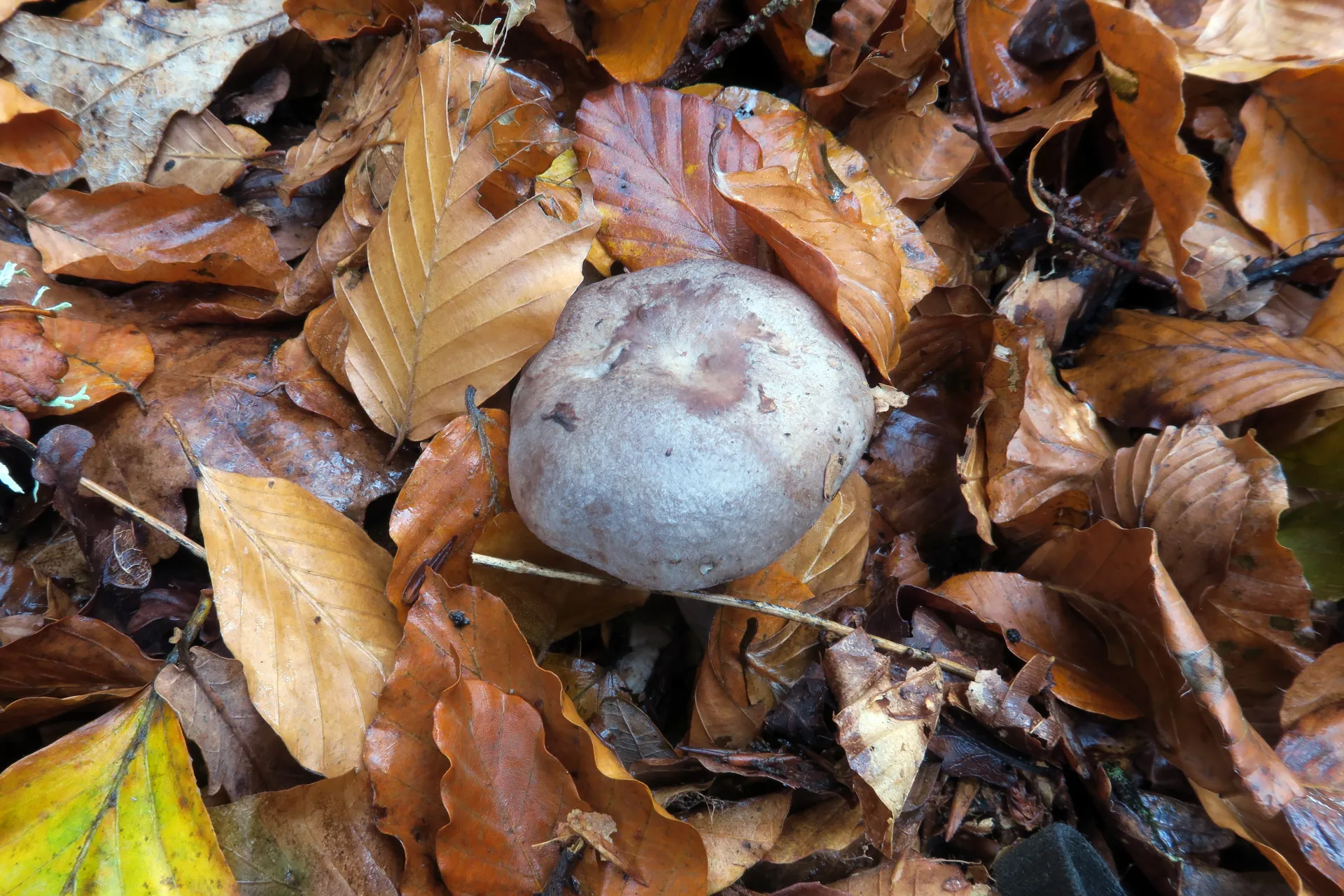
1 / 3Lactarius fluens - 1 - IMG_4695
Microscopic gallery
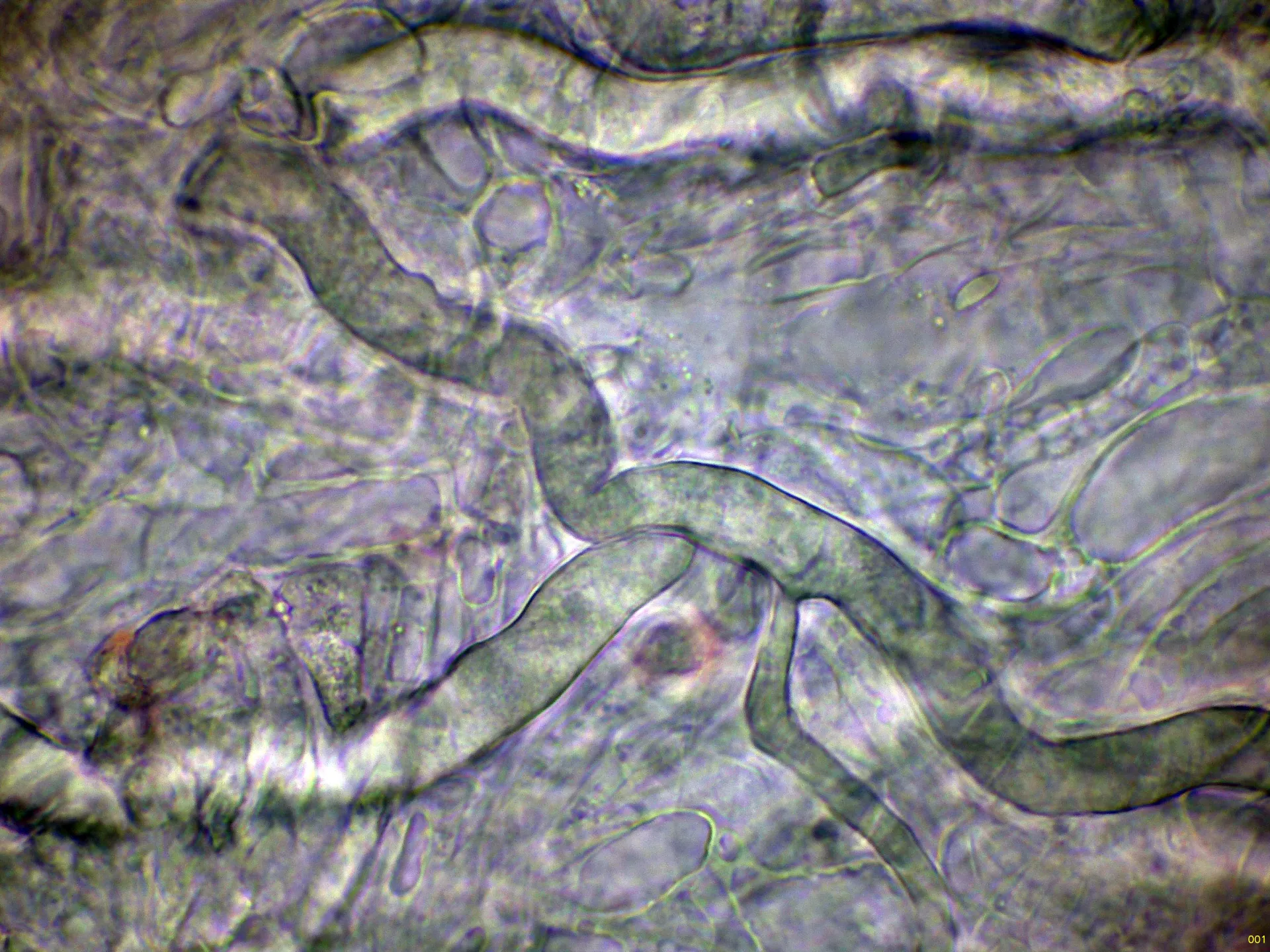
1 / 17Lactarius fluens - 10 - Hifa laticifera-001