


Lactarius decipiens
Quél.
Study description
General: Occurring under Quercus or Fagus, with white latex turning yellow within minutes on drying, and an acrid, bitter taste.
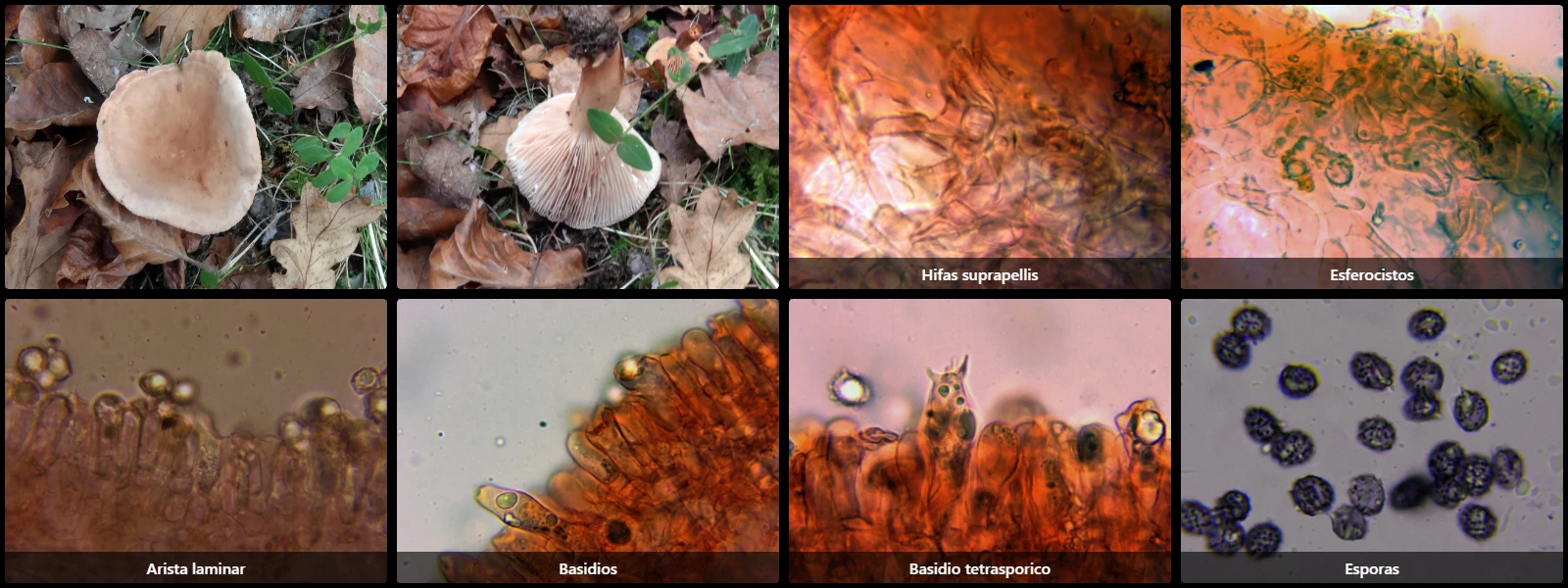
Pileipellis: Suprapellis composed of a thin layer of filamentous, slightly interwoven terminal hyphae 4-6 µm wide; subpellis of broader, short-celled elements 15-22 x 8-17 µm.
Cheilocystidia: Not observed in this collection; literature describes them as fusiform, 25-60 x 4-8 µm.
Basidia: Clavate, slightly ventricose, 37-50 x 8-11 µm, base simple, 2- or 4-spored.
Spores: Subspherical to ellipsoid, with warts connecting into short ridges up to 1.2 µm high, with a hyaline apiculus, amyloid in Melzer's reagent.
Pileipellis: Suprapellis composed of a thin layer of filamentous, slightly interwoven terminal hyphae 4-6 µm wide; subpellis of broader, short-celled elements 15-22 x 8-17 µm.
Cheilocystidia: Not observed in this collection; literature describes them as fusiform, 25-60 x 4-8 µm.
Basidia: Clavate, slightly ventricose, 37-50 x 8-11 µm, base simple, 2- or 4-spored.
Spores: Subspherical to ellipsoid, with warts connecting into short ridges up to 1.2 µm high, with a hyaline apiculus, amyloid in Melzer's reagent.
Geographic references
Map generated from global occurrence data from GBIF. GBIF.
Study measurements
Values in Microns (µm)Macroscopic gallery
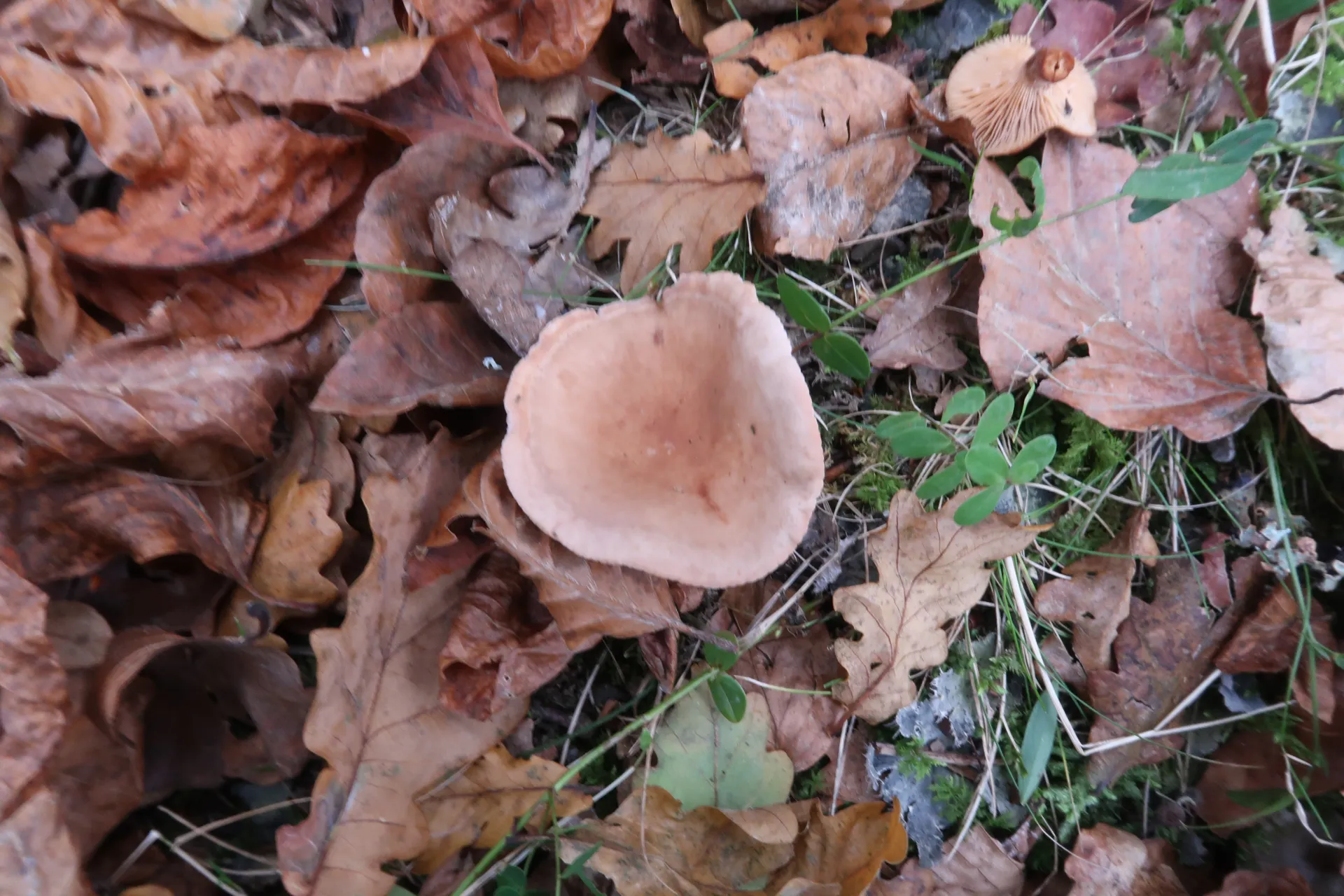
1 / 4Lactarius decipiens - 1 - IMG_2272
Microscopic gallery
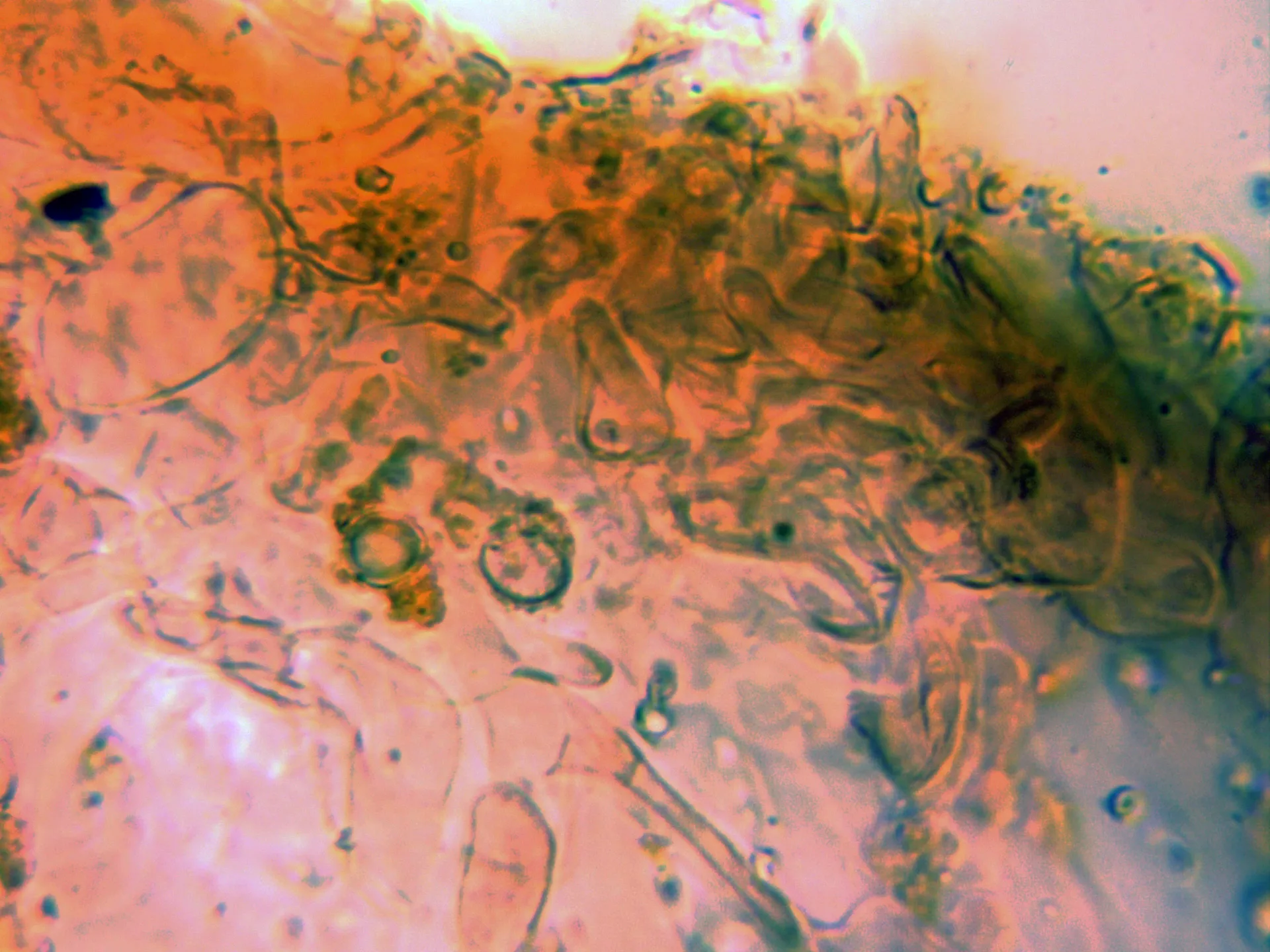
1 / 8Lactarius decipiens - 6 - Suprapellis