


Lactarius cistophilus
Bon & Trimbach
Study description
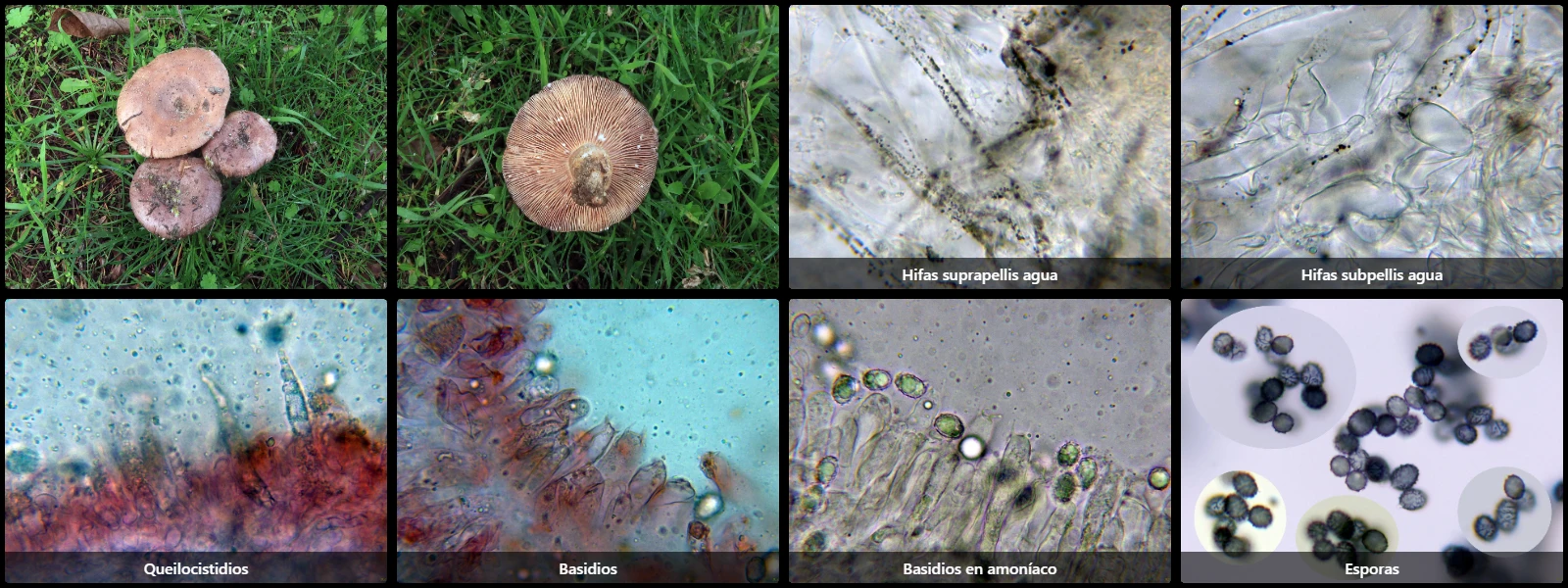
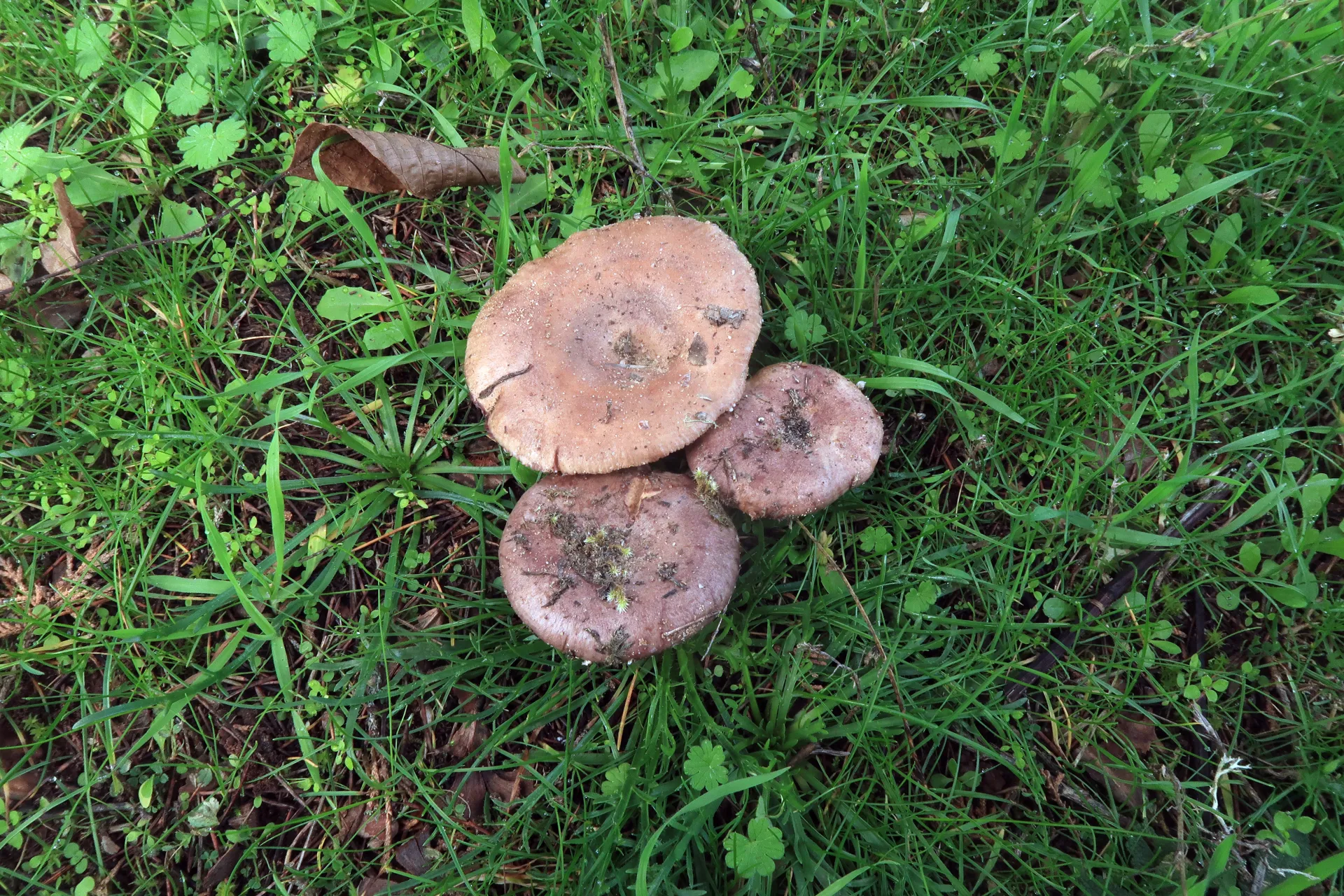
General: Mycorrhizal with Cistus (rockroses), characterized by white latex turning lilac to violet within minutes upon exposure to air, and a bitter taste.
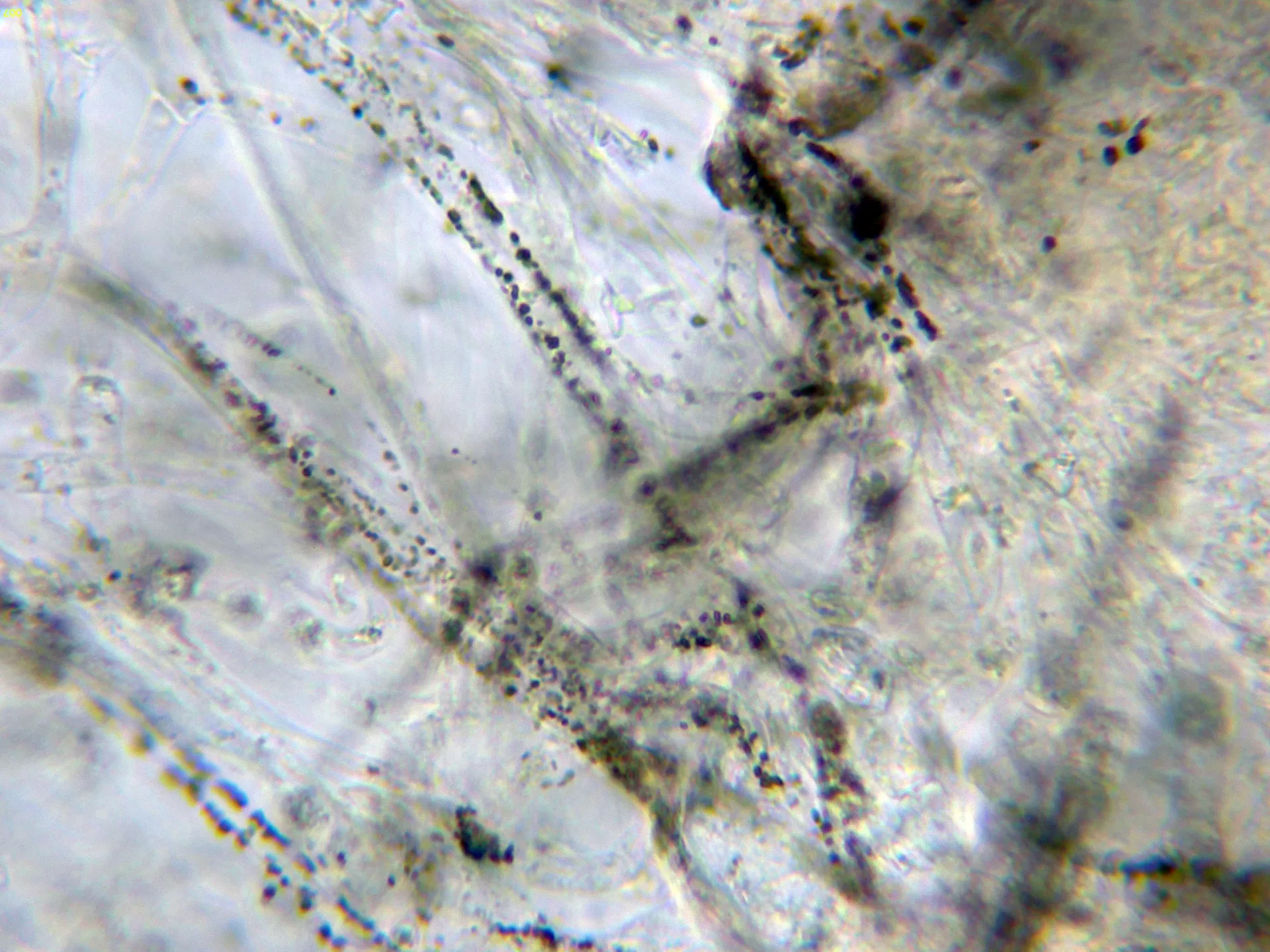
Pileipellis: Suprapellis formed by filamentous, interwoven hyphae 3-4 µm wide, separated by a gelatinous matrix and encrusted with abundant brownish-violaceous pigment, septate with simple septa; underlaid by much broader, hyaline hyphae intermixed with abundant sphaerocysts.
Cheilocystidia: Fusiform to lanceolate, with pointed apices, 50-70 x 8-11 µm, containing finely granular contents.
Pleurocystidia: Morphologically similar to cheilocystidia, 60-90 x 10-12 µm.
Basidia: Clavate, hyaline, 40-50 x 10-12 µm, base simple, 4-spored.
Spores: Ovoid to ellipsoid, ornamented with numerous warts connected by ridges up to 0.8 µm high without forming a complete reticulum, with a distinct hyaline apiculus, amyloid in Melzer's reagent.
Herbarium voucher: JTP2273/24.
Pileipellis: Suprapellis formed by filamentous, interwoven hyphae 3-4 µm wide, separated by a gelatinous matrix and encrusted with abundant brownish-violaceous pigment, septate with simple septa; underlaid by much broader, hyaline hyphae intermixed with abundant sphaerocysts.
Cheilocystidia: Fusiform to lanceolate, with pointed apices, 50-70 x 8-11 µm, containing finely granular contents.
Pleurocystidia: Morphologically similar to cheilocystidia, 60-90 x 10-12 µm.
Basidia: Clavate, hyaline, 40-50 x 10-12 µm, base simple, 4-spored.
Spores: Ovoid to ellipsoid, ornamented with numerous warts connected by ridges up to 0.8 µm high without forming a complete reticulum, with a distinct hyaline apiculus, amyloid in Melzer's reagent.
Herbarium voucher: JTP2273/24.
Geographic references
Map generated from global occurrence data from GBIF. GBIF.
Study measurements
Values in Microns (µm)Macroscopic gallery
1 / 3Lactarius cistophilus - 1 - IMG_7987
Microscopic gallery
1 / 24Lactarius cistophilus - 10 - Suprapellis agua-007