


Lactarius camphoratus
(Bull.) Fr.
Study description
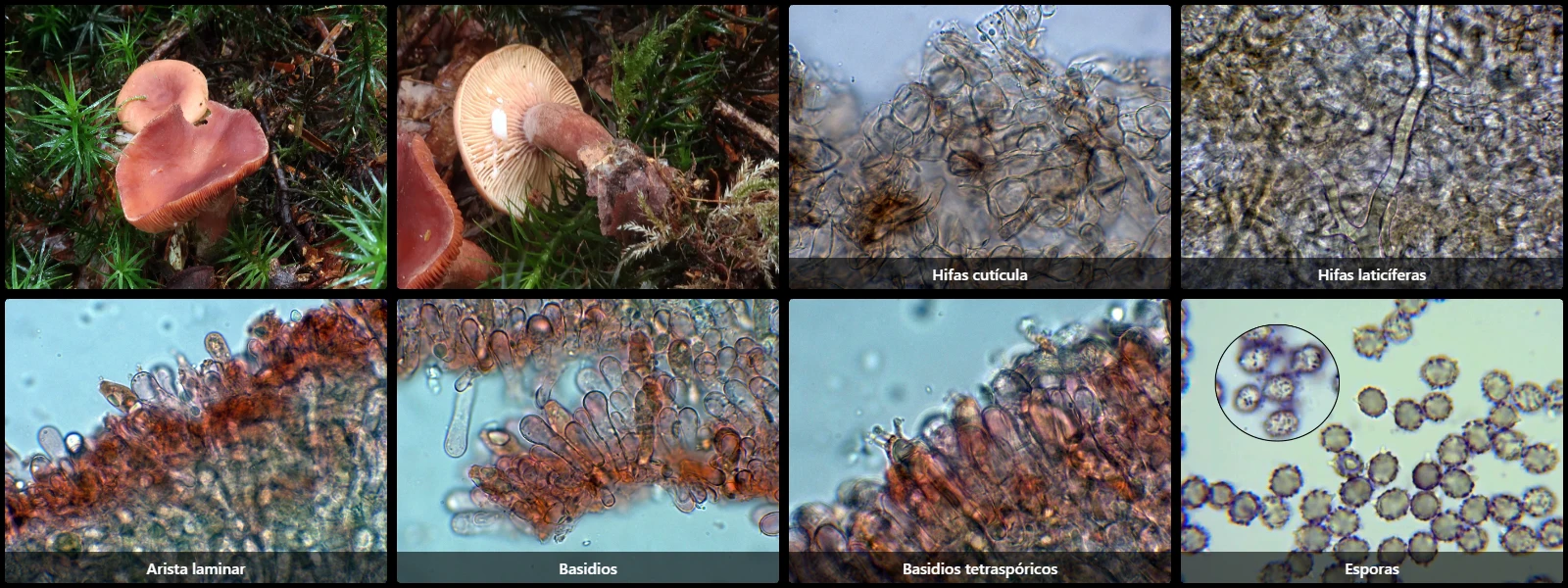
General: Associated with Picea or Fagus, with unchanging white latex, mild slightly astringent taste, and a characteristic curry-like odor when dried.
Pileipellis: Epithelium-like structure composed of globose to subglobose cells, moderately thick-walled, 15-35 µm in diameter, with abundant brown intracellular pigment.
Cheilocystidia: Fusiform, subulate with acute apices, 25-45 x 4-7 µm.
Pleurocystidia: Similar in appearance, larger, 35-55 x 7-10 µm.
Basidia: Clavate, 30-45 x 8-10 µm, base simple, 4-spored.
Spores: Globose to subglobose, with warts up to 1.2 µm high forming short connected ridges, with a prominent hyaline apiculus, amyloid in Melzer's reagent.
Pileipellis: Epithelium-like structure composed of globose to subglobose cells, moderately thick-walled, 15-35 µm in diameter, with abundant brown intracellular pigment.
Cheilocystidia: Fusiform, subulate with acute apices, 25-45 x 4-7 µm.
Pleurocystidia: Similar in appearance, larger, 35-55 x 7-10 µm.
Basidia: Clavate, 30-45 x 8-10 µm, base simple, 4-spored.
Spores: Globose to subglobose, with warts up to 1.2 µm high forming short connected ridges, with a prominent hyaline apiculus, amyloid in Melzer's reagent.
Geographic references
Map generated from global occurrence data from GBIF. GBIF.
Study measurements
Values in Microns (µm)Macroscopic gallery
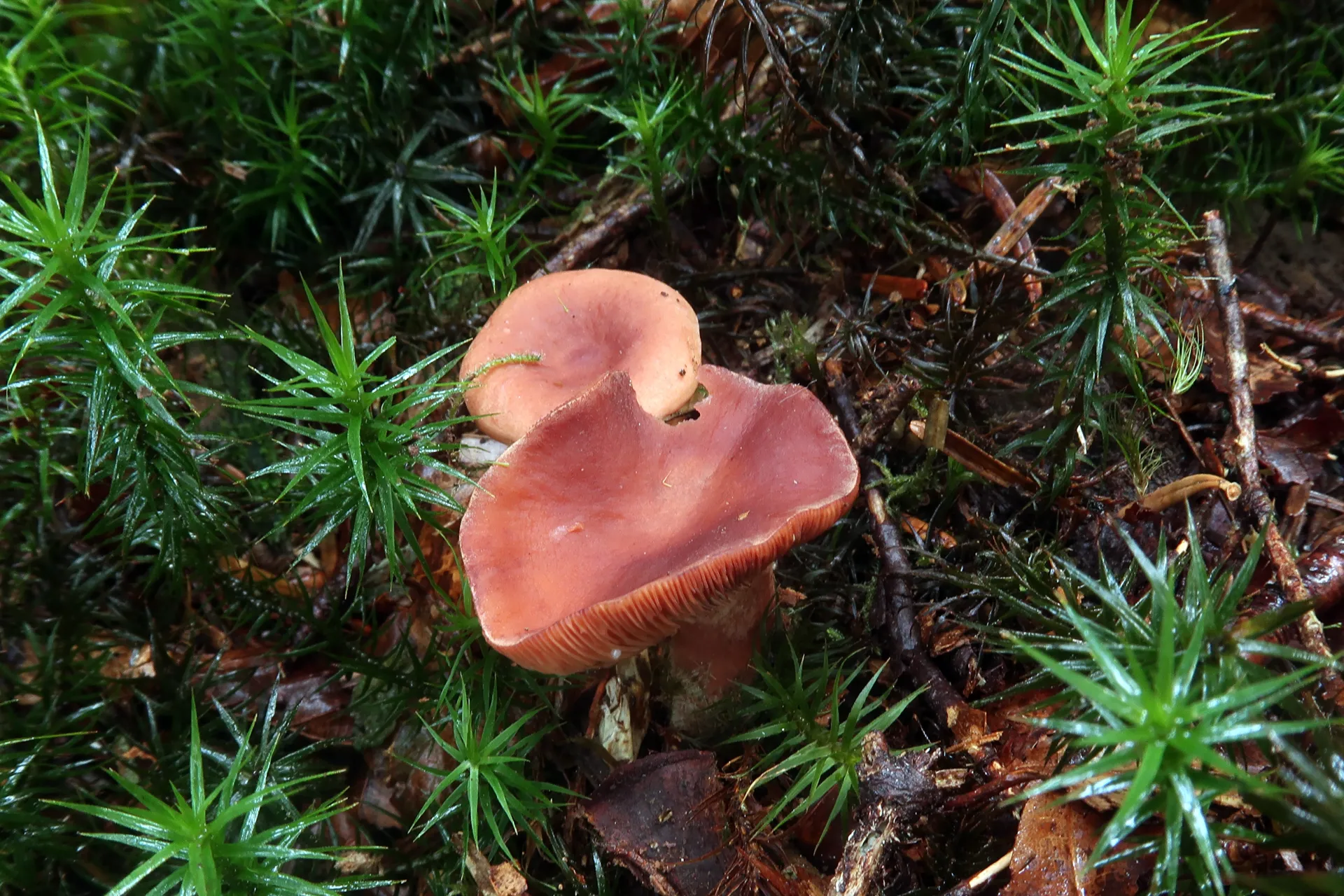
1 / 5Lactarius camphoratus - 1 - IMG_0339
Microscopic gallery
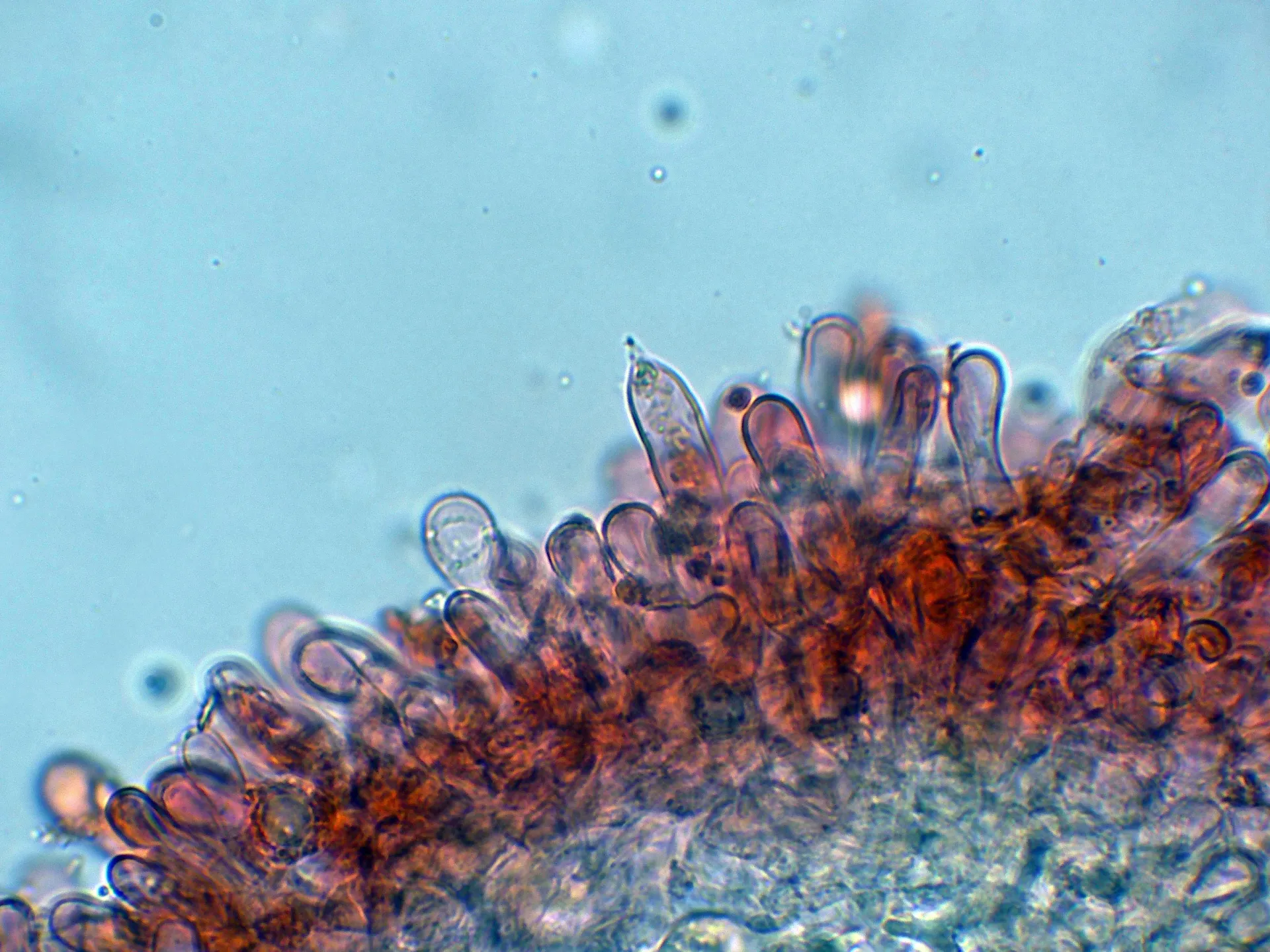
1 / 17Lactarius camphoratus - 10 - Arista-001