


Lactarius aurantiacus
(Pers.) Gray
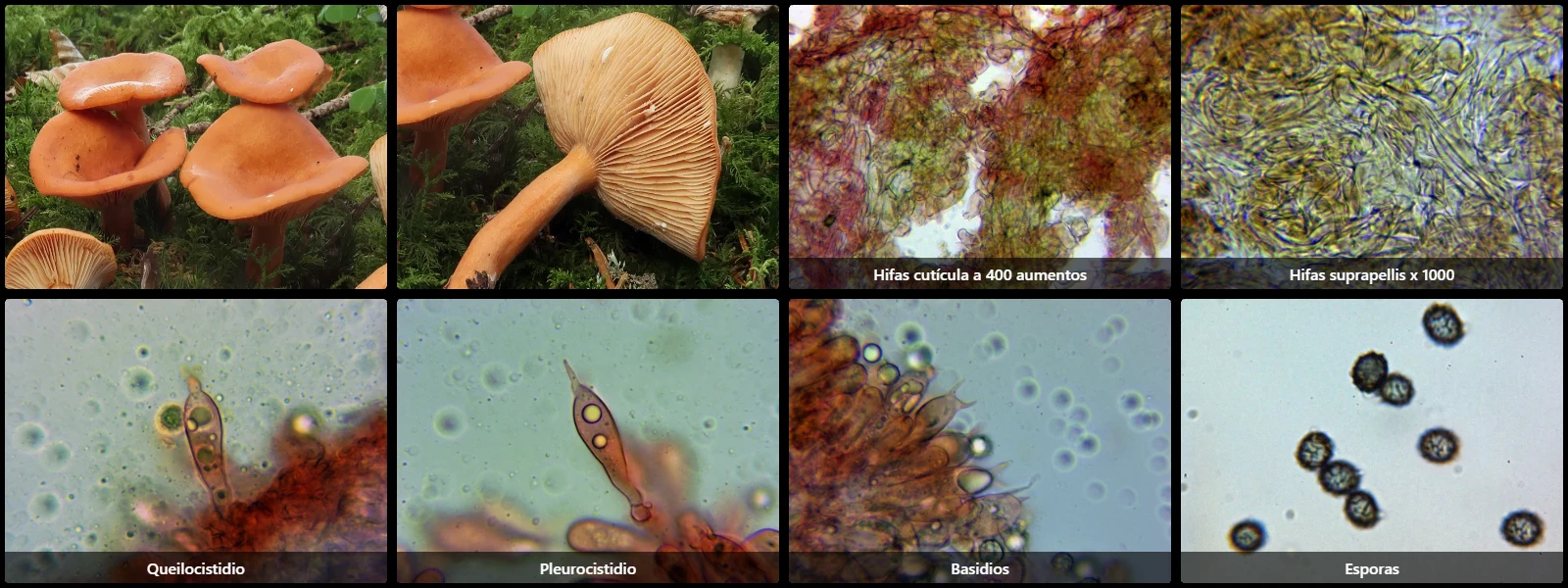
Study description
General: Associated with Picea or Fagus, with unchanging white latex and a mild to slightly bitter taste.
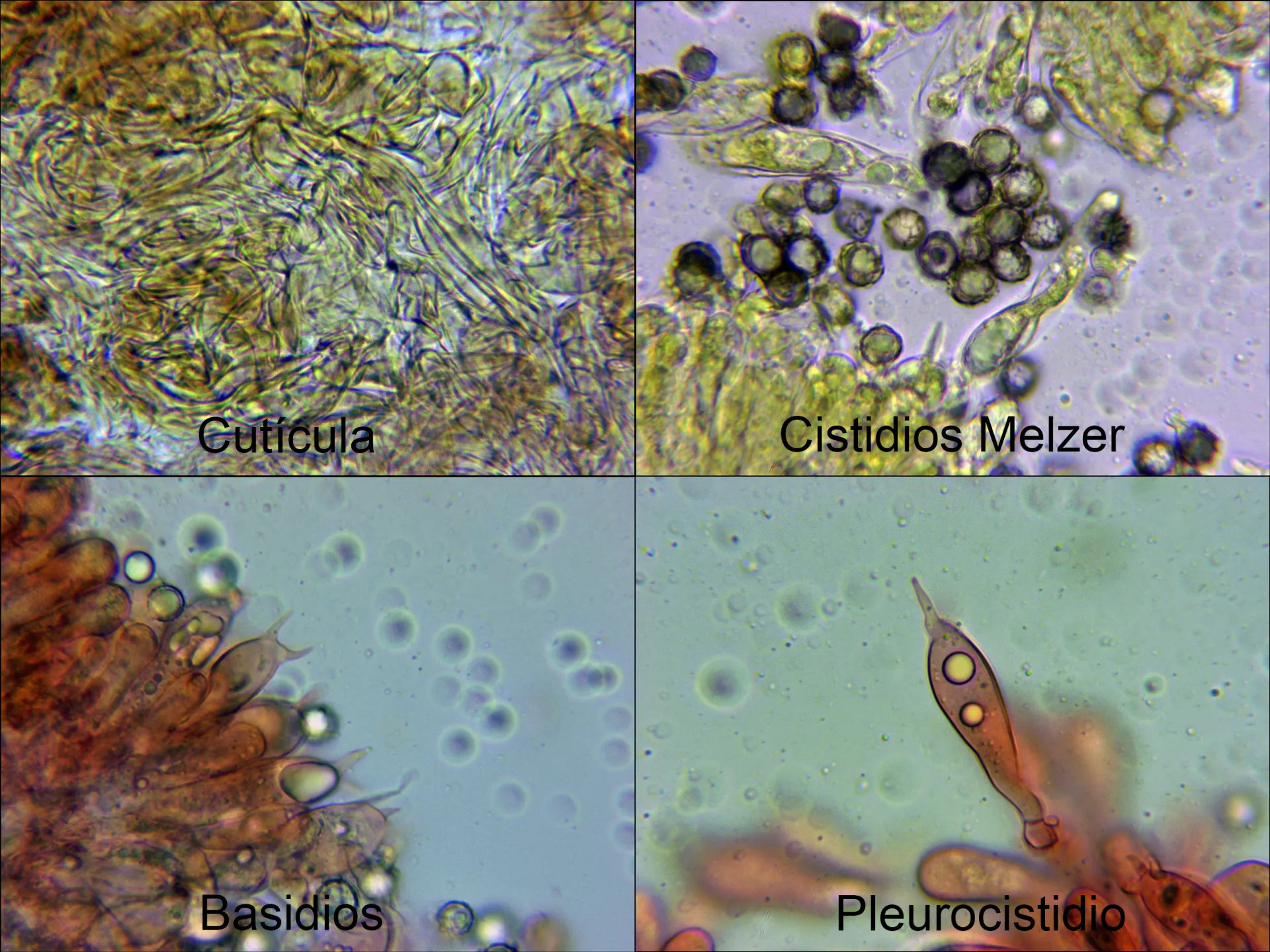
Pileipellis: Formed by filamentous, interwoven hyphae 3-5 µm wide, slightly separated by gelatinization, containing abundant yellowish-brown intracellular pigment.
Cheilocystidia: Scarce, fusiform, 35-60 x 6-8 µm.
Pleurocystidia: Similar morphology, 40-75 x 6-10 µm.
Basidia: Clavate, 42-52 x 10-13 µm, base simple, 4-spored.
Spores: Subspherical to ellipsoid, with ridges up to 1 µm high connected together without forming a complete reticulum, with a hyaline apiculus, amyloid in Melzer's reagent.
Pileipellis: Formed by filamentous, interwoven hyphae 3-5 µm wide, slightly separated by gelatinization, containing abundant yellowish-brown intracellular pigment.
Cheilocystidia: Scarce, fusiform, 35-60 x 6-8 µm.
Pleurocystidia: Similar morphology, 40-75 x 6-10 µm.
Basidia: Clavate, 42-52 x 10-13 µm, base simple, 4-spored.
Spores: Subspherical to ellipsoid, with ridges up to 1 µm high connected together without forming a complete reticulum, with a hyaline apiculus, amyloid in Melzer's reagent.
Geographic references
Map generated from global occurrence data from GBIF. GBIF.
Study measurements
Values in Microns (µm)Macroscopic gallery
1 / 4Lactarius aurantiacus - 1
Microscopic gallery
1 / 1810 - Lactarius aurantiacus micro