


Lactarius acerrimus
Britzelm.
Study description
General: Associated with deciduous trees, especially oaks (Quercus), with unchanging white latex and an acrid, peppery taste.
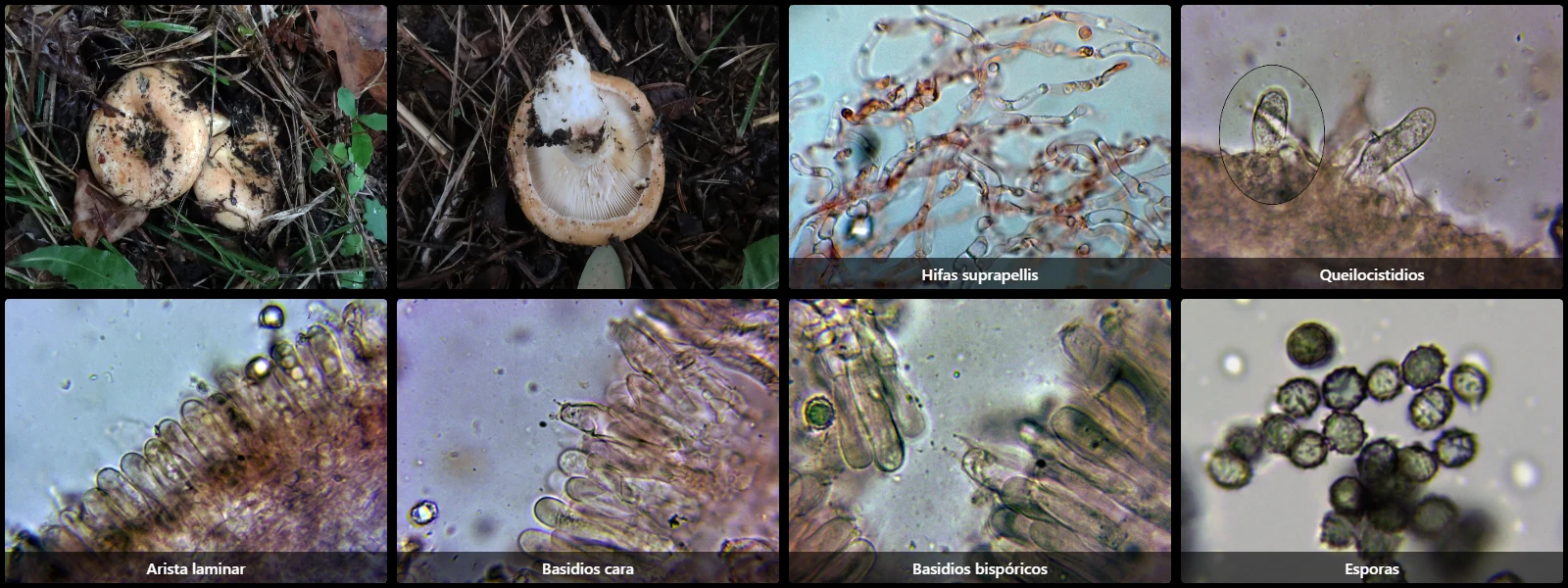
Pileipellis: Ixocutis formed by filamentous, cylindrical, slightly thick-walled hyphae 2-5 µm wide, interwoven, with faint intracellular pigment, strongly separated by gelatinization, septate with simple septa.
Cheilocystidia: Scarce in this study, cylindrical to fusiform, literature values 30-50 x 5-8 µm.
Basidia: Cylindric-clavate to fusiform, 50-60 x 10-12 µm, without clamp connections, predominantly 1- or 2-spored (monosterigmatic to bisporic).
Spores: Subspherical to slightly ellipsoid, ornamented with numerous warts connected by ridges without forming a complete reticulum, with a prominent hyaline apiculus, amyloid in Melzer's reagent.
Pileipellis: Ixocutis formed by filamentous, cylindrical, slightly thick-walled hyphae 2-5 µm wide, interwoven, with faint intracellular pigment, strongly separated by gelatinization, septate with simple septa.
Cheilocystidia: Scarce in this study, cylindrical to fusiform, literature values 30-50 x 5-8 µm.
Basidia: Cylindric-clavate to fusiform, 50-60 x 10-12 µm, without clamp connections, predominantly 1- or 2-spored (monosterigmatic to bisporic).
Spores: Subspherical to slightly ellipsoid, ornamented with numerous warts connected by ridges without forming a complete reticulum, with a prominent hyaline apiculus, amyloid in Melzer's reagent.
Geographic references
Map generated from global occurrence data from GBIF. GBIF.
Study measurements
Values in Microns (µm)Macroscopic gallery
1 / 2Lactarius acerrimus - 1
Microscopic gallery
1 / 10Lactarius acerrimus - 5 Queilocistidio