


Laccaria proxima
(Boud.) Pat.
Study description
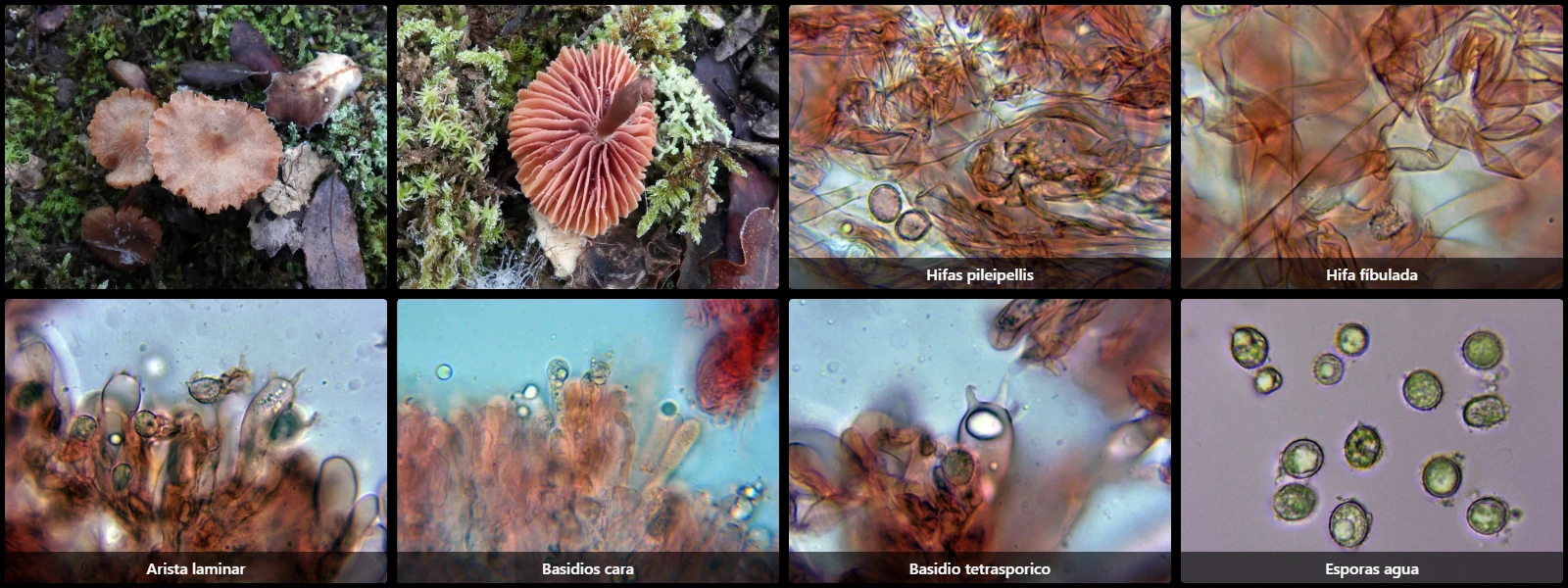
General: Characterized by a scaly reddish-brown pileus, moderately thick lamellae, and a cylindrical reddish-brown stipe.
Pileipellis: Composed of cylindrical hyphae, slightly interwoven, 5-10 µm wide, with brown intracellular pigment; terminal emergent elements grouped in bundles/fascicles, septate, and partially clamped.
Cystidia: Not observed, though literature notes the occasional presence of sinuous cylindrical hyphae on the lamellar edge up to 60 µm long with subcapitate apices.
Basidia: Clavate, 32-45 x 9-12 µm, 4-spored, with basal clamp connections.
Spores: Subglobose to ellipsoid, echinulate, pale yellow under the microscope, with a hyaline hilar appendage, containing a large oil drop, with short spines measuring up to only 0.9 µm.
Pileipellis: Composed of cylindrical hyphae, slightly interwoven, 5-10 µm wide, with brown intracellular pigment; terminal emergent elements grouped in bundles/fascicles, septate, and partially clamped.
Cystidia: Not observed, though literature notes the occasional presence of sinuous cylindrical hyphae on the lamellar edge up to 60 µm long with subcapitate apices.
Basidia: Clavate, 32-45 x 9-12 µm, 4-spored, with basal clamp connections.
Spores: Subglobose to ellipsoid, echinulate, pale yellow under the microscope, with a hyaline hilar appendage, containing a large oil drop, with short spines measuring up to only 0.9 µm.
Geographic references
Map generated from global occurrence data from GBIF. GBIF.
Study measurements
Values in Microns (µm)Macroscopic gallery
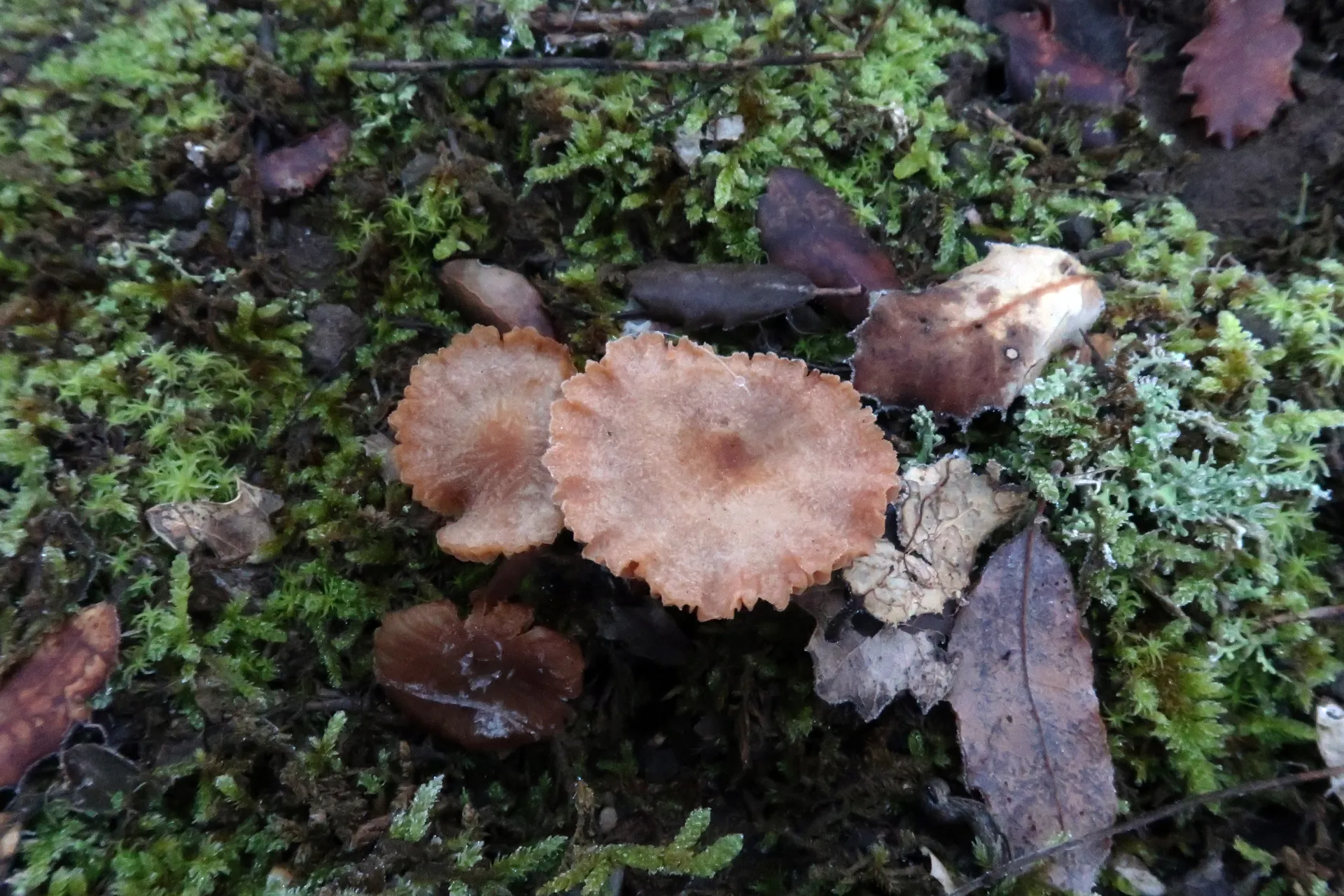
1 / 5Laccaria proxima - 1 - IMG_2691
Microscopic gallery
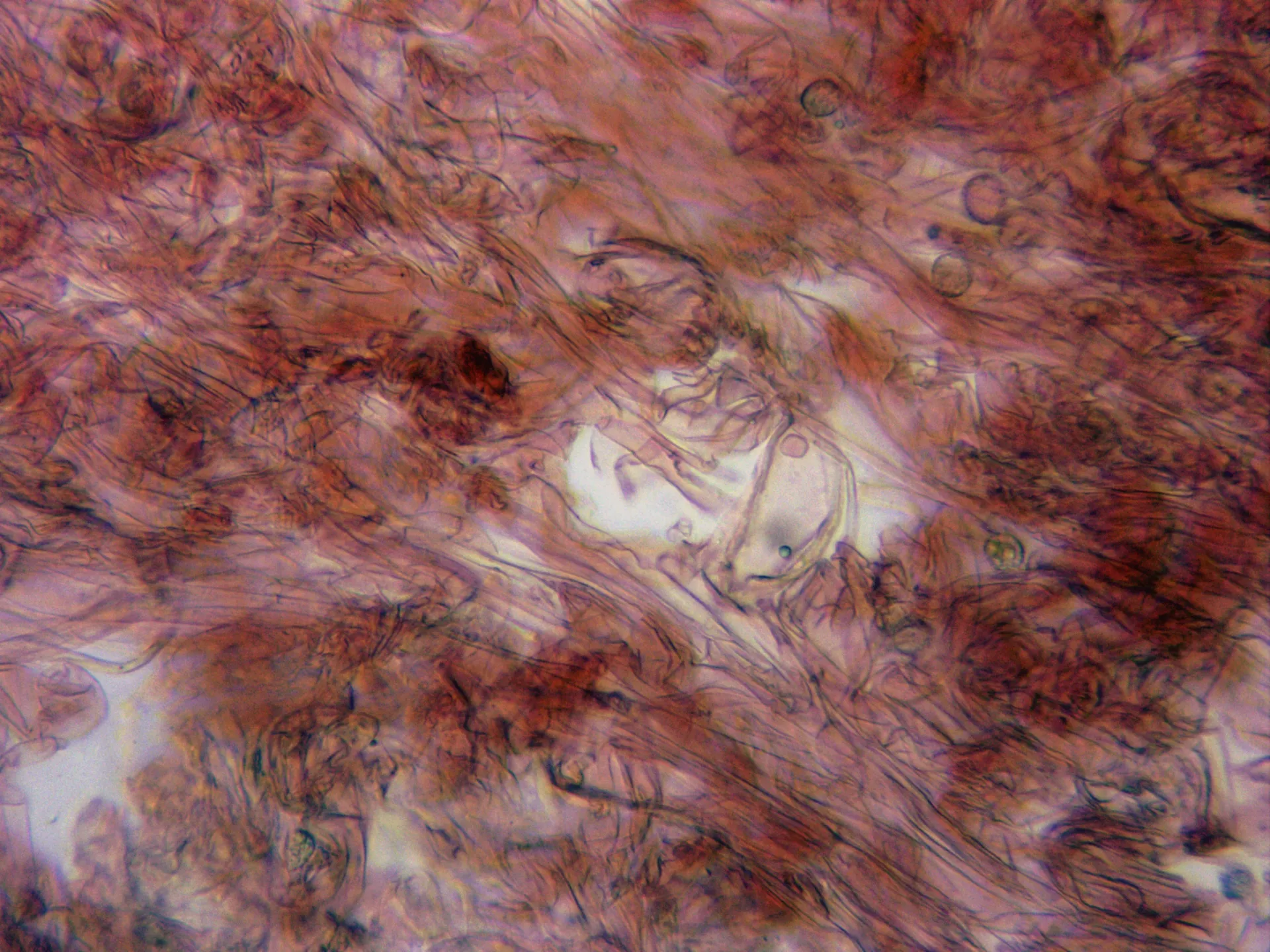
1 / 11Laccaria proxima - 5 - Pileipellis x 400