Inocybe subnudipes
Kühner
Study description
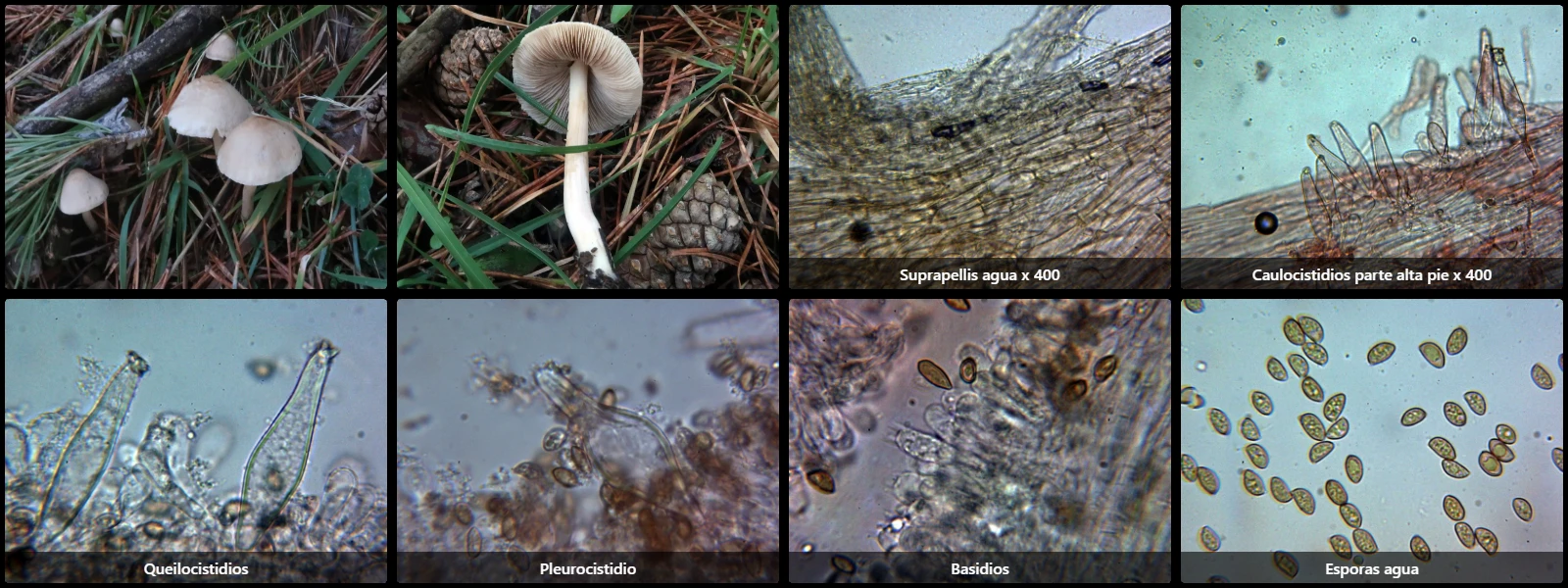
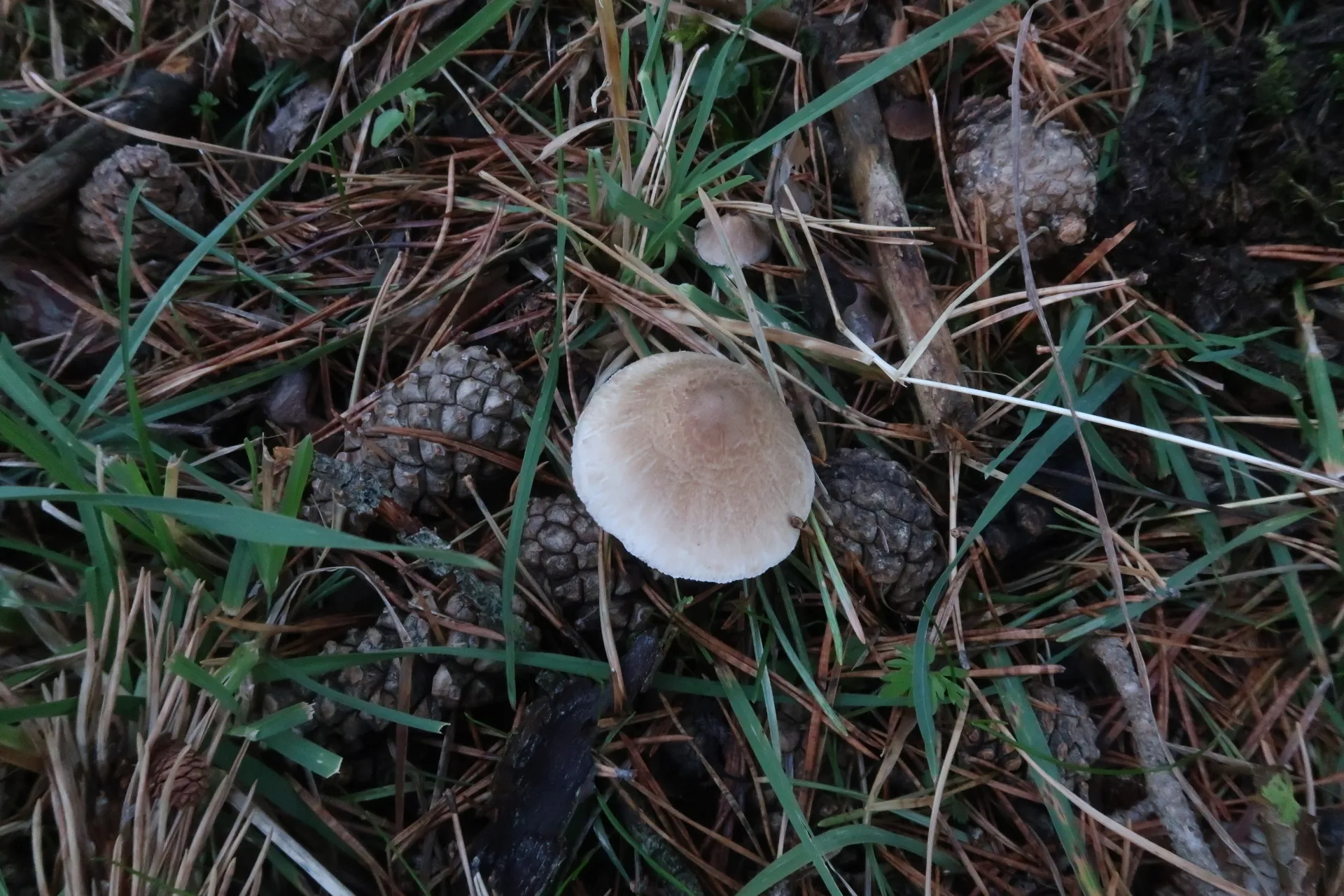
A species associated with conifers, especially pines, frequent on roadside verges on calcareous soils, with a fibrillose cap and a stipe lacking a marginate bulb.
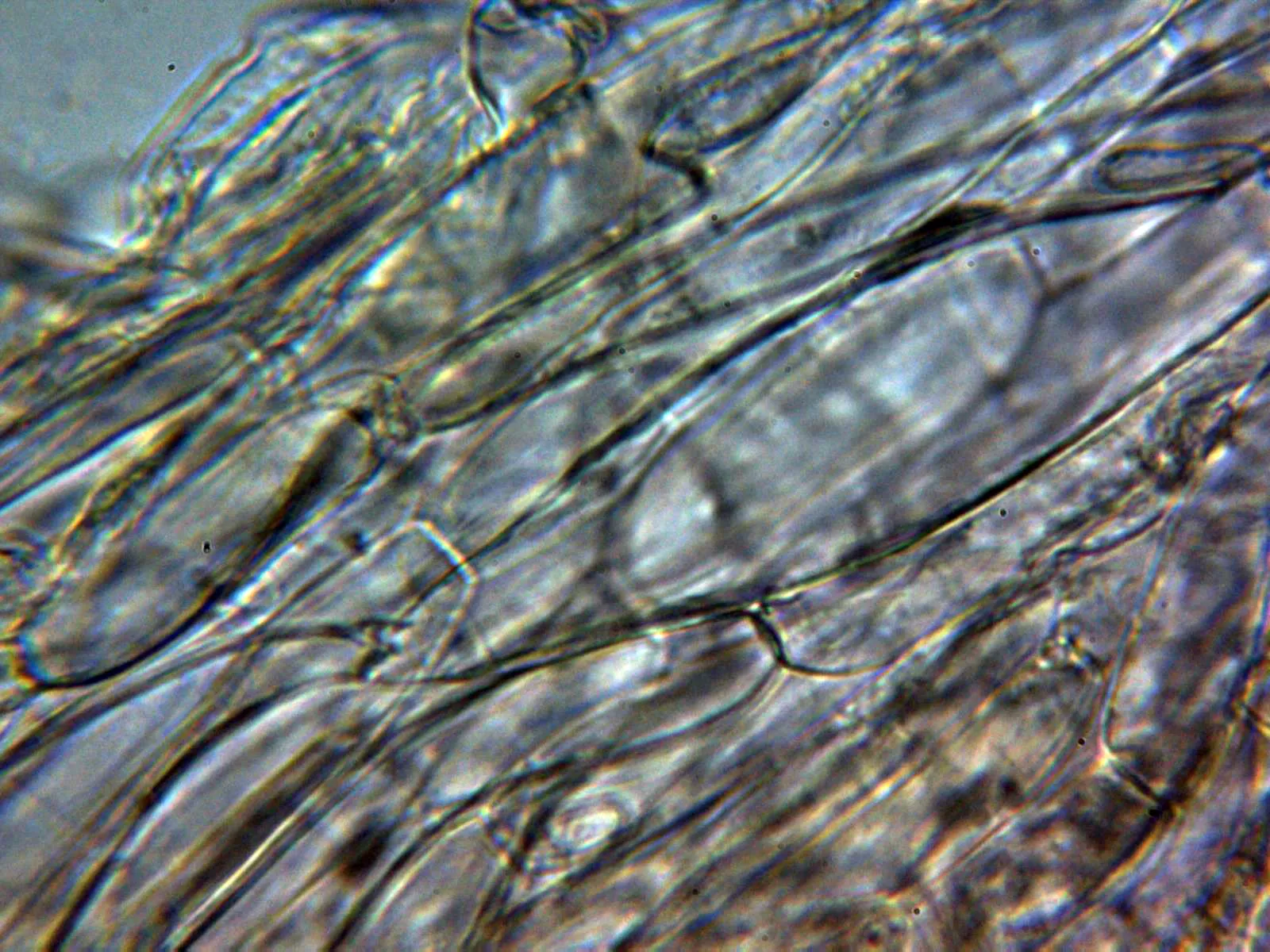
Suprapellis with a thin layer of parallel hyphae, 4-10 µm wide; underlain by hyphae with short septa reaching 15 µm or more wide, in both layers with yellowish-brown encrusting intracellular pigment, septate with clamps.
Caulocystidia present only on the upper third of the stipe, predominantly lageniform with apical crystallizations.
Cheilocystidia lageniform, 50-65 µm long and 12-20 µm wide, with apical crystallizations, walls up to 2.5 µm thick, accompanied by sterile, clavate to pyriform cells up to 20 µm long.
Pleurocystidia similar in morphology and dimensions to cheilocystidia.
Basidia clavate, 25-35 µm long and 7-9 µm wide, with basal clamps, predominantly 4-spored.
Spores ellipsoidal to amygdaliform, smooth- and thick-walled, yellowish-brown under the microscope, with an eccentric pointed end at the apiculus, containing faint granular internal content.
Geographic references
Map generated from global occurrence data from GBIF. GBIF.
Study measurements
Values in Microns (µm)Macroscopic gallery
Microscopic gallery