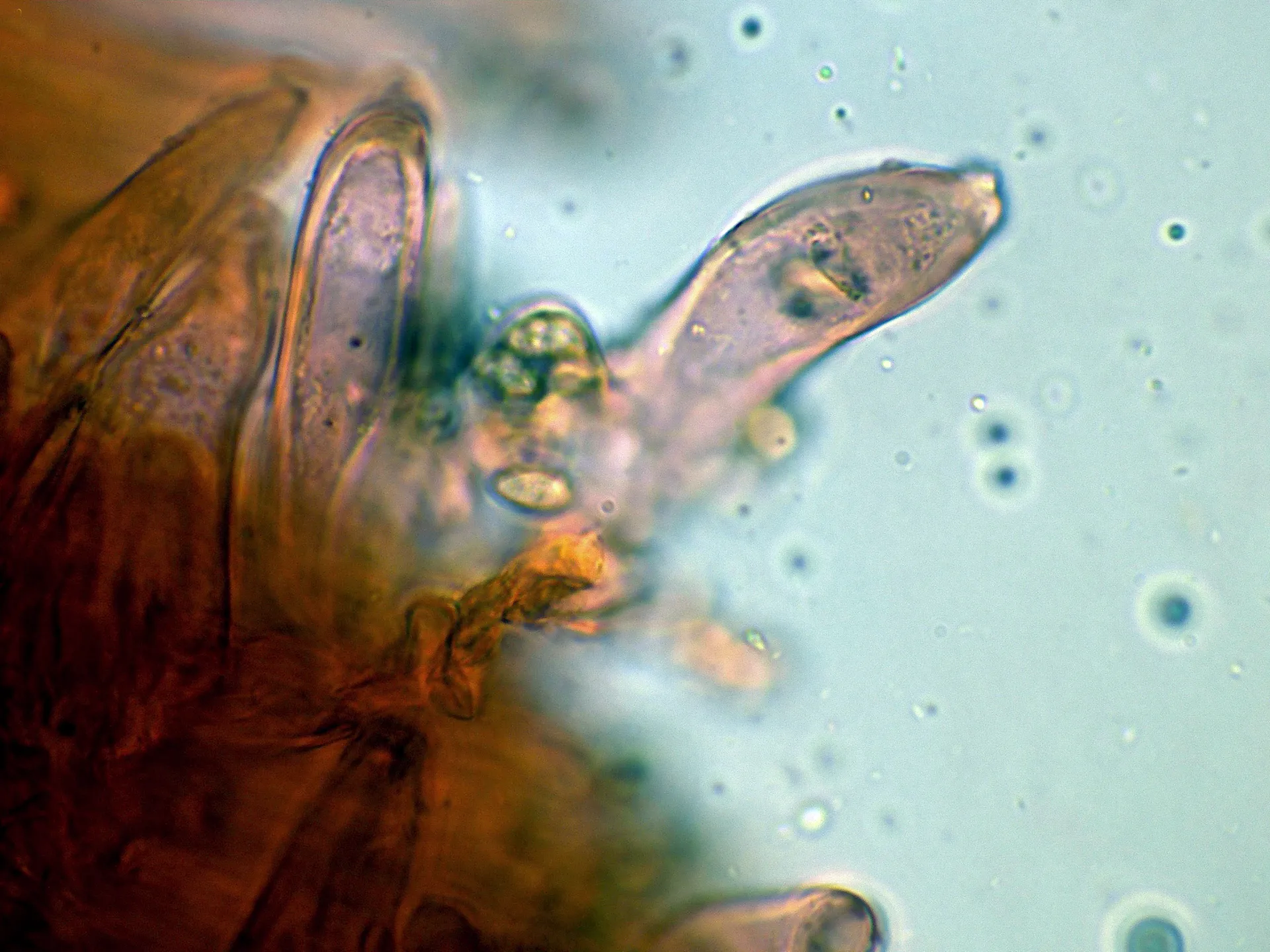
Inocybe sindonia
(Fr.) P.Karst.
Study description
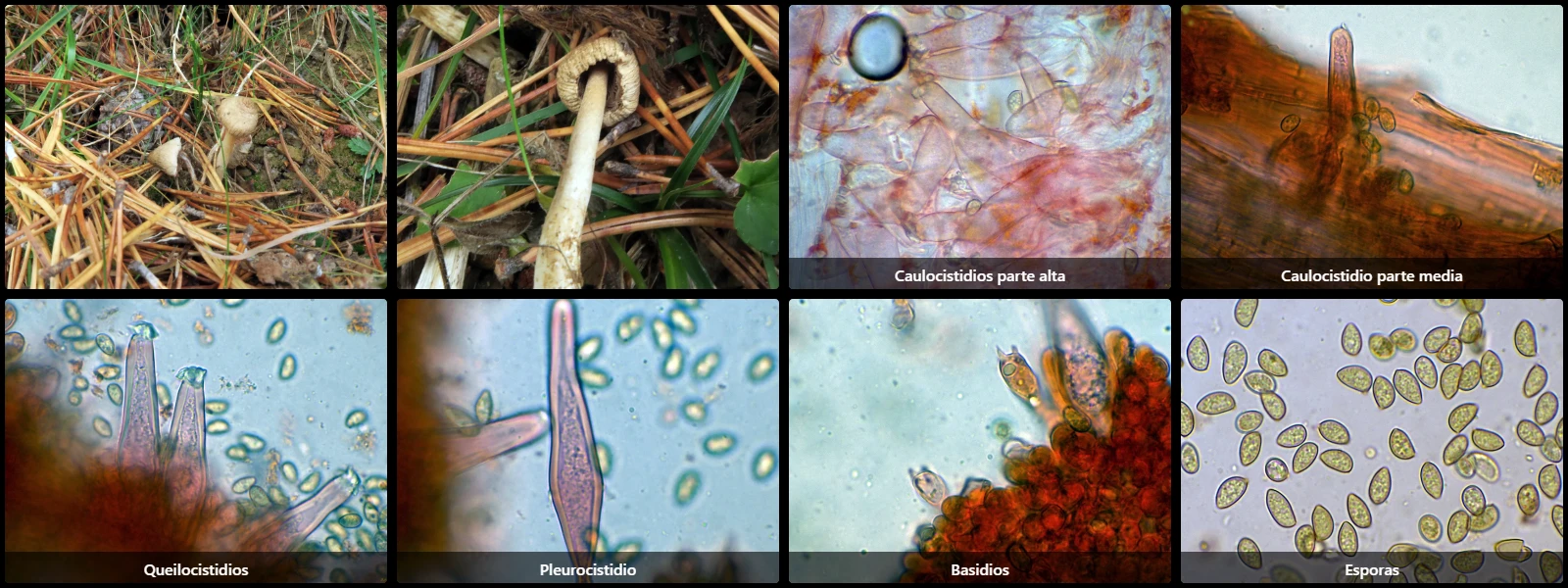
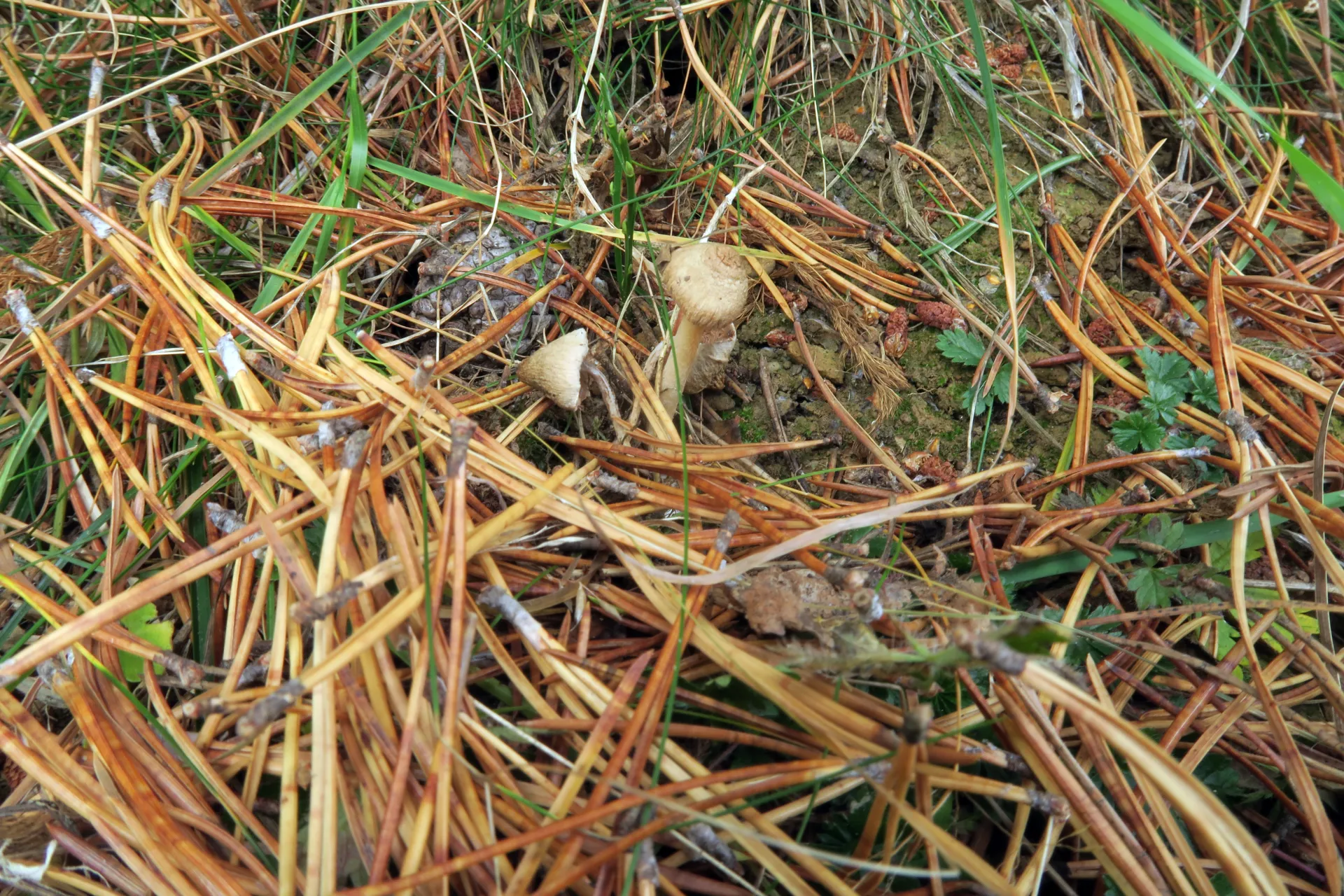
An autumnal species characteristic of coniferous woods such as pines or firs, with a conical to campanulate pileus retaining a central umbo, 2 to 3.5 cm in diameter, pale ochraceous brown, slightly darker at the center; fibrillose to scaly surface; adnate greyish-brown lamellae; a cylindrical stipe slightly enlarged at the base, concolorous with the pileus; slightly spermatic odor and mild, fungal taste.
Cuticle formed by cylindrical hyphae arranged parallel, 5 to 10 µm wide, with yellowish-brown intracellular pigment, septate with clamped septa.
Caulocystidia subcylindrical to lageniform, some with apical encrustations, extending down to the middle part of the stipe.
Cheilocystidia subcylindrical to fusiform, 60 to 85 µm long, 12 to 18 µm wide, with crystal encrustations at the apex, wall thickness 2 to 3.5 µm.
Pleurocystidia similar, fusiform to slightly lageniform, 65 to 80 µm long, 12 to 15 µm wide, some with apical crystals, wall thickness 2 to 2.6 µm.
Basidia clavate, 25 to 30 µm long, 7 to 10 µm wide, with basal clamp connections and four-spored.
Spores ellipsoidal to amygdaliform, with one flatter side, smooth- and thick-walled, yellowish brown under the microscope, 8.5 to 11 µm long, 5 to 6.5 µm wide, with a pointed end bearing the apiculus, and negative in Melzer's reagent (indextrinoid).
Herbarium material available: JTP2787/25.
Geographic references
Map generated from global occurrence data from GBIF. GBIF.
Study measurements
Values in Microns (µm)Macroscopic gallery
Microscopic gallery