


Inocybe pseudorubens
Carteret & Reumaux
Study description
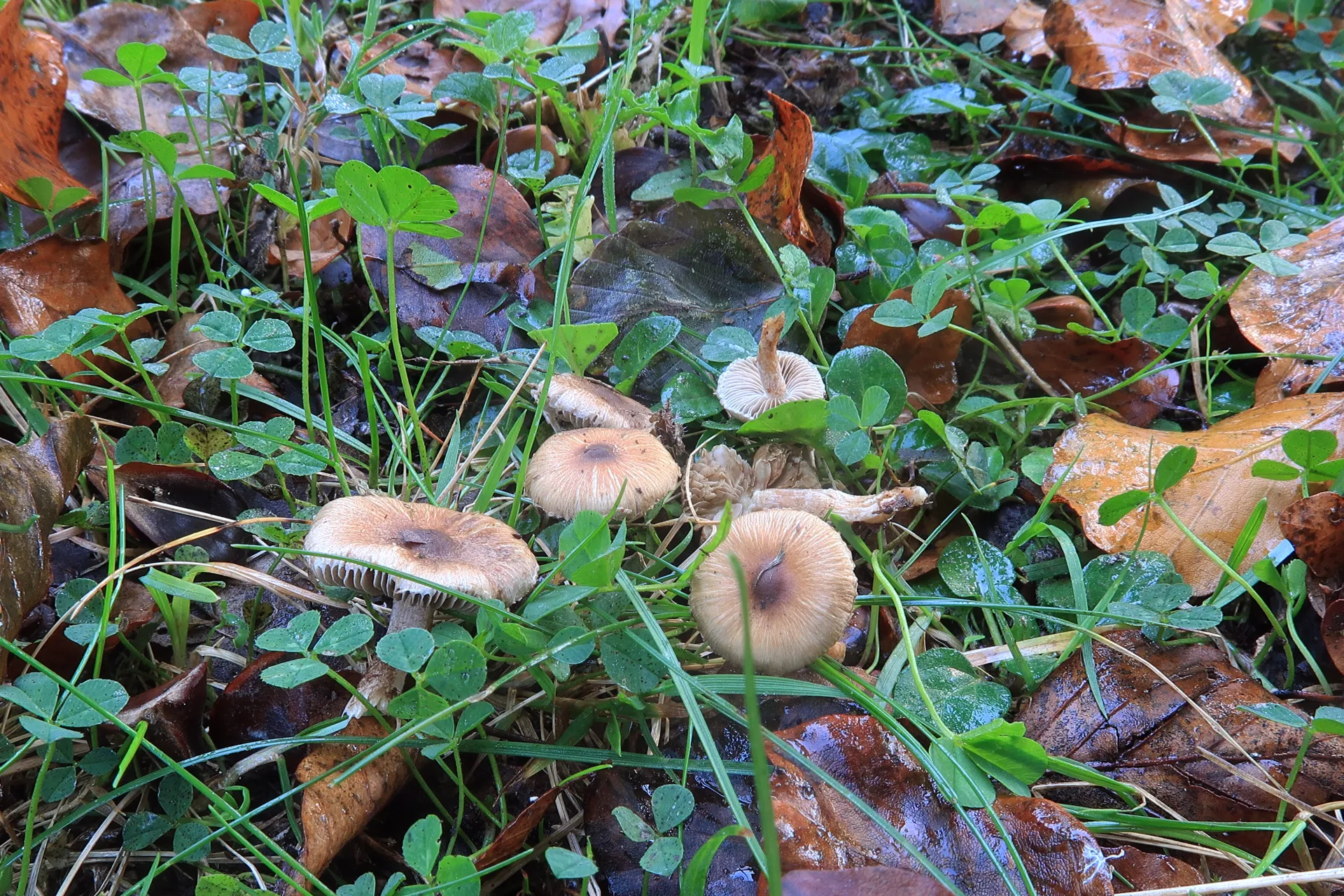
A poorly documented autumn Inocybe associated with deciduous trees, preferring calcareous soils.
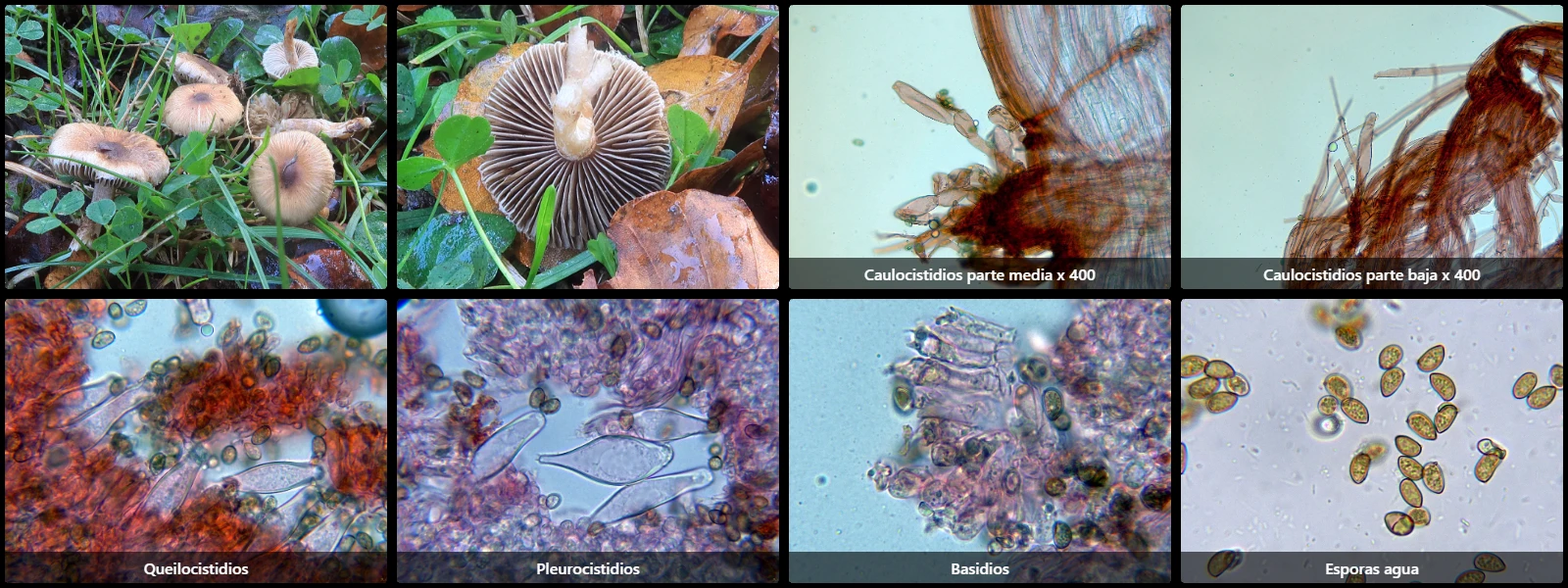
Pileipellis composed of parallelly arranged hyphae, 5-11 µm wide, with yellowish-brown encrusting intracellular pigment, septate and clamped.
Caulocystidia scarce and present only on the upper half of the stipe, cylindrical to fusiform.
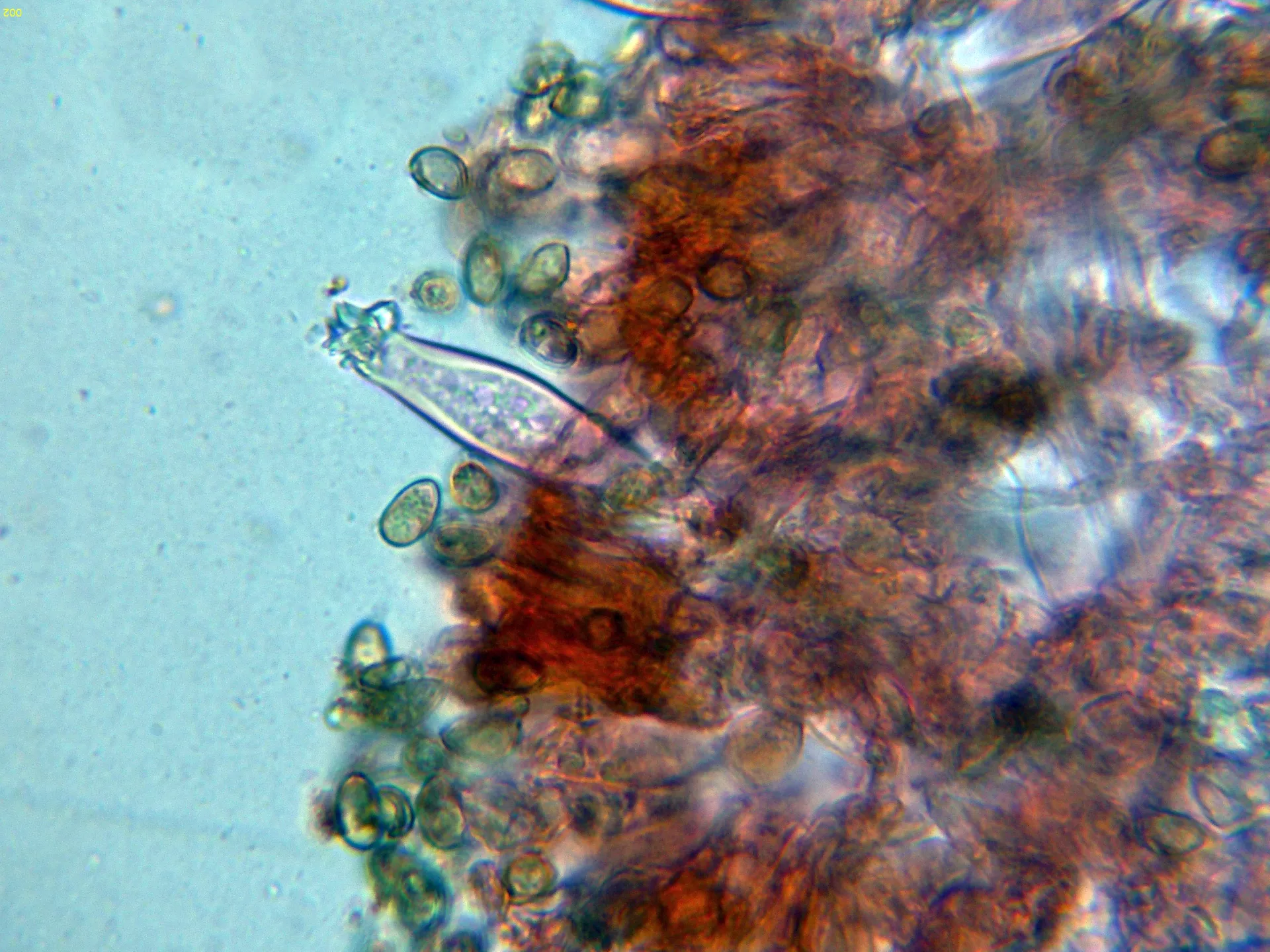
Cheilocystidia fusiform, 38-55 µm long and 9-13 µm wide, wall thickness up to 2 µm, with apical crystallizations.
Pleurocystidia similar in morphology, slightly larger, 45-60 µm long and 11-18 µm wide, with walls up to 2.5 µm thick.
Basidia clavate, 22-34 µm long and 7-11 µm wide, with basal clamps, predominantly 4-spored.
Spores ellipsoidal to slightly amygdaliform, smooth- and thick-walled, yellowish-brown under the microscope, with an eccentric apiculus at one end and faint granular internal content.
Herbarium material available: JTP1997/23.
Geographic references
Map generated from global occurrence data from GBIF. GBIF.
Study measurements
Values in Microns (µm)Macroscopic gallery
Microscopic gallery
Genetic / Phylogenetic Study
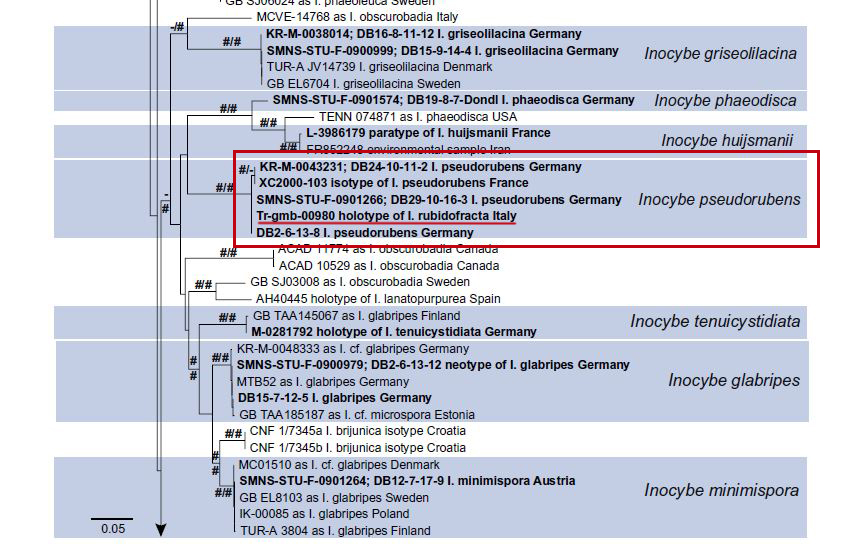
Phylogenetic Tree
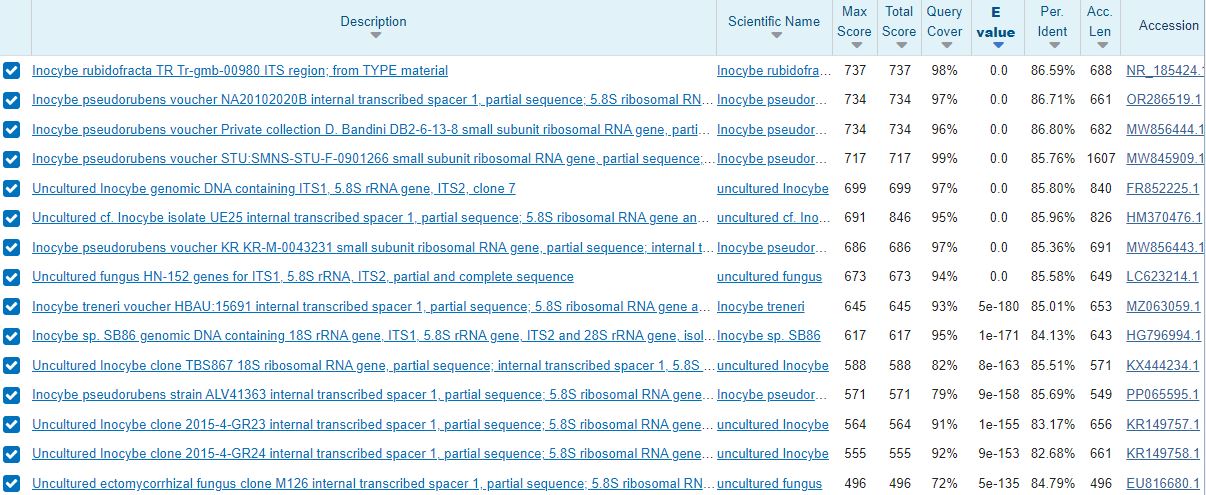
Sequences and Data
Sequencing (Chromatogram)
Select a file to visualize the chromatogram