Inocybe flocculosa
Sacc.
Study description
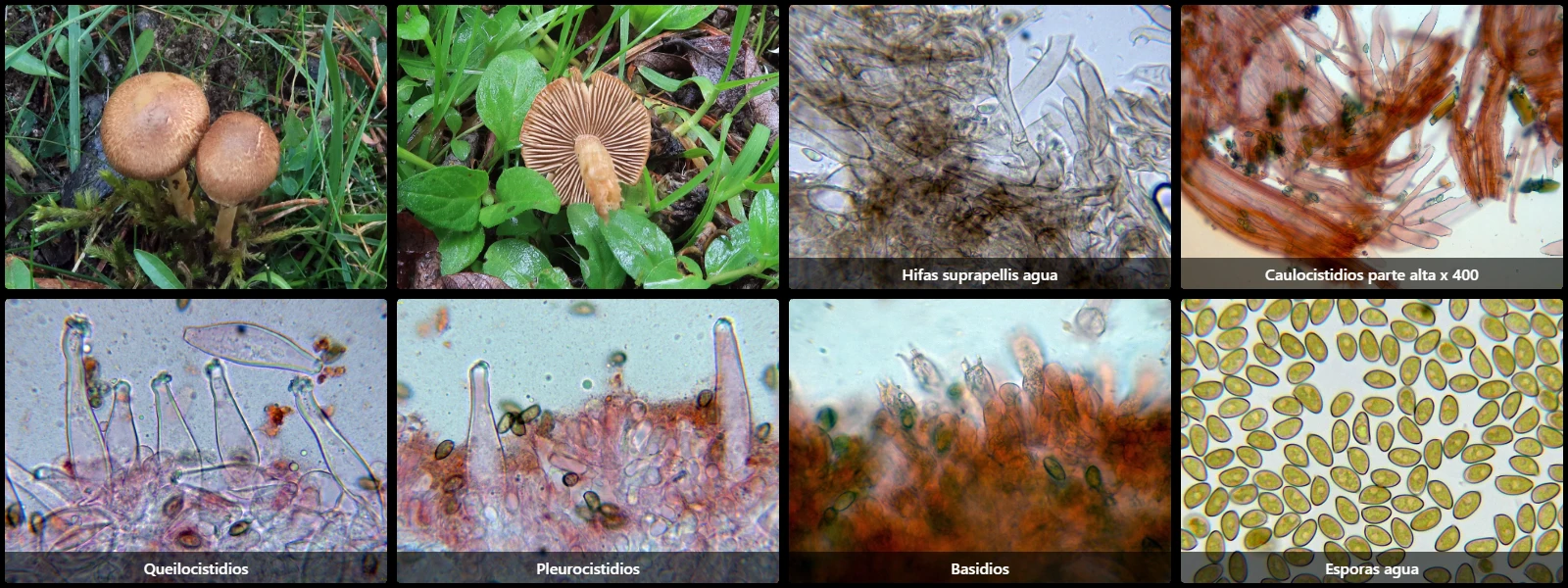
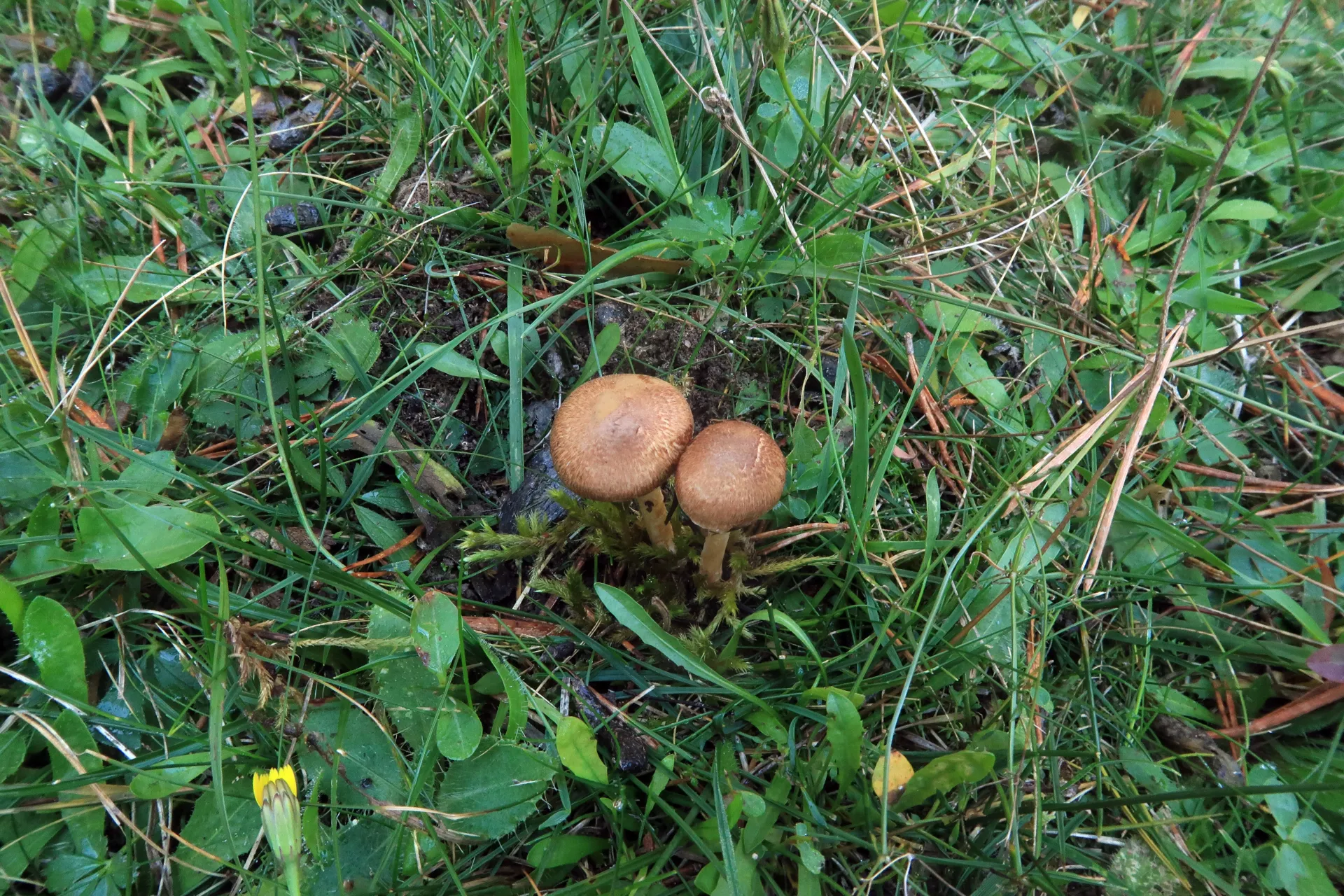
A widespread species of calcareous soils occurring under both conifers and deciduous trees, with a fibrillose and scaly cap, spermatic odor, and caulocystidia restricted to the upper stipe.
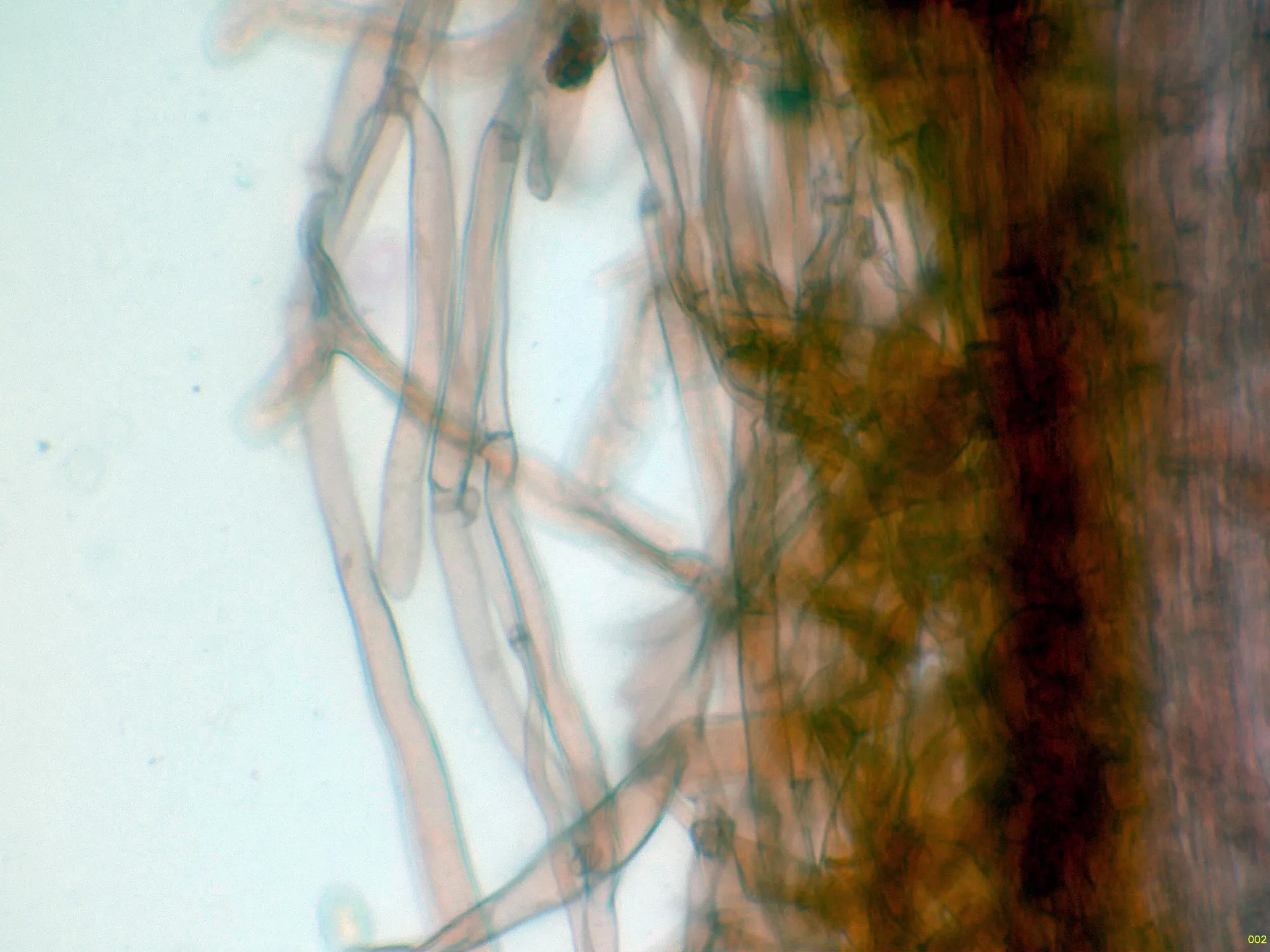
Pileipellis composed of parallelly arranged hyphae, 6-11 µm wide, with faint yellowish-brown intracellular pigment and darker surface incrustations, septate with predominantly clamped septa.
Caulocystidia present only on the upper third of the stipe, cylindrical to fusiform.
Cheilocystidia fusiform to slightly lageniform, 45-70 µm long and 11-20 µm wide, with walls up to 3 µm thick, crowned with abundant crystallizations, intermixed with subglobose to pyriform, thin-walled, notably shorter paracystidia.
Pleurocystidia lageniform, 55-80 µm long and 15-22 µm wide, with apical crystallizations like the cheilocystidia.
Basidia clavate, 25-30 µm long and 8-10 µm wide, with basal clamps, 4-spored.
Spores ellipsoidal to amygdaliform, yellowish-brown under the microscope, with a pointed end at the apiculus, containing abundant internal oil guttules.
Herbarium material available: JTP2223/24 and 2734/25.
Geographic references
Map generated from global occurrence data from GBIF. GBIF.
Study measurements
Values in Microns (µm)Macroscopic gallery
Microscopic gallery