

Hyphodontia spathulata
(Schrad.) Parmasto
Study description
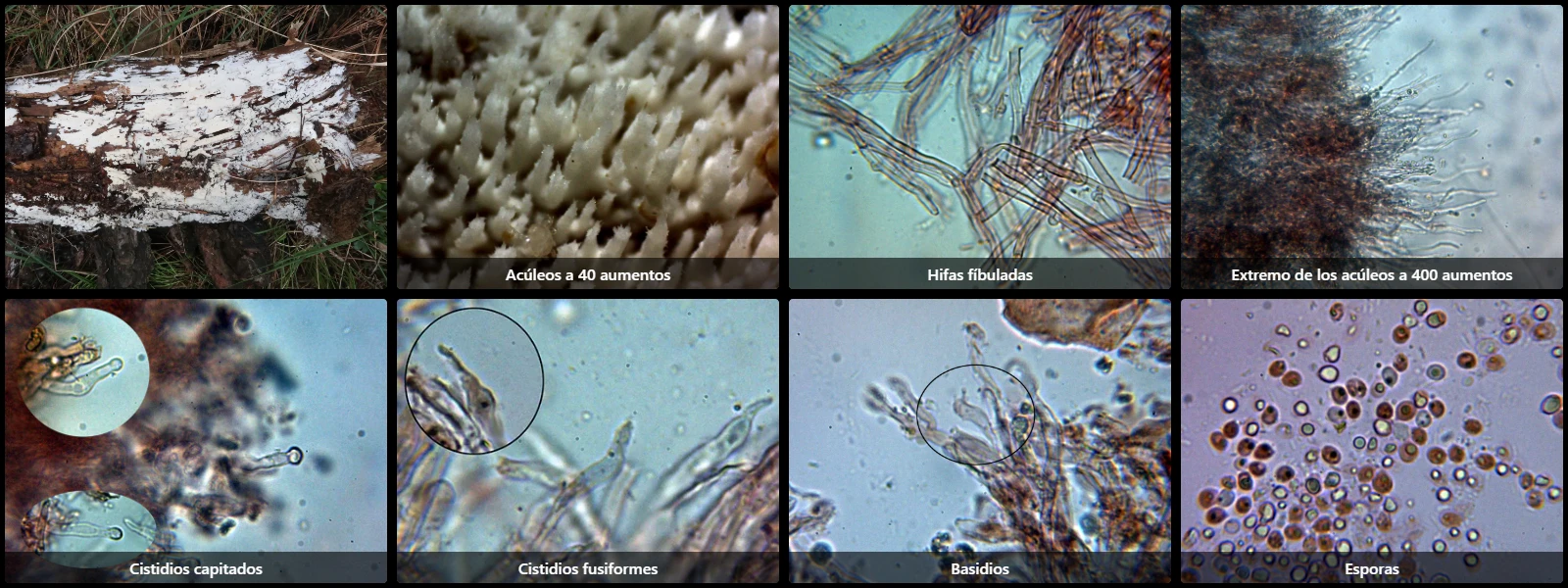
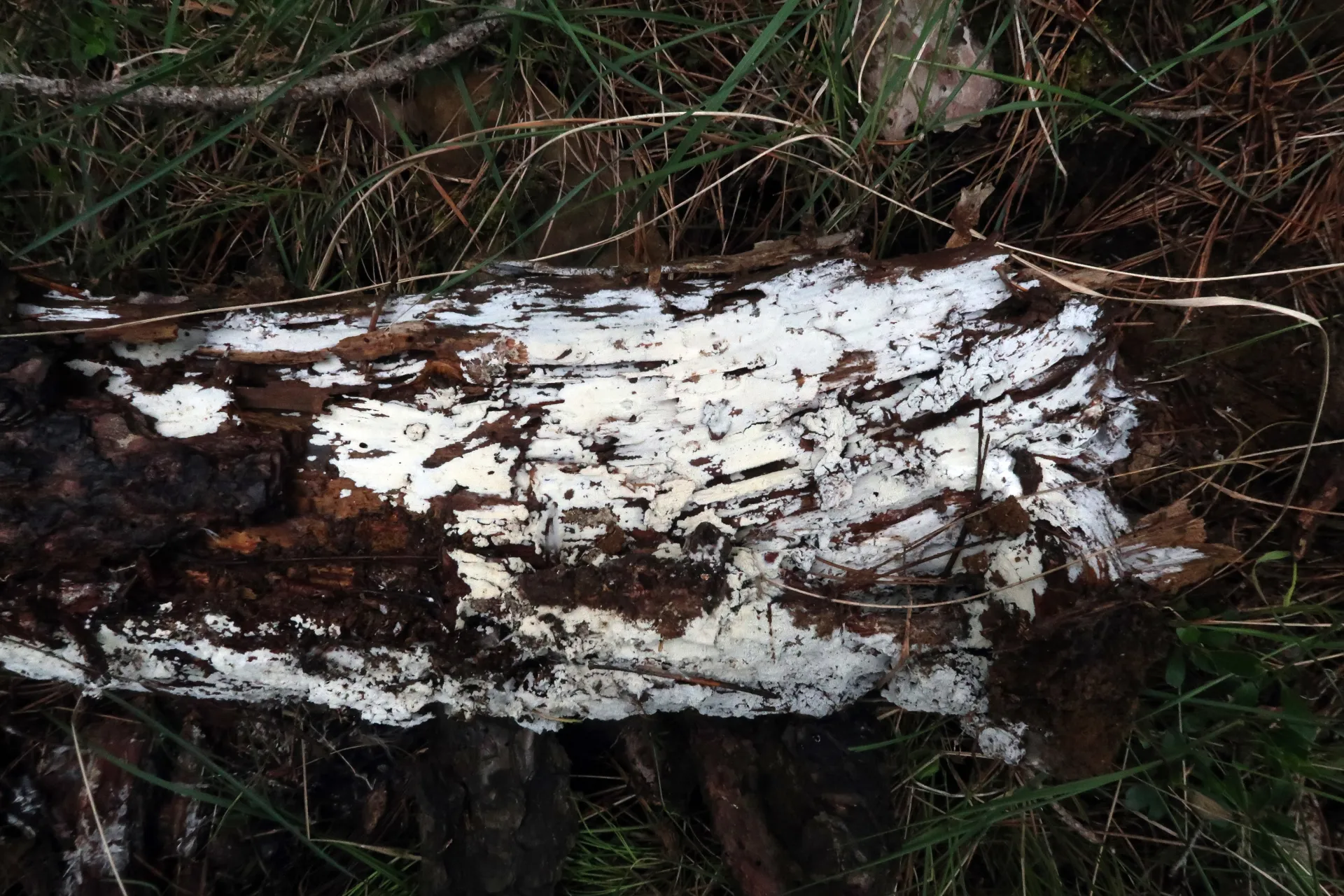
On decaying dead wood of Fagus or Quercus on the ground, with completely resupinate basidiomes, tightly adnate to the substrate, whitish to pale ochre, with the entire surface covered in cylindrical to flattened spines or teeth 1 to 2 mm long, with a very thin common subiculum, and a diffuse, ill-defined growing margin.
Monomitic hyphal system, with only cylindrical, hyaline, thin- to moderately thick-walled generative hyphae, 2.5 to 4 µm wide, abundantly branched, septate with clamp connections.
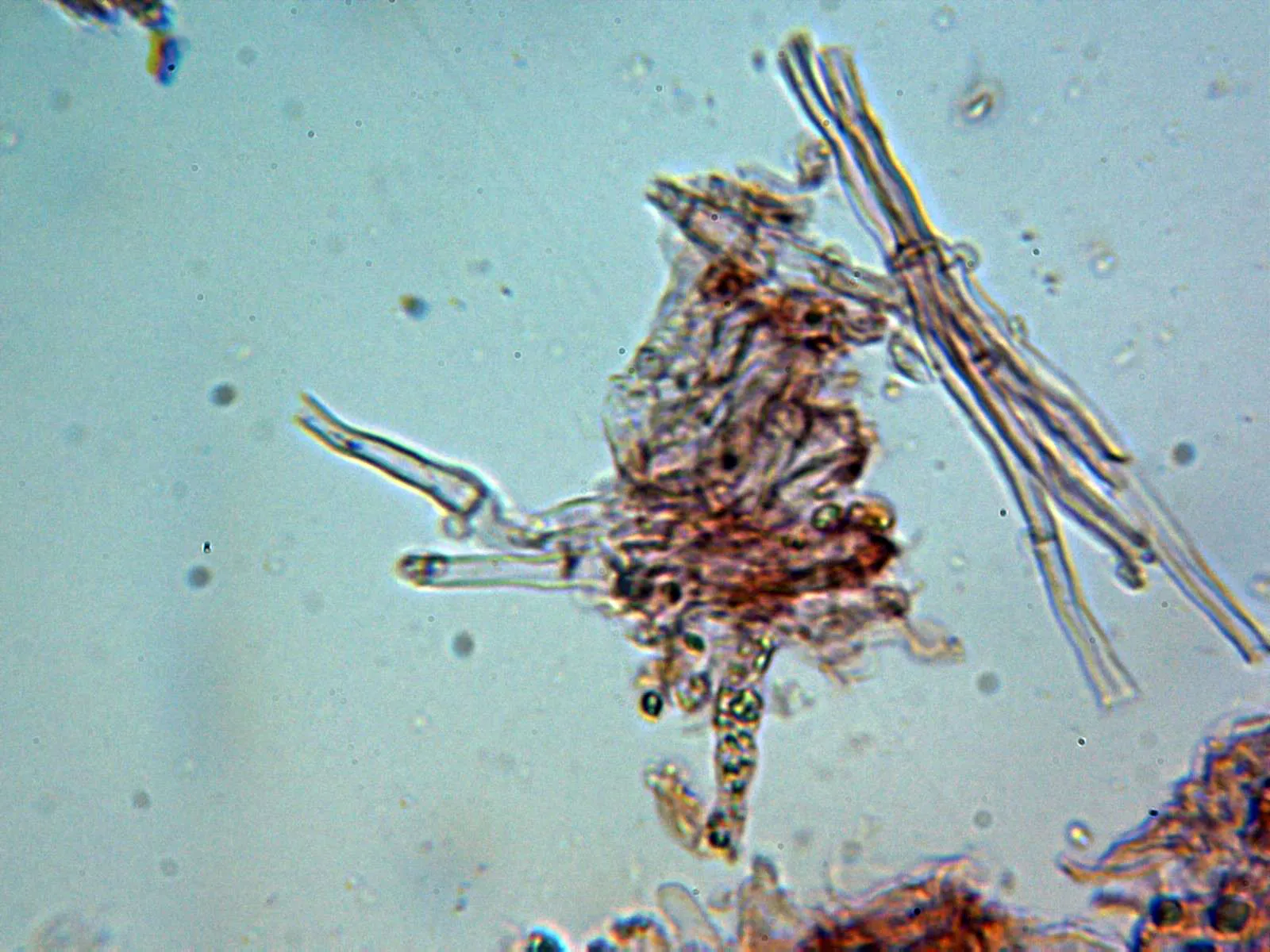
Cystidia of two types: on one hand, leptocystidium-like cystidia, cylindrical, hyaline, capitate, moderately thick-walled, 20 to 35 µm long by 5 to 8 µm wide, often with the apex enveloped in a yellowish resinous substance; and on the other hand, fusiform cystidia with a long neck, 25 to 40 µm long by 3 to 5 µm wide.
Basidia utriform to suburniform, 20 to 30 µm long by 4 to 5.5 µm wide, with basal clamp connections and tetrasporic.
Spores ovoid to ellipsoidal, smooth, hyaline, thin-walled, with a pointed apiculus at one end, 3.5 to 5 µm long by 3 to 4 µm wide, with one or more oil drops inside, and inamyloid in Melzer's reagent.
Geographic references
Map generated from global occurrence data from GBIF. GBIF.
Study measurements
Values in Microns (µm)Macroscopic gallery
Microscopic gallery