


Hyphoderma transiens
(Bres.) Parmasto
Study description
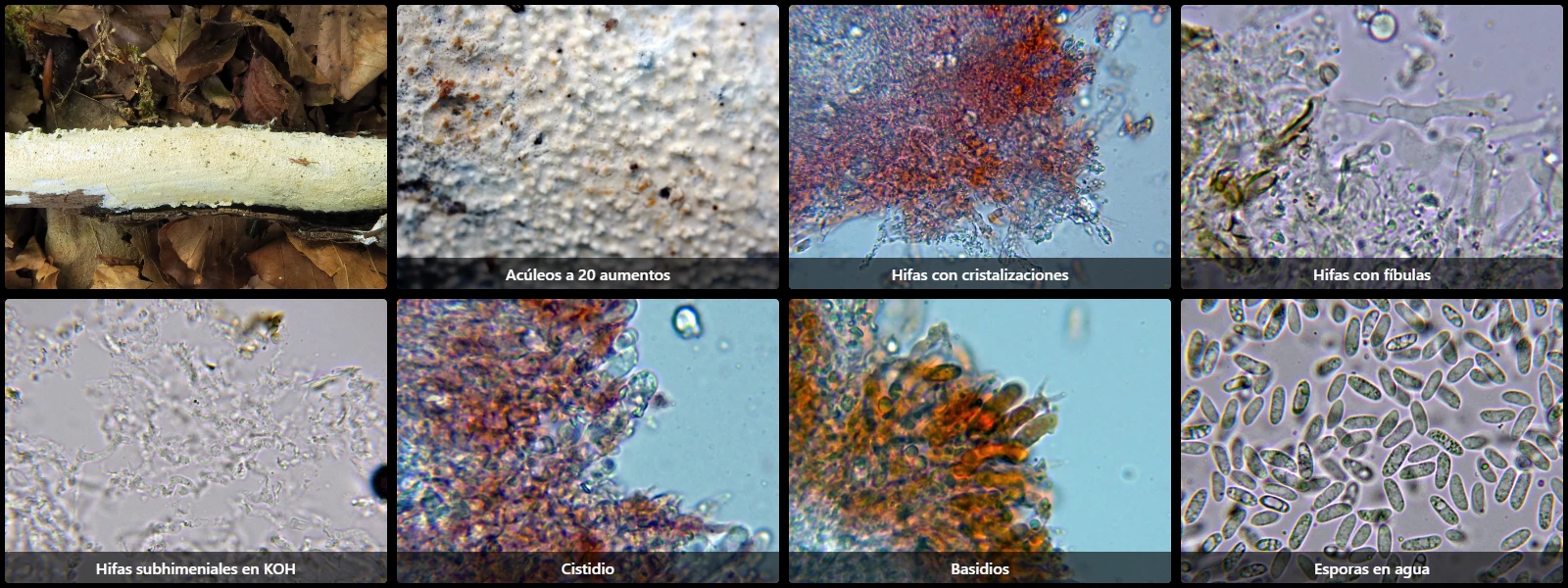
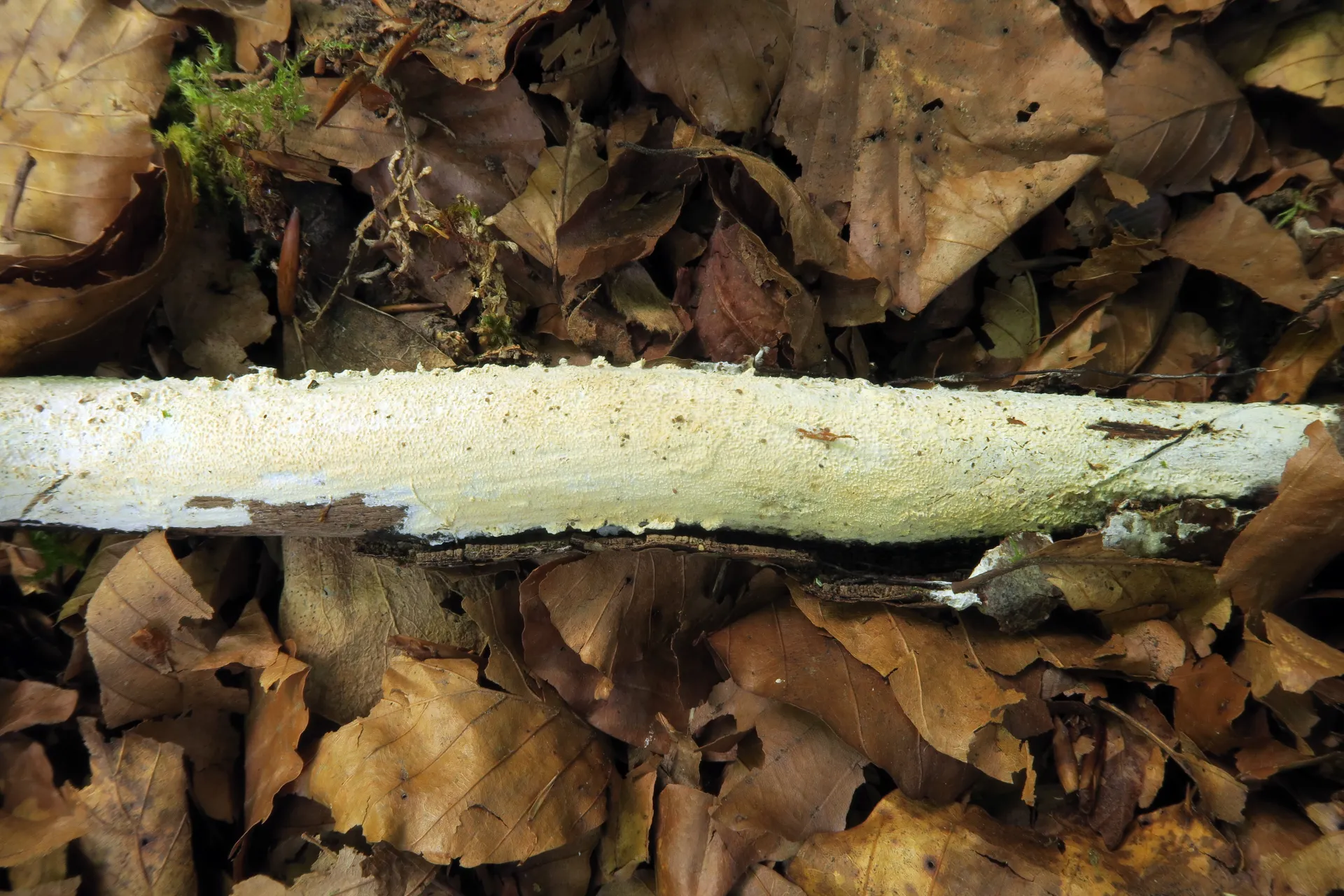
On decaying broadleaf wood debris on the ground, with completely resupinate basidiomes, tightly adnate to the substrate, with an odontoid hymenium bearing short brown teeth 0.2 to 0.4 mm high over a whitish to light brown background, a very thin subiculum of only up to 0.13 mm, and a farinaceous, diffuse growing margin.
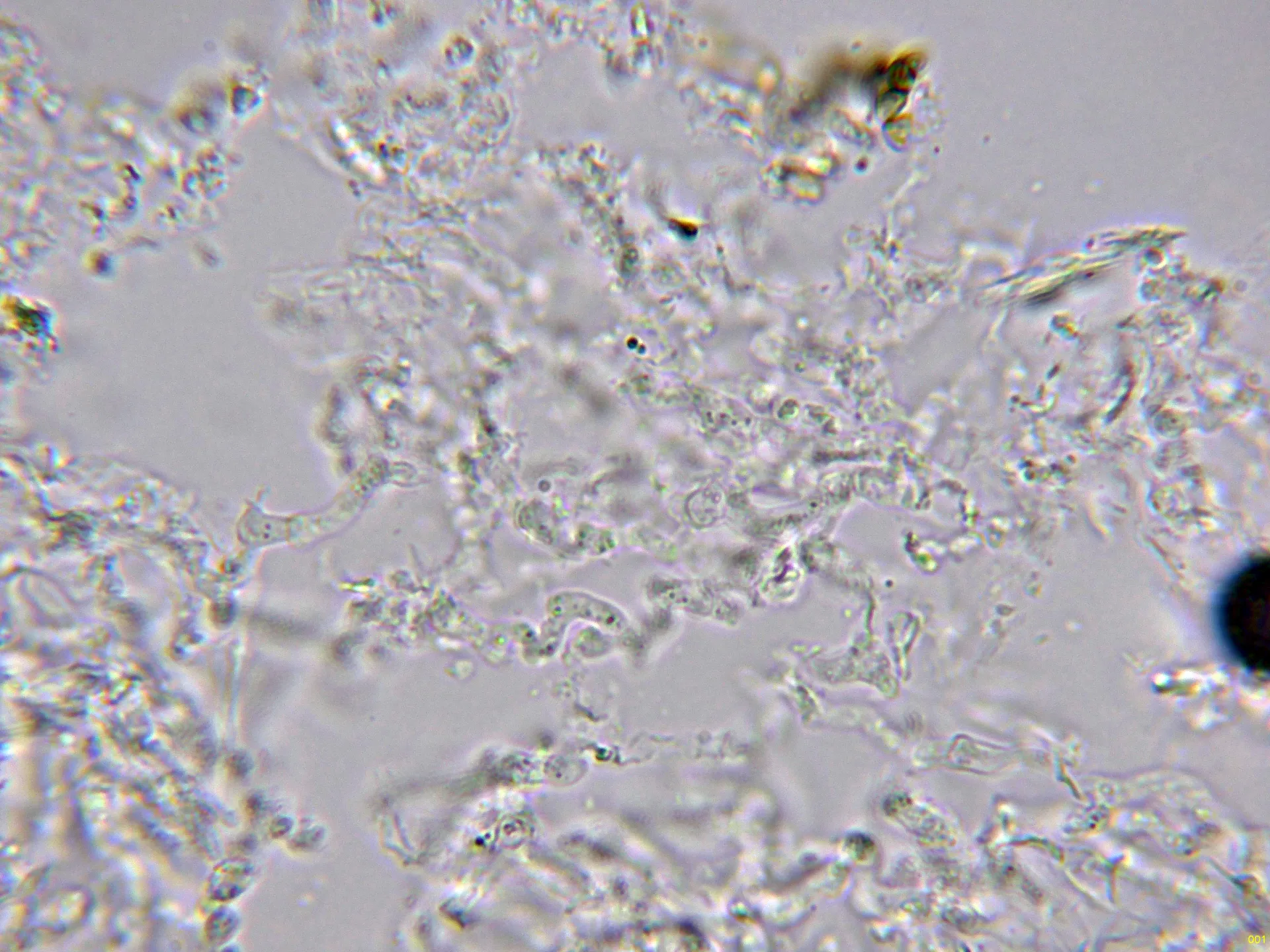
Monomitic hyphal system, with hyaline, thin- to moderately thick-walled subicular hyphae, slightly intertwined, 2 to 3.7 µm wide, branched, smooth or with light crystalline encrustations on their surface; tramal hyphae with abundant yellowish crystalline encrustations; apical hyphae of the teeth 1.5 to 3.5 µm wide, grouped in fascicles and arranged parallel; and hyaline, smooth, thin-walled, branched subhymenial hyphae, 2 to 2.5 µm wide, with abundant yellowish encrustations on their surface; all hyphae septate with clamp connections at the septa.
Cystidia scarce, scattered, deeply immersed in the hymenium, cylindrical, 40 to 90 µm long by 7 to 10 µm wide, thin-walled and smooth, occasionally with scattered encrusting crystals on their surface.
Basidia cylindrical to clavate, 15 to 25 µm long by 4.5 to 6 µm wide, with basal clamp connections, often with encrustations at the base, and with two or four sterigmata (bi- or tetrasporic).
Spores cylindrical, smooth, hyaline, thin-walled, with an eccentric apiculus at one end, 8.5 to 12.5 µm long by 3 to 4.5 µm wide, containing small oil drops of varying sizes inside, and inamyloid in Melzer's reagent.
Herbarium material available: JTP2875/26.
Geographic references
Map generated from global occurrence data from GBIF. GBIF.
Study measurements
Values in Microns (µm)Macroscopic gallery
Microscopic gallery
Genetic / Phylogenetic Study
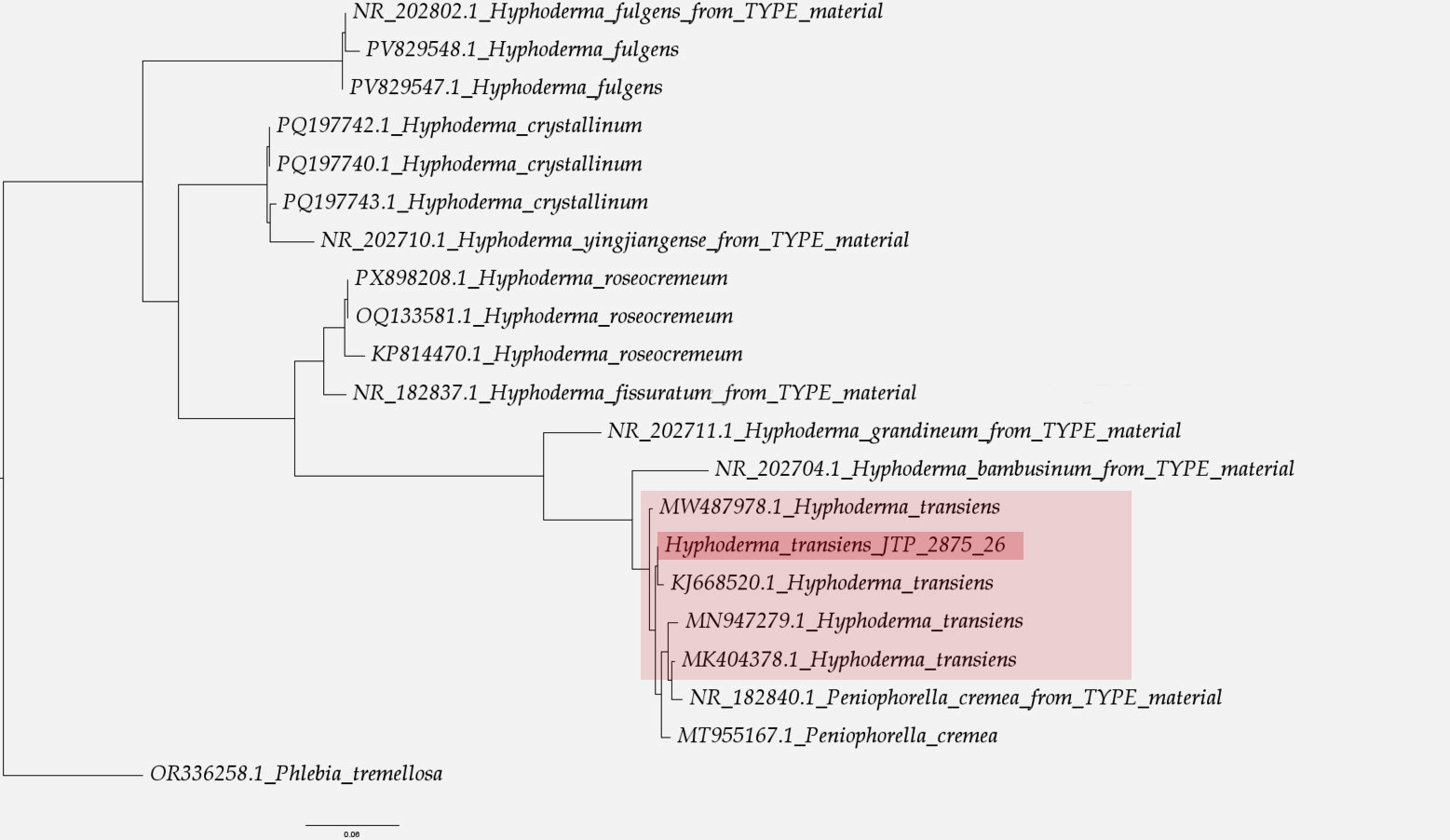
Phylogenetic Tree
Sequences and Data
Sequencing (Chromatogram)
Select a file to visualize the chromatogram