

Hymenochaete cruenta
(Pers.) Donk
Study description
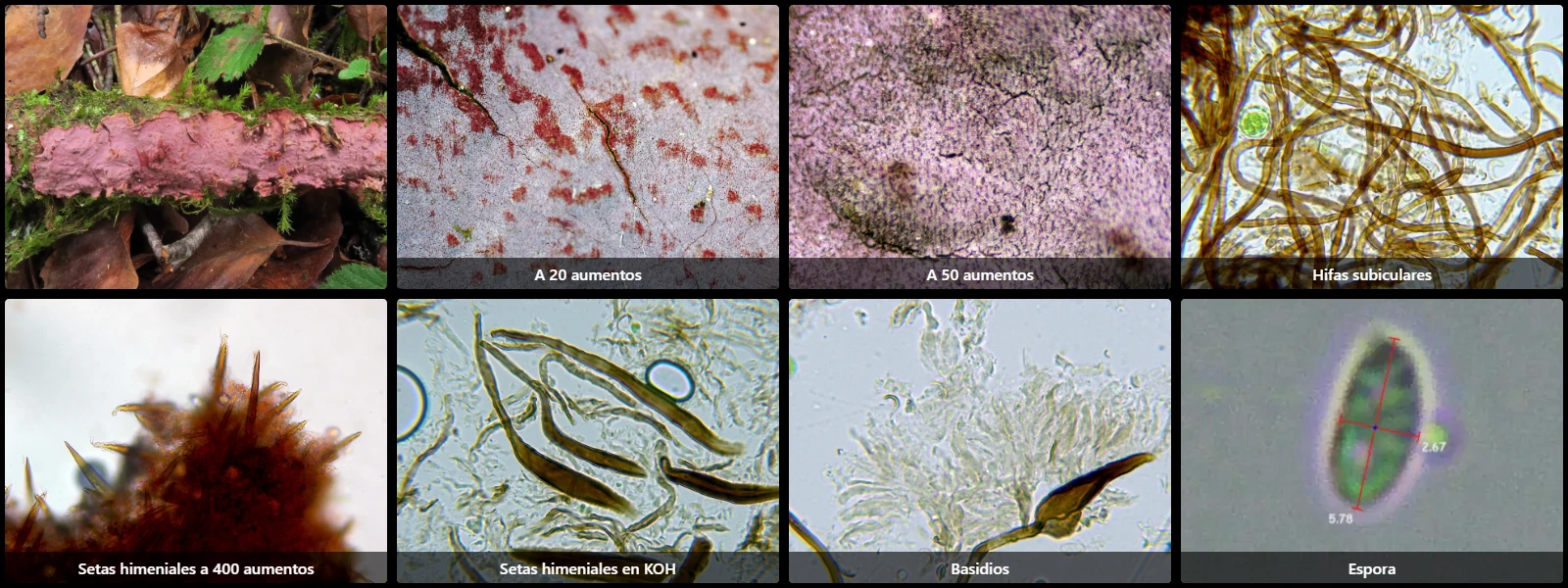
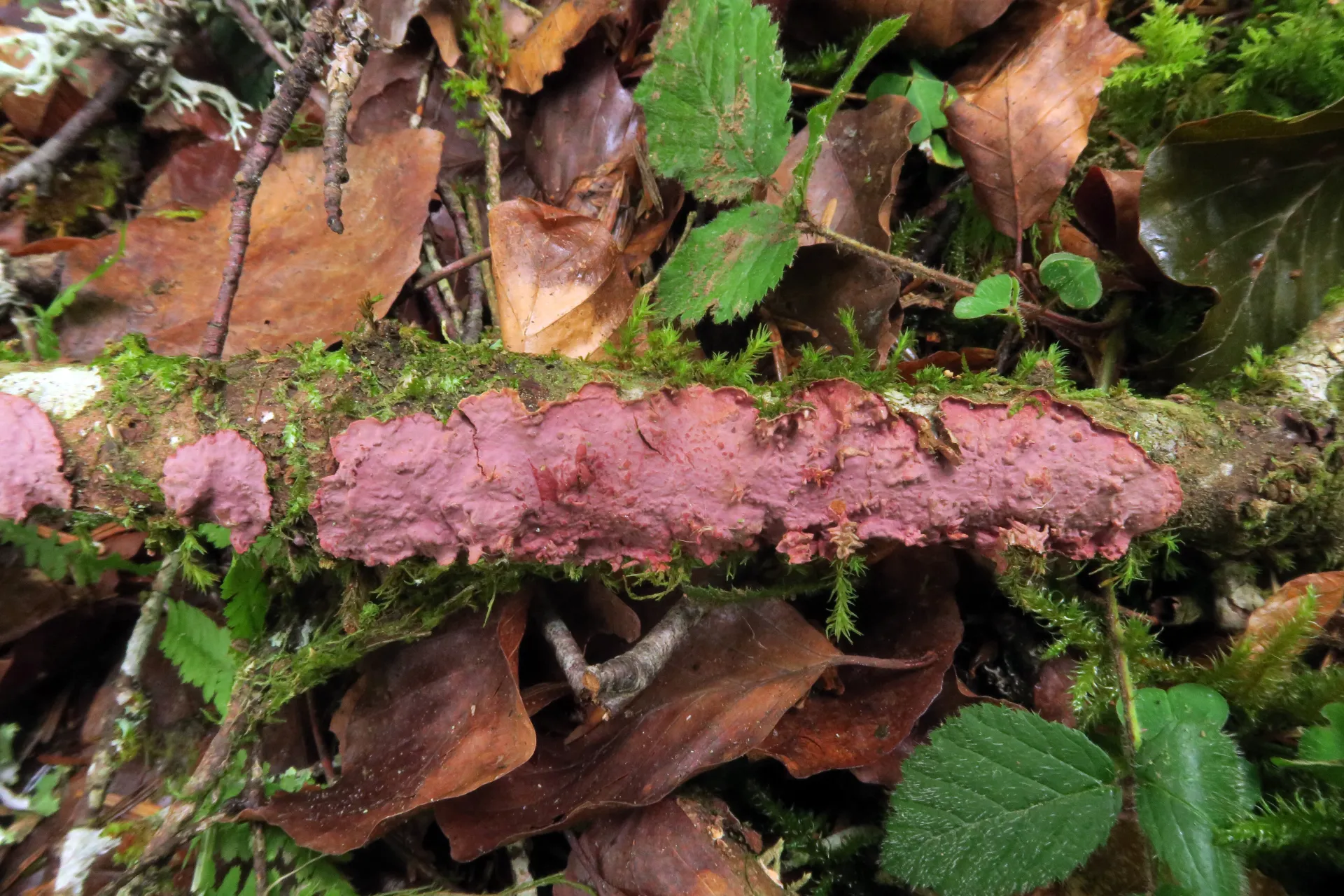
On decaying dead fir (Abies) branches on the ground or still attached to the tree, with completely resupinate basidiomes forming irregular patches on the bark, thin, reddish, with a surface that appears velvety under a good hand lens due to the abundance of hymenial setae on its surface, and of hard and brittle consistency.
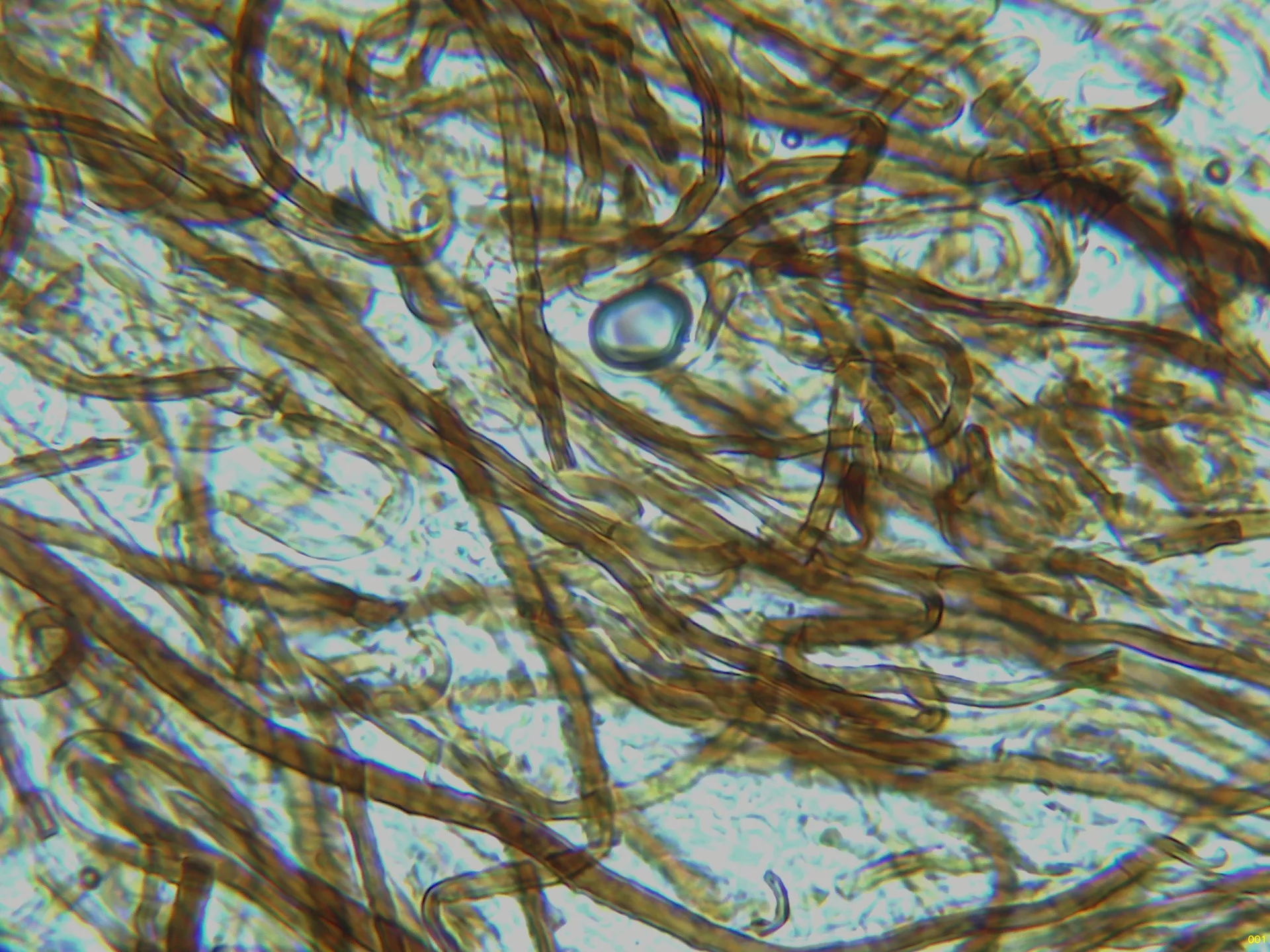
Monomitic hyphal system, with thick-walled tramal hyphae, 2 to 3 µm wide, with abundant brown pigment inside, and hyaline subhymenial hyphae, 1.5 to 3 µm wide, all septate with simple septa (without clamp connections).
Very abundant hymenial setae, very thick-walled with a narrow lumen, brown with a slightly more hyaline apex, 50 to 85 µm long by 6 to 9 µm wide, with a simple base, basal narrowings, and a pointed apex.
Basidia cylindrical to slightly clavate, 20 to 25 µm long by 4 to 5 µm wide, with a simple base and tetrasporic.
Very few spores obtained; according to literature cylindric-ellipsoidal, smooth, hyaline, thin-walled, 6 to 8.5 µm long by 2 to 3 µm wide, with an eccentric apiculus at one end, and inamyloid in Melzer's reagent.
Herbarium material available: JTP2842/26.
Geographic references
Map generated from global occurrence data from GBIF. GBIF.
Study measurements
Values in Microns (µm)Macroscopic gallery
Microscopic gallery