


Helvella levis
Bergeret
Study description
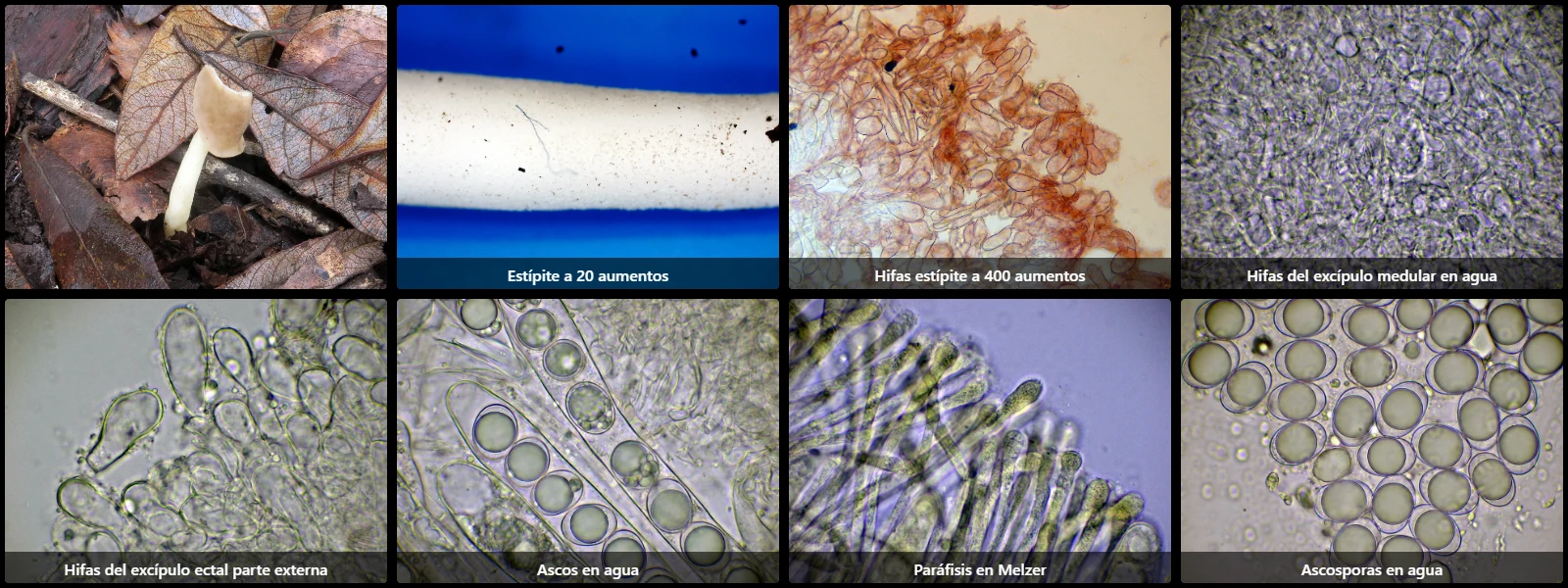
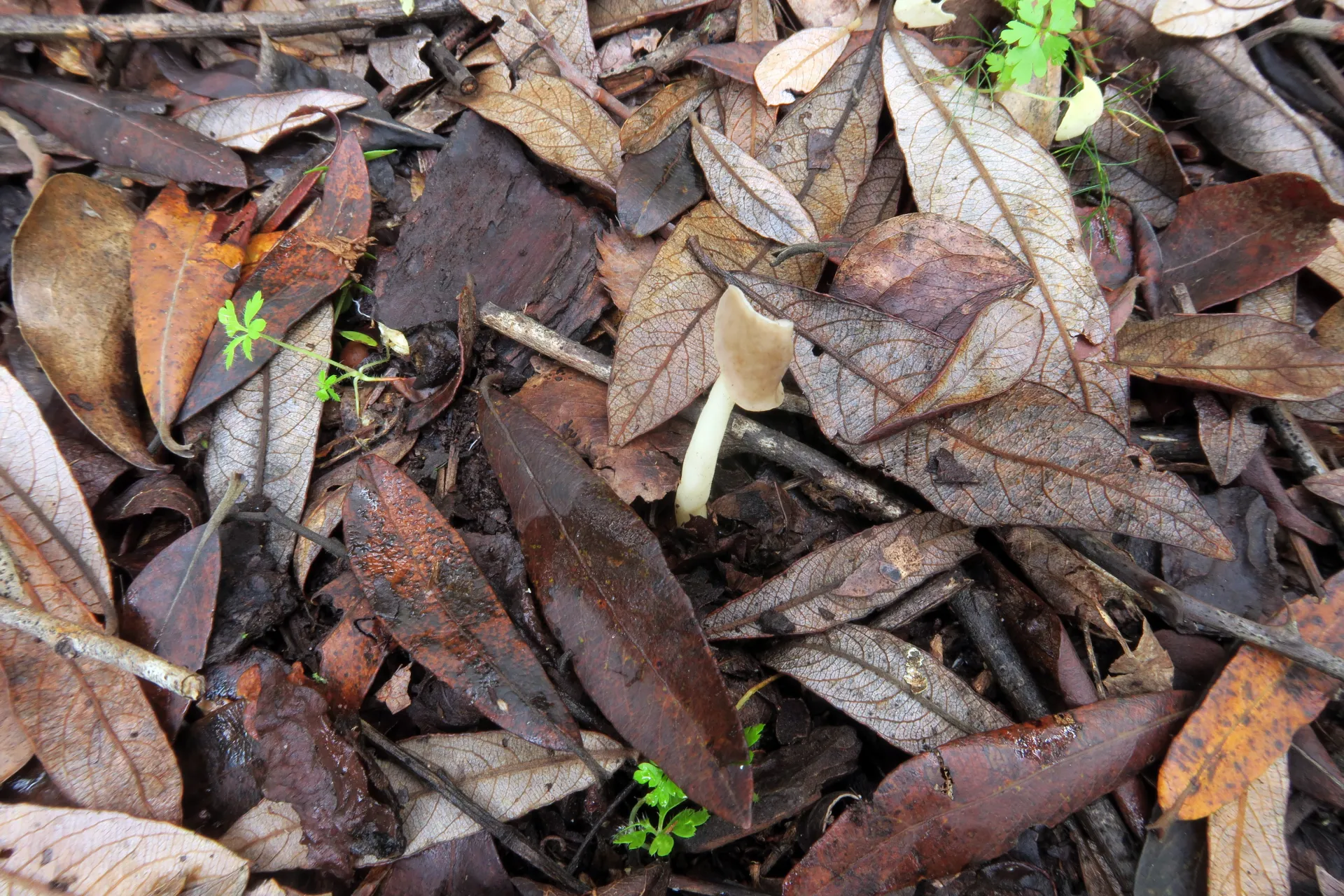
With a lobed pileus (saddle-shaped), 1 to 3.5 cm in diameter, cream to greyish brown, with a cylindrical stipe slightly enlarged at the base, 2.5 to 5 cm long, white, and with a pubescent surface.
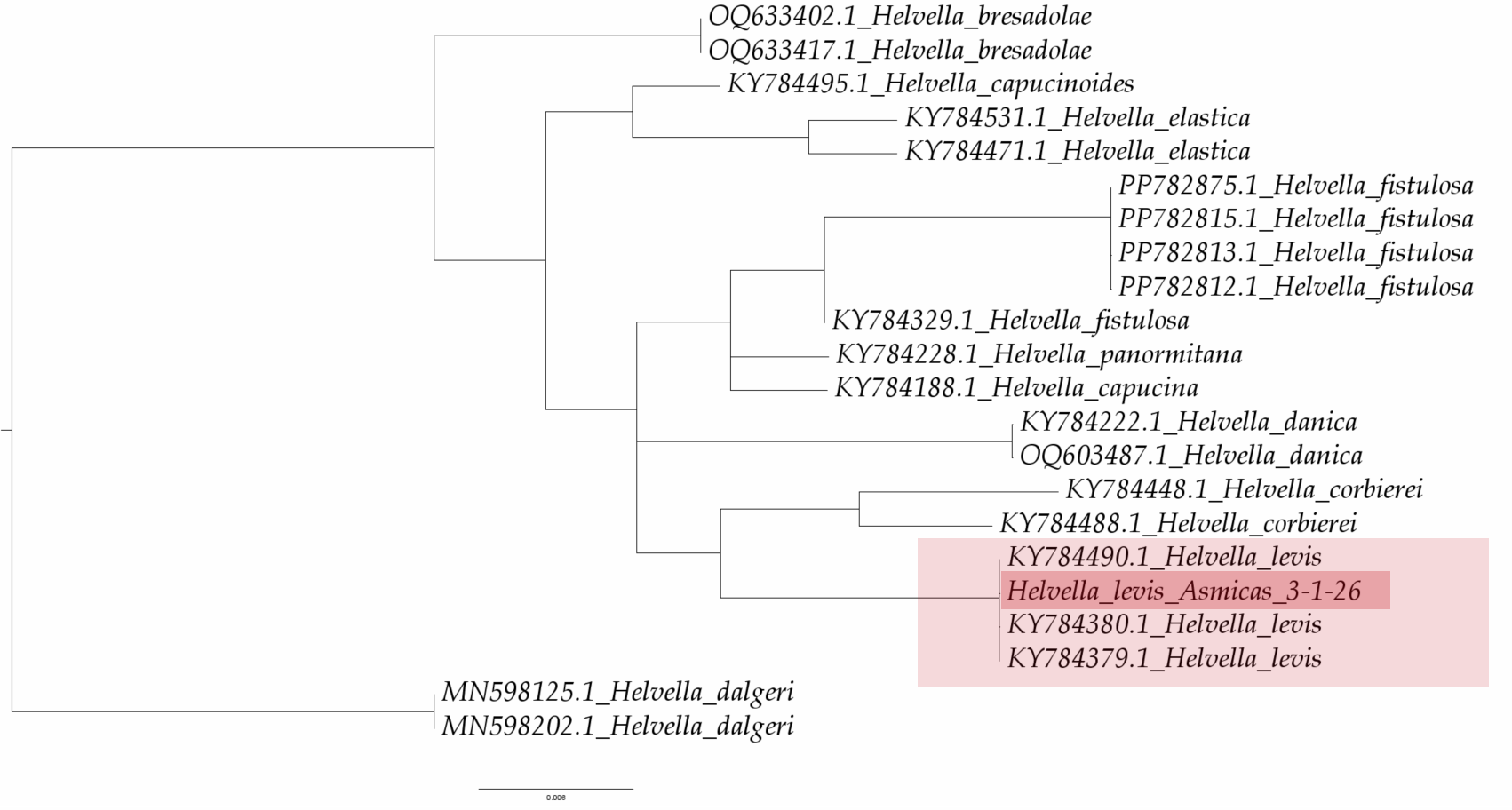
A species belonging to the Helvella elastica species complex, very difficult to identify without molecular analysis.
Superficial hyphae of the stipe cylindrical, clavate to pyriform, projecting outwards, grouped in fascicles, 5 to 8 µm in diameter, with simple septa.
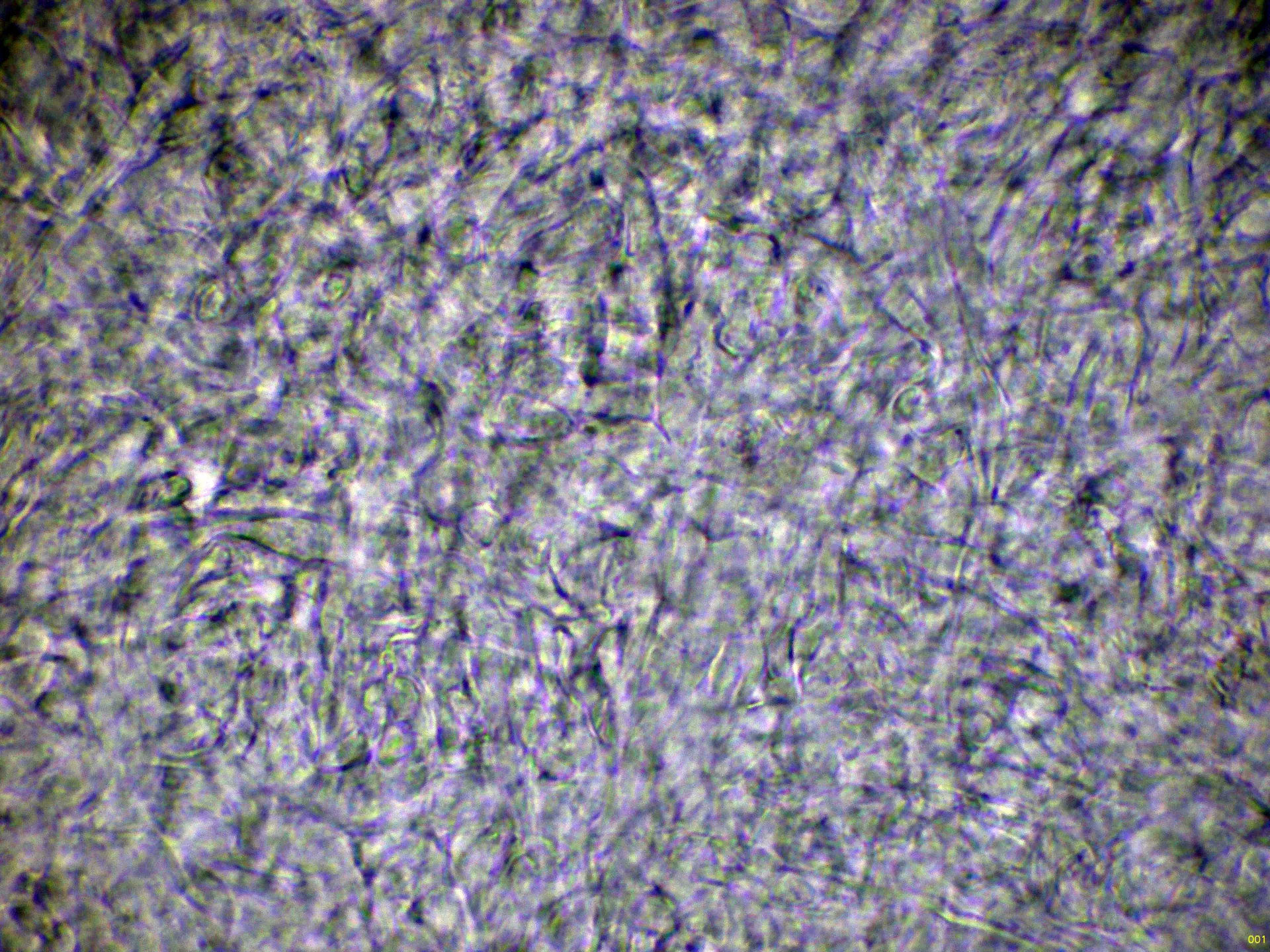
Medullary excipulum hyphae of textura intricata, hyaline, thin-walled, densely interwoven, 3 to 7 µm in diameter.
Ectal excipulum of textura globulosa-angularis, with hyaline hyphae 6 to 12 µm in diameter; terminal hyphae on the outer part subcylindrical, subclavate to clavate, 20 to 50 µm long and 15 to 25 µm wide.
Asci cylindrical, eight-spored, 290 to 320 µm long, 14 to 16 µm wide, with uniseriate spore arrangement inside the ascus (in a single row one behind the other), and without any reaction in Melzer's reagent (inamyloid).
Paraphyses filiform, septate, cylindrical at the base and clavate at the apex, maximum width 5 to 8 µm, with faint brownish granular pigment inside that darkens noticeably in Melzer's reagent.
Ascospores ovoid to ellipsoidal, smooth, hyaline, thin-walled, 19 to 24 µm long, 14 to 17 µm wide, with a large central guttule occupying more than three-quarters of the ascospore interior.
These ascospore measurements are larger than typically reported for the species, which according to most authors range between 17–22 µm long by 11–14 µm wide.
Herbarium material available: JTP2800/26.
Geographic references
Map generated from global occurrence data from GBIF. GBIF.
Study measurements
Values in Microns (µm)Macroscopic gallery
Microscopic gallery
Genetic / Phylogenetic Study
Phylogenetic Tree
Sequences and Data
Sequencing (Chromatogram)
Select a file to visualize the chromatogram