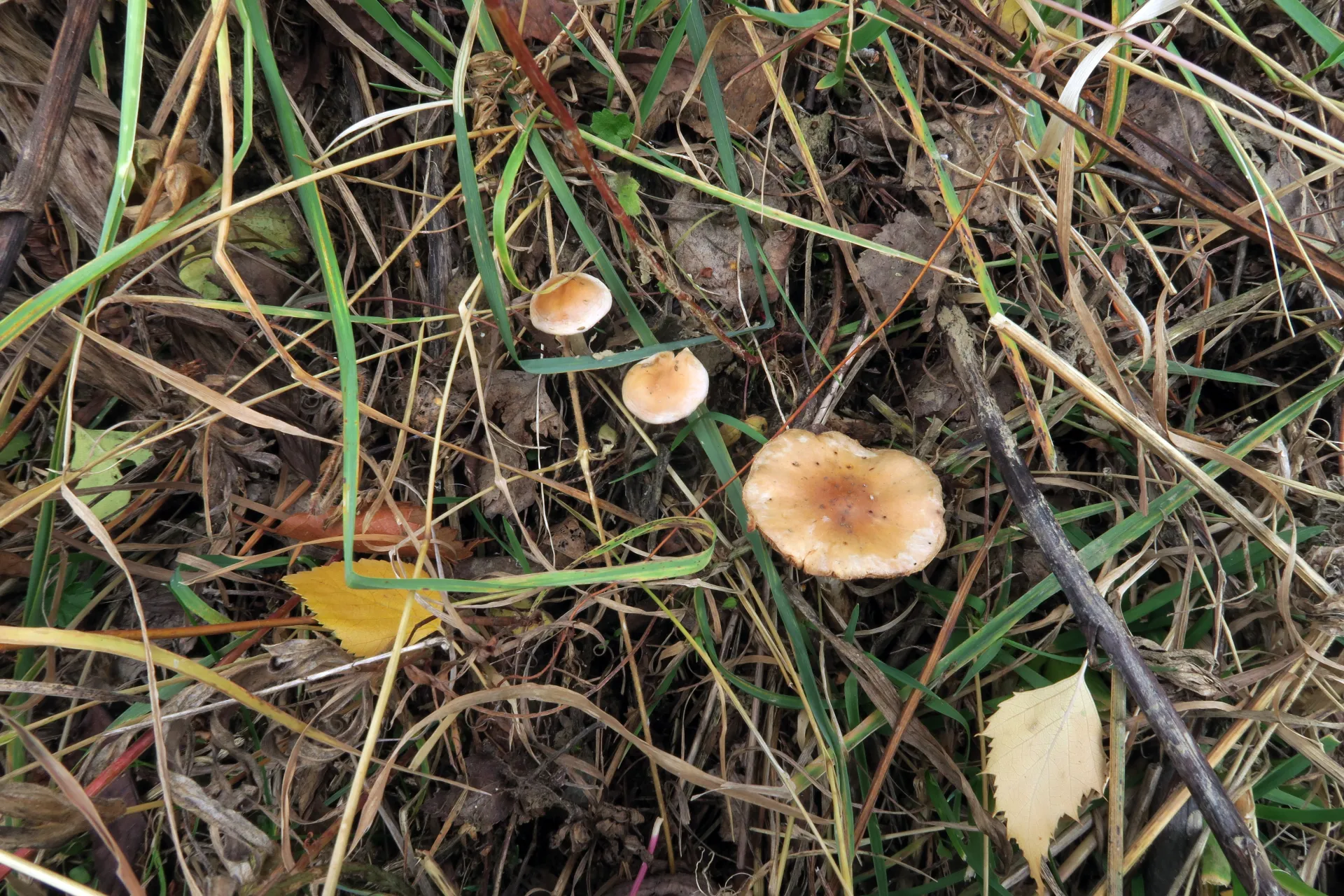
Hebeloma collariatum
Bruchet
Study description
A species associated with riparian forests and very humid locations, with indextrinoid spores.
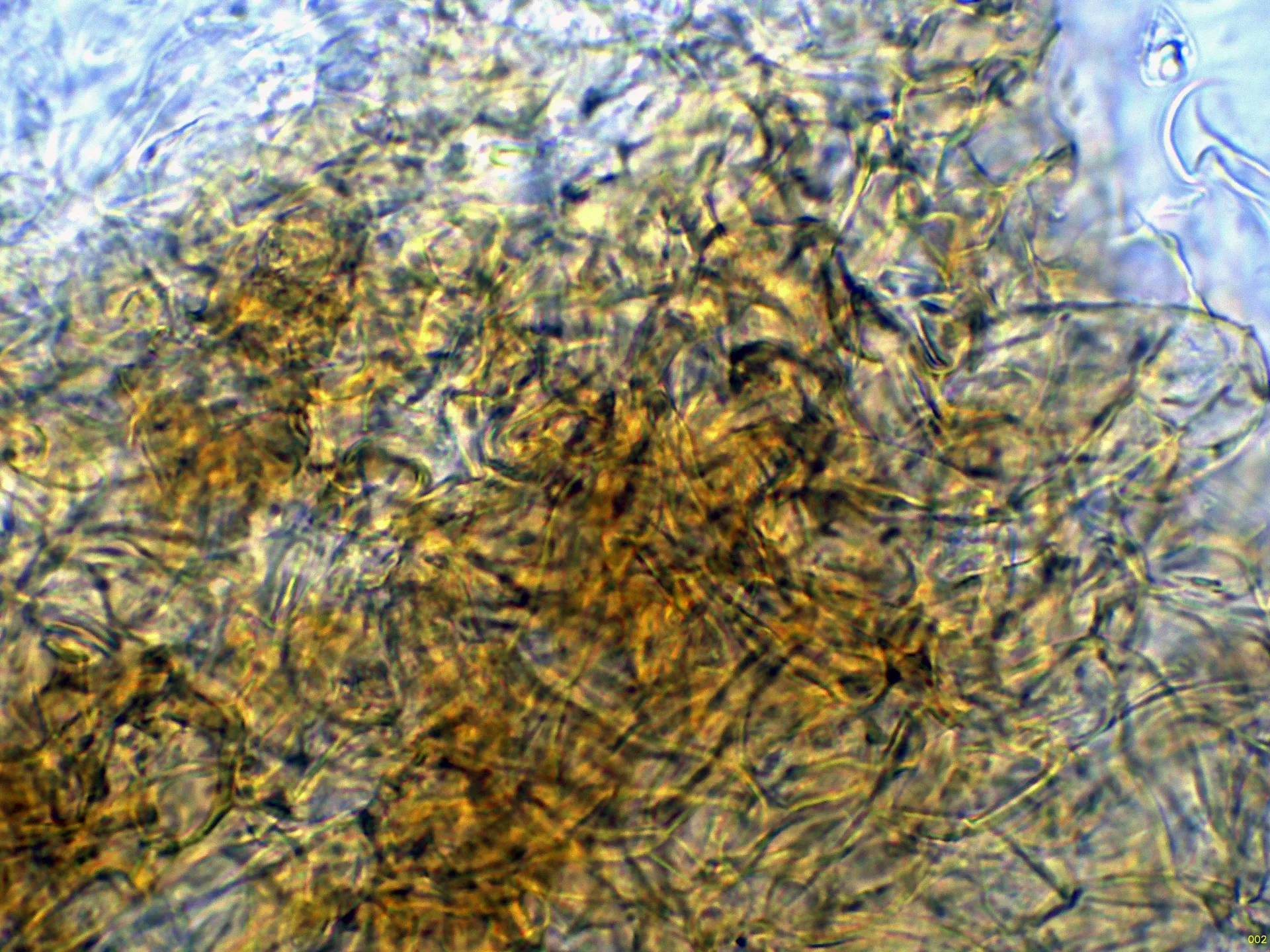
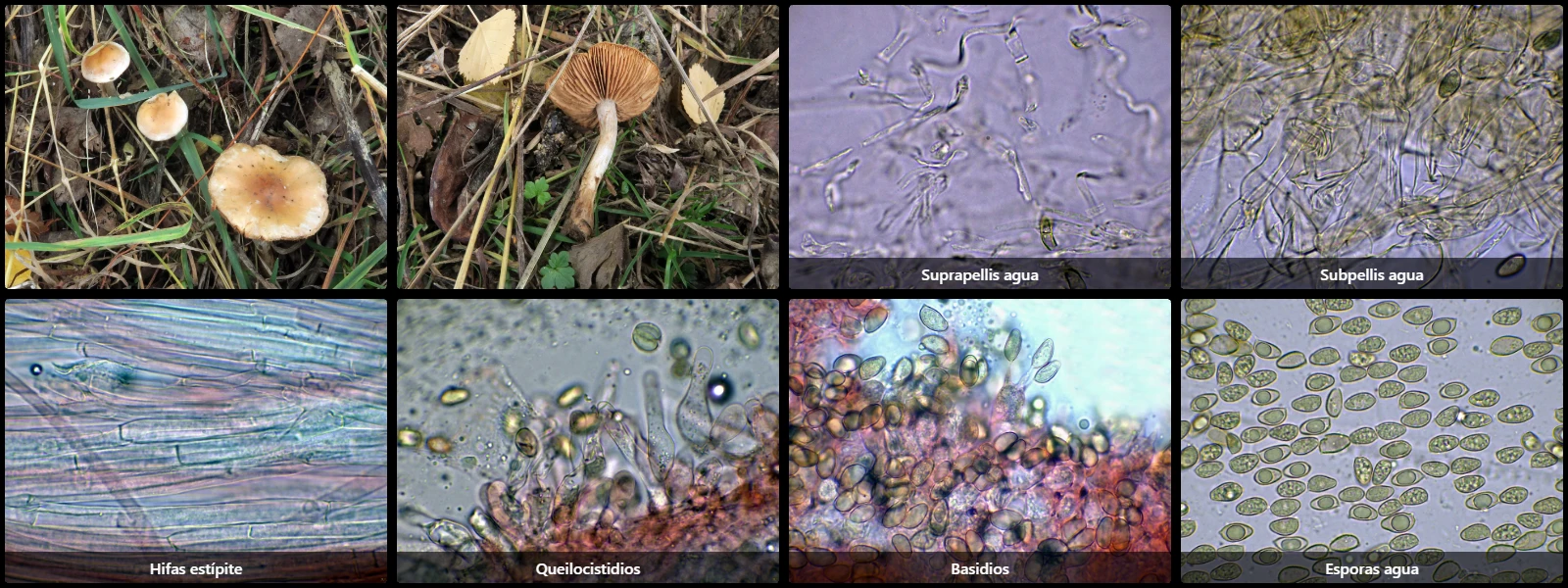
Pileipellis with a thin superficial layer of hyphae widely separated by gelification, hyaline, 3-6 µm wide; beneath this lies a more compacted layer of hyphae arranged more or less parallelly, with abundant brownish intracellular pigment, septate and with clamp connections at the septa.
Cheilocystidia cylindrical to lageniform, hyaline, thin-walled.
Basidia clavate, 35-40 µm long and 10-12 µm wide, with basal clamps, 4-spored.
Spores ellipsoidal, moderately thick-walled and very minutely verruculose, pale yellow under the microscope, with a prominent eccentric apiculus at one end, indextrinoid in Melzer's reagent.
Very similar to Hebeloma pumilum and Hebeloma sordescens, both of which possess dextrinoid spores.
Herbarium material available: JTP2655/25.
Geographic references
Map generated from global occurrence data from GBIF. GBIF.
Study measurements
Values in Microns (µm)Macroscopic gallery
Microscopic gallery