Gyrophanopsis polonensis
(Bres.) Stalpers & P.K.Buchanan
Study description
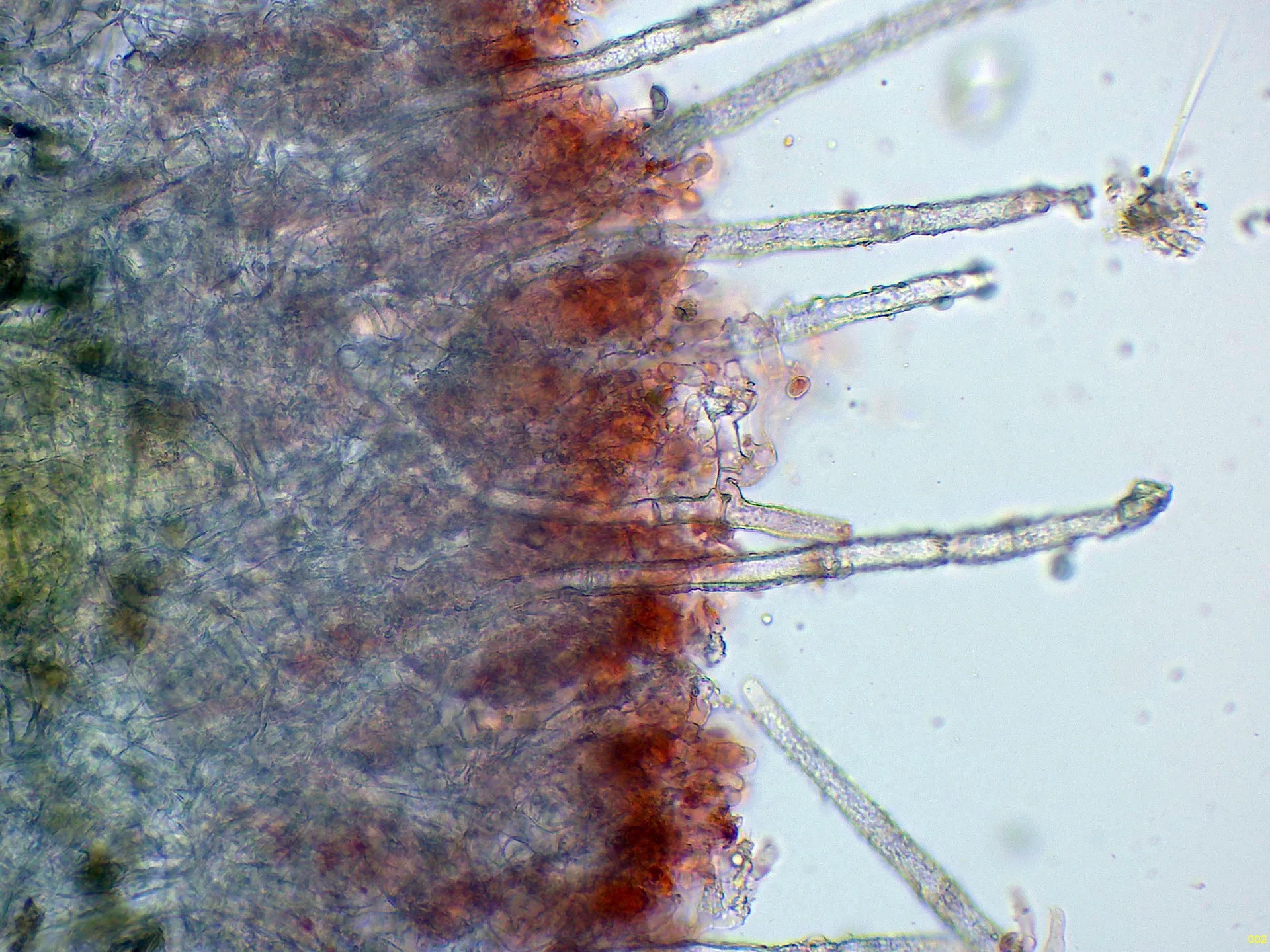
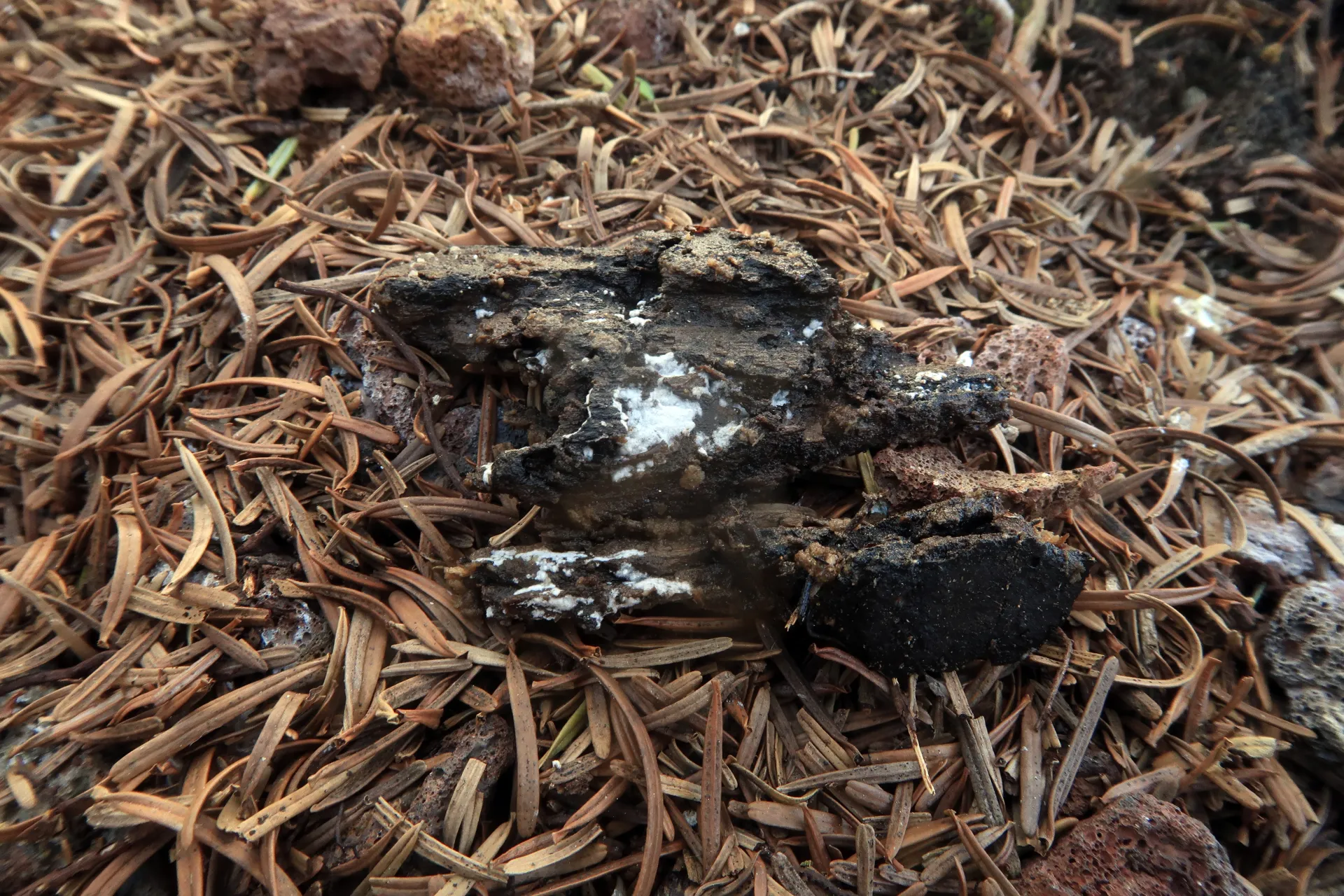
On very damp, heavily decayed broadleaf wood, with resupinate basidiomes, finely villous surface, whitish, with very abundant fine hairs easily observable with a hand lens, corresponding to very long septocystidia.
My thanks to Ángel Torrent for providing the material for study.
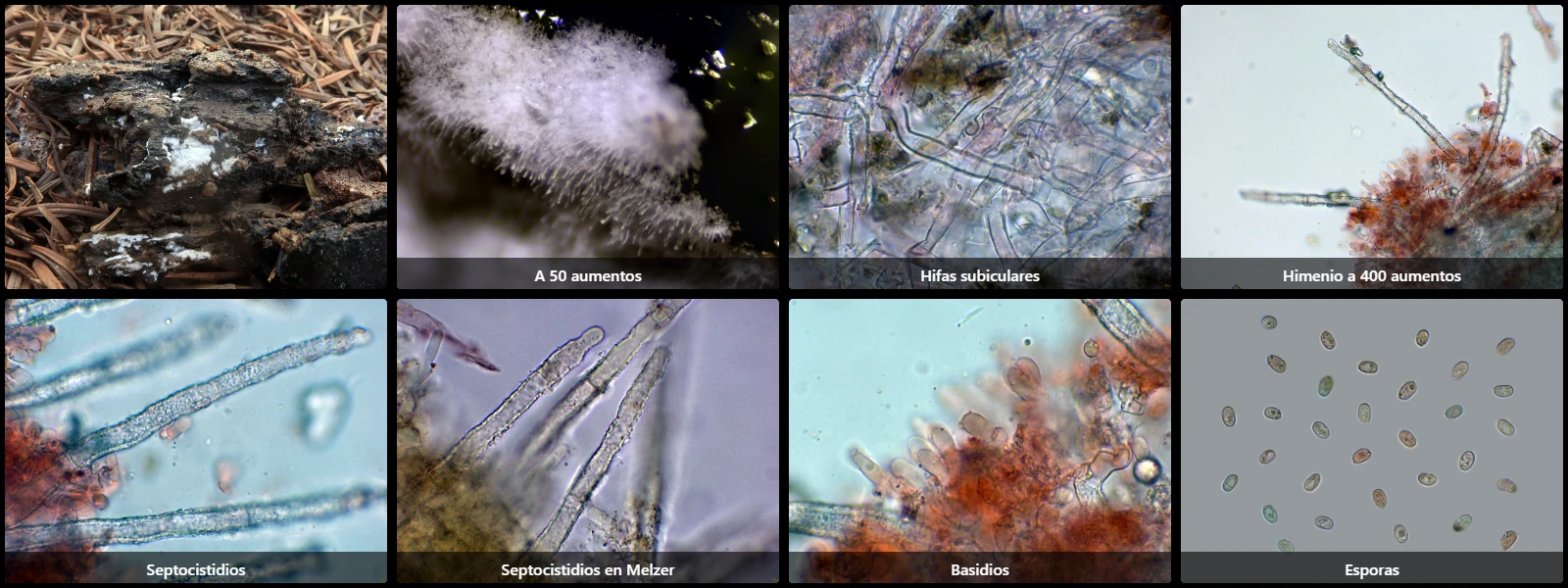
Hyphal system monomitic, with contextual hyphae hyaline, thin- to slightly thick-walled, 5 to 8 µm wide, abundantly branched, septate and with prominent clamp connections.
Cystidia of septocystidium type, cylindrical, moderately thick-walled, 150 to 270 µm long, 8 to 10 µm wide, projecting up to 90 µm above the basidial level, covered over their entire surface with hyaline granular encrustations, septate with clamp connections at the septa.
Basidia clavate to suburniform (with a slight constriction at the middle), 30 to 45 µm long, 6 to 8 µm wide, with basal clamp connections and generally four-spored.
Spores ellipsoidal, smooth, hyaline, thin- to slightly thick-walled, 6.5 to 8.5 µm long, 4 to 5.5 µm wide, with faint granular content inside, cyanophilic, and inamyloid in Melzer's reagent.
Herbarium material available: JTP2788/26.
Geographic references
Map generated from global occurrence data from GBIF. GBIF.
Study measurements
Values in Microns (µm)Macroscopic gallery
Microscopic gallery