Gymnopus brassicolens
(Romagn.) Antonín & Noordel.
Study description
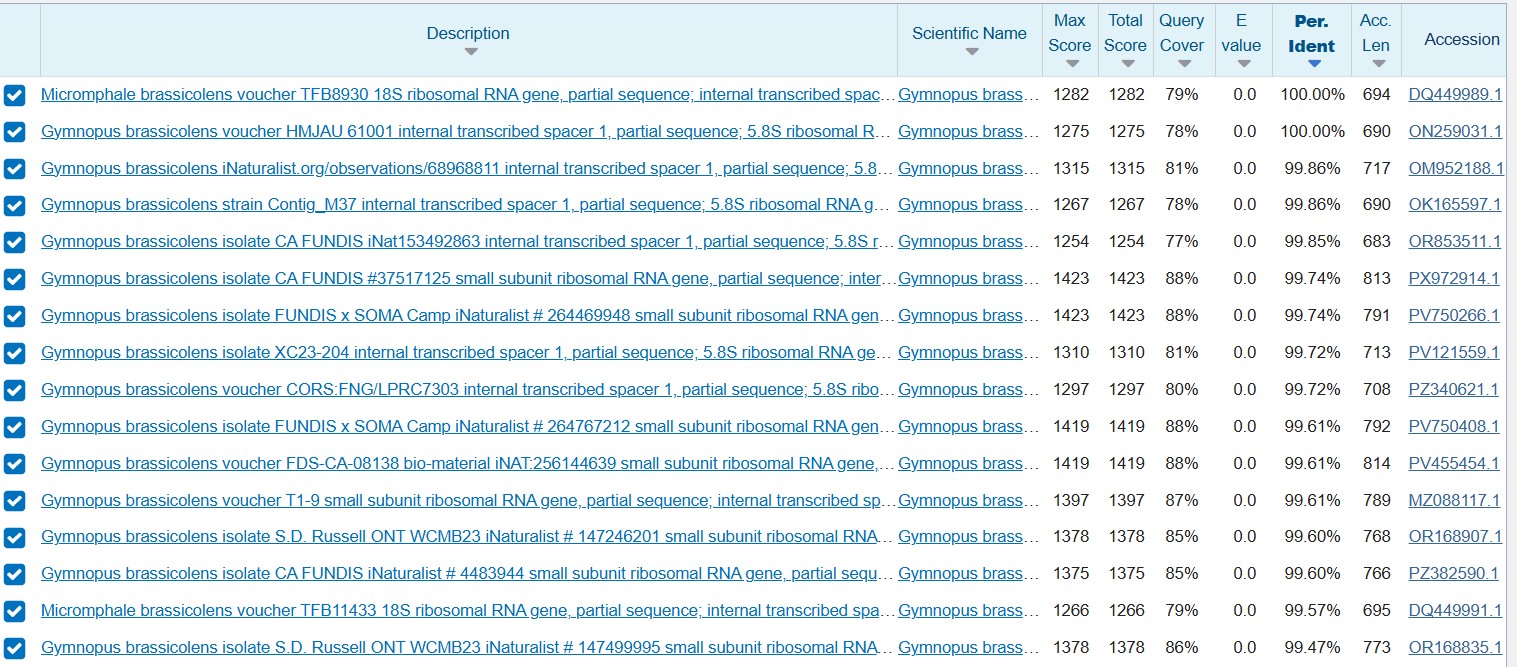
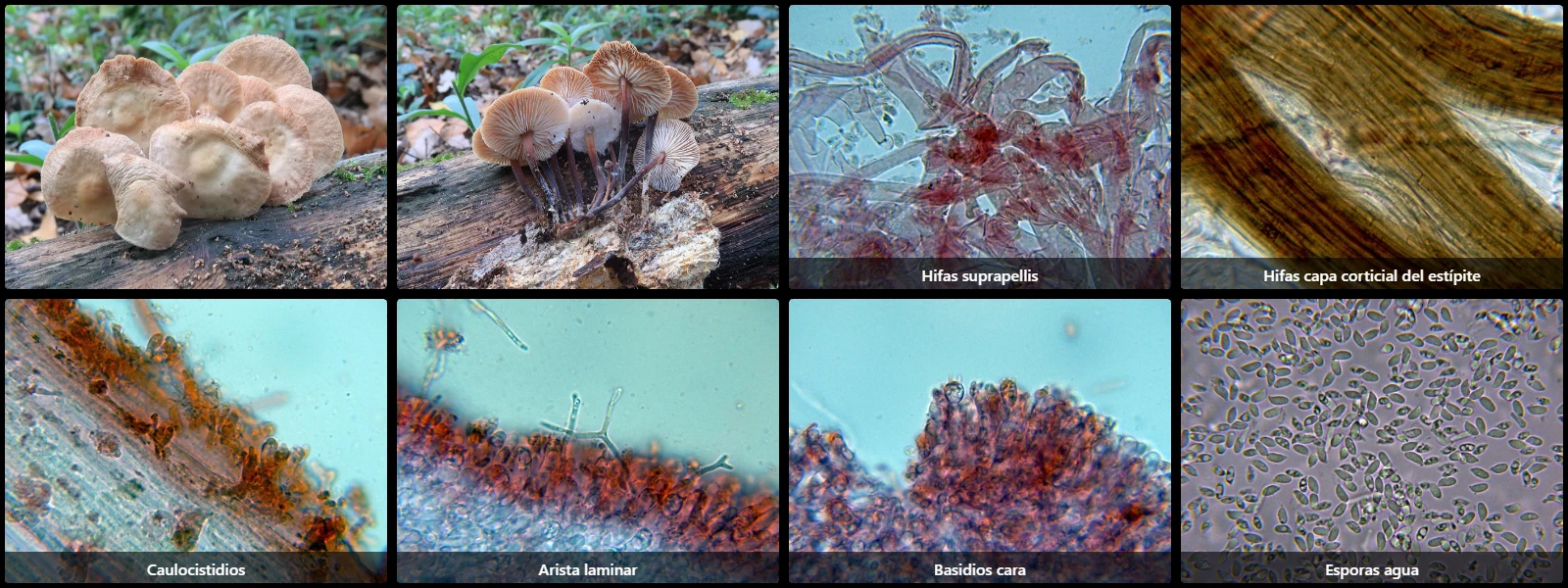
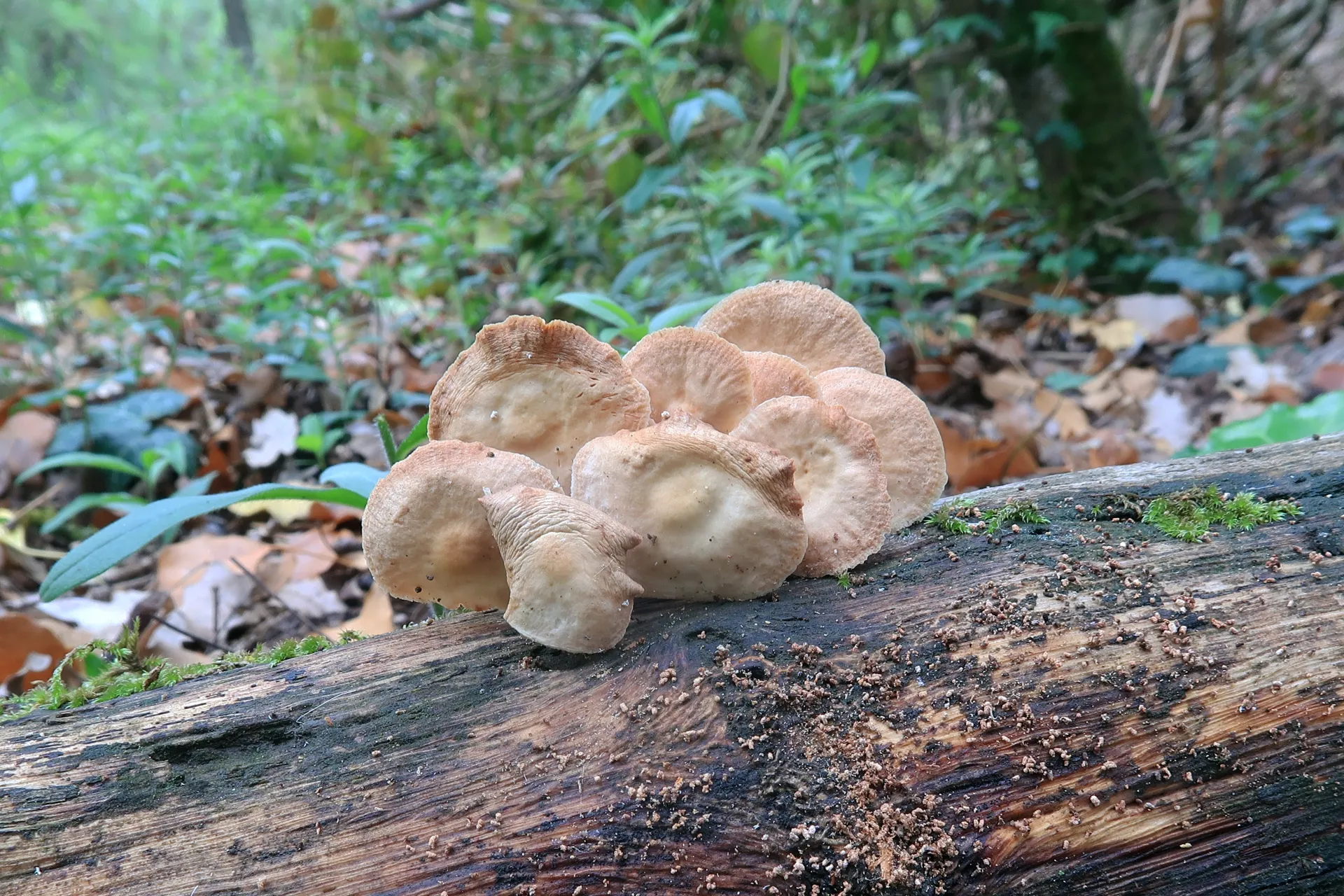
Species typical of beech forests with a preference for calcareous soils, usually fruiting on rotten wood on the ground, with a flattened pileus retaining a small central umbo, reddish-brown when fresh and ochre-cream when dried, a pruinose reddish-brown stipe darker towards the base, an unpleasant odour reminiscent of rotten cabbage, and a sweet taste.
Cuticle (pileipellis) formed by cylindrical, thin-walled hyphae 4–10 µm wide, arranged more or less parallel, with brownish encrusting intracellular pigment, the outermost hyphae slightly separated by gelification, in both cases septate and clamped.
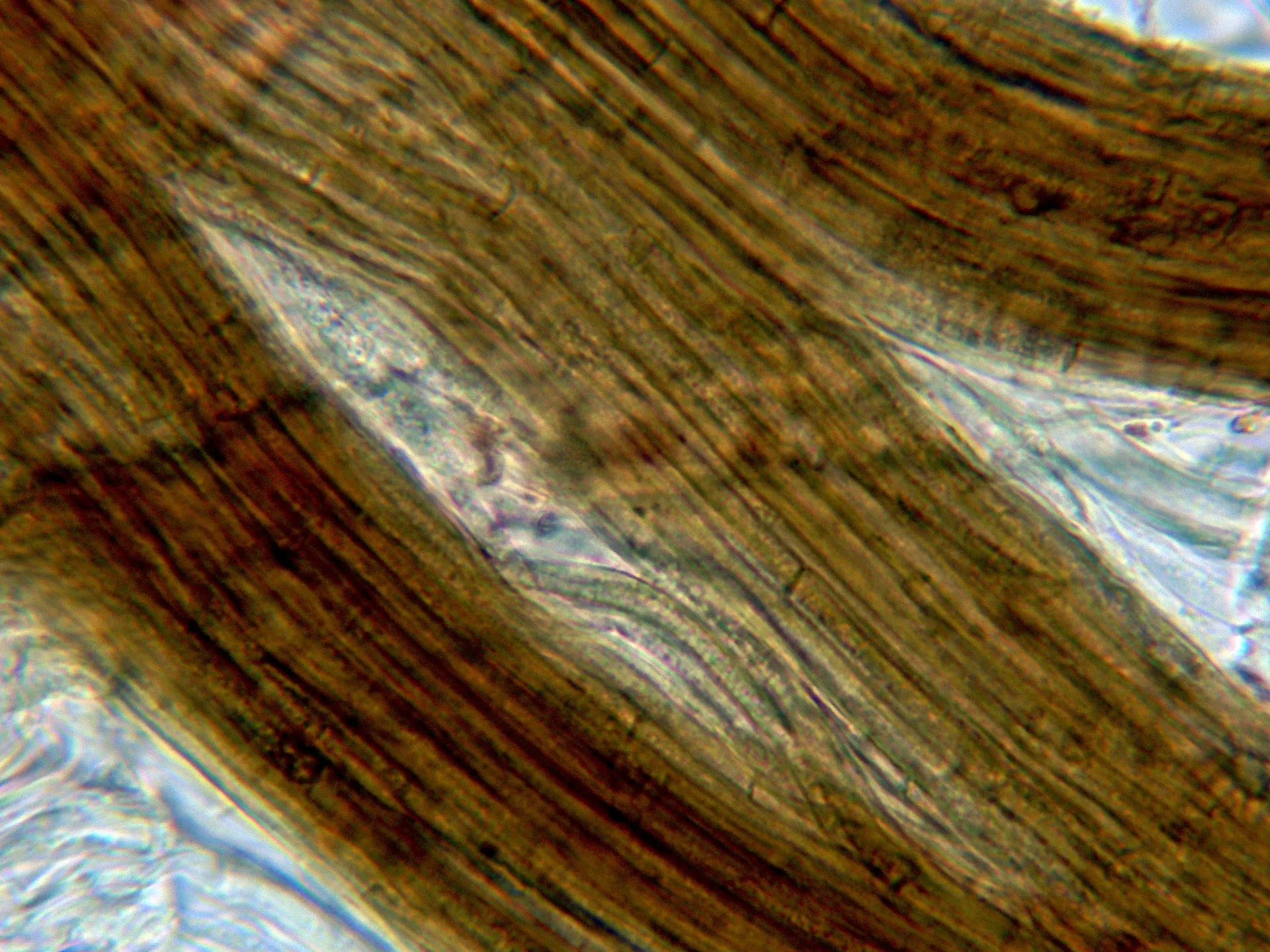
Stipe hyphae arranged parallel, with very abundant brown encrusting pigment.
Caulocystidia cylindrical, hyaline, slightly capitate, measuring 15–50 µm long by 4–10 µm wide.
Lamellar edge without differentiated elements from basidia or basidioles (cystidia absent).
Lamellar trama regular to parallel.
Basidia cylindrical-clavate, 26–32 µm long by 5–6 µm wide, with poorly defined basal clamps, 2- or 4-spored.
Spores ellipsoidal, smooth, hyaline, thin-walled, measuring 5.5–8 µm long by 2.8–3.6 µm wide, with a more pointed end where the apiculus is located, with slight granular content inside, inamyloid in Melzer's reagent.
Herbarium material available: JTP1998/23.
Geographic references
Map generated from global occurrence data from GBIF. GBIF.
Study measurements
Values in Microns (µm)Macroscopic gallery
Microscopic gallery
Genetic / Phylogenetic Study
Phylogenetic Tree