Fabisporus sanguineus
(L.) Zmitr.
Study description
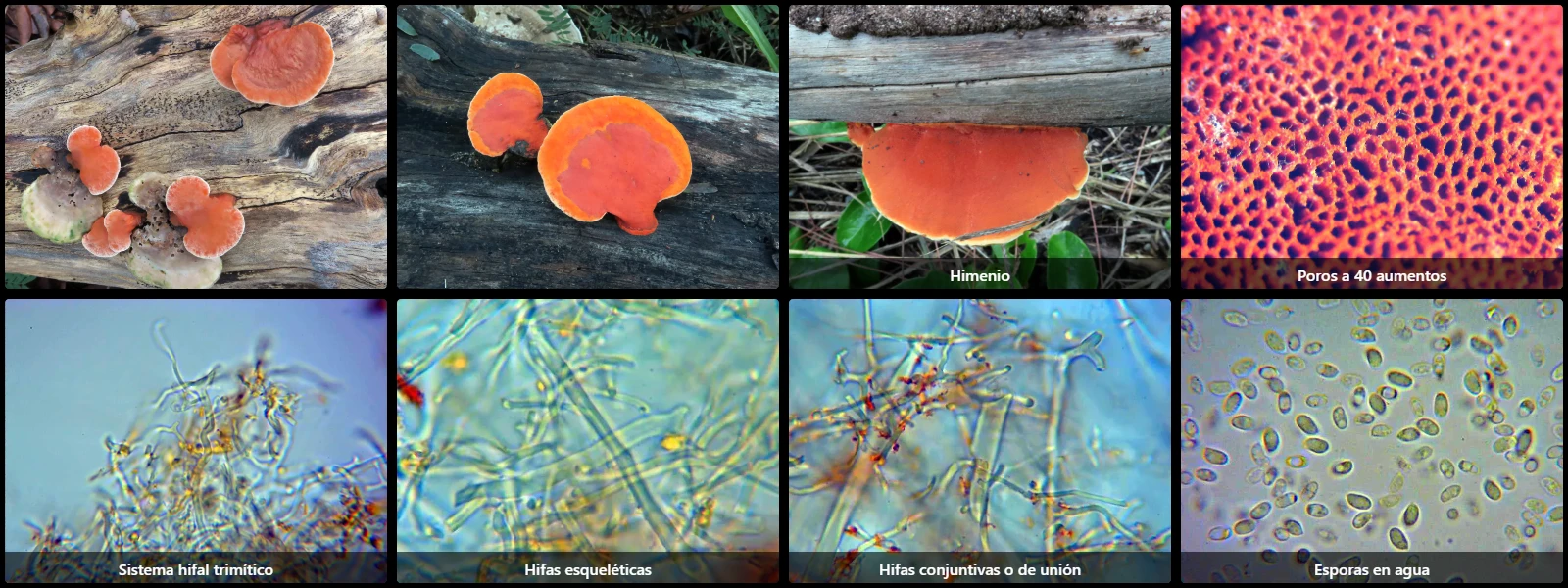
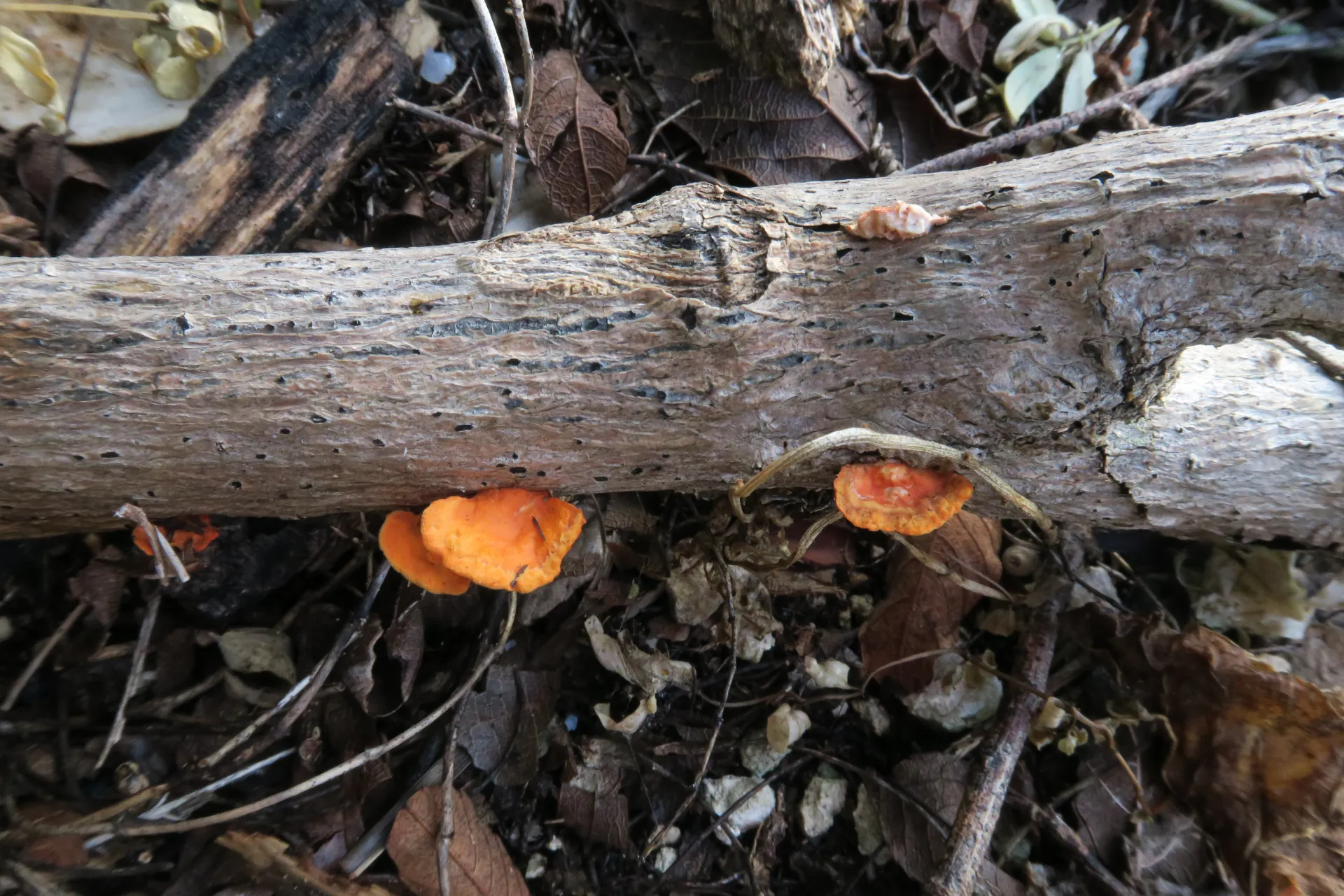
An abundant, widely distributed species in tropical regions, until recently known as Pycnoporus sanguineus, with sessile to effused-reflexed basidiocarps, shell- or fan-shaped, pileus diameter 3 to 8 cm, bright orange-red, with an orange hymenium bearing 5 to 6 minute circular to slightly angular pores per mm, and a tube layer up to 2 mm thick.
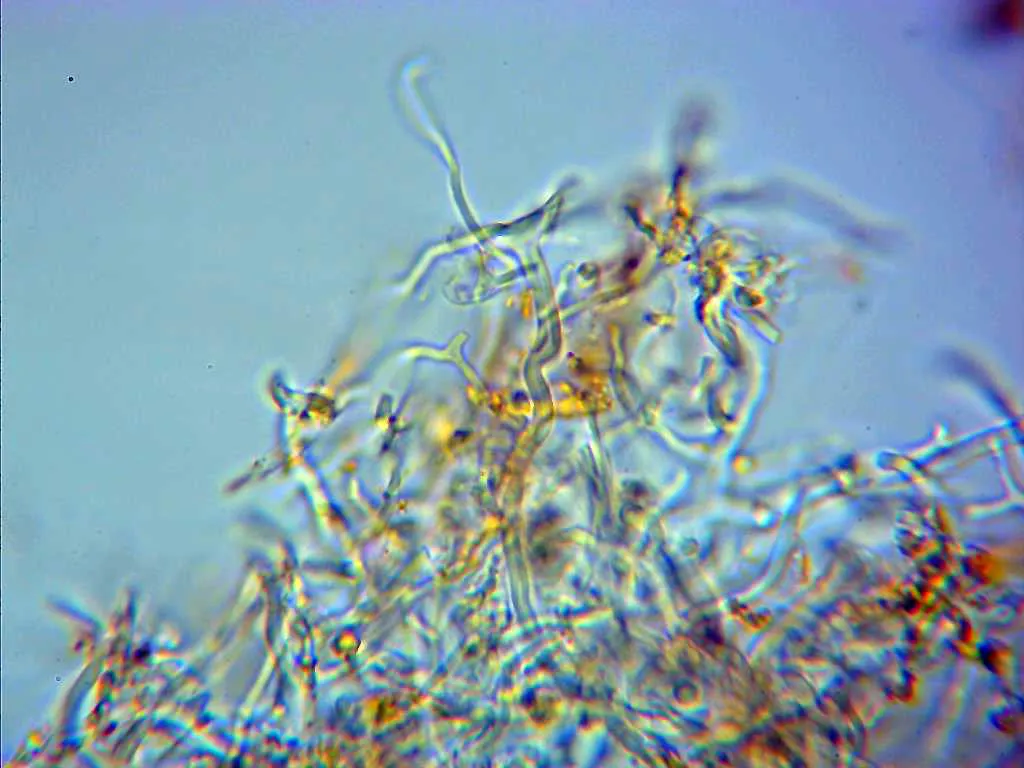
Hyphal system trimitic, with thick-walled skeletal hyphae lacking septa, little or unbranched, 3 to 7 µm in diameter; thin-walled, hyaline generative hyphae, 2.5 to 4 µm in diameter, septate and clamped; and very slender binding hyphae, profusely branched, only 1.5 to 2 µm in diameter.
Cystidia and other sterile hymenial elements absent.
Basidia not observed; according to literature, clavate, 11 to 16 µm long, 5 to 6 µm wide, with basal clamp connections and four-spored.
Spores cylindrical-ellipsoidal, smooth, hyaline, thin-walled, 4.5 to 6 µm long, 2.5 to 3.3 µm wide, with a pointed end corresponding to the apiculus, containing oil droplets inside, and inamyloid in Melzer's reagent.
Herbarium material available: JTP2037/24.
Geographic references
Map generated from global occurrence data from GBIF. GBIF.
Study measurements
Values in Microns (µm)Macroscopic gallery
Microscopic gallery