

Entomophthora muscae
(Cohn) Fresen.
Study description
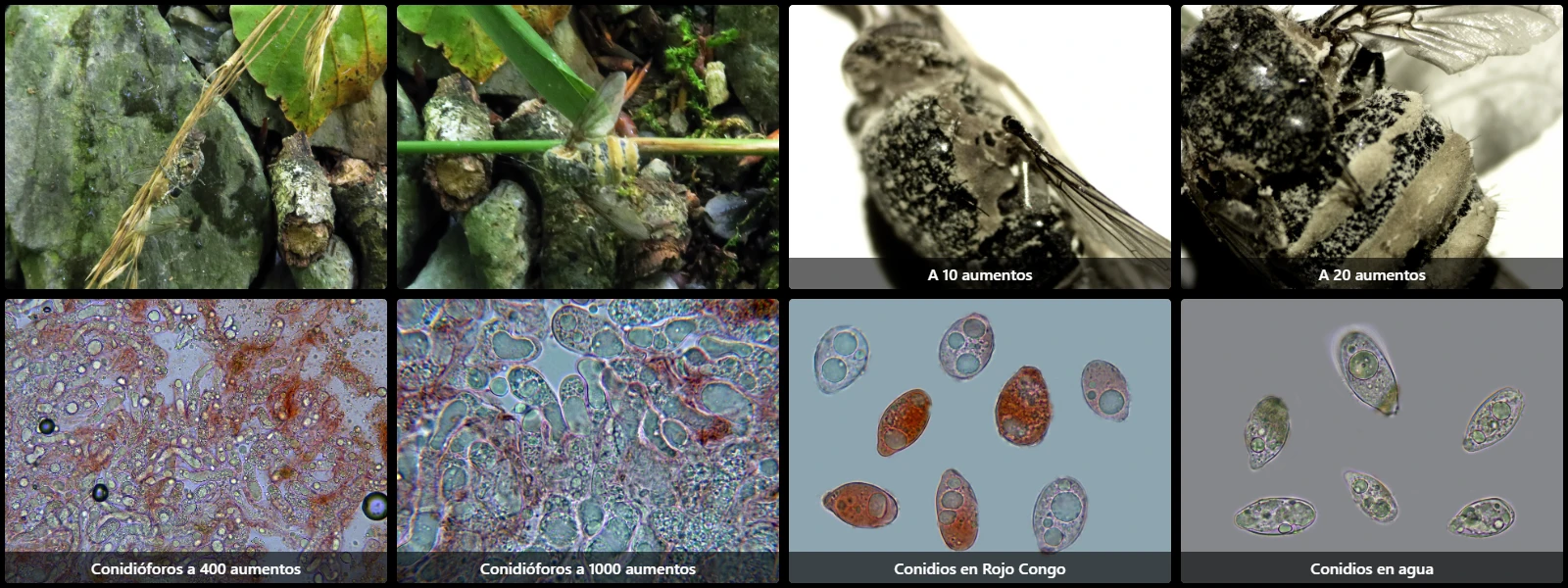
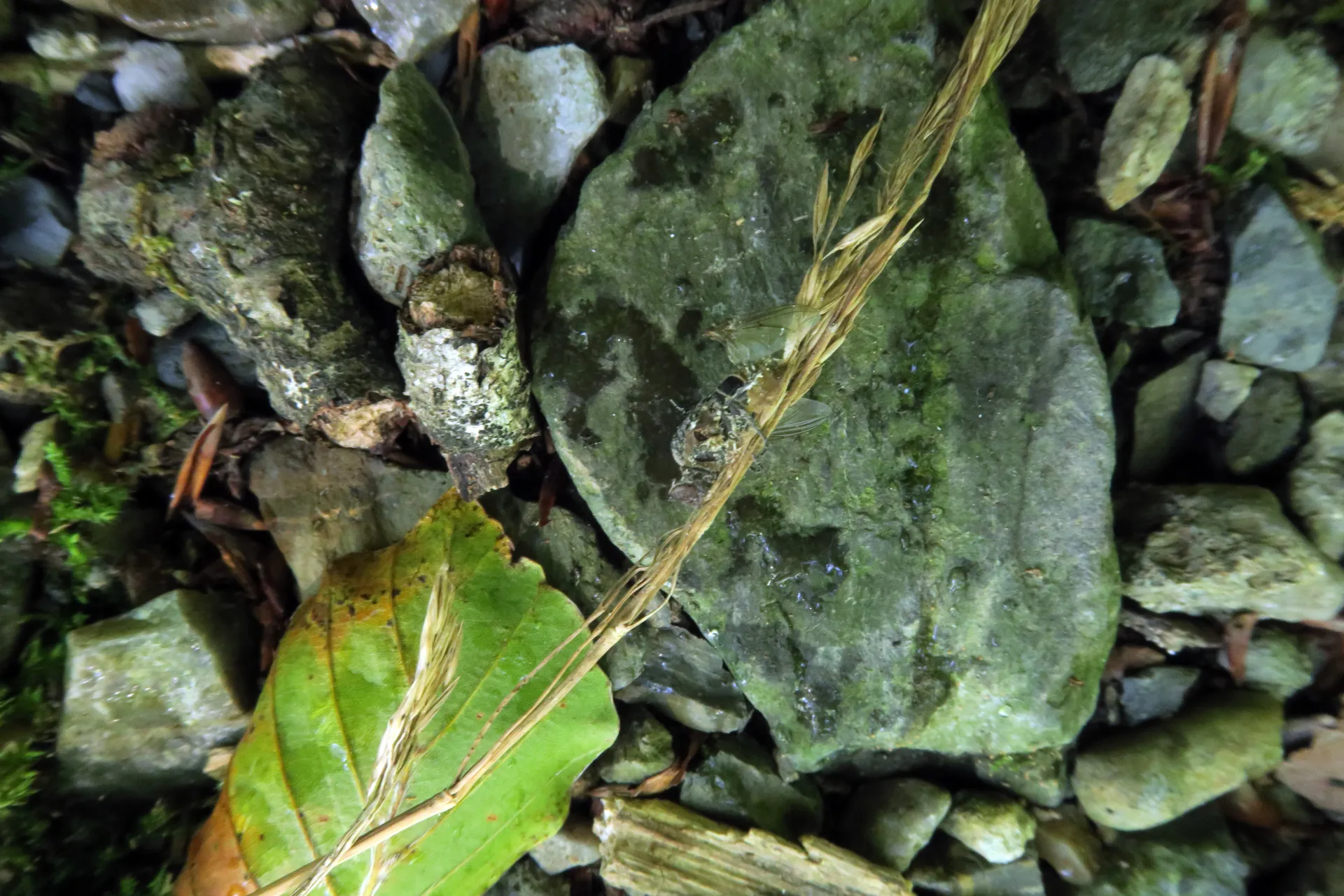
A very aggressive pathogenic fungus that manipulates and zombifies flies, causing them to climb to the highest points of small stems or branches in order to better disperse its spores.
After the fly's death, the fungus emerges from the abdomen, forming clearly visible whitish to cream bands.
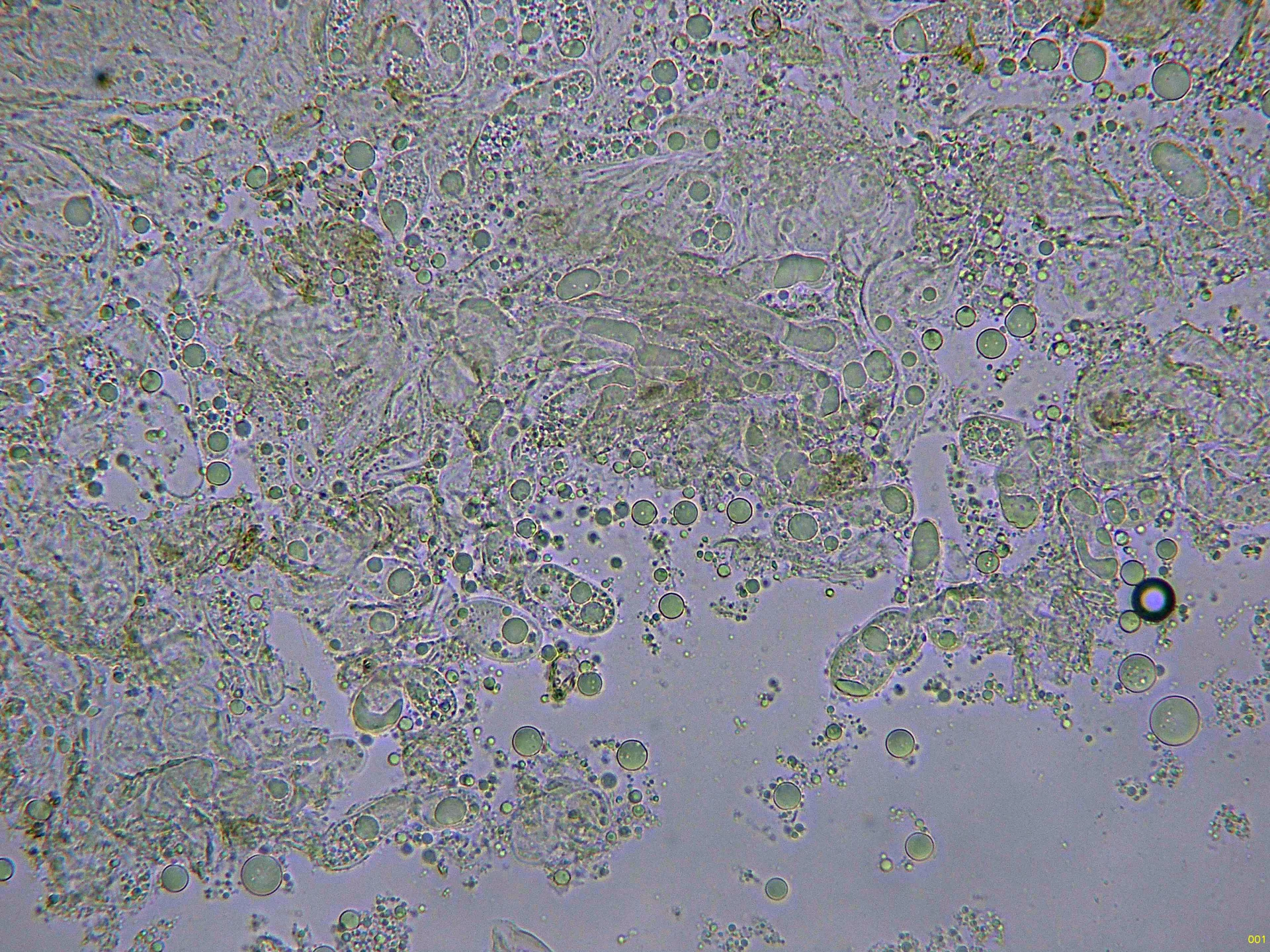
Conidiophores formed by simple, unbranched, cylindrical to slightly clavate hyphae, 9 to 15 µm wide, arranged in a palisade, emerging through the abdominal segments of the insect.
Conidia fusiform to campanulate, with one end more rounded, smooth, thin-walled, 22 to 33 µm long by 17 to 25 µm wide, with abundant granular content inside, multinucleate.
Species very similar to Entomophthora syrphi, exclusive to hoverflies (Syrphidae) rather than muscid flies, and also very similar to Entomophthora ferdinandii, the latter having larger conidia 35 to 40 µm long.
Herbarium material available: JTP2847/26.
Geographic references
Map generated from global occurrence data from GBIF. GBIF.
Study measurements
Values in Microns (µm)Macroscopic gallery
Microscopic gallery