Discostroma corticola
(Fuckel) Brockmann
Study description
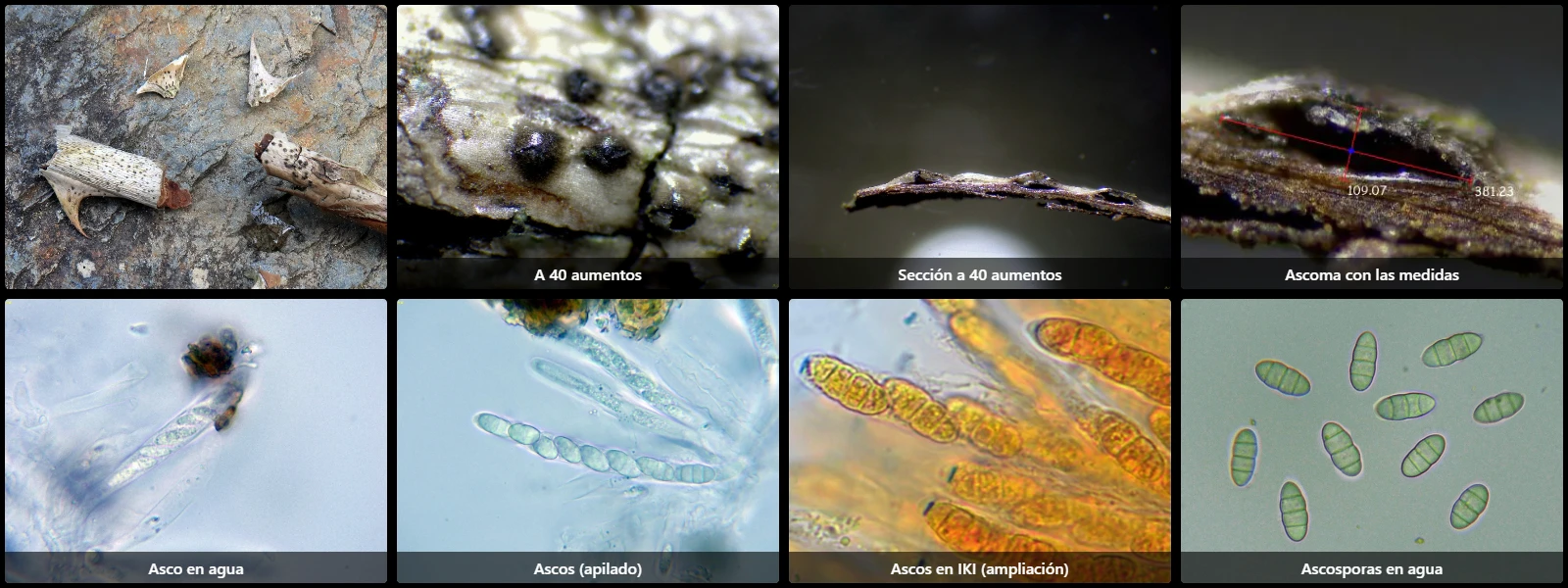
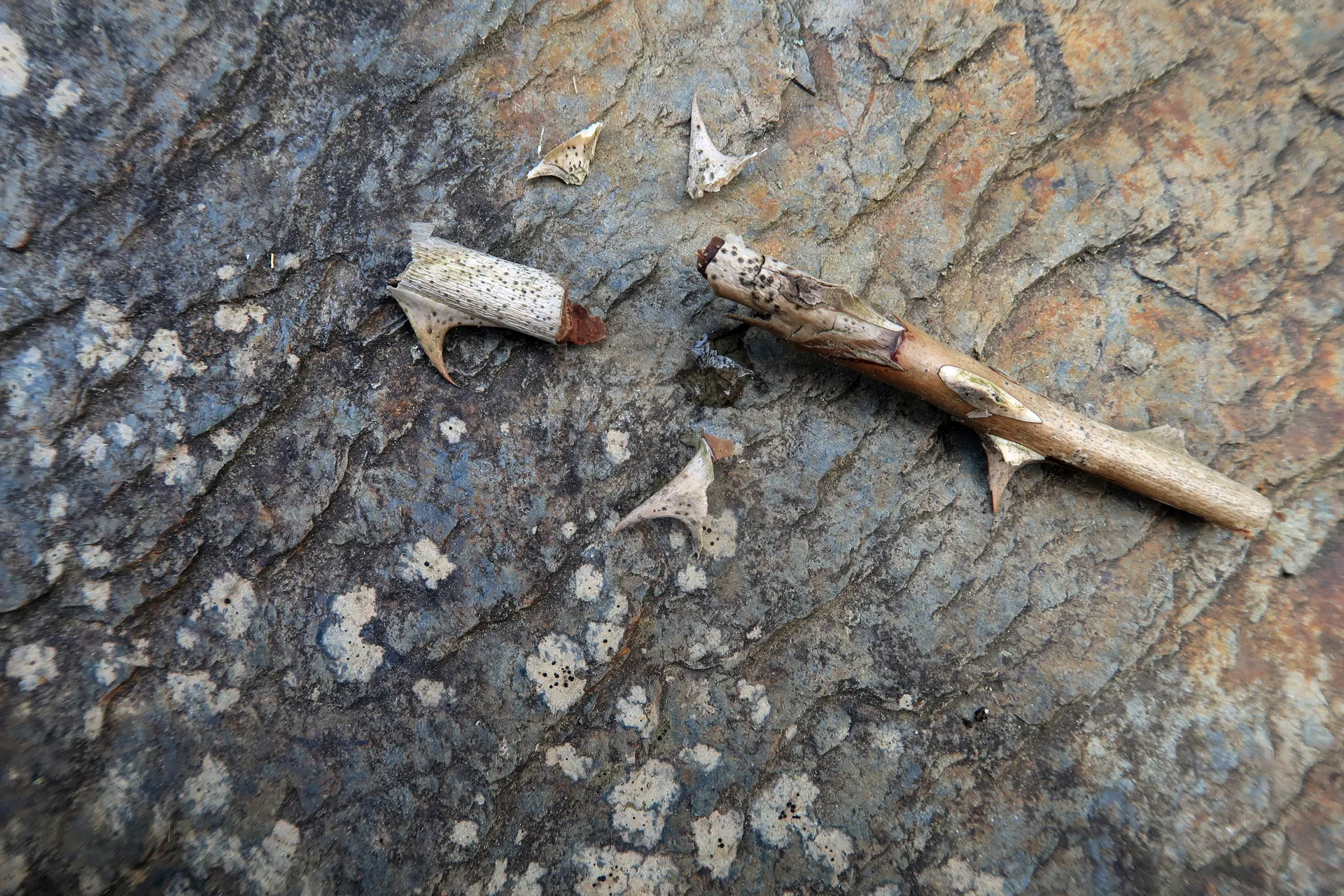
On decaying stems of Rosaceae on the ground, such as Rubus sp. or Rosa sp., also known as Sporocadus lichenicola, with blackish grain-like fruit bodies deeply immersed in tissue, 300 to 500 µm across and 100 to 150 µm high, opening outwards via an inconspicuous short central ostiole or papilla.
This study corresponds to the sexual or teleomorph stage of the species.
Peridial wall hyphae of textura angularis with brown intracellular pigment.
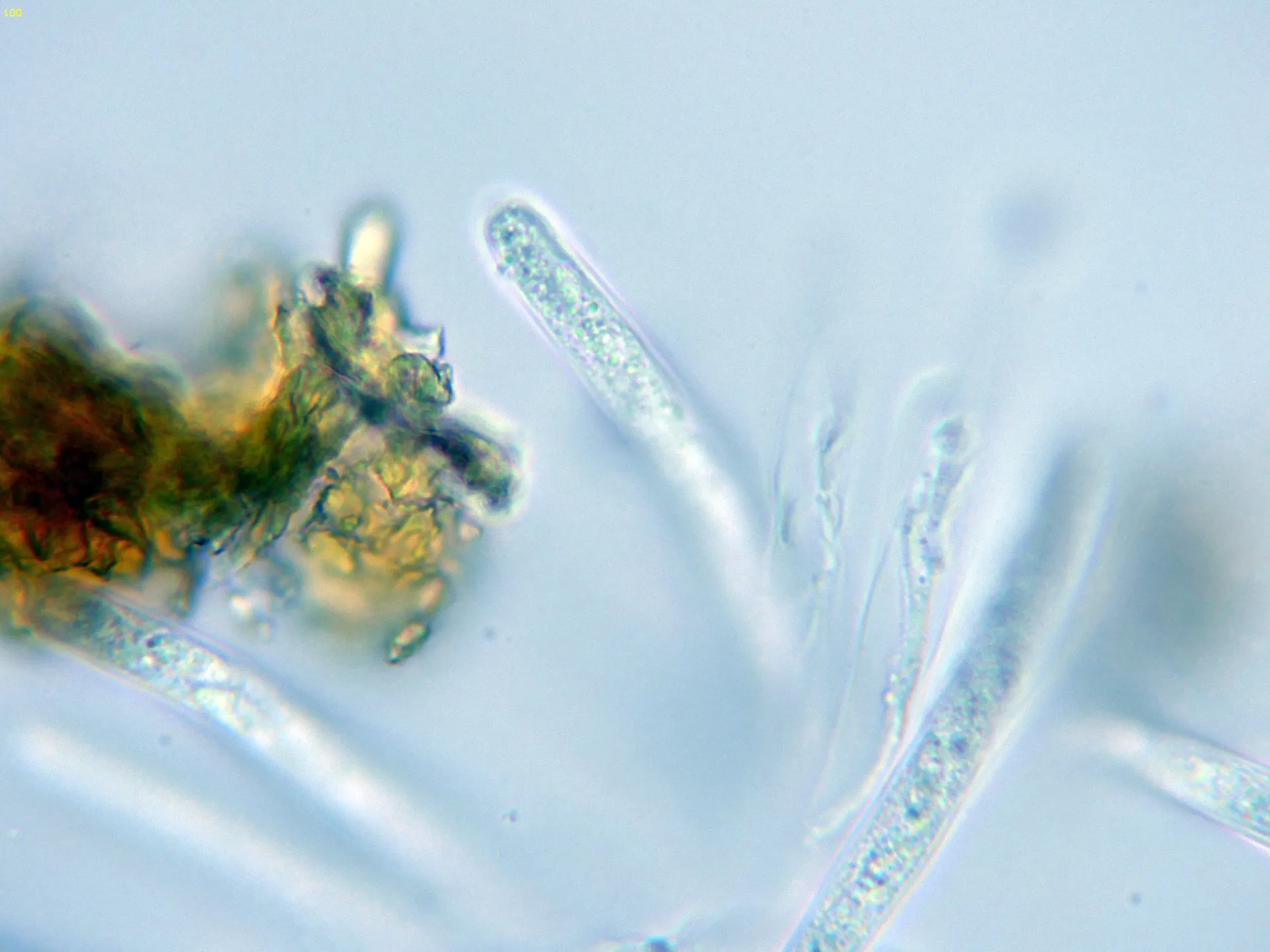
Asci cylindrical, eight-spored, unitunicate, 90 to 110 µm long, 8 to 10 µm wide, with uniseriate spore arrangement occupying practically the entire length of the ascus, and an amyloid apical disc in Melzer's reagent.
Paraphyses not observed.
Ascospores ellipsoidal, hyaline, thin-walled, with three transverse septa, constricted at the septa (constriction most pronounced at the central septum), 14.5 to 18 µm long, 6.5 to 8 µm wide, with practically homogeneous contents lacking conspicuous oil droplets.
Herbarium material available: JTP2144/24.
Geographic references
Map generated from global occurrence data from GBIF. GBIF.
Study measurements
Values in Microns (µm)Macroscopic gallery
Microscopic gallery