

Deconica inquilina
(Fr.) Pat. ex Romagn.
Study description
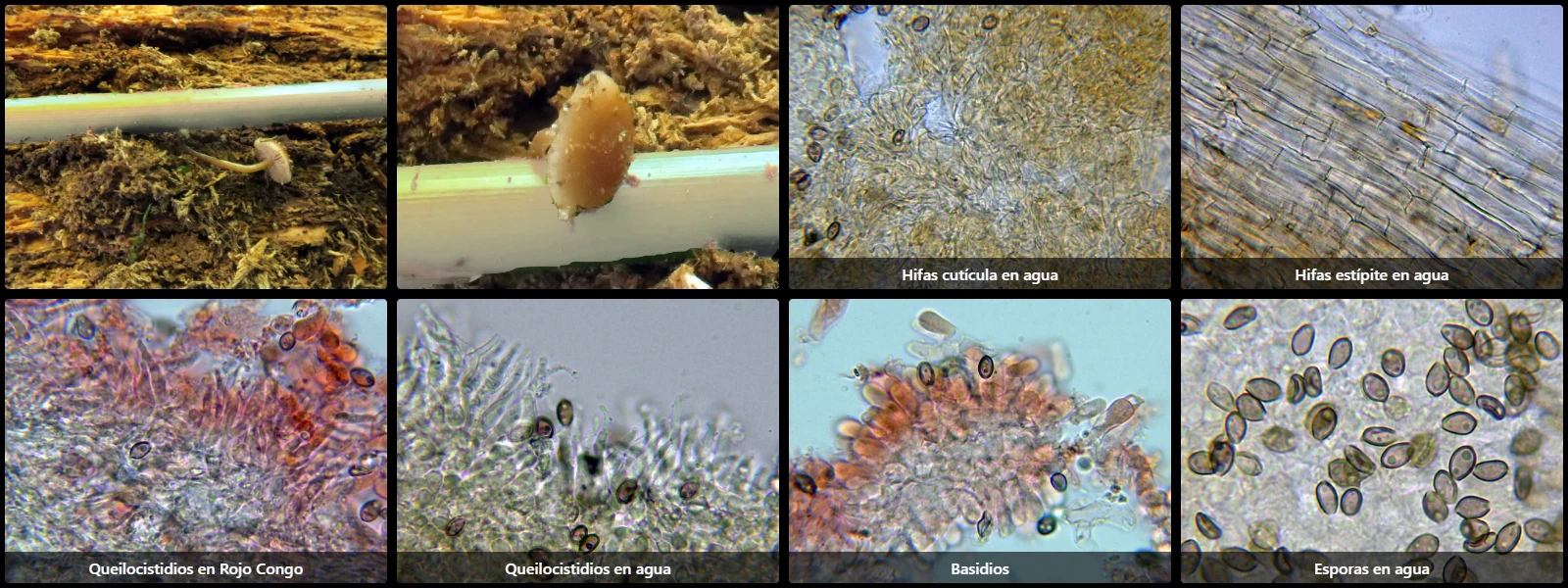
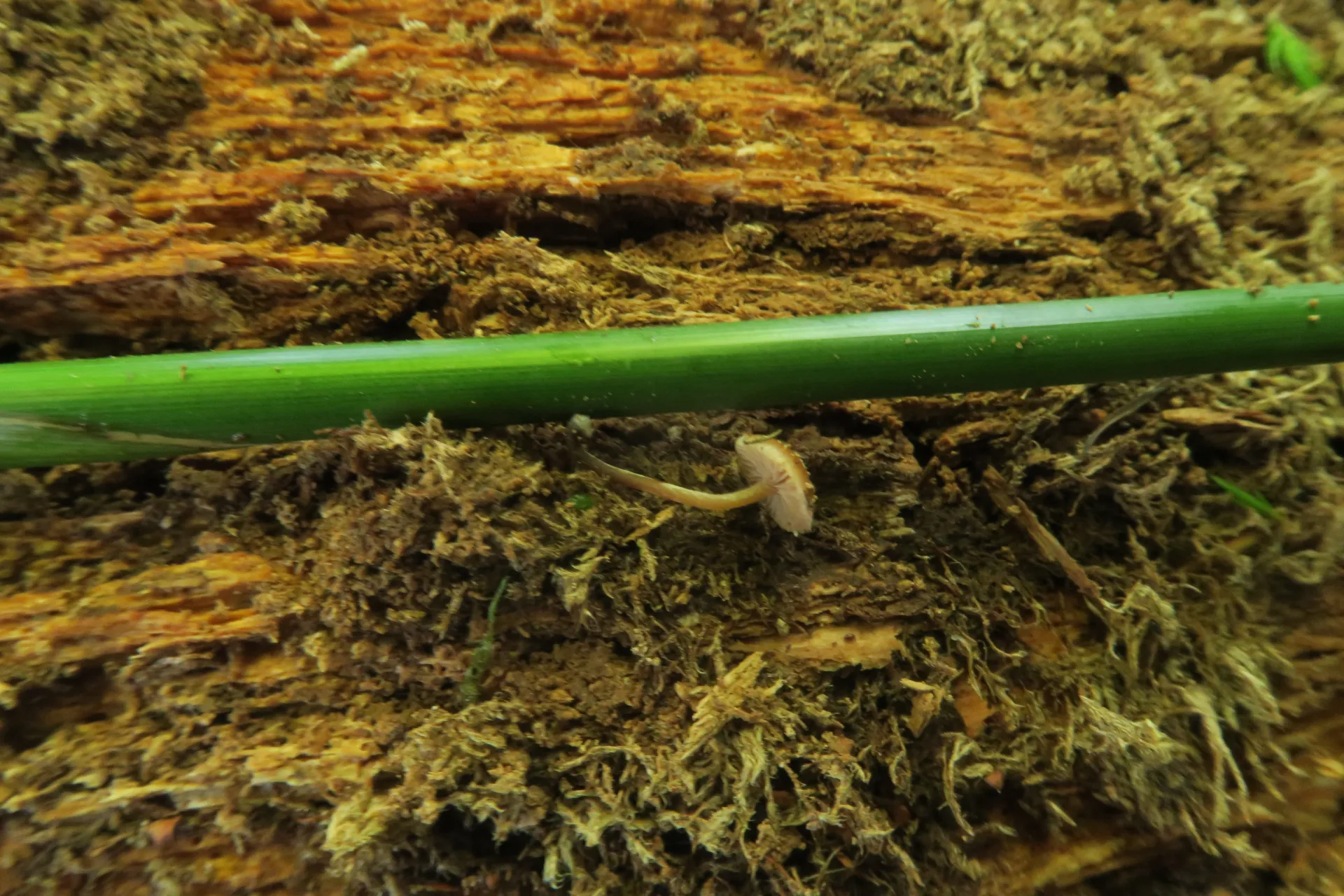
On herbaceous plant debris on the ground, with a conical to convex-flattened cap, 0.5 to 1.8 cm in diameter, with a reddish-brown surface, adnate gills greyish turning dark brown with development, a cylindrical, often curved stipe with white longitudinal fibrils over a brown background, without noticeable odour, and with a mild taste.
Cuticle formed by superficial cylindrical hyphae arranged parallel to very slightly intertwined, hyaline, 2 to 3 µm wide, separated from each other by gelification, and beneath these more compacted, densely intermixed hyphae, 5 to 10 µm wide, with abundant yellowish-brown pigment inside, all septate with simple septa (without clamp connections).
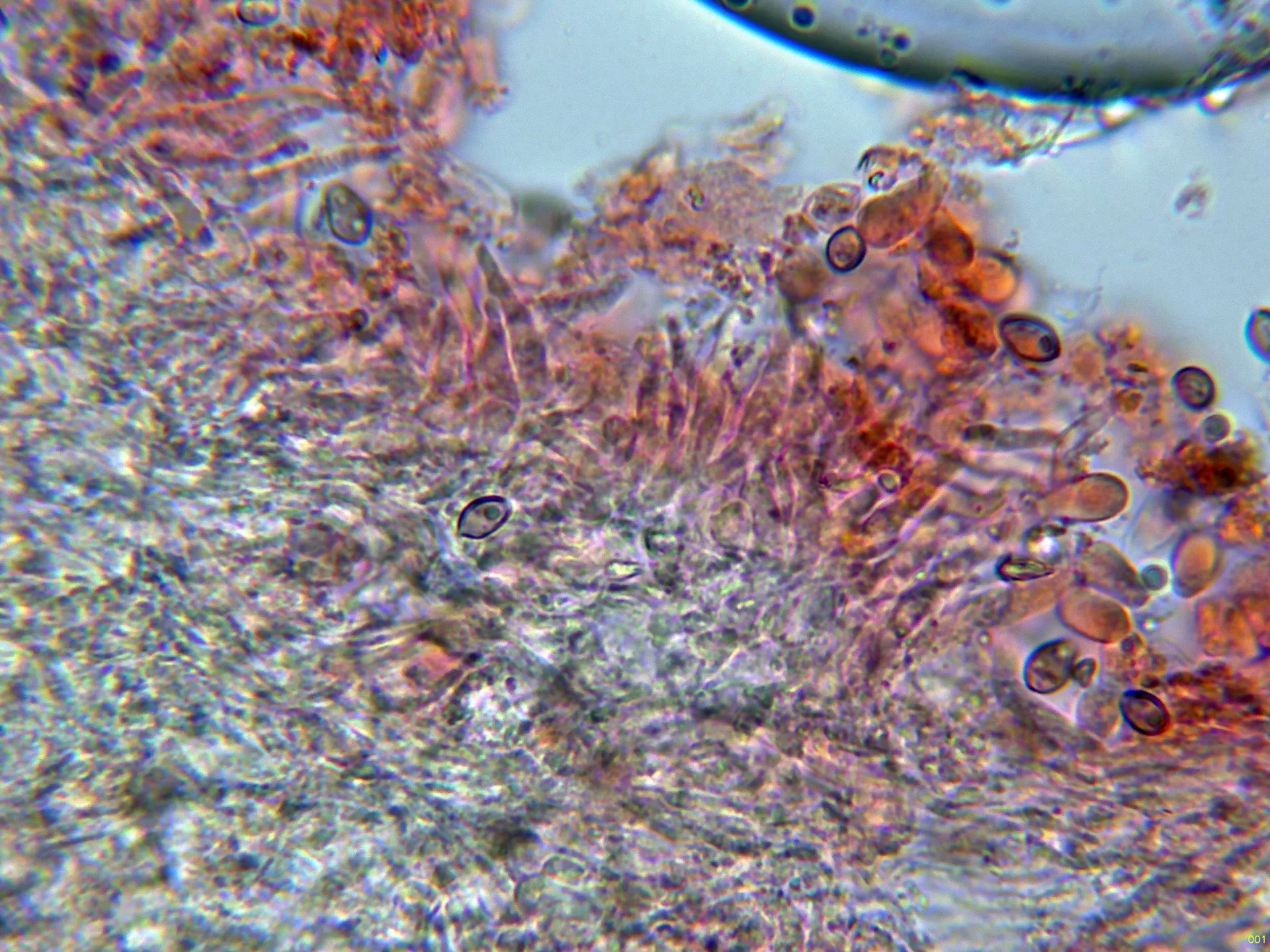
Cheilocystidia fusiform to lageniform, very abundant, rendering the gill edge practically sterile, 20 to 30 µm long by 5 to 7 µm wide.
Without pleurocystidia.
Basidia cylindric-clavate, 15 to 20 µm long by 6 to 8 µm wide, with basal clamp connections and with two or four sterigmata (bi- or tetrasporic).
Spores ellipsoidal to mitriform, smooth, moderately thick-walled, brown under the microscope in water, 6 to 8 µm long by 4 to 5.5 µm wide, with a barely noticeable apiculus at one end and a clearly visible germ pore at the opposite end, darkening noticeably in KOH.
Herbarium material available: JTP2821/26.
Geographic references
Map generated from global occurrence data from GBIF. GBIF.
Study measurements
Values in Microns (µm)Macroscopic gallery
Microscopic gallery